December 14, 2021
Mohenjo
Business, Enthralling, Human Interest, Photographs
amazon, business, Business News, current-events, Future, Hotels, human-rights, medicine, mental-health, research, Science, Science News, technology, Technology News, travel, vacation

Click the link below the picture
.
Croatia, officially the Republic of Croatia, is a country at the crossroads of Central and Southeast Europe on the Adriatic Sea. Croatia borders Slovenia to the northwest, Hungary to the northeast, Serbia to the east, Bosnia and Herzegovina and Montenegro to the southeast, and shares a maritime border with Italy to the west and southwest. Its capital and largest city, Zagreb, forms one of the country’s primary subdivisions, with twenty counties. Croatia has an area of 56,594 square kilometers (21,851 square miles) and a population of 4.07 million.
The Croats arrived in the 6th century and organized the territory into two duchies by the 9th century. Croatia was first internationally recognized as independent on 7 June 879 during the reign of Duke Branimir. Tomislav became the first king by 925, elevating Croatia to the status of a kingdom. During the succession crisis after the Trpimirović dynasty ended, Croatia entered a personal union with Hungary in 1102. In 1527, faced with Ottoman conquest, the Croatian Parliament elected Ferdinand I of Austria to the Croatian throne. In October 1918, the State of Slovenes, Croats, and Serbs, independent from Austria-Hungary, was proclaimed in Zagreb, and in December 1918, merged into the Kingdom of Yugoslavia. Following the Axis invasion of Yugoslavia in April 1941, most of Croatia was incorporated into a Nazi-installed puppet state, the Independent State of Croatia. A resistance movement led to the creation of the Socialist Republic of Croatia, which after the war became a founding member and constituent of the Socialist Federal Republic of Yugoslavia. On 25 June 1991, Croatia declared independence, and the War of Independence was fought for four years following the declaration.
A sovereign state, Croatia is a republic governed under a parliamentary system. It is a member of the European Union, the United Nations, the Council of Europe, NATO, the World Trade Organization, and a founding member of the Union for the Mediterranean. An active participant in United Nations peacekeeping, Croatia has contributed troops to the International Security Assistance Force and took a nonpermanent seat on the United Nations Security Council for the 2008–2009 term. Since 2000, the Croatian government has invested in infrastructure, especially transport routes and facilities along the Pan-European corridors.
Croatia is classified by the World Bank as a high-income economy and ranks very high on the Human Development Index. Service, industrial sectors, and agriculture dominate the economy, respectively. Tourism is a significant source of revenue, with Croatia ranked among the 20 most popular tourist destinations. The state controls a part of the economy, with substantial government expenditure. The European Union is Croatia’s most important trading partner. Croatia provides social security, universal health care, and tuition-free primary and secondary education while supporting culture through public institutions and corporate investments in media and publishing. Wikipedia
.
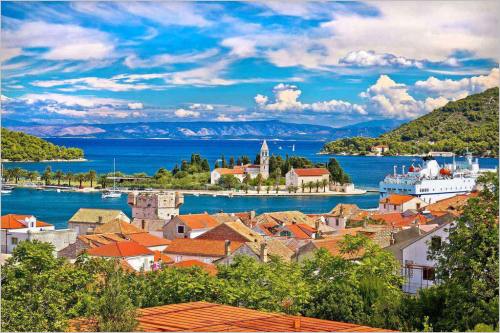 An image of Croatia Coastline
.
.
Click the link below for images:
.
__________________________________________
December 14, 2021
Mohenjo
Business, Human Interest
amazon, business, Business News, current-events, Future, Hotels, human-rights, medicine, mental-health, research, Science, Science News, technology, Technology News, travel, vacation

Click the link below the picture
.
NASA has warned that a giant asteroid bigger than the Eiffel Tower will break into Earth’s orbit in just over a week.
The 1,082-foot space rock is heading our way and should skim past us on December 11.
NASA has its eye on Asteroid 4660 Nereus because it’s well over 492 feet long and will come within 4.6 million miles of Earth.
That puts it in the “potentially hazardous” category.
There’s no need to panic, though, as Asteroid Nereus isn’t expected to impact Earth.
If all goes well, it should shoot past our planet at 14,700 miles per hour.
NASA is expecting the space rock to stay 2.4 million miles away from us.
That’s about 10 times the distance between Earth and the moon.
That may seem pretty far away, but it’s actually close as near-Earth asteroids go.
.
 A gigantic 1,082-foot asteroid is set to approach Earth’s orbit on December 11, according to NASA. Getty Images/Science Photo Libra
.
.
Click the link below for the article:
.
__________________________________________
December 14, 2021
Mohenjo
Business, Food For Thought, Human Interest, Science, Technical
amazon, business, Business News, current-events, Future, Hotels, human-rights, medicine, mental-health, research, Science, Science News, technology, Technology News, travel, vacation

Click the link below the picture
.
The Universe’s normal matter consists, humbly, of atoms.
Every atom’s nucleus contains protons, whose number determines that element’s properties.
Over 100 elements, sortable into a periodic table, are presently known.
Only eight processes occur to create them all.
.
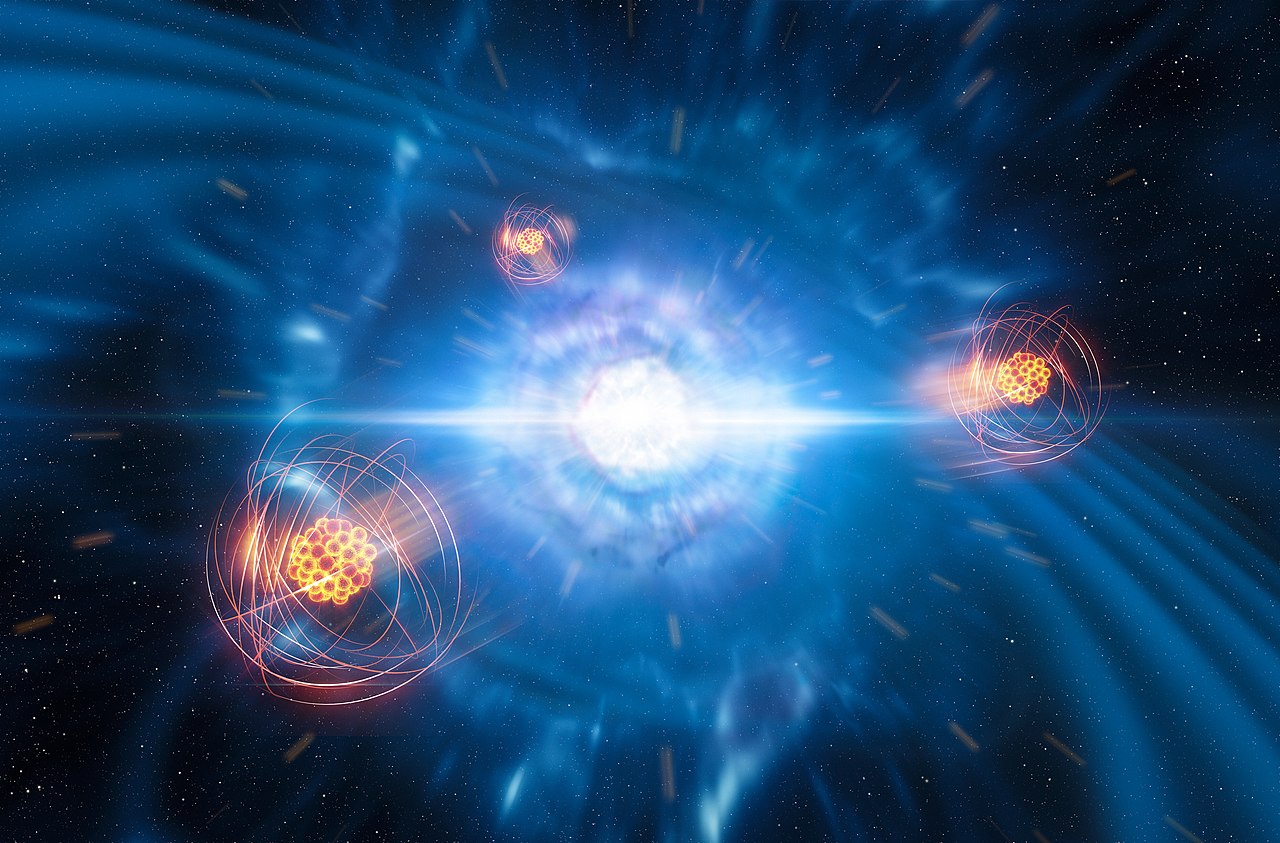 The Universe itself, through a variety of nuclear processes involving stars and stellar remnants, as well as other means, can naturally copiously produce nearly 100 elements of the periodic table. There are only 8 total processes, both natural and human-made, that cause them all. (Credit: ESO/L. Calçada/M. Kornmesser)
.
.
Click the link below for the article:
.
__________________________________________
December 13, 2021
Mohenjo
Business, Enthralling, Human Interest, Photographs
amazon, business, Business News, current-events, Future, Hotels, human-rights, medicine, mental-health, research, Science, Science News, technology, Technology News, travel, vacation
Click the link below the picture
.
Central Kalahari Game Reserve is an extensive national park in the Kalahari Desert of Botswana. Established in 1961 it covers an area of 52,800 square kilometers (20,400 sq mi) (larger than the Netherlands, and almost 10% of Botswana’s total land area), making it the second-largest game reserve in the world.
The Bushmen, or San, have inhabited the lands for thousands of years since they roamed the area as nomadic hunters. However, since the mid-1990s the Botswana government has tried to relocate the Bushmen from the reserve, claiming they were a drain on financial resources despite revenues from tourism. In 1997, three-quarters of the entire San population were relocated from the reserve, and in October 2005 the government had resumed the forced relocation into resettlement camps outside of the park leaving only about 250 permanent occupiers. In 2006 a Botswana court proclaimed the eviction illegal and affirmed the Bushmen’s right to return to living in the reserve. However, as of 2015 most Bushmen are blocked from access to their traditional lands in the reserve. A nationwide ban on hunting made it illegal for the Bushmen to practice their traditional hunter-gatherer lifestyle, despite allowing private game ranches to provide hunting opportunities for tourists.
In 2014 a diamond mine called Ghaghoo operated by Gem Diamonds opened in the southeast portion of the reserve. The company estimated that the mine could yield $4.9 billion worth of diamonds. The Rapaport Diamond Report, a diamond-industry pricing guide, stated, “Ghaghoo’s launch was not without controversy […] given its location on the ancestral land of the Bushmen”.
A huge bush fire in and around the park in the middle of September 2008 burnt around 80 percent of the reserve. The origin of the fire remains unknown.
This park contains wildlife such as giraffe, elephant, white rhinoceros, Cape buffalo, spotted hyena, brown hyena, honey badger, meerkat, yellow mongoose, warthog, cheetah, caracal, Cape wild dog, black-backed jackal, bat-eared fox, cape fox, leopard, lion, wildebeest, zebra, eland, sable antelope, gemsbok, springbok, steenbok, impala, greater kudu, aardvark, cape ground squirrel, cape hare, cape porcupine, chacma baboon, red hartebeest, and ostrich. The land is mostly flat, and gently undulating covered with bush and grasses covering the sand dunes, and areas of larger trees. Many of the river valleys are fossilized with salt pans. Four fossilized rivers meander through the reserve including Deception Valley which began to form around 16,000 years ago. Wikipedia
.
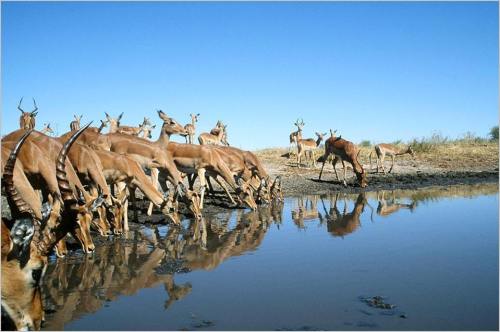 An image from Central Kalahari Game Reserve
.
.
Click the link below for images:
.
__________________________________________
December 13, 2021
Mohenjo
Business, Food For Thought, Human Interest, Science, Technical
amazon, business, Business News, current-events, Future, Hotels, human-rights, medicine, mental-health, research, Science, Science News, technology, Technology News, travel, vacation

Click the link below the picture
.
PARTICLES that also act like waves; the “spooky action at a distance” of entanglement; those dead-and-alive cats. Small wonder people often trot out physicist Richard Feynman’s line that “nobody understands quantum mechanics”. With quantum theory, we have developed an exceedingly successful description of how fundamental reality works. It also amounts to a full-frontal assault on our intuitions about how reality should work.
Or does it? “It only seems strange to us because our immediate everyday experience of the world is so very limited,” says Sean Carroll at the California Institute of Technology. Intuitive-feeling classical physics is largely devoted to describing macroscopic objects – the things we see and feel directly in the world around us. “It should not be surprising that this breaks down when we push it into domains that we never experience directly,” says Carroll.
There is a big difference between seeming strange and being strange, too. “If quantum mechanics is right, it can’t truly be strange – it’s how nature works,” says Carroll. You can say something similar, after all, about other areas of physics, such as Albert Einstein’s space-and-time-warping theories of relativity. Their effects only truly kick in at close to light speed, or in humongous gravitational fields of the sort, we never experience, so their picture of the world seems alien to us.
.
 Shutterstock/agsandrew
.
.
Click the link below for the article:
.
__________________________________________
December 13, 2021
Mohenjo
Business, Food For Thought, Human Interest, Science, Technical
amazon, business, Business News, current-events, Future, Hotels, human-rights, medicine, mental-health, research, Science, Science News, technology, Technology News, travel, vacation

Click the link below the picture
.
Are you in the market for a loophole in the laws that forbid perpetual motion? Knowing you’ve got yourself an authentic time crystal takes more than a keen eye for high-quality gems.
In a new study, an international team of researchers used Google’s Sycamore quantum computing hardware to double-check their theoretical vision of a time crystal, confirming it ticks all of the right boxes for an emerging form of technology we’re still getting our head around.
Similar to conventional crystals made of endlessly repeating units of atoms, a time crystal is an infinitely repeating change in a system, one that remarkably doesn’t require energy to enter or leave.
Though such a thing comes close to breaking certain laws of thermodynamics, the fact that the system’s entropy doesn’t increase means it should sit on the right side of physics.
In reality, such a crystal might look like an oscillation of some sort that doesn’t synchronize with the rest of the system’s rhythms. A laser tapping out a steady beat on your time crystal, for example, might make its particles’ spins flip only on every other tap.
This recalcitrant flip-flopping is a signature time crystal behavior and has been used as evidence for the design and production of time crystals in past experiments.
.
 The chip used in the creation of a time crystal. (Google Quantum AI)
.
.
Click the link below for the article:
.
__________________________________________
December 12, 2021
Mohenjo
Business, Food For Thought, Human Interest, Science, Technical
amazon, business, Business News, current-events, Future, Hotels, human-rights, medicine, mental-health, research, Science, Science News, technology, Technology News, travel, vacation

Click the link below the picture
.
The new theory contradicts earlier predictions that these ‘shortcuts’ would instantly collapse.
Wormholes, or portals between black holes, maybe stable after all, a wild new theory suggests.
The findings contradict earlier predictions that these hypothetical shortcuts through space-time would instantly collapse.
The sea change comes because tiny differences in the mathematics of relativity, which is used to describe such wormholes, end up dramatically changing our overall picture of how they behave.
.
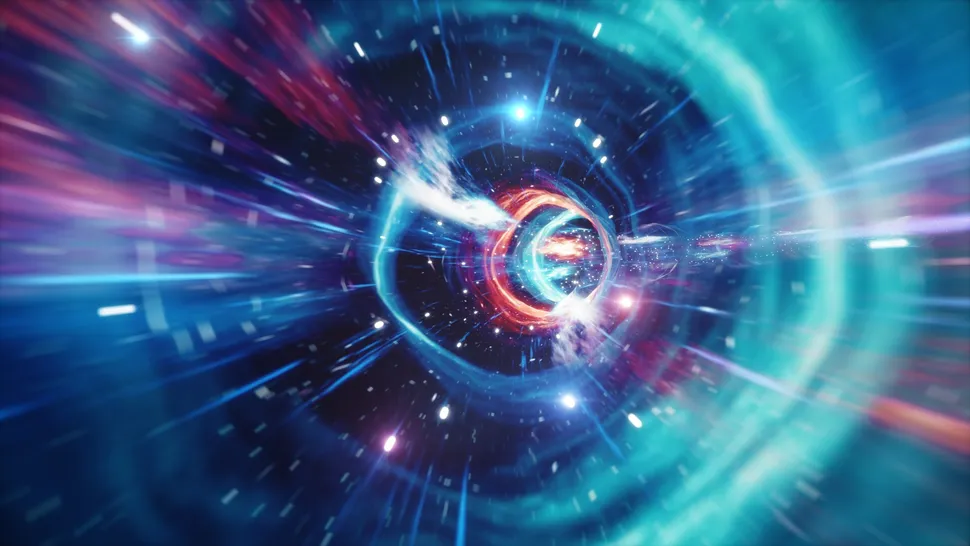 An artist’s impression of the inside of a wormhole. (Image credit: Shutterstock)
.
.
Click the link below for the article:
.
__________________________________________
December 12, 2021
Mohenjo
Business, Food For Thought, Human Interest, Science, Technical
amazon, business, Business News, current-events, Future, Hotels, human-rights, medicine, mental-health, research, Science, Science News, technology, Technology News, travel, vacation

Click the link below the picture
.
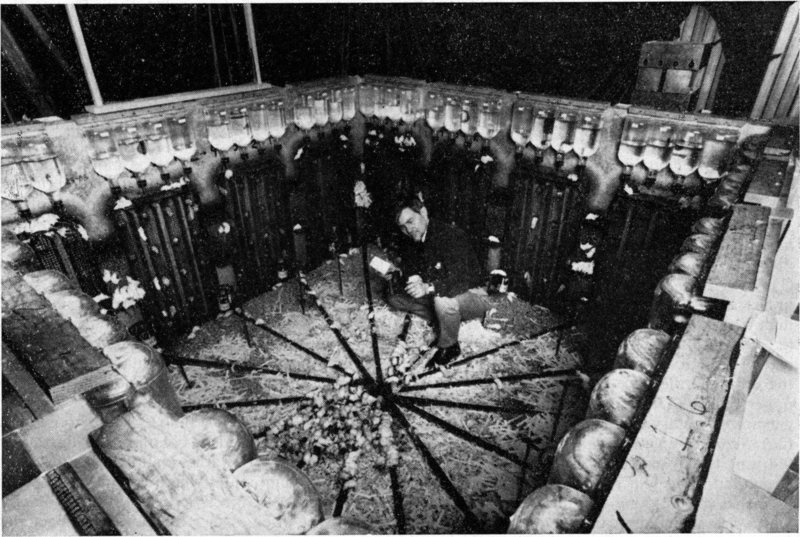
On July 9th, 1968, eight white mice were placed into a strange box at the National Institute of Health in Bethesda, Maryland. Maybe “box” isn’t the right word for it; the space was more like a room, known as Universe 25, about the size of a small storage unit. The mice themselves were bright and healthy, hand-picked from the institute’s breeding stock. They were given the run of the place, which had everything they might need: food, water, climate control, hundreds of nesting boxes to choose from, and a lush floor of shredded paper and ground corn cob.
This is a far cry from a wild mouse’s life—no cats, no traps, no long winters. It’s even better than your average lab mouse’s, which is constantly interrupted by white-coated humans with scalpels or syringes. The residents of Universe 25 were mostly left alone, save for one man who would peer at them from above, and his team of similarly interested assistants. They must have thought they were the luckiest mice in the world. They couldn’t have known the truth: that within a few years, they and their descendants would all be dead.
.
 Calhoun inside Universe 25, his biggest, baddest mouse utopia. Photo: Yoichi R. Okamoto/Public Domain .
.
.
Click the link below for the article:
.
__________________________________________
December 11, 2021
Mohenjo
Business, Enthralling, Human Interest, Photographs
amazon, business, Business News, current-events, Future, Hotels, human-rights, medicine, mental-health, research, Science, Science News, technology, Technology News, travel, vacation
Click the link below the picture
.
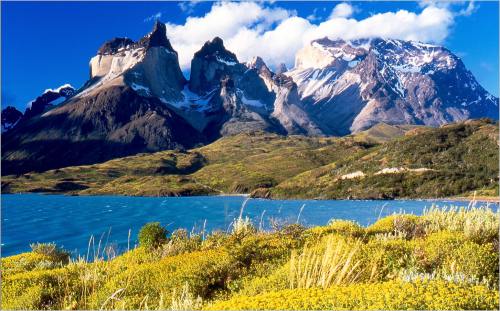
Torres del Paine National Park is a national park encompassing mountains, glaciers, lakes, and rivers in southern Chilean Patagonia. The Cordillera del Paine is the centerpiece of the park. It lies in a transition area between the Magellanic subpolar forests and the Patagonian Steppes. The park is located 112 km (70 mi) north of Puerto Natales and 312 km (194 mi) north of Punta Arenas. The park borders Bernardo O’Higgins National Park to the west and the Los Glaciares National Park to the north in Argentine territory. Paine means “blue” in the native Tehuelche (Aonikenk) language and is pronounced PIE-nay, while Torres means “towers”.
Torres del Paine National Park is part of the Sistema Nacional de Áreas Silvestres Protegidas del Estado de Chile (National System of Protected Forested Areas of Chile). In 2013, it measured approximately 181,414 hectares (700 sq mi). It is one of the largest and most visited parks in Chile. The park averages around 252,000 visitors a year, of which 54% are foreign tourists, who come from many countries all over the world. It is also part of the End of the World Route, a tourist scenic route.
The park is one of the 11 protected areas of the Magallanes Region and Chilean Antarctica (together with four national parks, three national reserves, and three national monuments). Together, the protected forested areas comprise about 51% of the land of the region (6,728,744 hectares (25,980 sq mi)).
The Torres del Paine are the distinctive three granite peaks of the Paine mountain range or Paine Massif. From left to right they are known as Torres d’Agostini, Torres Central and Torres Monzino. They extend up to 2,500 meters (8,200 ft) above sea level and are joined by the Cuernos del Paine. The area also boasts valleys, rivers such as the Paine, lakes, and glaciers. The well-known lakes include Grey, Pehoé, Nordenskiöld, and Sarmiento. The glaciers, including Grey, Pingo, and Tyndall, belong to the Southern Patagonia Ice Field.
Lady Florence Dixie, in her book published in 1880, gave one of the first descriptions of the area and referred to the three towers as Cleopatra’s Needles. She and her party are sometimes credited as being the first “foreign tourists” to visit the area that is now called Torres del Paine National Park. Wikipedia
.
 An image from Torres Del Paine National Park
.
.
Click the link below for images:
.
__________________________________________
December 11, 2021
Mohenjo
Business, Food For Thought, Human Interest, Science, Technical
amazon, business, Business News, current-events, Future, Hotels, human-rights, medicine, mental-health, research, Science, Science News, technology, Technology News, travel, vacation

Click the link below the picture
.
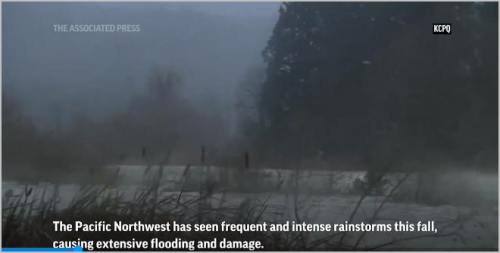
Think your area has had more rain than usual? You’re probably right.
Think your area has had less rain than usual? Again, you’re probably right.
For our climate change investigation out this week, called Downpour, USA TODAY reporters used 126 years of monthly data from the National Oceanic and Atmospheric Administration to analyze average annual precipitation at 344 climate divisions. They used daily precipitation data from weather stations to measure the change in frequency of extreme rain events across the U.S. from 1951-2020.
“We were hearing a lot about extreme rainfall, stories of flooding, people with sewer backups, people flooded out of their homes, and we wanted to know, is this happening everywhere?” said Dinah Pulver, one of the project’s lead reporters. “How many people, how many places, are contending with this kind of rainfall?
We found more than half of the nation’s 344 climate divisions had their wettest periods on record since 2018. We calculated the same rolling averages for states.
“East of the Rockies, more rain is falling, and it’s coming in more intense bursts,” our report finds. “In the West, people are waiting longer to see any rain at all.
“Taken together, the reporting reveals a stunning shift in the way precipitation falls in America.”
.
.
.
Click the link below for the article:
.
__________________________________________
Older Entries
Newer Entries

