February 5, 2022
Mohenjo
Business, Food For Thought, Human Interest, Science, Technical
amazon, business, Business News, current-events, Future, Hotels, human-rights, medicine, mental-health, research, Science, Science News, technology, Technology News, travel, vacation

Click the link below the picture
.
Mystery solved? Not Yeti, but close.
A year ago, geneticists reported that RNA extracted from hair samples attributed to the Himalayan Yeti monster, a.k.a. “the Abominable Snowman,” were actually most similar to the 40,000-year-old genetic signature of a now-extinct breed of polar bear. They suggested there might be a yet-to-be-discovered bear species lurking in the remote Himalayan snows.
Now a different research team says the hairs were just as likely to come from a type of brown bear that’s common in the Himalayas.
The scientists behind the original study, led by Oxford University’s Bryan Sykes, are holding to their claims about the polar-bearish RNA. But Eliecer Gutierrez of the Smithsonian Institution and Ronald Pine, who’s associated with the University of Kansas’ Natural History Museum and Biodiversity Research Center, say there’s too much genetic overlap in the RNA results to rule out the Himalayan brown bear.
The analysis from Gutierrez and Pine was published online Monday by the open-access journal ZooKeys.
.
 .
.
.
Click the link below for the article:
.
__________________________________________
February 5, 2022
Mohenjo
Business, Food For Thought, Human Interest, Science, Technical
amazon, business, Business News, current-events, Future, Hotels, human-rights, medicine, mental-health, research, Science, Science News, technology, Technology News, travel, vacation

Click the link below the picture
.
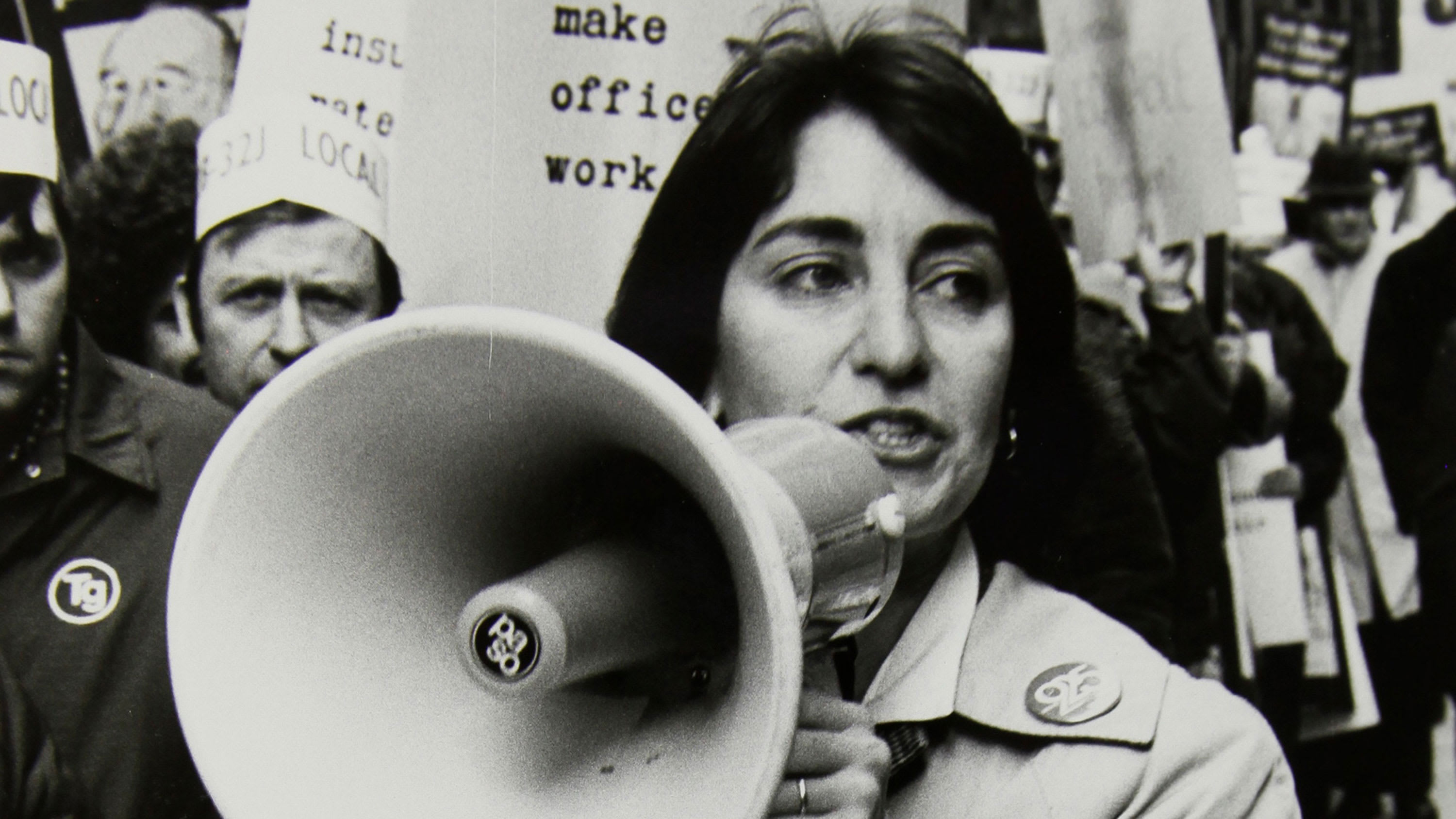
The working woman’s problems in 9 to 5, the Jane Fonda-starring feminist comedy about three secretaries’ revolt against their chauvinistic boss, only seem distant at first.
Yes, the movie is four decades old. Female office workers and secretaries are no longer the largest sector of the American workforce; 20 million women don’t roll on pantyhose and sling on high heels every morning while staring down the barrel of another day of mind-numbing clerical work and coffee-fetching. The battle to end the gender pay gap and sexual harassment on the job still toils on. But the feminist movement of the 1970s organized resistance against male bosses who regarded the women around them at work as “office wives” and not fellow professionals. Female office workers took to the streets and brought their message to employers, legislatures, and pop culture.
Finally, women’s careers diversified; cultural attitudes changed. For many Americans, the oppressed secretary’s struggle for respect and recognition now seems frozen in time, stiff as the four-inch halo of hairspray curls around every woman’s head in 9 to 5.
But right at the end of the movie, just before we toast champagne with Fonda, Dolly Parton, and Lily Tomlin in their newly egalitarian office, 9 to 5 reveals a more radical vision of the workplace than the simple eradication of every “sexist, egotistical, lying, hypocritical bigot.” (Like their boss, who gets relocated to Brazil.) Tomlin rattles off new employee benefits and accommodations including an in-office daycare center, flexible hours, a job-sharing program, even resources for recovering alcoholics—on top of the basic things like robust health care, equal pay, and the catharsis of watching a serial sexual harasser shipped off the continent. Workers are happier and more productive, making higher-ups happy too. It’s a gleaming example of how functional and humane work can be.
.
.
.
Click the link below for the article:
.
__________________________________________
February 4, 2022
Mohenjo
Business, Food For Thought, Human Interest, Science, Technical
amazon, business, Business News, current-events, Future, Hotels, human-rights, medicine, mental-health, research, Science, Science News, technology, Technology News, travel, vacation

Click the link below the picture
.
Last November in the cavernous Amazon Room of Las Vegas’s Rio casino, two dozen men dressed mostly in sweatshirts and baseball caps sat around three well-worn poker tables playing Texas Hold ’em. Occasionally a few passers-by stopped to watch the action, but otherwise the players pushed their chips back and forth in dingy obscurity. Except for the taut, electric stillness with which they held themselves during a hand, there was no outward sign that these were the greatest poker players in the world, nor that they were, as the poker saying goes, “playing for houses,” or at least hefty down payments. This was the first day of a three-day tournament whose official name was the World Series of Poker Super High Roller, though the participants simply called it “the 250K,” after the $250,000 each had put up to enter it.
At one table, a professional player named Seth Davies covertly peeled up the edges of his cards to consider the hand he had just been dealt: the six and seven of diamonds. Over several hours of play, Davies had managed to grow his starting stack of 1.5 million in tournament chips to well over two million, some of which he now slid forward as a raise. A 33-year-old former college baseball player with a trimmed light brown beard, Davies sat upright, intensely following the action as it moved around the table. Two men called his bet before Dan Smith, a fellow pro with a round face, mustache and whimsically worn cowboy hat, put in a hefty reraise. Only Davies called.
.
 Illustration by Patricia Doria
.
.
Click the link below for the article:
.
__________________________________________
February 3, 2022
Mohenjo
Business, Food For Thought, Human Interest, Science, Technical
amazon, business, Business News, current-events, Future, Hotels, human-rights, medicine, mental-health, research, Science, Science News, technology, Technology News, travel, vacation

Click the link below the picture
.
In almost every regard, new cars are better than they’ve been at any time in their history. They’re safer than they used to be—though that is less true for women. Powertrains, particularly battery-electric ones, are more powerful and more efficient, which helps to compensate for the extra weight of that added safety equipment. Vehicles are far more reliable, at least for their first 100,000 miles, and even cheap cars come with standard equipment that would seem like science fiction to drivers from just a few decades ago.
They ride better; they stop better—so everything’s great, right? The problem is that modern cars almost invariably feel a bit boring to drive. The issue is more acute the longer you’ve been driving, as you might expect since the cause is technological progression—specifically, power steering.
What happened to steering feel?
For much of the car’s existence, steering was entirely unassisted. The driver turns the wheel connected to a steering column that, through links and pivots and usually a gear, turns the front wheels in either direction. That setup was marvelous for feedback, but it wasn’t great in terms of the effort required to turn the wheel, particularly at lower speeds.
.
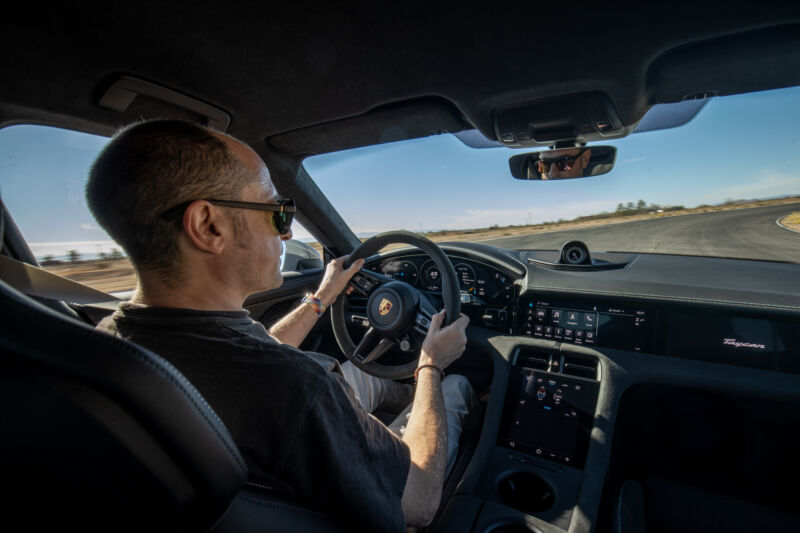 The Porsche Taycan is one of the few new cars to exhibit anything we might recognize as steering feel. That wasn’t always the case.
.
.
Click the link below for the article:
.
__________________________________________
February 2, 2022
Mohenjo
Business, Enthralling, Human Interest, Photographs
amazon, business, Business News, current-events, Future, Hotels, human-rights, medicine, mental-health, research, Science, Science News, technology, Technology News, travel, vacation

Click the link below the picture
.
Romania is a country at the crossroads of Central, Eastern, and Southeastern Europe. It borders Bulgaria to the south, Ukraine to the north, Hungary to the west, Serbia to the southwest, Moldova to the east, and the Black Sea to the southeast. It has a predominantly temperate-continental climate, and an area of 238,397 km2 (92,046 sq mi), with a population of around 19 million. Romania is the twelfth-largest country in Europe and the sixth-most populous member state of the European Union. Its capital and largest city is Bucharest, and other major urban areas include Iași, Cluj-Napoca, Timișoara, Constanța, Craiova, Brașov, and Galați.
The Danube, Europe’s second-longest river, rises in Germany’s Black Forest and flows in a southeasterly direction for 2,857 km (1,775 mi), before emptying into Romania’s Danube Delta. The Carpathian Mountains, which cross Romania from the north to the southwest, include Moldoveanu Peak, at an altitude of 2,544 m (8,346 ft).
Romania was formed in 1859 through a personal union of the Danubian Principalities of Moldavia and Wallachia. The new state, officially named Romania since 1866, gained independence from the Ottoman Empire in 1877. During World War I, after declaring its neutrality in 1914, Romania fought together with the Allied Powers from 1916. In the aftermath of the war, Bukovina, Bessarabia, Transylvania, and parts of Banat, Crișana, and Maramureș became part of the Kingdom of Romania. In June–August 1940, as a consequence of the Molotov–Ribbentrop Pact and Second Vienna Award, Romania was compelled to cede Bessarabia and Northern Bukovina to the Soviet Union, and Northern Transylvania to Hungary. In November 1940, Romania signed the Tripartite Pact and, consequently, in June 1941 entered World War II on the Axis side, fighting against the Soviet Union until August 1944, when it joined the Allies and recovered Northern Transylvania. Following the war and occupation by the Red Army, Romania became a socialist republic and a member of the Warsaw Pact. After the 1989 Revolution, Romania began a transition towards democracy and a market economy.
Romania is a developing country, with a high-income economy, ranking 49th in the Human Development Index. It has the world’s 47th largest economy by nominal GDP. Romania experienced rapid economic growth in the early 2000s; its economy is now based predominantly on services. It is a producer and net exporter of machines and electric energy through companies such as Automobile Dacia and OMV Petrom. Romania has been a member of the United Nations since 1955, NATO since 2004, and the European Union since 2007. The majority of Romania’s population are ethnic Romanian and religiously identify themselves as Eastern Orthodox Christians, speaking Romanian, a Romance language.
“Romania” derives from the local name for Romanian (Romanian: român), which in turn derives from Latin romanus, meaning “Roman” or “of Rome”. This ethnonym for Romanians is first attested in the 16th century by Italian humanists traveling in Transylvania, Moldavia, and Wallachia. The oldest known surviving document written in Romanian, a 1521 letter known as the “Letter of Neacșu from Câmpulung”, is notable for including the first documented occurrence of Romanian in a country name: Wallachia is mentioned as Țeara Rumânească. Wikipedia
.
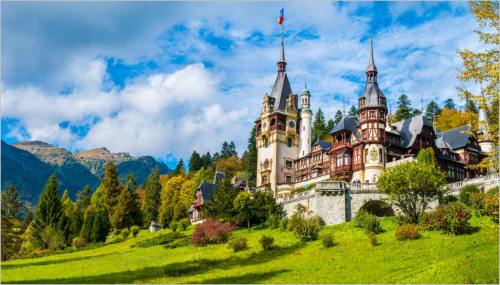 An image from Romania
.
.
Click the link below for images:
.
__________________________________________
February 2, 2022
Mohenjo
Business, Food For Thought, Human Interest, Science, Technical
amazon, business, Business News, current-events, Future, Hotels, human-rights, medicine, mental-health, research, Science, Science News, technology, Technology News, travel, vacation

Click the link below the picture
.
If you’ve ever been tempted by a flutter, you’ll know how bookmakers and casinos stack the odds against you. The clearest example is roulette, where there are 36 red and black numbers plus the green numbers 0 and (in the U.S.) 00. So that’s 38 possibilities in total. When betting on red or black, the odds of choosing correctly are 18/38, and a fair payout for a $1 stake is $2.111. However, the house pays only $2 and keeps the difference. In that way, it guarantees itself a profit.
A similar bias occurs in bookmakers’ odds on horse races, soccer, and every other sporting event. The bookies always ensure that the odds are in their favor. But setting these odds is harder than those for roulette because the calculations are trickier.
And that raises a tantalizing possibility. Is it possible to come up with a better way to calculate the odds, and thus beat the bookies?
.
 Photo by humonia / Getty Images.
.
.
Click the link below for the article:
.
__________________________________________
February 2, 2022
Mohenjo
Business, Food For Thought, Human Interest, Overlooked Past Article, Science, Technical
amazon, business, Business News, current-events, Future, Hotels, human-rights, medicine, mental-health, research, Science, Science News, technology, Technology News, travel, vacation

Click the link below the picture
.
Updated December 6, 2017
Without Spock, there would be no “Star Trek.” The Starship Enterprise’s part-Vulcan officer always captivated audiences with his wit and logic while knowing exactly how to keep Captain Kirk in check.
On Friday, Leonard Nimoy, the actor who made Spock famous, died at the age of 83. Now, looking back on his career, we fondly remember the times no one could have said it better than Spock.
.
 LOS ANGELES – SEPTEMBER 15: Leonard Nimoy as Mr. Spock in the STAR TREK episode, ‘Charlie X.’ Season 1, episode, 2. Original air date September 15, 1966. Image is a screen grab. (Photo by CBS via Getty Images)
.
.
Click the link below for the article:
.
__________________________________________
February 1, 2022
Mohenjo
Business, Enthralling, Human Interest, Photographs
amazon, business, Business News, current-events, Future, Hotels, human-rights, medicine, mental-health, research, Science, Science News, technology, Technology News, travel, vacation
Click the link below the picture
.
Aulanko Nature Reserve is a nature reserve in Finland near the municipality of Hämeenlinna. It is a part of Finland’s National Urban Park policy introduced in the Land Use and Building Act in 1991. Wikipedia
Aulanko has been a popular destination with visitors for more than a hundred years. Nowadays, there is a lot to see in Aulanko Nature Reserve, in addition to the beautiful scenery. The forest park of Aulanko, its sights, and the view from the scenic lookout tower of Aulangonvuori Hill over the national landscape attract more than 400 000 visitors every year. The area is best suitable for day trips.
The English-style park, which forms a part of the nature reserve, was constructed in 1883 – 1938, and, with its buildings and cultural history, it is a nationally valuable site. To maintain the spacious park landscape, the forest park is actively managed. The nature reserve also includes forest landscape in its natural state.
The forest park of Aulanko has had a significant impact on the Finnish park culture. Nationalparks.fi
.
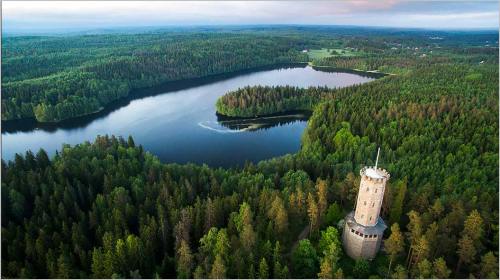 An image from the Aulanko Nature Reserve
.
.
Click the link below for images:
.
__________________________________________
February 1, 2022
Mohenjo
Business, Food For Thought, Human Interest, Science, Technical
amazon, business, Business News, current-events, Future, Hotels, human-rights, medicine, mental-health, research, Science, Science News, technology, Technology News, travel, vacation

Click the link below the picture
.
Forget doomsday asteroids, global plagues, and supervolcanoes. British theoretical physicist and cosmologist Stephen Hawking says we’re facing a much more immediate threat — and it’s our own behavior.
“The human failing I would most like to correct is aggression,” Hawking told contest winner Adaeze Uyanwah, according to the Independent. “It may have had survival advantage in caveman days, to get more food, territory or a partner with whom to reproduce, but now it threatens to destroy us all.”
Uyanwah, a 24-year-old from California, won the “Guest of Honor” contest from VisitLondon.com. The prize package included a tour of London’s Science Museum with Hawking.
While being shown around, Uyanwah asked Hawking which human shortcoming he would most like to change, and which trait he’d enhance.
Hawking chose aggression and warned that a nuclear war could end civilization and possibly the human race. We need to replace aggression with empathy, which “brings us together in a peaceful loving state,” he said.
The subject of “The Theory of Everything” also told her that the future of man lies beyond Earth.
.

Stephen Hawking arrives for the British Academy Film and Television Awards 2015, The BAFTAs, at the Royal Opera House, in London, Sunday, Feb. 8, 2015. (Photo by Jonathan Short/Invision/AP)
.
.
Click the link below for the article:
.
__________________________________________
February 1, 2022
Mohenjo
Business, Food For Thought, Human Interest, Science, Technical
amazon, business, Business News, current-events, Future, Hotels, human-rights, medicine, mental-health, research, Science, Science News, technology, Technology News, travel, vacation

Click the link below the picture
.
Take a tweet from the week after the Capitol riot in January 2021: “A Liberal insurrection would have looked very different. We would have escorted the original Broadway cast of Hamilton into the galleries. They would softly sing … as members of the GOP spewed their lies.” This was apparently intended as satire of a certain type of extremely online and cringe-inducing liberal smugness, but it came off as the thing itself and then produced more of the same. “I’ve literally been listening to the Hamilton soundtrack at work for days now,” wrote one woman. “This is EXACTLY what would’ve happened. ALL the theater kids everywhere” wrote another.
Then the joke became real. Last week, as part of a series of public events marking one year since the January 6 riot, Speaker of the House Nancy Pelosi introduced a prerecorded performance by the cast of Hamilton, singing “Dear Theodosia.” Pelosi read aloud from the song’s lyrics: “We’ll make it right for you. If we lay a strong enough foundation, we’ll pass it on to you; we’ll give the world to you.” There was no need to debate whether this was cringe (which is now an adjective, as well as a noun and verb), because cringe is a you-know-it-when-you-see-it type of thing. And these days, you can see it everywhere.
As a term, cringe took off in forums in the early aughts, when the practice of humiliating oneself online was still somewhat novel. If it’s now mainstream—as a meme and an entertainment genre and an incredibly cutting insult—that’s not because human beings have become more cringe as a group. It’s because we’ve been given more opportunities to display our cringeworthy characteristics, and also to point out the cringe-worthy behavior of others. Whereas people used to feel secondhand embarrassment on behalf of their friends and family, or wince at their own awkward behavior, they are now exposed to the potentially embarrassing behavior of entire social networks.
After spending years in that environment, our sense of cringe has been heightened to truffle-pig levels of sensitivity. We can sniff out the tiniest flaws in someone else’s public performance, dig them up, share them around. We’re connoisseurs of cringe. Maybe we’re even gluttons for it. Wikipedia
.
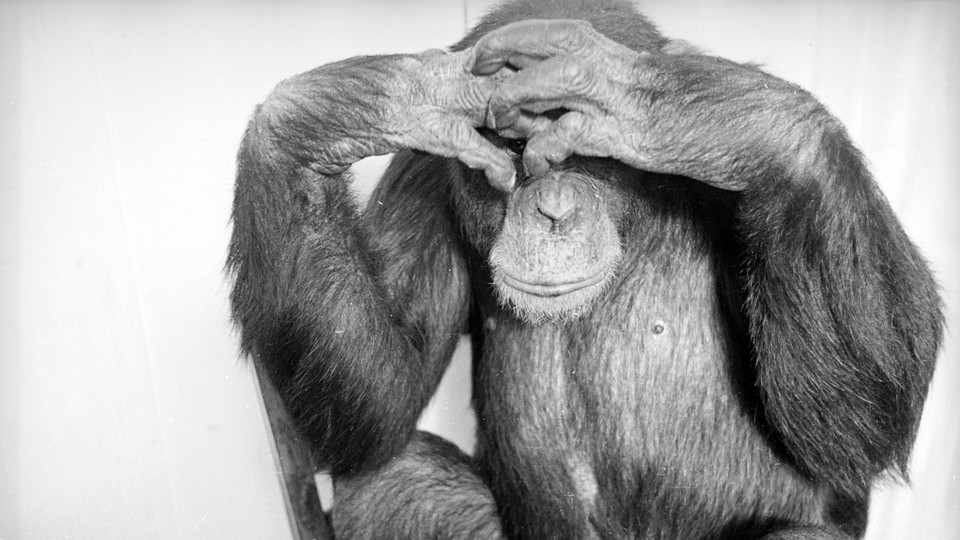 Fox Photos / Getty
.
.
Click the link below for the article:
.
__________________________________________
Older Entries
Newer Entries

