April 1, 2023
Mohenjo
Business, Food For Thought, Human Interest, Political, Science, Technical
amazon, business, Business News, current-events, Future, Hotels, human-rights, medicine, mental-health, research, Science, Science News, technology, Technology News, travel, vacation

Click the link below the picture
.
In my 20s, I had a friend who was brilliant, charming, Ivy-educated, and rich, heir to a family fortune. I’ll call him Gallagher. He could do anything he wanted. He experimented, dabbling in neuroscience, law, philosophy, and other fields. But he was so critical, so picky, that he never settled on a career. Nothing was good enough for him. He never found love for the same reason. He also disparaged his friends’ choices, so much so that he alienated us. He ended up bitter and alone. At least that’s my guess. I haven’t spoken to Gallagher in decades.
There is such a thing as being too picky, especially when it comes to things like work, love, and nourishment (even the pickiest eater has to eat something). That’s the lesson I gleaned from Gallagher. But when it comes to answers to big mysteries, most of us aren’t picky enough. We settle on answers for bad reasons, for example, because our parents, priests, or professors believe it. We think we need to believe something, but actually, we don’t. We can, and should, decide that no answers are good enough. We should be agnostics.
Some people confuse agnosticism (not knowing) with apathy (not caring). Take Francis Collins, a geneticist who directs the National Institutes of Health. He is a devout Christian, who believes that Jesus performed miracles, died for our sins, and rose from the dead. In his 2006 bestseller The Language of God, Collins calls agnosticism a “cop-out.” When I interviewed him, I told him I am an agnostic and objected to “cop-out.”
.
 Photo by gremlin/Getty Images
.
.
Click the link below for the article:
.
__________________________________________
March 31, 2023
Mohenjo
Business, Food For Thought, Human Interest, Political, Science, Technical
amazon, business, Business News, current-events, Future, Hotels, human-rights, medicine, mental-health, research, Science, Science News, technology, Technology News, travel, vacation

Click the link below the picture
.
Scientists have a firm grasp on the purpose of certain automatic physical functions, like blinking, breathing, or digestion. When it comes to sleep, however, researchers still aren’t clear on why exactly your body needs to shut off every night. Details aside, one thing’s for sure: When you don’t sleep, your body revolts.
The effects of acute sleep deprivation—which is more akin to pulling an all-nighter than to getting just a few hours of sleep every night for weeks at a time (that’s chronic sleep deprivation)—generally kick in after 16 to 18 hours of being awake and get progressively worse with each proceeding hour. Your mind, heart, endocrine system, and immune system are all affected, malfunctioning in ways both subtle and severe.
The consequences of chronic sleep deprivation are far worse than one sleepless night. But the decision to pull an all-nighter just once can leave some serious damage in its wake.
Mind
When it comes to the effects of acute sleep deprivation, “It’s really all about the brain,” says Steven Feinsilver, director of sleep medicine at Lenox Hill Hospital and a leading sleep researcher. The first signal that your body is overtired will be a sluggish mind. Your reaction time will begin lagging around hour 18; after a full night without sleep, it will nearly triple—which, for context, is about the same as being legally drunk. Your ability to form memories will start deteriorating, and after a while, your capacity to create any new memories at all will shut off entirely.
.
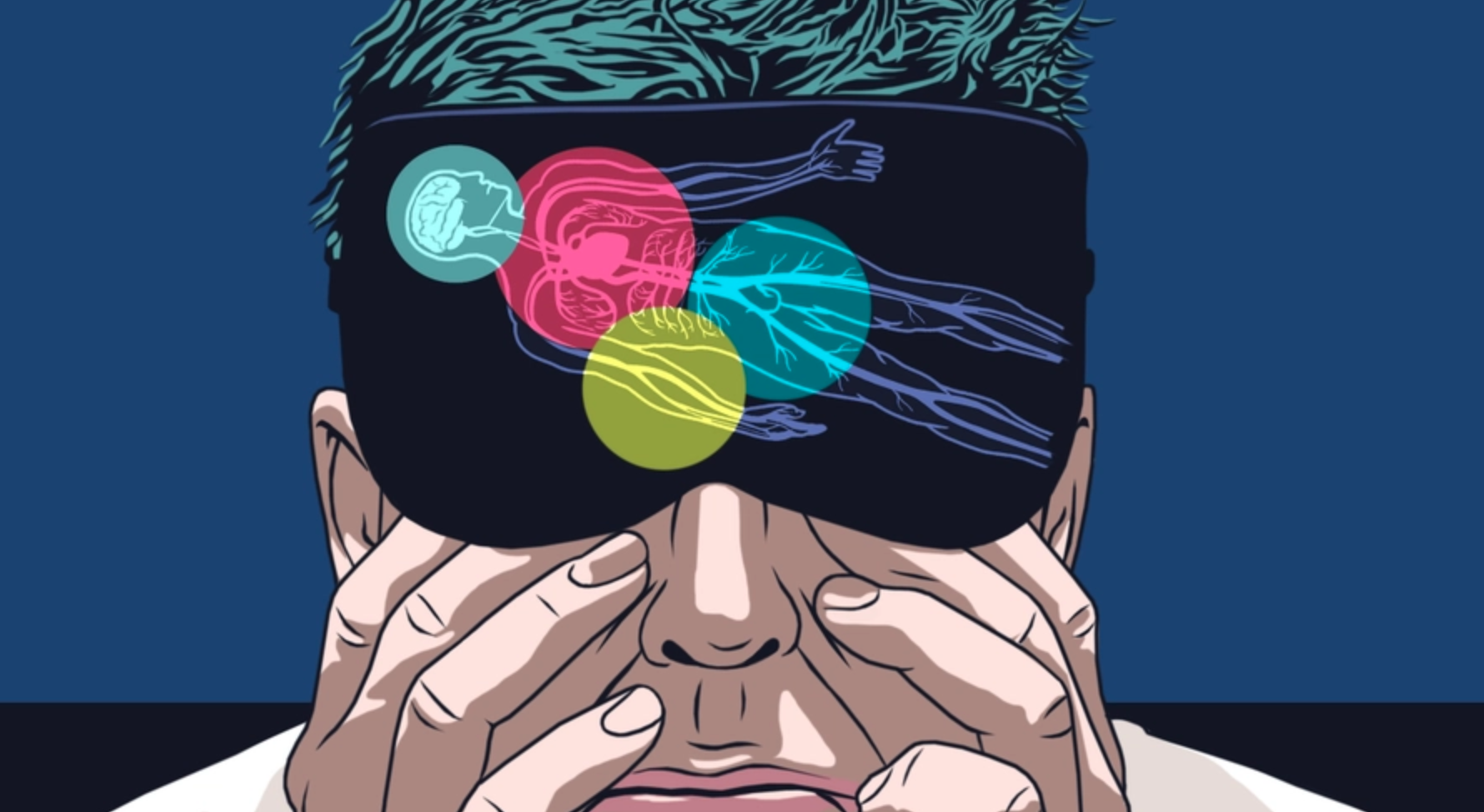 Photo: Bill Butcher
.
.
Click the link below for the article:
.
__________________________________________
March 31, 2023
Mohenjo
Business, Finance, Food For Thought, Human Interest, Political, Science, Technical
amazon, business, Business News, current-events, Future, Hotels, human-rights, medicine, mental-health, research, Science, Science News, technology, Technology News, travel, vacation

Click the link below the picture
.
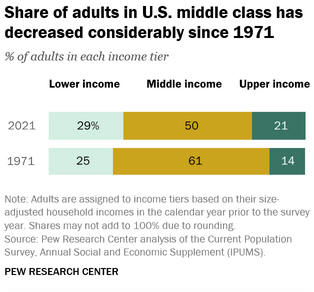
The middle class, once the economic stratum of a clear majority of American adults, has steadily contracted in the past five decades. The share of adults who live in middle-class households fell from 61% in 1971 to 50% in 2021, according to a new Pew Research Center analysis of government data.
The shrinking of the middle class has been accompanied by an increase in the share of adults in the upper-income tier – from 14% in 1971 to 21% in 2021 – as well as an increase in the share who are in the lower-income tier, from 25% to 29%. These changes have occurred gradually, as the share of adults in the middle class decreased in each decade from 1971 to 2011, but then held steady through 2021.
The analysis below presents seven facts about how the economic status of the U.S. middle class and that of America’s major demographic groups have changed since 1971. A related analysis examines the impact of the coronavirus pandemic on the financial well-being of households in the lower-, middle- and upper-income tiers, with comparisons to the Great Recession era. (In the source data for both analyses, demographic figures refer to the 1971-2021 period, while income figures refer to the 1970-2020 period. Thus, the shares of adults in an income tier are based on their household incomes in the previous year.)
.
 Interesting!
.
.
Click the link below for the article:
.
__________________________________________
March 30, 2023
Mohenjo
Business, Human Interest, Made Me Laugh, Political, Science, Technical
amazon, business, Business News, current-events, Future, Hotels, human-rights, medicine, mental-health, research, Science, Science News, technology, Technology News, travel, vacation

Click the link below the picture
.
Micah Bucey is surprised by how well-guided meditations work over Zoom. Bucey, an associate minister at New York’s Judson Memorial Church, usually leads in-person meditations once a week. But since the coronavirus outbreak, Bucey’s gone digital. “I actually am quite taken by how intimate Zoom feels,” says Bucey, who now leads about 30 participants through guided breathing and meditation every day. “I feel a little bit more vulnerable as a facilitator because people are actually sitting in front of a screen and my face is on that screen, not 20 feet away in a room.”Bucey’s is one of dozens of online offerings meant to help Americans handle the stress of Covid-19. Sure, we had worries and anxiety before. But the era of coronavirus has brought with it a whole new set of fears about running out of food, masks, and ventilators, plus escalating economic woes and concerns about the well-being of loved ones. To help people cope, the Monterey Bay Aquarium is offering an online Morning MeditOcean, during which jellyfish soothingly undulate across the screen. Chefs are creating quarantine cooking shows, and #quarantinebaking has become so popular that Amazon is sold out of popular brands of flour and chocolate chips.
But these are more than desperate attempts at self-soothing. It turns out that housekeeping and self-care activities like meditating, cooking, cleaning, and even just stocking the pantry can help stop cycles of anxiety and depression by changing how the human brain self-regulates. Here’s why stress-baking or cleaning feels so good, neurologically speaking.
When humans perceive a threat or stressor, our amygdala—a small region of the brain associated with facilitating fear, anxiety, and emotion—jumps into gear and becomes more active. This activation can have physical consequences, too. Sometimes people who are anxious report feeling short of breath or have an increased heart rate. That’s because the amygdala is also involved in regulating our blood pressure, breathing, and heart. So when the amygdala gets going, those systems do too.
.
 Photograph: Getty Images
.
.
Click the link below for the article:
.
__________________________________________
March 30, 2023
Mohenjo
Business, Food For Thought, Human Interest, Political, Science, Technical
amazon, business, Business News, current-events, Future, Hotels, human-rights, medicine, mental-health, research, Science, Science News, technology, Technology News, travel, vacation

Click the link below the picture
.
When U.S. Marine Corp Officer Jake D.’s vehicle drove over an explosive device in Afghanistan, he looked down to see his legs almost completely severed below the knee. At that moment, he remembered a breathing exercise he had learned in a book for young officers. Thanks to that exercise, he was able to stay calm enough to check on his men, give orders to call for help, tourniquet his own legs, and remember to prop them up before falling unconscious. Later, he was told that had he not done so, he would have bled to death.
If a simple breathing exercise could help Jake under such extreme duress, similar techniques can certainly help the rest of us with our more common workplace stresses. The combination of the Covid-19 pandemic and battles for social justice have only exacerbated the anxiety that many of us feel every day, and studies show that this stress is interfering with our ability to do our best work. But with the right breathing exercises, you can learn to handle your stress and manage negative emotions.
In two recently published studies, we explored several different techniques and found that a breathing exercise was most effective for both immediate and long-term stress reduction.
.
 Illustration by Giulia Neri
.
.
Click the link below for the article:
.
__________________________________________
March 29, 2023
Mohenjo
Business, Food For Thought, Human Interest, Political, Science, Technical
amazon, business, Business News, current-events, Future, Hotels, human-rights, medicine, mental-health, research, Science, Science News, technology, Technology News, travel, vacation

Click the link below the picture
.
Kimberly M. Wetherell loves watching television after a hard day at work. The 46-year-old audiobook narrator, who lives in Brooklyn, N.Y, likes to binge on shows like “Good Omens” and “Fleabag.”
But when it comes time to unwind, Wetherell, like many people, finds herself craving what she calls “comfort TV,” favorite old sitcoms like “The Golden Girls,” or “Seinfeld.”
“When I go to bed, my mind is still racing. My brain will be going over the anxiety of the day. I start overanalyzing things and my brain just won’t turn off,” she told TODAY. Watching ‘The Golden Girls,’ she explained, is “like hanging out with old friends.”
Not only does she have every one of Blanche, Rose, Dorothy, and Sophia’s wisecracks memorized, she has a special place in her heart for the show’s canned laughter.
“Something about a laugh track brings me back to when I was a kid and I watched TV in the ‘70s and the ‘80s. There’s something familiar and soothing about it. It allows me to turn my brain off and drift off to sleep,” she shared.
Reruns as a healthy ‘regression’
Will Meyerhofer, a New York-based psychotherapist, and author, says watching our favorite old shows can be a useful tool for dealing with anxiety and mild depression.
“For my clients, these old shows are like the food they grew up with. ‘The Brady Bunch’ or ‘The Facts of Life’ or ‘The Jeffersons’ is like that beloved baloney sandwich on Wonder Bread with just enough mayo the way mom used to make,” he told TODAY.
.
:extract_focal()/https%3A%2F%2Fs3.amazonaws.com%2Fpocket-collectionapi-prod-images%2F3f6ae79d-c7e8-4970-aebc-db5ae56aa971.jpeg) Image by Elena Medvedeva/Getty Images
Image by Elena Medvedeva/Getty Images
:extract_focal()/https%3A%2F%2Fs3.amazonaws.com%2Fpocket-collectionapi-prod-images%2Fa08d69ce-d024-438f-9e9b-d45c06b907a1.jpeg) Image by Malte Mueller/Getty Images
Image by Malte Mueller/Getty Images
 Watching “comfort TV” like “The Golden Girls” can help when we’re feeling anxious.NBC via Getty Images
.
.
Click the link below for the article:
.
__________________________________________
March 29, 2023
Mohenjo
Business, Food For Thought, Human Interest, Political, Science, Technical
amazon, business, Business News, current-events, Future, Hotels, human-rights, medicine, mental-health, research, Science, Science News, technology, Technology News, travel, vacation

Click the link below the picture
.
One unlikely day during the empty-belly years of the Great Depression, an advertisement appeared in the smeared, smashed-ant font of the New York Times’ classifieds:
WANTED. Five hundred college graduates, male, to perform secretarial work of a pleasing nature. Salary adequate to their position. Five-year contract.
Thousands of desperate, out-of-work bachelors of arts applied; five hundred were hired (“they were mainly plodders, good men, but not brilliant”). They went to work for a mysterious Elon Musk-like millionaire who was devising “a new plan of universal knowledge.” In a remote manor in Pennsylvania, each man read three hundred books a year, after which the books were burned to heat the manor. At the end of five years, the men, having collectively read three-quarters of a million books, were each to receive fifty thousand dollars. But when, one by one, they went to an office in New York City to pick up their paychecks, they would encounter a surgeon ready to remove their brains, stick them in glass jars, and ship them to that spooky manor in Pennsylvania. There, in what had once been the library, the millionaire mad scientist had worked out a plan to wire the jars together and connect the jumble of wires to an electrical apparatus, a radio, and a typewriter. This contraption was called the Cerebral Library.
“Now, suppose I want to know all there is to know about toadstools?” he said, demonstrating his invention. “I spell out the word on this little typewriter in the middle of the table,” and then, abracadabra, the radio croaks out “a thousand-word synopsis of the knowledge of the world on toadstools.”
.

.
.
Click the link below for the article:
.
__________________________________________
March 28, 2023
Mohenjo
Business, Food For Thought, Human Interest, Political, Science, Technical
amazon, business, Business News, current-events, Future, Hotels, human-rights, medicine, mental-health, research, Science, Science News, technology, Technology News, travel, vacation

Click the link below the picture
.
Vegetables are an essential part of eating healthy, but getting enough vegetables can be a challenge for those of us who, to be totally honest, never learned to like them. I was once a vegetable hater, so I totally get this. But you can learn to like veggies, even if you despised them as a kid.
If you’re envisioning a banquet full of the same horrible-tasting dishes you turned your nose up as a child, relax. There are two important things to remember. One is that there are far more vegetable dishes in the universe than the ones you’ve already tried, and certainly some of them will be to your tastes.
The other is that our tastes really do change over time. Most of us go through a picky stage as children, then expand our palates a bit as teenagers and young adults. We also tend to taste bitter flavors less strongly as we age. That’s good news if you always felt Brussels sprouts or broccoli tasted too bitter to you. I rediscovered a lot of vegetables in my twenties, and sometime in my thirties, I found myself on the opposite end of the pickiness spectrum, eating pretty much everything I formerly hated—even black licorice.
.

.
.
Click the link below for the article:
.
__________________________________________
March 28, 2023
Mohenjo
Business, Food For Thought, Human Interest, Political, Science
amazon, business, Business News, current-events, Future, Hotels, human-rights, medicine, mental-health, research, Science, Science News, technology, Technology News, travel, vacation

Click the link below the picture
.
In the summer of 2021, I experienced a cluster of coincidences, some of which had a distinctly supernatural feel. Here’s how it started. I keep a journal and record dreams if they are especially vivid or strange. It doesn’t happen often, but I logged one in which my mother’s oldest friend, a woman called Rose, made an appearance to tell me that she (Rose) had just died. She’d had another stroke, she said, and that was it. Come the morning, it occurred to me that I didn’t know whether Rose was still alive. I guessed not. She’d had a major stroke about 10 years ago and had gone on to suffer a series of minor strokes, descending into a sorry state of physical incapacity and dementia.
I mentioned the dream to my partner over breakfast, but she wasn’t much interested. We were staying in the Midlands at the time in the house where I’d spent my later childhood years. The place had been unoccupied for months. My father, Mal, was long gone, and my mother, Doreen, was in a care home drifting inexorably through the advanced stages of Alzheimer’s. We’d just sold the property we’d been living in, and there would be a few weeks’ delay in getting access to our future home, so the old house was a convenient place to stay in the meantime.
I gave no further thought to my strange dream until, a fortnight later, we returned from the supermarket to find that a note had been pushed through the letterbox. It was addressed to my mother and was from Rose’s daughter, Maggie. Her mother, she wrote, had died ‘two weeks ago’. The funeral would be the following week. I handed the note to my partner and reminded her of my dream. ‘Weird,’ she said and carried on unloading the groceries. Yes, weird. I can’t recall the last time Rose had entered my thoughts, and there she was, turning up in a dream with news of her own death.
.
 Photo by Ernst Haas/Getty
.
.
Click the link below for the article:
.
__________________________________________
March 28, 2023
Mohenjo
Business, Food For Thought, Human Interest, Political, Science, Technical
amazon, business, Business News, current-events, Future, Hotels, human-rights, medicine, mental-health, research, Science, Science News, technology, Technology News, travel, vacation

Click the link below the picture
.
Smells hover just below our conscious awareness, conjuring up emotions and memories that shape how we perceive and navigate the world.
An unexpected whiff of a long-forgotten snack or a dusty book can transport a person to years past — enabling a kind of time travel that makes hazy memories more vivid.
It’s puzzling then that smell is a sense that, according to scientists, has been largely — and unfairly — ignored in most attempts to understand the past. A growing number of researchers now want to reconstruct ancient aromas and use them to learn more about how we used to live.
During the Covid-19 pandemic, many people who caught the disease temporarily lost their sense of smell, prompting a newfound appreciation of the importance of odor in their lives. New research projects are underway to understand what the past smelled like and identify what contemporary scents should be preserved for posterity.
“It’s a very vital sense. Smell was also very important in the past and it was probably even more important because in the past not everything was so sanitized,” said Barbara Huber, a doctoral researcher of archaeology at the Max Planck Institute of Geoanthropology in Jena, Germany.
The challenge of finding past smells is how to capture an ephemeral phenomenon: Archaeologists typically find and study things we can touch, and these are the artifacts we encounter in museums.
.
Smell
.
.
Click the link below for the article:
.
__________________________________________
Older Entries
Newer Entries
 James' World 2