In July of 1852, a 32-year-old novelist named Herman Melville had high hopes for his new novel, Moby-Dick; or, The Whale, despite the book’s mixed reviews and tepid sales. That month he took a steamer to Nantucket for his first visit to the Massachusetts island, homeport of his novel’s mythic protagonist, Captain Ahab, and his ship, the Pequod. Like a tourist, Melville met local dignitaries, dined out, and took in the sights of the village he had previously only imagined.
And on his last day on Nantucket, he met the broken-down 60-year-old man who had captained the Essex, the ship that had been attacked and sunk by a sperm whale in an 1820 incident that had inspired Melville’s novel. Captain George Pollard Jr. was just 29 years old when the Essex went down, and he survived and returned to Nantucket to captain a second whaling ship, Two Brothers. But when that shipwrecked on a coral reef two years later, the captain was marked as unlucky at sea—a “Jonah”—and no owner would trust a ship to him again. Pollard lived out his remaining years on land, as the village night watchman.
Melville had written about Pollard briefly in Moby-Dick, and only with regard to the whale sinking his ship. During his visit, Melville later wrote, the two merely “exchanged some words.” But Melville knew Pollard’s ordeal at sea did not end with the sinking of the Essex, and he was not about to evoke the horrific memories that the captain surely carried with him. “To the islanders, he was a nobody,” Melville wrote, “to me, the most impressive man, tho’ wholly unassuming, even humble—that I ever encountered.”
.
Herman Melville drew inspiration for Moby-Dick from the 1820 whale attack on the Essex. Credit: Wikimedia Commons / Public Domain.
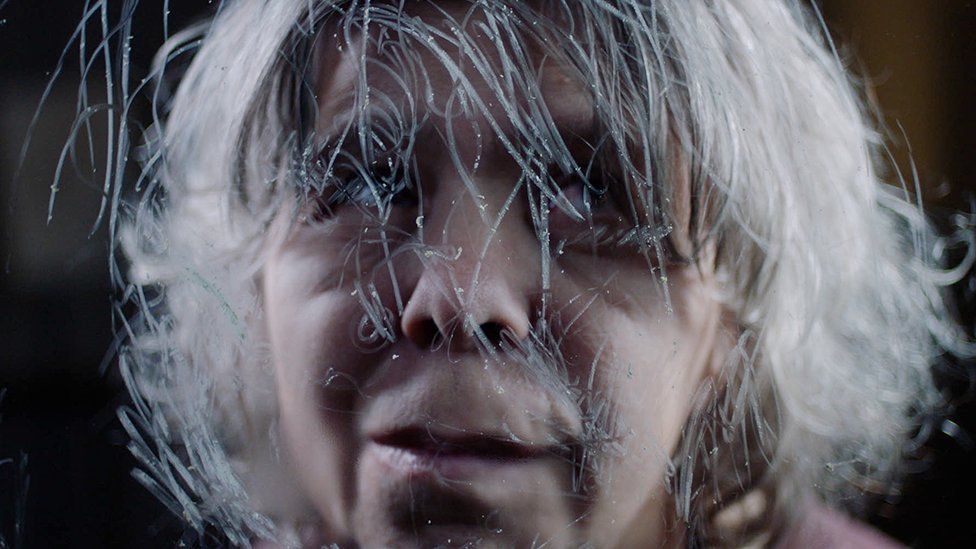
Carlotta has never been able to recognize faces, neither the faces of other people nor her own. Her condition, face blindness, has had a major effect on her life but has also given her a sense of purpose as an artist – to make self-portraits of the face she cannot picture in her mind.
Carlotta sits down to draw a self-portrait. The room is very dark, lit just by a few candles. She doesn’t need light, because she’s not using a mirror or a photograph – instead, with one hand she traces the contours of her face, while her other hand sketches the shapes on paper.
“It’s always a surprise when I see my drawings in daylight,” she says.
Her apartment is filled with self-portraits – about 1,000 of them, she thinks. Each one is completely different, and they have an otherworldly quality. Shapes overlap. Several heads may be projected on top of each other, sometimes upside down. In one, she has three eyes, in another six.
If she catches sight of herself in a mirror, Carlotta will think, “the woman looking at me is in my nightie and in my flat, so it must be me”. She will also recognise her hair – it’s what happens underneath those grey curls that’s a mystery.
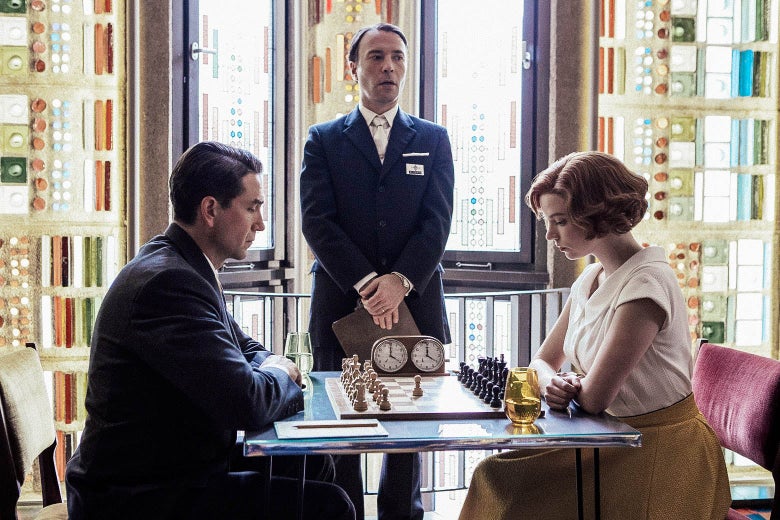
Netflix’s popular miniseries The Queen’s Gambit, which follows a young chess prodigy as she ascends the ranks of U.S. and world championship tournaments, has earned widespread praise from chess enthusiasts, historians, and even professionals for its startlingly accurate portrayal of chess gameplay and the world of high-stakes competition.Much of the reason The Queen’s Gambit has avoided the mockery that so many other depictions of the game have received is that the show’s creators consulted with chess heavyweights, including instructor Bruce Pandolfini (who advised the novel The Queen’s Gambit is adapted from) and grandmaster Garry Kasparov, a former world chess champion considered by some to be the greatest player ever. I spoke with Kasparov to learn more about his work on The Queen’s Gambit, what the show gets right about chess in the ’60s, and how it compares with other on-screen depictions of the game. Our conversation has been edited and condensed for clarity.
.
The Queen’s Gambit.Photo illustration by Slate. Photo by Netflix.
During the first wave of the pandemic in the winter, Mo Willems’s ‘‘Lunch Doodles’’ series, in which the beloved children’s-book author and illustrator led viewers in endearingly no-frills online drawing sessions, was a lifeline to families desperate to exercise their imaginations during the lockdown. (He pitched in again by hosting another doodle session on election night.) That Willems, who is 52, was ready to help during a hard, confusing time was no surprise. His two best-selling series of books — one about the odd couple Elephant and Piggie, the other about the mercurial Pigeon — resonate with the hard, confusing time of early childhood. In their whimsy, slapstick, and emotional matter-of-factness, these books have established their creator as sort of a cross between Dr. Seuss and Charles Schulz, with all the responsibility that implies. ‘‘The idea that one of my books would be one of the first that a child reads on their own — that’s incredibly powerful,’’ says Willems, who just published the latest in his Unlimited Squirrels series, ‘‘I Want to Sleep Under the Stars!’’ ‘‘Reading by yourself is the first time you don’t need your parents to do something vital. It’s a liberation.’’
When I was first putting together my questions for you, I realized that a lot of them had to do with things like how we can help kids with the ambient stress of parents’ worrying about the pandemic or politics. But maybe it’s wrong for me to assume that a has unique ideas about kids’ emotions. So let me ask you: Do you think you have special insights about kids? Probably the most fundamental insight is that even a good childhood is difficult: You’re powerless; the furniture is not made to your size. But when parents come up to me and ask, ‘‘How do you talk to the kid about the pandemic?’’ they’re asking me to be disloyal. They’re actually asking about a form of control. ‘‘Hey, you have this relationship with kids. Help me control them.’’ [Expletive] you! I’m not on your side. I wish there was a better way to say it. The real answer is: Show that you don’t know. Show them that you’re fumbling. Why wouldn’t you? How do you expect your child to fall and then stand up and say ‘‘That’s OK’’ when you won’t even say, ‘‘I don’t know how to discuss the pandemic with you’’? Are children not allowed to be upset? Does that inconvenience you? You want to protect and prepare them. But I’m not saying it’s easy.
Film and Writing Festival for Comedy. Showcasing best of comedy short films at the FEEDBACK Film Festival. Plus, showcasing best of comedy novels, short stories, poems, screenplays (TV, short, feature) at the festival performed by professional actors.






 James' World 2