
Click the link below the picture
.
Here’s the latest.
Thousands of displaced families flooded the main highway to southern Lebanon on Friday, hours after a 10-day cease-fire pausing Israel’s military campaign against Hezbollah went into effect.
The fighting between Israeli forces and Hezbollah, an Iran-backed militant group, has threatened the fragile halt in fighting between Iran and the United States until next week. The Lebanon cease-fire removes a major hurdle to ending the U.S.-Iran war because the Iranian government has insisted that the truce extend to Lebanon.
When the war began, Abdullah Raouf Hamzieh, 54, had to leave his home near Bint Jbiel, a town in southern Lebanon where Hezbollah and Israeli forces have clashed in recent days. He recalled feeling ecstatic when the 2024 cease-fire was announced, and said it felt like it was a win for Hezbollah. But as Israeli forces continued to strike Lebanon in the year since, his enthusiasm faded.
“It actually wasn’t a victory; it was a disaster what happened,” Hamzieh said. Now, he hopes that the temporary truce will finally lead to a more lasting peace.
Many Lebanese, especially those displaced by the war, still feel uneasy and uncertain about the days to come. Unlike the cease-fire in 2024, which was indefinite, this one is for only 10 days.
“If we have to leave again, I can’t describe how disappointing it would be; it would be devastating,” said Israa Jaber, 54, as she sat in her car waiting in traffic heading south to her home in the town of Srifa. Jaber’s 9-year-old daughter Lamis, said she missed her teddy bears and her makeup, which she left at home in their rush to flee last month.
In Qasmiyeh, a town on the highway that runs along Lebanon’s coast, Lebanese army soldiers are using excavators to repair a bridge that links the road from the north to the south. The crossing has become the main bottleneck as thousands of people try to return to their homes in southern Lebanon.
Over the past month and a half, Israeli forces bombarded all of the main bridges on the Litani River, which divides northern and southern Lebanon. They hit the bridge in Qasmiyeh again yesterday, hours before the ceasefire was announced.
There have been heavy Israeli airstrikes in Dahiya, the dense area on the southern edge of Beirut. Ahmad Lahham, a Dahiya resident, expressed defiance on Friday and criticized the Lebanese government for trying to end to the fighting.
“I am standing in front of my destroyed house, you think I care? I don’t,” said Lahham, 48. He added: “They want peace with the enemy, and we still have blood on our ground.”
Some in northern Israel criticized the truce after it was announced on Thursday, arguing that it would do little to remove the threat posed by Hezbollah. “This is what it is like to have a government that cares about America’s interest, and not that of its citizens,” David Azoulay, the head of the Israeli border village of Metula, wrote on social media.
The cease-fire has brought relief to many in northern Israel, which faced intense Hezbollah rocket fire in the current round of fighting. These rocket launches continued into the last hour before the cease-fire went into effect at midnight. At least eight people were injured in the city of Nahariya on Thursday, according to the national emergency service.
After the cease-fire went into effect at midnight, thousands of displaced families hoping to return to their homes flooded onto the main highway to southern Lebanon. But since Israeli forces destroyed the two bridges connecting the highway to the south over the Litani River, vehicles have to snake one by one along an ad-hoc dirt crossing. That bottleneck has created four lanes of stand-still traffic that stretches for more than two miles. “We will make it home. Even if we have to walk, we will go home today,” said Ali Roumieh, 41, as he sat in his car.
.
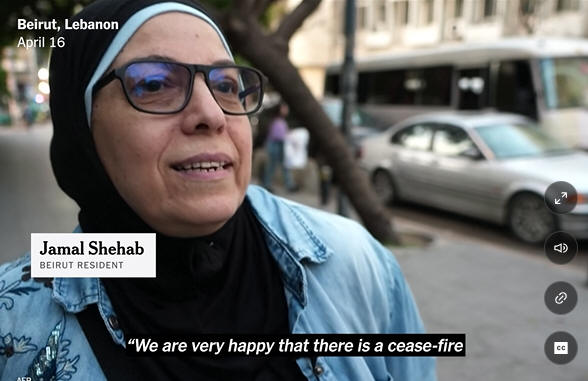 Celebrations broke out in Lebanon after its government agreed to a 10-day cease-fire with Israel. In both Israel and Lebanon, some people remained wary that the truce would hold. Credit Credit…David Guttenfelder/The New York Times
.
.
Click the link below for the complete article:
https://www.nytimes.com
.
__________________________________________


Leave a comment