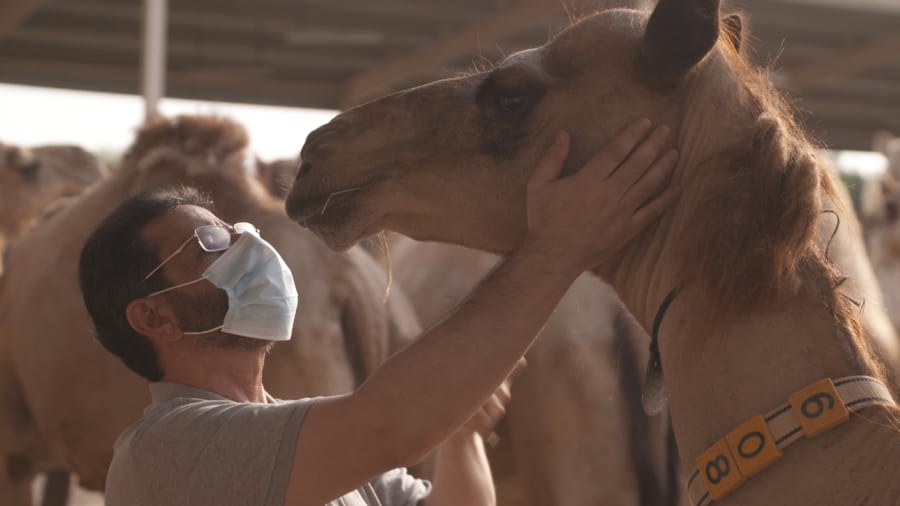
When Nisar Ahmad Wani succeeded in carrying out the world’s first camel cloning in 2009, it was hailed as a great achievement. Today, Wani is scientific director at the Reproductive Biotechnology Centre, in Dubai, and the practice is so popular that cloning has become his nine-to-five job.
Wani and his team research and develop new cloning techniques and maintain cell banks, allowing them to make copies of animals including buffalo and sheep. But the center’s focus is on cloning camels.
Each year, it produces dozens of cloned dromedary camel calves. Among the most popular are copies of camel “beauty queens,” with the right combination of drooping lips and long necks.
Replicating beauties
Camel beauty pageants are popular in the Gulf states and prize money runs into the tens of millions of dollars at some events. Owners have been disqualified in the past for using banned techniques such as injecting camels with silicone and fillers and inflating body parts using rubber bands to enhance their appearance. But as far as these competitions are concerned, cloned camels are perfectly legitimate.
Audrey Patterson (September 27, 1926 — August 23, 1996) was the first African American woman to win an Olympic medal; she won a bronze medal in the 200-meter dash at the 1948 Olympic Games in London. Patterson was born in New Orleans to Lionel Patterson and Josephine Nero Patterson.[1] She attended Danneel Elementary School and Gilbert Academy,[citation needed] where she developed […]
It was March 1827 and Ludwig van Beethoven was dying. As he lay in bed, wracked with abdominal pain and jaundiced, grieving friends and acquaintances came to visit. And some asked a favor: Could they clip a lock of his hair for remembrance?
The parade of mourners continued after Beethoven’s death at age 56, even after doctors performed a gruesome craniotomy, looking at the folds in Beethoven’s brain and removing his ear bones in a vain attempt to understand why the revered composer lost his hearing.
Within three days of Beethoven’s death, not a single strand of hair was left on his head.
Ever since a cottage industry has aimed to understand Beethoven’s illnesses and the cause of his death.
Now, an analysis of strands of his hair has upended long-held beliefs about his health. The report provides an explanation for his debilitating ailments and even his death, while also raising new questions about his genealogical origins and hinting at a dark family secret.
.
A contemporary portrait of Ludwig van Beethoven, who died in 1827 at age 56, by Joseph Karl Stieler.Credit…Joseph Karl Stieler, via Beethoven-Haus Bonn
In my 20s, I had a friend who was brilliant, charming, Ivy-educated, and rich, heir to a family fortune. I’ll call him Gallagher. He could do anything he wanted. He experimented, dabbling in neuroscience, law, philosophy, and other fields. But he was so critical, so picky, that he never settled on a career. Nothing was good enough for him. He never found love for the same reason. He also disparaged his friends’ choices, so much so that he alienated us. He ended up bitter and alone. At least that’s my guess. I haven’t spoken to Gallagher in decades.
There is such a thing as being too picky, especially when it comes to things like work, love, and nourishment (even the pickiest eater has to eat something). That’s the lesson I gleaned from Gallagher. But when it comes to answers to big mysteries, most of us aren’t picky enough. We settle on answers for bad reasons, for example, because our parents, priests, or professors believe it. We think we need to believe something, but actually, we don’t. We can, and should, decide that no answers are good enough. We should be agnostics.
Some people confuse agnosticism (not knowing) with apathy (not caring). Take Francis Collins, a geneticist who directs the National Institutes of Health. He is a devout Christian, who believes that Jesus performed miracles, died for our sins, and rose from the dead. In his 2006 bestseller The Language of God, Collins calls agnosticism a “cop-out.” When I interviewed him, I told him I am an agnostic and objected to “cop-out.”
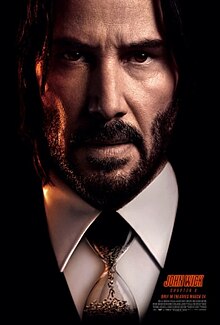
John Wick: Chapter 4 (stylized as JW4) is a neo-noir action thriller directed by Chad Stahelski and written by Shay Hatten and Michael Finch. The sequel to John Wick: Chapter 3 – Parabellum (2019) and the fourth installment in the John Wick franchise. In Chapter 4, John Wick sets out to get revenge on those who left him for dead to find a way out of the High Table with their blessing. In a word, John Wick: Chapter 4 is “VIOLENT” with lots of thrill and action but…
In New York City, John Wick (Keanu Reeves) prepares to exact revenge against the High Table while hiding underground with the Bowery King (Laurence Fishburne). He travels to Morocco and kills the Elder (George Georgiou), the “one who sits above the Table”. In response, the Marquis Vincent de Gramont (Bill Skarsgård), a senior member of the High Table, summons NY…
Scientists have a firm grasp on the purpose of certain automatic physical functions, like blinking, breathing, or digestion. When it comes to sleep, however, researchers still aren’t clear on why exactly your body needs to shut off every night. Details aside, one thing’s for sure: When you don’t sleep, your body revolts.
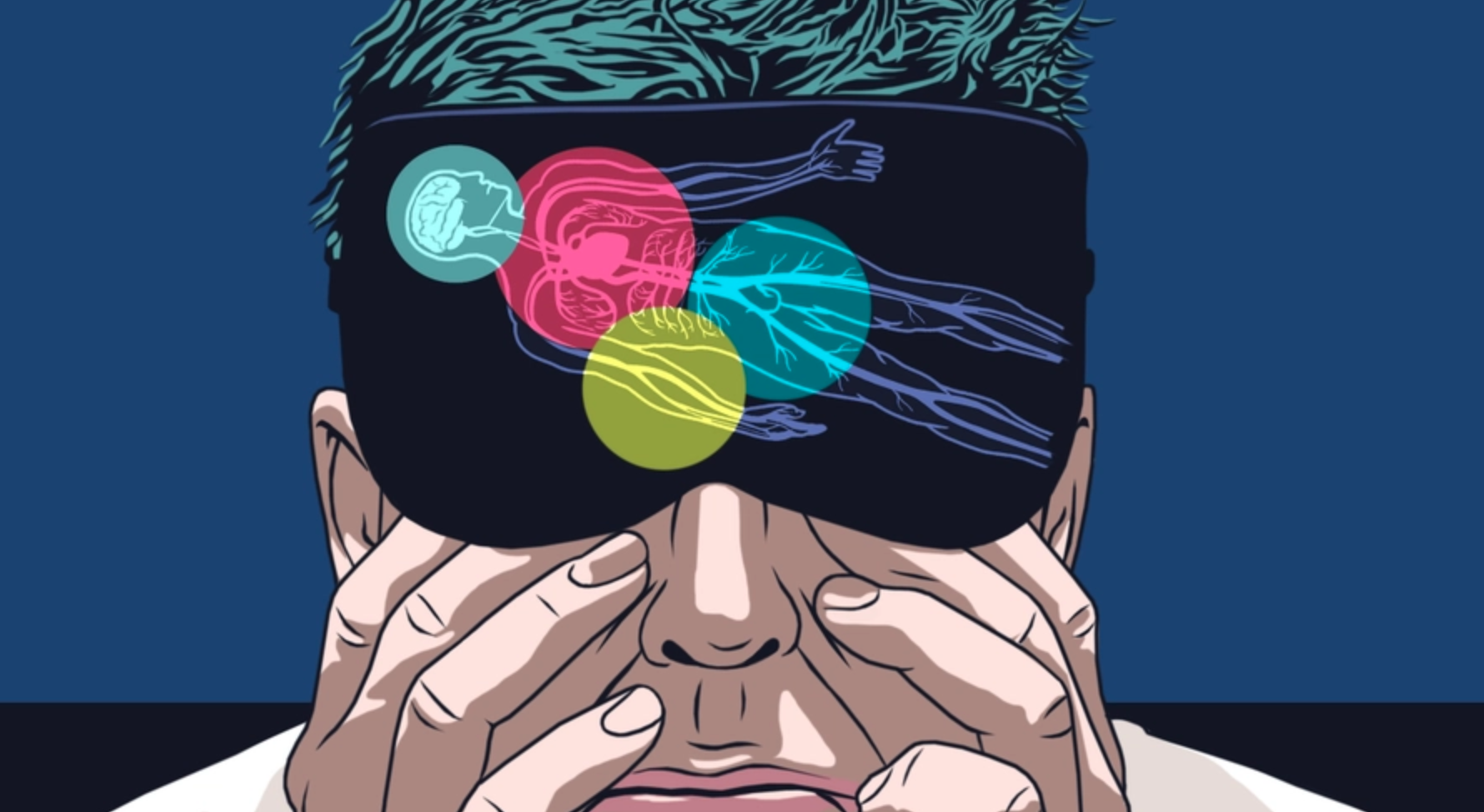
The effects of acute sleep deprivation—which is more akin to pulling an all-nighter than to getting just a few hours of sleep every night for weeks at a time (that’s chronic sleep deprivation)—generally kick in after 16 to 18 hours of being awake and get progressively worse with each proceeding hour. Your mind, heart, endocrine system, and immune system are all affected, malfunctioning in ways both subtle and severe.
The consequences of chronic sleep deprivation are far worse than one sleepless night. But the decision to pull an all-nighter just once can leave some serious damage in its wake.
Mind
When it comes to the effects of acute sleep deprivation, “It’s really all about the brain,” says Steven Feinsilver, director of sleep medicine at Lenox Hill Hospital and a leading sleep researcher. The first signal that your body is overtired will be a sluggish mind. Your reaction time will begin lagging around hour 18; after a full night without sleep, it will nearly triple—which, for context, is about the same as being legally drunk. Your ability to form memories will start deteriorating, and after a while, your capacity to create any new memories at all will shut off entirely.
The middle class, once the economic stratum of a clear majority of American adults, has steadily contracted in the past five decades. The share of adults who live in middle-class households fell from 61% in 1971 to 50% in 2021, according to a new Pew Research Center analysis of government data.
The shrinking of the middle class has been accompanied by an increase in the share of adults in the upper-income tier – from 14% in 1971 to 21% in 2021 – as well as an increase in the share who are in the lower-income tier, from 25% to 29%. These changes have occurred gradually, as the share of adults in the middle class decreased in each decade from 1971 to 2011, but then held steady through 2021.
The analysis below presents seven facts about how the economic status of the U.S. middle class and that of America’s major demographic groups have changed since 1971. A related analysis examines the impact of the coronavirus pandemic on the financial well-being of households in the lower-, middle- and upper-income tiers, with comparisons to the Great Recession era. (In the source data for both analyses, demographic figures refer to the 1971-2021 period, while income figures refer to the 1970-2020 period. Thus, the shares of adults in an income tier are based on their household incomes in the previous year.)
In the world, human beings are facing various problems. People who are full of greed, anger, and ignorance are seen to be fighting with each other in words and deeds. As the fighting continues, various problems such as civil wars, wars of aggression, and wars of aggression are occurring. As world peace is being destroyed, humans are facing unbearable problems. Innocent children and women are not getting the rights they deserve and deserve. I can't think of one thing every time. What is it? The United Nations. If we look at the responsibilities and duties of the United Nations, I think it is not suitable for solving the problems that are happening in the world today. In fact, the United Nations and the World Security Council, such an organization must rule the world, must be able to give orders, and must have various ways to obey orders. There must be no organization that can influence more than that organization. There should be experts from each country. They can even dominate the superpowers like the US, China, and Britain. Only then will global peace be achieved quickly. Now, if a country with power develops more militarily, economically, or socially than its own country, then powerful countries will jealously seek out enemies and wage war. Or they will attack with fighter jets. In this, innocent people are losing their lives. No one understands the value of a life. You should think about how to achieve global peace by controlling these. If the US continues to be the permanent president of the UN, world peace will never be achieved. If you think carefully, no one sees that they are working for the common good, but for their own benefit, for the benefit of their own country. The permanent president of the UN and the Security Council has rejected this, As a young Rohingya, I have come to realize that only by electing the president and secretary from among the countries in the world through a secret ballot system and governing the world fairly can we achieve global peace. The United Nations and the Security Council are organizations in which any country must govern, give orders, and make them obey their orders. For example, only when a defendant is tried in court can we hold the leaders of the countries in check and control them, can we achieve global peace smoothly. Otherwise, it will not be easy for powerful countries to use various excuses to end this war every year, every year, for the benefit of themselves and their countries. No country's leaders pay any attention to the words of the United Nations and the Security Council. If we look at it in practice, look at the Rohingya issue. Myanmar is a small country. Even that country has been under siege for 8 years. What action can be taken? Why is the UN and the Security Council Powerless? Without such Power, how can the organization bring about global peace? Everyone should think about it. Whether there is a veto or a strong one, all countries in the world can only achieve global peace if they are subject to the UN and the Security Council. Seek peace in the quiet embrace of nature. Peace is an indispensable need of the human race. It is not as if one person can kill another person, and it is as if one country can attack another country, but instead of trying to build peace, we must try to destroy the peace now, and the world is getting hotter and is on the verge of collapse. I especially appeal to all the world experts to urgently try to bring about peace in all parts of the world. Mr, Noor Muhamed Arkhan Rohingya Youth Myanmar
Film and Writing Festival for Comedy. Showcasing best of comedy short films at the FEEDBACK Film Festival. Plus, showcasing best of comedy novels, short stories, poems, screenplays (TV, short, feature) at the festival performed by professional actors.










 Interesting!
