When I was young, I didn’t understand pain. Each morning, I hit the ground running, moving easily through life. But at age 25, I injured my spine while dancing. My perspective on my body and my relationship with it changed overnight.
I learned to adapt and apply my fitness knowledge to my daily life and, later, to the lives of my clients; as a Pilates instructor for decades, I understand when clients ask, “What can I do to lessen my pain? How can I feel better?”Pain robs us of the joy in life—but stretching gives us a return to life, freedom, and joyful experiences. It can help ease aches and prevent new pains. Daily stretching increases blood flow, which delivers more oxygen and nutrients to joints and muscles, and this helps improve flexibility, range of motion, and strength—all things that add up to less stiffness and pain. In short, stretching helps your body function at its best.
I don’t break down stretches into individual body parts, but rather into broader movements. The body is a network: Our muscles, bones, tendons, and fascia are all connected. Pain in one area can affect another body part, but this also means you get more bang for your buck when you stretch mindfully.
I also think it’s crucial to connect stretching with functional activities—how to properly reach for an item on a high shelf, for example. If a stretch doesn’t help you move with less pain in the real world, what good is it?
I don’t break down stretches into individual body parts, but rather into broader movements. The body is a network: Our muscles, bones, tendons, and fascia are all connected. Pain in one area can affect another body part, but this also means you get more bang for your buck when you stretch mindfully.
I also think it’s crucial to connect stretching with functional activities—how to properly reach for an item on a high shelf, for example. If a stretch doesn’t help you move with less pain in the real world, what good is it?
New research sheds light on a tricky idea of consciousness: There’s a difference between what the brain takes in and what we’re consciously aware of taking in.
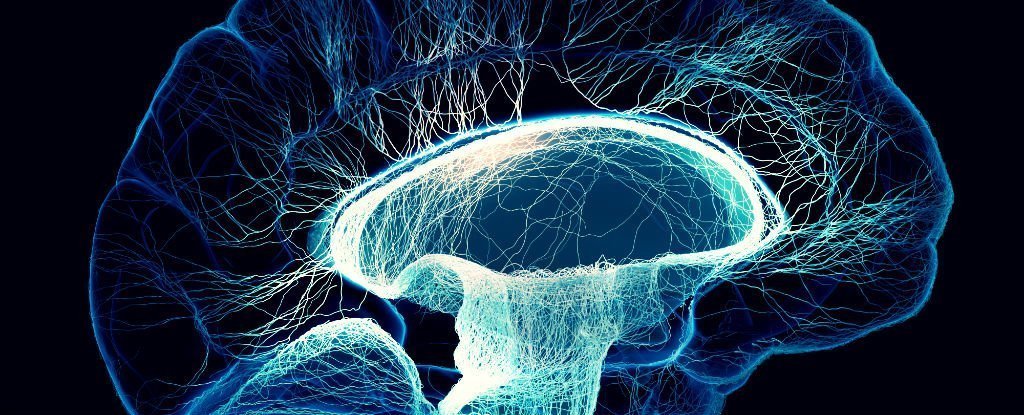
Scientists now think they’ve pinpointed the brain region where that conscious awareness is managed.
The team, from the Hebrew University of Jerusalem in Israel and the University of California, Berkeley (UC Berkeley), in the US, found sustained brain activity in the occipitotemporal area of the visual cortex in the back of the brain.
While this activity dropped to around 10–20 percent of its level about 300 milliseconds after an original visual stimulus, the pattern of activity remained while the stimulus was viewed.
That was in contrast to other brain areas, where information disappeared entirely within half a second (500 milliseconds).
“This stable representation suggests a neural basis for stable perception over time, despite the changing level of activity,” says psychologist Leon Deouell from the Hebrew University of Jerusalem.
In other words, this neural region is where we not just notice something but also notice that we’re noticing it. As the visual stimulus changed – a series of images – so did the brain activity recorded by the researchers. Machine learning algorithms then filtered out the noise and spot patterns.
Researchers enlisted 10 epilepsy patients for the study who were already scheduled to have electrodes fitted inside their skulls. These electrodes allow for a more complete measure of brain activity over time, with less guesswork, compared with other brain scanning methods that work externally.
FEBRUARY 19, 2015, BY CONTRIBUTED BY: JOYCEANN GRAY Hamilton Hatter, educator and inventor, was the first principal of Bluefield Colored Institute in Bluefield, West Virginia. Hatter was born enslaved on April 24, 1856, in Jefferson County, Virginia, which became part of West Virginia in 1863. His parents Frank and Rebecca Hatter, his maternal grandparents, William and Lettie McCord, and his paternal grandparents, James Hatter and […]
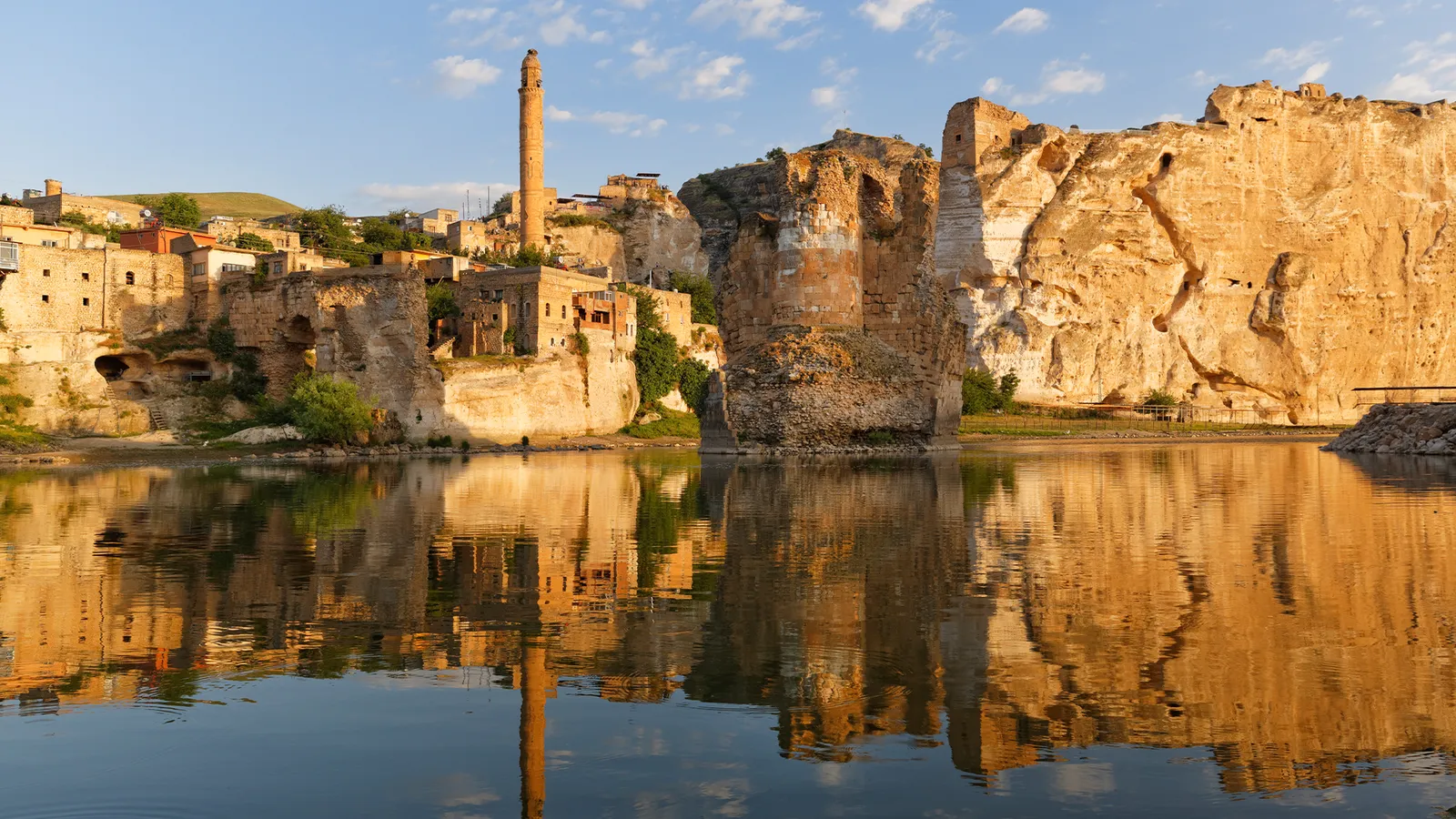
Reaching the source of the Tigris is not an easy task. Where a dirt road ends, a small path leads over the shoulder of a jagged mountain whose peaks are gnawed like fingernails. The path becomes a goat track, treacherously narrow, winding around the hillside until it is halted by a tumble of springs. These form a torrential stream that disappears into a vast, arched tunnel. When the nascent river emerges 1.5km later, it is tamed by whatever happened deep inside the cave.
The ancient Assyrians believed this to be a place where the physical and spiritual worlds collide. Three thousand years ago, their armies traveled upstream to offer sacrifices. A relief of Tiglath-Pileser, King of Assyria from 1114-1076 BCE, still stands at the mouth of the tunnel. Time has dulled his edges, but he remains upright and regal, pointing out across his empire.
The source of the Tigris lies in present-day Turkey, where it flows southeast out of the Taurus Mountains. It skims a pinched corner of north-east Syria and then passes through the cities of Mosul, Tikrit, and Samarra on its way to Baghdad. In southern Iraq, the sprawling Mesopotamian Marshes absorb the Tigris close to the confluence with its sister river, the Euphrates, and both flow together to the Persian Gulf.
Around 8,000 years ago, our hunter-gatherer ancestors settled in the great floodplain between these two rivers and developed agriculture and animal husbandry, leading many to call the area the “Cradle of Civilization”. From these early city-states – like Eridu, Ur, and Uruk – came the invention of the wheel and the written word. Codified legal systems, sailing boats, beer brewing, and love songs followed, among other inventions.
And yet, because of the decades of conflict that have plagued modern Iraq, the fact that the Tigris has guarded and shaped our shared human heritage is easily forgotten.
For 10 weeks in 2021, a small team and I traveled roughly 2,000km by boat and overland from the Tigris’ source to where it empties into the Persian Gulf – a journey one advisor told me likely hadn’t been attempted since the Ottoman era. My goal was to chart the river’s historical importance and tell its story through the voices of those who live along its banks, while also investigating the threats to its future. A combination of geo-political instability, poor water management, and climate change has led some to state that this once-mighty river is dying. I hoped our journey would be a reminder of what emerged from this land, and what we would collectively lose if the river that birthed civilization dried up.
Prior to the pandemic, the working world already felt to most of us like it was undergoing rapid, unrelenting change — changes in customer preferences, client and employee expectations, and competitive advantages. Covid-19 managed to upend the few things that felt relatively predictable, like where we spent our working hours, how we collaborated with colleagues, and whether or not we bothered to put on real pants each day. Today, leaders across industries are feverishly trying to figure out what the “new normal” needs to look like, which seems to be constantly shifting under their feet.
To stay motivated as we encounter unprecedented levels of uncertainty in every aspect of our lives, we should understand that the human brain simply was not built for this. Knowing what your brain does well — and what it does surprisingly poorly — can give you a much clearer sense of the strategies you need to not just endure but to thrive.
For most of human history, we have been hunter-gatherers, living in groups where individuals had established roles and lives. While sometimes dangerous, life was largely predictable. The brain evolved to be remarkably good at recognizing patterns and building habits, turning very complex sets of behaviors into something we can do on autopilot. (Ever drive home from work and end up in your driveway, with no memory of actually driving home? That’s the kind of thing we’re talking about.)
Given that habits and recognizable patterns are kind of its “thing,” the brain evolved to be uncertainty-averse. When things become less predictable — and therefore less controllable — we experience a strong state of threat. You may already know that threat leads to “fight, freeze, or flight” responses in the brain. You may not know that it also leads to decreases in motivation, focus, agility, cooperative behavior, self-control, sense of purpose and meaning, and overall well-being. In addition, threat creates significant impairments in your working memory: You can’t hold as many ideas in your mind to solve problems, nor can you pull as much information from your long-term memory when you need it. Threats of uncertainty literally make us less capable, because dealing with them is just not something our brains evolved to do.
JANUARY 17, 2007, BY CONTRIBUTED BY: CHRIS OTT Dr. George Franklin Grant was the first African American professor at Harvard. He was born in Oswego, New York to former slaves. When he was fifteen years old a local dentist, Dr. Albert Smith, hired him as an errand boy. He soon became a lab assistant, and Dr. Smith encouraged him to pursue […]
Thirteen years ago, paleontologist Mario Urbina made a remarkable discovery in the coastal desert of Peru. He had a hunch that it was something really special. But his conclusion was so odd that it took years of excavation and testing to show international scientists that his convictions were right, according to Urbina’s field partner and fellow paleontologist Rodolfo Salas-Gismondi, head of the vertebrate paleontology department at the Museum of Natural History in Lima. They were fossil masses, and what Urbina thought they were: preserved bones from a new species of early whale, dating to 39 million years ago. And, it turns out, this one was a whopper.
“The authors have definitely found something new. This is a really weird, stupendously large, early whale,” says paleobiologist Nicholas Pyenson, the curator of fossil marine mammals at the Smithsonian National Museum of Natural History.
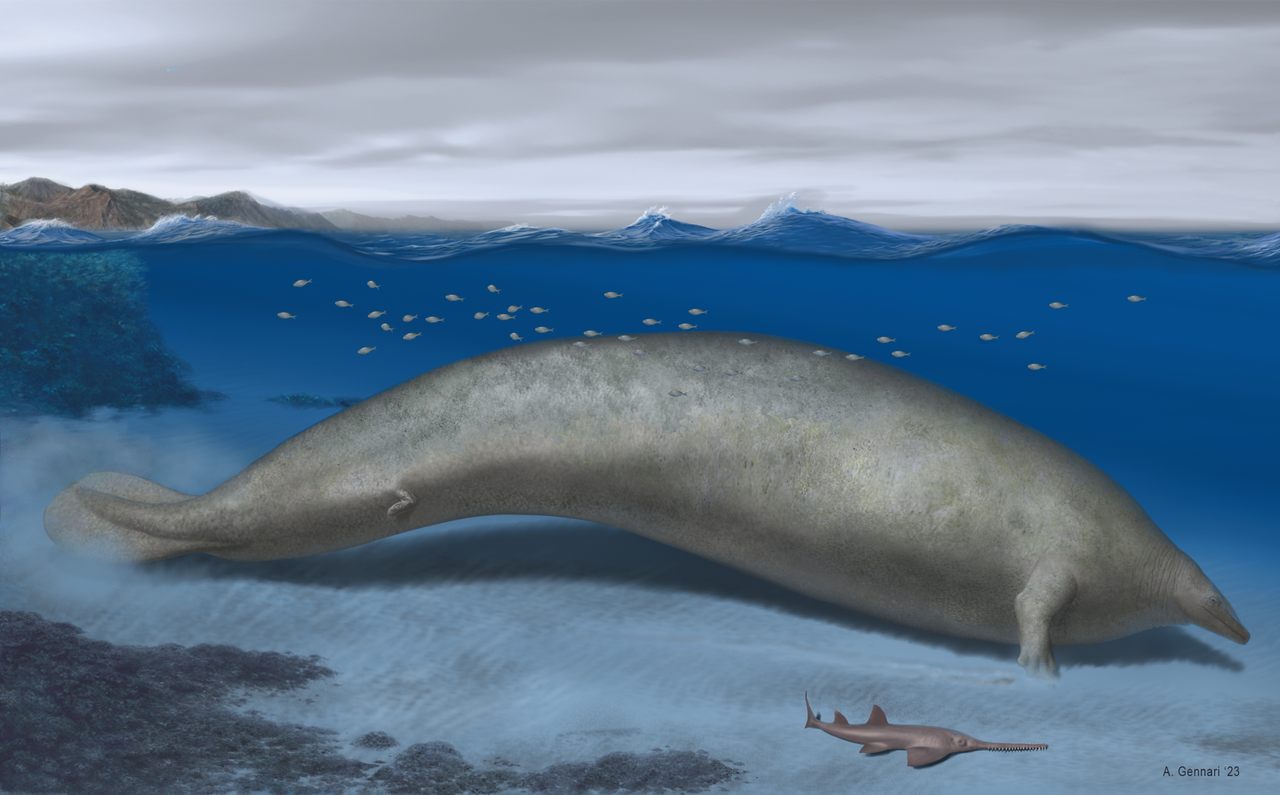
This whale relative, named Perucetus colossus—“the colossal whale from Peru”—is pretty darn big. In their new study published today in Nature, the international team of researchers posit that it could be the heaviest animal. Ever. By their estimates, the species would have had a 65-foot skeleton that outweighs the 82-foot skeleton of a blue whale—the world’s current heavyweight champion species—by two to three times, possibly resulting in an overall body weight of between 90 and 370 tons. At the upper range, that’s more than twice as chonky as a blue whale. Further, this ancient giant falls far earlier in history than scientists would expect, changing the known evolutionary timeline for huge whales up by 30 million years.
.
A reconstruction of P. colossus shows it in its coastal habitat. The head is an educated guess because a skull has not been found yet. Alberto Gennari
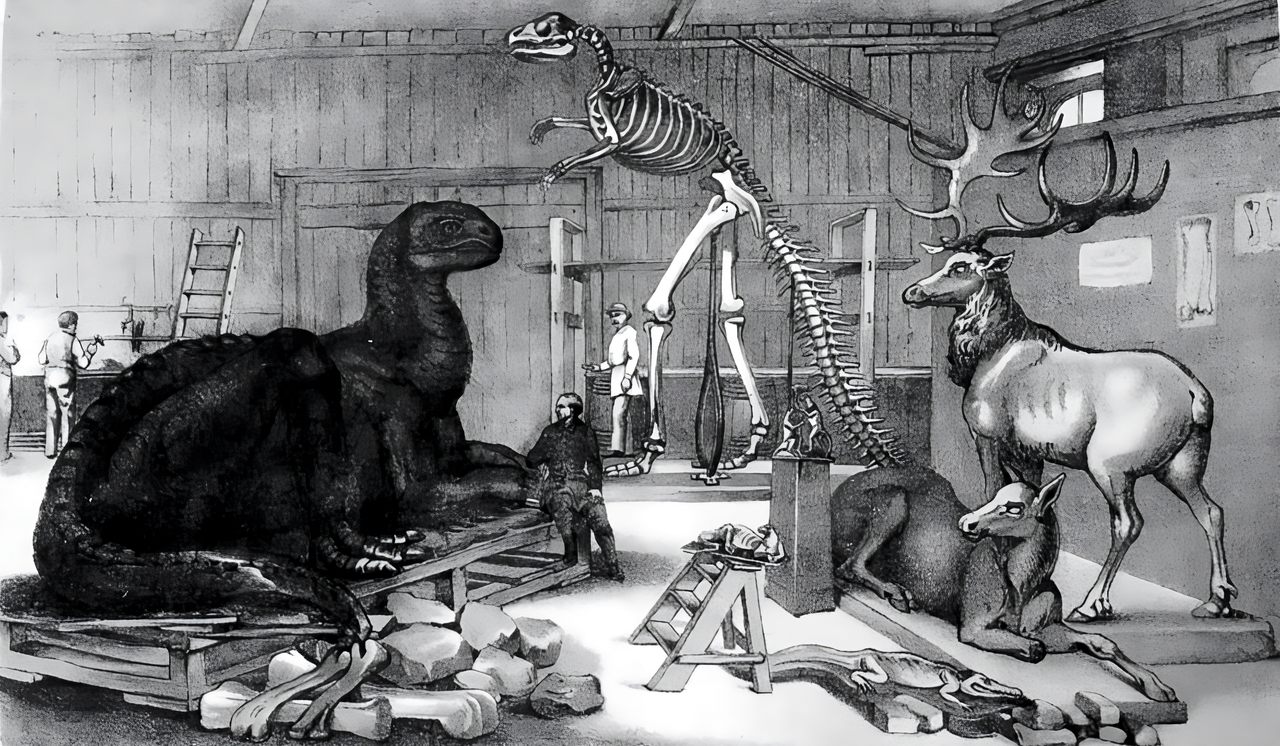
There are dinosaurs buried beneath New York City’s Central Park. Now, these aren’t your typical T. rex or Triceratops left behind in layers of sediment. These dinosaurs aren’t millions of years old and never took a gulp of air. They’re dapper Victorians, made of cement, wire, stone, and clay. They were entertainers and educators, meant to give New Yorkers their first glimpse of the prehistoric creatures that once roamed New Jersey forests and Connecticut lakeshores. But in 1871, these carefully crafted, life-size models were destroyed, smashed into worthless smithereens, and then buried in a small mound in Central Park. According to historian Vicky Coules of the University of Bristol, the event remains the “greatest act of vandalism in the history of dinosaur study and museum development.”
For more than a century, the villain behind the destruction was thought to be William Magear Tweed, a corrupt Tammany Hall politician better known as Boss Tweed, who controlled New York City with his “Tweed ring” cronies. But after almost a year of combing through government and newspaper archives, Coules discovered that the real villain wasn’t Tweed at all, but Henry Hilton, a New York lawyer who was appointed to oversee the city’s parks. And the more Coules dug into the story, the stranger it became. Hilton, she says, “did other things that were just bizarre.”
In the mid-19th century, very few people knew about dinosaurs; the word “dinosaur” had only been coined in the early 1840s. But English sculptor and natural history artist Benjamin Waterhouse Hawkins set out to change that. In 1851, Hawkins created dozens of life-sized, scientifically accurate (at least for the time) dinosaur models in a South London park: the famous Crystal Palace dinosaur display. When they were unveiled, Hawkins’s dinosaurs were a sensation; on opening day, 40,000 visitors flocked to the park. As paleontologist Thomas Holtz of the University of Maryland puts it, Hawkins “is the real start of the popularization of dinosaurs.”
.
Designed by English sculptor Benjamin Waterhouse Hawkins, models of dinosaurs and other prehistoric animals were destined for Central Park’s never-realized Paleozoic Museum. Public Domain
DECEMBER 31, 2017, BY CONTRIBUTED BY: SAMUEL MOMODU Alfred L. Cralle was an African American businessman and inventor best known for inventing the ice cream scoop in 1897. Cralle was born on September 4, 1866, in Kenbridge, Lunenburg County, Virginia, just after the end of the American Civil War. He attended local schools and worked for his father in the carpentry trade as […]
In the world, human beings are facing various problems. People who are full of greed, anger, and ignorance are seen to be fighting with each other in words and deeds. As the fighting continues, various problems such as civil wars, wars of aggression, and wars of aggression are occurring. As world peace is being destroyed, humans are facing unbearable problems. Innocent children and women are not getting the rights they deserve and deserve. I can't think of one thing every time. What is it? The United Nations. If we look at the responsibilities and duties of the United Nations, I think it is not suitable for solving the problems that are happening in the world today. In fact, the United Nations and the World Security Council, such an organization must rule the world, must be able to give orders, and must have various ways to obey orders. There must be no organization that can influence more than that organization. There should be experts from each country. They can even dominate the superpowers like the US, China, and Britain. Only then will global peace be achieved quickly. Now, if a country with power develops more militarily, economically, or socially than its own country, then powerful countries will jealously seek out enemies and wage war. Or they will attack with fighter jets. In this, innocent people are losing their lives. No one understands the value of a life. You should think about how to achieve global peace by controlling these. If the US continues to be the permanent president of the UN, world peace will never be achieved. If you think carefully, no one sees that they are working for the common good, but for their own benefit, for the benefit of their own country. The permanent president of the UN and the Security Council has rejected this, As a young Rohingya, I have come to realize that only by electing the president and secretary from among the countries in the world through a secret ballot system and governing the world fairly can we achieve global peace. The United Nations and the Security Council are organizations in which any country must govern, give orders, and make them obey their orders. For example, only when a defendant is tried in court can we hold the leaders of the countries in check and control them, can we achieve global peace smoothly. Otherwise, it will not be easy for powerful countries to use various excuses to end this war every year, every year, for the benefit of themselves and their countries. No country's leaders pay any attention to the words of the United Nations and the Security Council. If we look at it in practice, look at the Rohingya issue. Myanmar is a small country. Even that country has been under siege for 8 years. What action can be taken? Why is the UN and the Security Council Powerless? Without such Power, how can the organization bring about global peace? Everyone should think about it. Whether there is a veto or a strong one, all countries in the world can only achieve global peace if they are subject to the UN and the Security Council. Seek peace in the quiet embrace of nature. Peace is an indispensable need of the human race. It is not as if one person can kill another person, and it is as if one country can attack another country, but instead of trying to build peace, we must try to destroy the peace now, and the world is getting hotter and is on the verge of collapse. I especially appeal to all the world experts to urgently try to bring about peace in all parts of the world. Mr, Noor Muhamed Arkhan Rohingya Youth Myanmar
Film and Writing Festival for Comedy. Showcasing best of comedy short films at the FEEDBACK Film Festival. Plus, showcasing best of comedy novels, short stories, poems, screenplays (TV, short, feature) at the festival performed by professional actors.

 Philip Friedman


 (Image credit: Westend61/Getty Images)


 A reconstruction of P. colossus shows it in its coastal habitat. The head is an educated guess because a skull has not been found yet.
  Designed by English sculptor Benjamin Waterhouse Hawkins, models of dinosaurs and other prehistoric animals were destined for Central Park’s never-realized Paleozoic Museum. Public Domain

