Natural gas is a fossil fuel. Like other fossil fuels such as coal and oil, natural gas forms from the plants, animals, and microorganisms that lived millions of years ago.
There are several different theories to explain how fossil fuels are formed. The most prevalent theory is that they form underground, under intense conditions. As plants, animals, and microorganisms decompose, they are gradually covered by layers of soil, sediment, and sometimes rock. Over millions of years, the organic matter is compressed. As the organic matter moves deeper into Earth’s crust, it encounters higher and higher temperatures.
The combination of compression and high temperature causes the carbon bonds in the organic matter to break down. This molecular breakdown produces thermogenicmethane—natural gas. Methane, probably the most abundant organic compound on Earth, is made of carbon and hydrogen (CH4).
Natural gas deposits are often found near oil deposits. Deposits of natural gas close to Earth’s surface are usually dwarfed by nearby oil deposits. Deeper deposits—formed at higher temperatures and under more pressure—have more natural gas than oil. The deepest deposits can be made up of pure natural gas.
Natural gas does not have to be formed deep underground, however. It can also be formed by tiny microorganisms called methanogens. Methanogens live in the intestines of animals (including humans) and in low-oxygen areas near the surface of Earth. Landfills, for example, are full of decomposing matter that methanogens break down into a type of methane called biogenic methane. The process of methanogens creating natural gas (methane) is called methanogenesis.
Although most biogenic methane escapes into the atmosphere, there are new technologies being created to contain and harvest this potential energy source.
Thermogenic methane—the natural gas formed deep beneath Earth’s surface—can also escape into the atmosphere. Some of the gas is able to rise through permeable matter, such as porous rock, and eventually dissipate into the atmosphere.
.
Photograph by David Cupp: Burgan Field/ The Burgan oil field, in Kuwait, is one of the richest oil fields in the world. Natural gas, some of which is seen burning here, is often found near deposits of oil and coal. Oil, coal, and natural gas are fossil fuels.
Take only pictures, leave only footprints. We’ve all heard it, but how many of us actually heed it? Today, with more than 1 billion people traveling every year, it’s imperative for frequent travelers to engage in sustainable practices that tread lightly on the Earth. To that end, a multitude of useful apps and websites have emerged to help us be greener globe-trotters: before, during, and after the journey. The following digital resources feature functions that range from finding flights with the lowest C02 emissions to locating sustainably sourced, seasonal food. What’s more—each of these environmentally friendly tools is totally free to use.
Locavore
If you like eating local, Locavore will be your friend for life. This free iOS app uses your phone’s GPS to help you determine which fruits and vegetables are in season wherever you are in the world. In addition, it pinpoints the location of nearby farmers’ markets, farms open to the public, and community-supported agricultural venues. The mobile app also offers quick and easy recipes for an extra fee and prompts users to share their finds on Facebook, inspiring other farm-to-table travelers to join the locavore movement.
.
Sustainability-minded apps and websites help reduce the environmental impact of travel by making it easier to find fuel-efficient flights, seek out eco-friendly hotels, and calculate carbon emissions in real-time. Illustration courtesy of alexacrib / Shutterstock.
I’ve struggled with insomnia nearly all of my adult life.
Typically, I’m able to fall asleep within an hour or two, but often it takes much longer, and the anxiety about not sleeping has made it so much worse. I’ve accepted that this is something I just have to live with.
A few years ago, I started wearing a sleep mask and turning on cable news so that the mindless banter in the background would distract me from my thoughts long enough to pass out. This isn’t the wisest strategy, but it has, occasionally, worked. Lately, I’ve started listening to meditation apps that play sounds of waves crashing or fire crackling.
If any of this resonates with you, you might be interested in a new book by Henry Nicholls called Sleepyhead: The Neuroscience of a Good Night’s Rest. Nicholls, a science journalist in England, chose the topic of sleep in part because of his personal experience with narcolepsy, a rare neurological disorder that impacts the brain’s ability to control sleep-wake cycles. So he decided to write a book about how to sleep better.
Nicholls surveyed the latest medical research on sleep, interviewed many of the researchers involved, and underwent intense sleep therapy to treat his own condition.
I spoke to him recently about what he learned and about some of the practical things you can do to get a better night’s sleep.
A lightly edited transcript of our conversation follows.
Sean Illing
What’s the key to a good night’s sleep?
Henry Nicholls
The simplest thing is to work on something called “sleep stability,” which is very common advice in insomnia clinics and something my physician, Dr. David O’Regan, recommended as part of my cognitive behavioral therapy course for insomnia.
In theory, Nate works 40 hours a week in the operations department at a major fintech company. In reality, Nate works one hour a day at most. He moseys over to his computer whenever he gets an alert on his phone that he’s got a task to complete. Otherwise, he spends most of the day doing, basically, whatever he feels — he sleeps in, he watches TV, he does household chores. His only real restriction is that he can’t stray too far from home in the event he is needed for something.
“I don’t have a problem with being asked to do work; it’s just I’m not really being asked,” he says. Maybe he could take more initiative and try to take on more, but he gets good performance reviews and raises as it is, so he figures, why bother? Plus, it’s not like he can waltz up to his boss to announce there’s no real business reason for his existence. “How do I initiate that conversation that’s, ‘Hey, I haven’t been doing much of anything this whole time, I need more to do’? You don’t really want to draw attention to it,” says Nate, which is a pseudonym. Vox granted him anonymity to speak for this story for obvious reasons, as we did all of the workers interviewed.
Strongly suspecting that a certain person isn’t doing much, or not nearly enough to fill up what is ostensibly an eight-hour day, seems to be a near-universal work experience. Many people have also, at some point in time, been that less-than-occupied worker. Sometimes, it’s intentional. Other times, like in Nate’s case, that’s just how the corporate cards have been dealt.
These jobless employed are a persistent presence in the working world, their existence a bug that’s become a feature. There’s a percentage of every job that’s bullshit, and in their case, that’s 90 percent, minimum. “It’s not good for the culture. It can engender huge resentment from the person’s colleagues, especially if they themselves are overworked, and you do see that combination a lot,” says Alison Green, a career columnist and expert who runs the website Ask a Manager. “It also raises questions for people about whoever is supposed to be managing that person. Are they incompetent? Do they suck at managing?”
.
Your suspicions are right: That one guy at work really doesn’t do anything. A-R-T-U-R via Getty Images/iStockphoto
If companies want to leave Russia, the president is setting the terms — in ways that benefit his government, his elites, and his war.
Soon after Russian troops invaded his country, the Ukrainian president, Volodymyr Zelensky, made a plea to Western companies: “Leave Russia,” he said. “Make sure that the Russians do not receive a single penny.”
President Vladimir V. Putin had other plans.
Mr. Putin has turned the exits of major Western companies into a windfall for Russia’s loyal elite and the state itself. He has forced companies wishing to sell to do so at fire-sale prices. He has limited sales to buyers anointed by Moscow. Sometimes he has seized firms outright.
A New York Times investigation traced how Mr. Putin has turned an expected misfortune into an enrichment scheme. Western companies that have announced departures have declared more than $103 billion in losses since the start of the war, according to a Times analysis of financial reports. Mr. Putin has squeezed companies for as much of that wealth as possible by dictating the terms of their departure.
He has also subjected those exits to ever-increasing taxes, generating at least $1.25 billion in the past year for Russia’s war chest.
“Go for a walk,” it said, the no-nonsense command perched in a prominent spot above Katherine May’s desk.
Ms. May, a British author who wrote the best-selling memoir “Wintering” about a fallow and difficult period of her life, had come across more hard times during the height of the pandemic. She was bored, restless, burned out. Her usual ritual — walking — had fallen away, along with other activities that used to bring her pleasure: collecting pebbles, swimming in the sea, savoring a book.
“There was nothing that made the world feel interesting to me,” Ms. May said in a recent interview with The New York Times. “I felt like my head was kind of full and empty at the same time.”
In Ms. May’s latest book, “Enchantment,” she describes how a simple series of actions, like writing that note, helped her to discover little things that filled her with wonder and awe — and, in turn, made her feel alive again.
“You have to keep pursuing it until you get that tingle that tells you that you’ve found something that’s magical to you,” Ms. May said. “It’s trial and error, isn’t it?”
We asked Ms. May for tips on how you can do the same.
Commit to noticing the world around you
“We have to find the humility to be open to experience every single day and to allow ourselves to learn something,” Ms. May wrote in “Enchantment.”
This, she acknowledges, “is easier said than done.”
“Let yourself go past those thoughts that tell you it’s silly or pointless or a waste of time, or you’re far too busy to possibly do this,” Ms. May said during the interview. “Instead give yourself permission to want that in the first place — to crave that contact with the sacred, and that feeling of being able to commune with something that’s bigger than you are.”
Entering a state of wonder is akin to using a muscle, Ms. May said. Put yourself in that mindset more often and it gradually becomes easier.
First, you must “give in to the fascination” that you feel in everyday moments. For example, Ms. May gets “really excited” when she sees light dance across the surface of her coffee.
The holiday season is a time of magic, wonder, and, for some of us, an absolutely overwhelming onslaught of toys from well-intentioned relatives who, notably, will not be the ones tasked with hunting down the one missing piece of the 57-piece Bluey set at 9 p.m. on a school night. If the thought of finding a place for even more stuff gives you hives, you’re not alone. “This is actually a very common thing that comes up around gift-giving, and it is very difficult,” says Jody Baumstein, LCSW, a therapist at Children’s Healthcare of Atlanta. However, asking family and friends who want to give your children presents at the holidays for experience gifts instead of toys is completely reasonable thing to do, she explains. “People don’t want to bring up boundary-related conversations because they think that they’re going to be perceived as negative or difficult, but the reality is, healthy relationships actually have very, very good boundaries.”
It can be hard to accept that it’s not selfish to have preferences about what people give to your kid, but Baumstein says it’s essential to really believe that your feelings are valid before you try to approach a relative about asking for experience gifts instead of stuff this year. “A lot of times people feel guilty. They think I shouldn’t feel this way. It’s nice that so-and-so wants to show up for my kids,” she says. “But, two things can be true at the same time. You can be grateful and feel like the gift-giving is a little off-base.”
How do you ask for experiences instead of toys?
Conversations about gifts can be simple, kind, specific, and direct, Baumstein says. When people are uncomfortable, they can start to talk in circles, but she encourages simplicity and directness, as well as understanding that you don’t need the relative, in-law, or friend to completely understand why you are asking for this. Instead, they just need to respect and hear your wishes. “We don’t need agreement, we need alignment. And that’s a huge difference,” she explains. “We don’t need to agree that this is the right way, what we need is alignment about what you’re going to do for your family in your home.”
In the world, human beings are facing various problems. People who are full of greed, anger, and ignorance are seen to be fighting with each other in words and deeds. As the fighting continues, various problems such as civil wars, wars of aggression, and wars of aggression are occurring. As world peace is being destroyed, humans are facing unbearable problems. Innocent children and women are not getting the rights they deserve and deserve. I can't think of one thing every time. What is it? The United Nations. If we look at the responsibilities and duties of the United Nations, I think it is not suitable for solving the problems that are happening in the world today. In fact, the United Nations and the World Security Council, such an organization must rule the world, must be able to give orders, and must have various ways to obey orders. There must be no organization that can influence more than that organization. There should be experts from each country. They can even dominate the superpowers like the US, China, and Britain. Only then will global peace be achieved quickly. Now, if a country with power develops more militarily, economically, or socially than its own country, then powerful countries will jealously seek out enemies and wage war. Or they will attack with fighter jets. In this, innocent people are losing their lives. No one understands the value of a life. You should think about how to achieve global peace by controlling these. If the US continues to be the permanent president of the UN, world peace will never be achieved. If you think carefully, no one sees that they are working for the common good, but for their own benefit, for the benefit of their own country. The permanent president of the UN and the Security Council has rejected this, As a young Rohingya, I have come to realize that only by electing the president and secretary from among the countries in the world through a secret ballot system and governing the world fairly can we achieve global peace. The United Nations and the Security Council are organizations in which any country must govern, give orders, and make them obey their orders. For example, only when a defendant is tried in court can we hold the leaders of the countries in check and control them, can we achieve global peace smoothly. Otherwise, it will not be easy for powerful countries to use various excuses to end this war every year, every year, for the benefit of themselves and their countries. No country's leaders pay any attention to the words of the United Nations and the Security Council. If we look at it in practice, look at the Rohingya issue. Myanmar is a small country. Even that country has been under siege for 8 years. What action can be taken? Why is the UN and the Security Council Powerless? Without such Power, how can the organization bring about global peace? Everyone should think about it. Whether there is a veto or a strong one, all countries in the world can only achieve global peace if they are subject to the UN and the Security Council. Seek peace in the quiet embrace of nature. Peace is an indispensable need of the human race. It is not as if one person can kill another person, and it is as if one country can attack another country, but instead of trying to build peace, we must try to destroy the peace now, and the world is getting hotter and is on the verge of collapse. I especially appeal to all the world experts to urgently try to bring about peace in all parts of the world. Mr, Noor Muhamed Arkhan Rohingya Youth Myanmar
Film and Writing Festival for Comedy. Showcasing best of comedy short films at the FEEDBACK Film Festival. Plus, showcasing best of comedy novels, short stories, poems, screenplays (TV, short, feature) at the festival performed by professional actors.

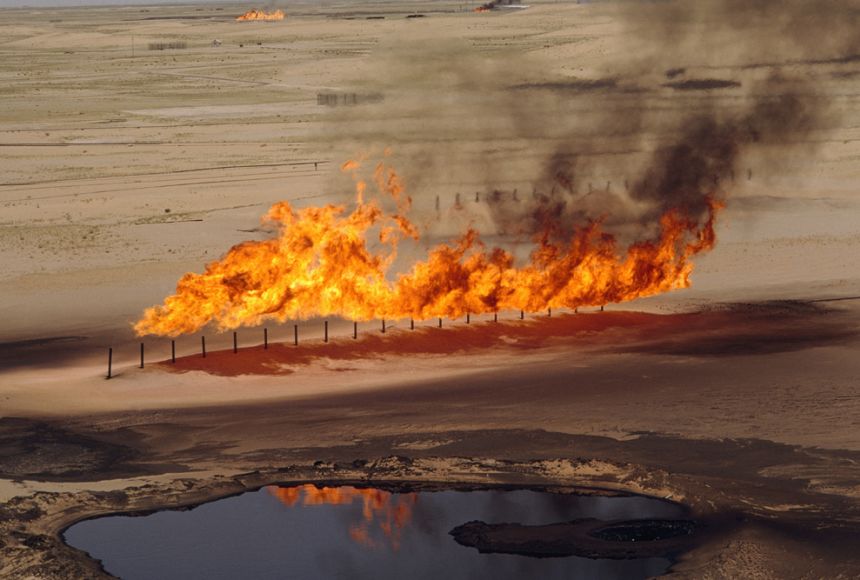 Photograph by David Cupp: Burgan Field/ The Burgan oil field, in Kuwait, is one of the richest oil fields in the world. Natural gas, some of which is seen burning here, is often found near deposits of oil and coal. Oil, coal, and natural gas are fossil fuels.


:format(webp)/cdn.vox-cdn.com/uploads/chorus_image/image/60994965/sleep_copy.0.jpg)
:format(webp)/cdn.vox-cdn.com/uploads/chorus_image/image/72308213/GettyImages_658928966.0.jpg)






 Experience Gifts
