With ice-blue caves, kaleidoscopic lakes, and confusing rock formations, Earth is capable of producing some over-the-top scenery. These transportive landscapes are escapes from modern life—sometimes to what feel like other planets altogether. Below are some of our favorite otherworldly natural wonders across the world, from the marvelous to the strange.
Lake Natron, Tanzania
Don’t let the ring of salty marshes along the edge of Lake Natron fool you: This body of water is one of the most inhospitable areas on Earth. Colored a deep red from salt-loving organisms and algae, the lake reaches hellish temperatures and is nearly as basic as ammonia. Although most human settlements throughout history have formed around lakes and rivers, the barren landscape around Lake Natron tells a clear story of a place no one has ever wanted to live in.
Chile Marble Caves, Chile
Carved into the Patagonian Andes, the Cuevas de Mármol are located on a peninsula of solid marble along Lake General Carrera, a remote glacial body of water that spans the Chile-Argentina border. Formed by 6,000-plus years of waves washing up against calcium carbonate, the smooth, swirling blues of the cavern walls are a reflection of the lake’s azure waters, which change in intensity and hue depending on water level and time of year.
.
White Desert, Egypt Anton Petrus/Getty Images
.
.
Click the link below for the article (Click the Title of each Location, then click the back arrow to return to the Article for the nextLocation):
You begin shopping for your future the moment you become an adult in New York City. Rich and well-furnished lives are aggressively paraded about. Parlor windows reveal Noguchi lamps the size of small horses, couples sit for brunch, families haul exploding bags of farmers’-market produce back to their lairs. People are furiously refreshing Resy to pay $27 for spaghetti pomodoro (!) and going, constantly, to Mexico City. Sure, it’s always been ludicrously expensive, and the “what you could get for the same price of this Chelsea studio in Ohio” game is our little way of torturing ourselves. New York is the most expensive city in the world, according to one recent report. Half the households that live here simply cannot afford to, according to another, which says you have to make $100,000 just to reasonably get by — to afford food and transportation to work. A one-pound container of strawberries at Eli’s costs $30.
We decided to put a price tag on the dream lives of a wide range of New Yorkers, all 30 and under and childless. We spoke to dozens of people but narrowed it down to a handful, each reasonably en route to the upper-middle- (and, in two instances, just plain upper-) class life they picture in their heads. We were surprised by how many people fantasize about a life with a partner and kids in brownstone Brooklyn — we expected more to plan lives as single artists or to build households of friends and throuples. We expected a few more to actually want to live in Manhattan. Instead, we heard a craving for high-end domesticity; so many people told us they wanted to be married with “between one and two kids,” a shocking number said they wanted three or more, and nearly everyone said they wanted to own their homes.
We went deep with these nine people on their aspirations for their lives in 15 years. We asked, What, would a “nice life” look like? Do they want extreme levels of well off, or bourgeois comfort, or simply freedom from financial worry with the time to pursue a hobby?
American Fiction is a 2023 American comedy-drama film written and directed by Cord Jefferson, in his feature directorial debut. Based on the 2001 novel Erasure by Percival Everett, the film follows a frustrated novelist-professor who writes an outlandishly stereotypical “black” book as satire, only for the book to be published to high sales and praise. […]
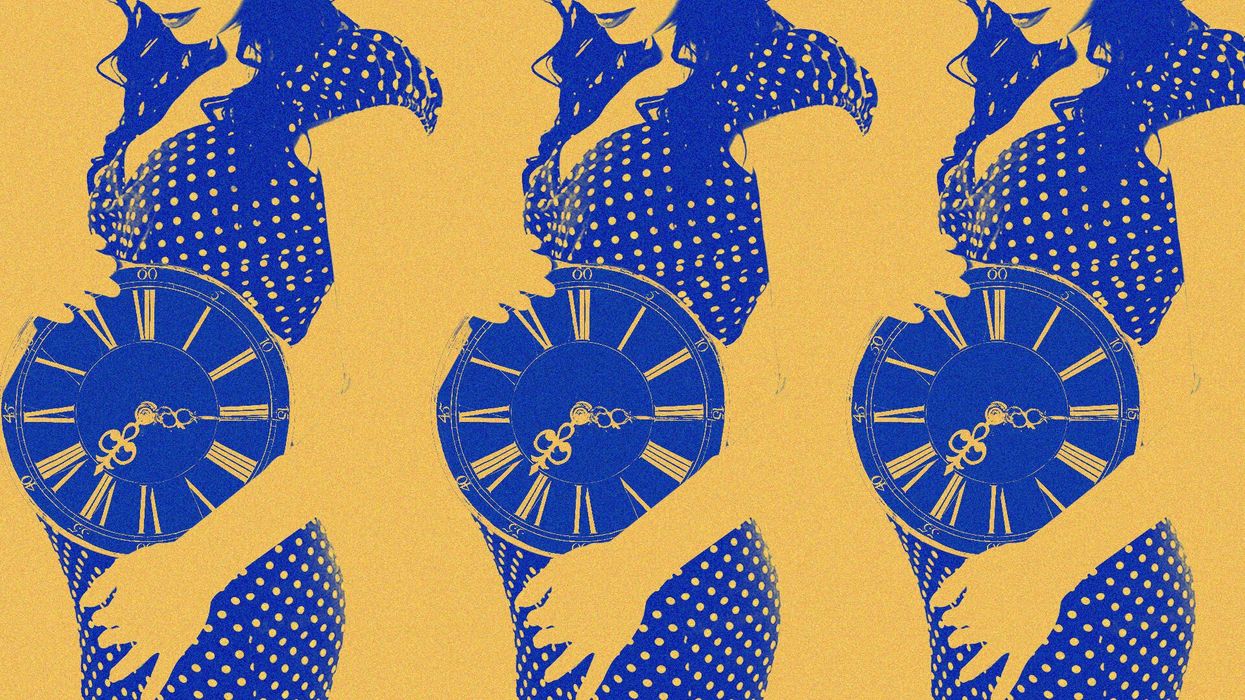
Four months ago, while laying under a beach umbrella on vacation with my best friend in Mexico, a complete stranger walked up to us and asked if I was okay. I was reading a book called Regretting Motherhood, recommended by my friend Jordan, who is also child-free. A liter-sized bottle of what looked like tequila—it was sparkling water—sat beside my beach chair. I was two weeks past my initial egg-freezing consultation, and despite my wishy-washy stance on parenthood, I knew I was going to do it. I just wasn’t sure about the rest of it.
My partner and I have been together for more than three years and though I just turned 35, he’s just nearing 30 and we’re just not ready to decide on, let alone have, kids yet. Both of us come from Italian families with inquiring minds, so holidays and get-togethers often meant we’d be pressured to talk about our plans for reproduction. Friends, family, and strangers always told me, often with a hint of condescension, that I’d “just know” or it’d “just happen.” (It hasn’t.) We figured freezing my eggs wouldn’t just be an insurance plan for later, but it’d also take the pressure off us to plan our lives according to my biological clock—and it’d get my aunts off our back. I’d started looking into it again last year, two years after being told at an NYC clinic-that-shall-not-be-named told me that at 32, I was almost too old.
Like a lot of women, I told myself that because I’d been on the pill for 20 years and because I messed it up so many times and still never been pregnant that I must not be fertile. I actually put off my consultation for so long because I could “come to terms” with my inability to have kids, a fact that I completely fabricated and had conflicting feelings about. At the same time, I’d spent years trying to sort out my views on motherhood, as well as how they mingled with my complicated relationship with my own mother: Did I only think I didn’t want kids because she may not have wanted them? Despite being a co-parent for my nephew, could I ever see myself as truly maternal? It’s a crazy feeling to not know if you want to have kids, but to know fiercely that you want to have the option. Apparently, hoards of women had the same thought—or so I’d find out when I shared my first transvaginal scan on Instagram. We decided to move forward with freezing only my eggs rather than embryos, even though we knew that meant accepting a success rate of about 50 percent rather than 70 percent. I’d later find out from one of my nurses—as well as at least a handful of people in my DMs—that it was mostly single women that went that route.
Roasting Roasting a chicken, like cooking a steak, is one of those culinary tasks that inspires strong feelings: Everyone’s always trying to iterate to find the “better” technique, despite the existing classics. While I could likely spend a year testing roast chicken recipes (after which I’d certainly never want to eat another roast chicken), I wanted to compare some popular ones that use diverging techniques. How I wanted to know, does a chicken cooked at a relatively low heat compare with one that starts in a very hot oven? Does a wet brine work, and is it worth it? Surely butter makes everything better, right?
To answer these questions, I embarked on what I dubbed Chickenpalooza, a few chicken-packed weeks I spent testing some of the internet’s most beloved roast chicken methods. Spoiler: I liked them all, but I definitely emerged from the experiment with a standout, surprising technique that I’ll be returning to often, whether for my next dinner party or simply a weeknight meal.
Marcella Hazan’s Roast Chicken With Lemons, Food and Wine
Like Marcella Hazan’s legendary tomato sauce, her recipe for roast chicken — which I had to make, given how many people call it their gold standard — is startlingly simple. It calls for no butter, no oil; just salt, pepper, and two lemons. Hazan explains the latter’s preparation meticulously: “Puncture the lemons in at least 20 places each, using a sturdy round toothpick, a trussing needle, a sharp-pointed fork, or similar implement.”
More technique- than ingredient-focused, this roasting method is “self-basting,” as Hazan describes it. While today that can denote birds that have been “injected or marinated with solution,” what it means in this recipe is that the chicken bakes in its own juices while being infused by the lemons inside its cavity. If the skin is unbroken, Hazan writes that the chicken can “puff up” as it cooks, which seems to be mostly an aesthetic perk. Though I didn’t experience this effect, possibly due to shoddy prep, it ultimately didn’t matter for the eating experience.
Nobody sees the stars during the day. But in the night, they are visible. God knows how to hide you till its your time to shine.Your invisibility doesn’t mean you are not existing. It only means its not your time yet. Wait patiently, God’s timing is always perfect. Every king was once a crying baby […]
In July of 1838, Charles Darwin was twenty-nine years old and single. Two years earlier, he had returned from his voyage aboard H.M.S. Beagle with the observations that would eventually form the basis of “On the Origin of Species.” In the meantime, he faced a more pressing analytical problem. Darwin was considering proposing to his cousin Emma Wedgwood, but he worried that marriage and children might impede his scientific career. To figure out what to do, he made two lists. “Loss of time,” he wrote on the first. “Perhaps quarreling. . . . Cannot read in the evenings. . . . Anxiety and responsibility. Perhaps my wife won’t like London; then the sentence is banishment and degradation into indolent, idle fool.” On the second, he wrote, “Children (if it Please God). Constant companion (and friend in old age). . . . Home, & someone to take care of house.” He noted that it was “intolerable to think of spending one’s whole life, like a neuter bee, working, working. . . . Only picture to yourself a nice soft wife on a sofa with good fire and books and music, perhaps.”
Beneath his lists, Darwin scrawled, “Marry, Marry, Marry QED.” And yet, Steven Johnson writes, in “Farsighted: How We Make the Decisions That Matter the Most,” “we have no evidence of how he actually weighed these competing arguments against each other.” Johnson, the author of “How We Got to Now” and other popular works of intellectual history, can’t help but notice the mediocrity of Darwin’s decision-making process. He points out that Benjamin Franklin used a more advanced pro-and-con technique: in what Franklin called “Prudential Algebra,” a numerical weight is assigned to each listed item, and counterbalancing items are then eliminated. (“If I find a Reason pro equal to some two Reasons con, I strike out the three . . . And thus proceeding I find at length where the Ballance lies,” Franklin explained to a friend.) Even this approach, Johnson writes, is slapdash and dependent upon intuition. “The craft of making farsighted choices—decisions that require long periods of deliberation, decisions whose consequences might last for years,” he concludes, “is a strangely under-appreciated skill.”
We say that we “decide” to get married, to have children, to live in particular cities, or embark on particular careers, and in a sense this is true. But how do we actually make those choices? One of the paradoxes of life is that our big decisions are often less calculated than our small ones are. We agonize over what to stream on Netflix, then let TV shows persuade us to move to New York; buying a new laptop may involve weeks of Internet research, but the deliberations behind a life-changing breakup could consist of a few bottles of wine. We’re hardly more advanced than the ancient Persians, who, Herodotus says, made big decisions by discussing them twice: once while drunk, once while sober.
Johnson hopes to reform us. He examines a number of complex decisions with far-reaching consequences—such as the choice, made by President Barack Obama and his advisers, to green-light the raid on Osama bin Laden’s presumed compound, in Abbottabad, Pakistan—and then shows how the people in charge drew upon insights from “decision science,” a research field at the intersection of behavioral economics, psychology, and management. He thinks that we should apply such techniques to our own lives.
.
Your life choices are shadowed by ignorance: you choose to be a parent without knowing what being a parent will be like. Illustration by AnnaParini
In the world, human beings are facing various problems. People who are full of greed, anger, and ignorance are seen to be fighting with each other in words and deeds. As the fighting continues, various problems such as civil wars, wars of aggression, and wars of aggression are occurring. As world peace is being destroyed, humans are facing unbearable problems. Innocent children and women are not getting the rights they deserve and deserve. I can't think of one thing every time. What is it? The United Nations. If we look at the responsibilities and duties of the United Nations, I think it is not suitable for solving the problems that are happening in the world today. In fact, the United Nations and the World Security Council, such an organization must rule the world, must be able to give orders, and must have various ways to obey orders. There must be no organization that can influence more than that organization. There should be experts from each country. They can even dominate the superpowers like the US, China, and Britain. Only then will global peace be achieved quickly. Now, if a country with power develops more militarily, economically, or socially than its own country, then powerful countries will jealously seek out enemies and wage war. Or they will attack with fighter jets. In this, innocent people are losing their lives. No one understands the value of a life. You should think about how to achieve global peace by controlling these. If the US continues to be the permanent president of the UN, world peace will never be achieved. If you think carefully, no one sees that they are working for the common good, but for their own benefit, for the benefit of their own country. The permanent president of the UN and the Security Council has rejected this, As a young Rohingya, I have come to realize that only by electing the president and secretary from among the countries in the world through a secret ballot system and governing the world fairly can we achieve global peace. The United Nations and the Security Council are organizations in which any country must govern, give orders, and make them obey their orders. For example, only when a defendant is tried in court can we hold the leaders of the countries in check and control them, can we achieve global peace smoothly. Otherwise, it will not be easy for powerful countries to use various excuses to end this war every year, every year, for the benefit of themselves and their countries. No country's leaders pay any attention to the words of the United Nations and the Security Council. If we look at it in practice, look at the Rohingya issue. Myanmar is a small country. Even that country has been under siege for 8 years. What action can be taken? Why is the UN and the Security Council Powerless? Without such Power, how can the organization bring about global peace? Everyone should think about it. Whether there is a veto or a strong one, all countries in the world can only achieve global peace if they are subject to the UN and the Security Council. Seek peace in the quiet embrace of nature. Peace is an indispensable need of the human race. It is not as if one person can kill another person, and it is as if one country can attack another country, but instead of trying to build peace, we must try to destroy the peace now, and the world is getting hotter and is on the verge of collapse. I especially appeal to all the world experts to urgently try to bring about peace in all parts of the world. Mr, Noor Muhamed Arkhan Rohingya Youth Myanmar
Film and Writing Festival for Comedy. Showcasing best of comedy short films at the FEEDBACK Film Festival. Plus, showcasing best of comedy novels, short stories, poems, screenplays (TV, short, feature) at the festival performed by professional actors.


 The dream-life calculator


:format(webp)/cdn.vox-cdn.com/uploads/chorus_image/image/73065213/L_Palmberg_Eater_At_Home_008.0.jpg) Eater at Home
Eater at Home


