
On This Day: May 28, 1830
Assorted human interest posts.
May 27, 2025
Business, Food For Thought, Human Interest, Political, Science, Technical amazon, business, Business News, current-events, Future, Hotels, human-rights, medicine, mental-health, research, Science, Science News, technology, Technology News, travel, vacation Leave a comment

Click the link below the picture
.
CLIMATEWIRE | Public officials have started pleading with the Trump administration for help in recovering from deadly disasters as President Donald Trump triggers frustration in states struck by tornadoes, floods, and storms by taking no action on requests for aid.
Trump has left states, counties and tribes in limbo as he delays making decisions on formal requests for millions of dollars in Federal Emergency Management Agency funding. Some areas that are still reeling from extreme weather are unable to start cleanup.
“We’re at a standstill and waiting on a declaration from FEMA,” said Royce McKee, emergency management director in Walthall County, Mississippi, which was hit by tornadoes in mid-March.
The county of 13,000 people can’t afford to clean up acres of debris, McKee said, and is waiting for Trump to act on a disaster request that was submitted by Gov. Tate Reeves, a Republican, on April 1 after the tornadoes killed seven people, destroyed or damaged 671 homes, and caused $18.2 million in public damage.
“I’m disappointed, especially for the people that lost their houses,” McKee said.
Trump himself assailed FEMA in January for being “very slow.”
The frustration over Trump’s handling of disasters is the latest upheaval
involving FEMA. Trump recently canceled two FEMA grant programs that gave states billions of dollars a year to pay for protective measures against disasters. The move drew protests from Republican and Democratic lawmakers.
On May 8, Trump fired FEMA leader Cameron Hamilton and replaced him with David Richardson, a former Marine Corps officer who has no experience in emergency management.
At a congressional hearing on Tuesday, Missouri Sen. Josh Hawley, a Republican, pleaded with Homeland Security Secretary Kristi Noem to push Trump to approve three disaster requests that Missouri Gov. Mike Kehoe, a Republican, had sent to Trump beginning April 2.
“We are desperate for assistance in Missouri,” Hawley said as Noem pledged to help. Her department oversees FEMA.
St. Louis Mayor Cara Spencer, whose city was badly damaged by tornadoes earlier this week, told MSNBC: “What we need right now is federal assistance. This is where FEMA and the federal government have got to come in and help communities. Our city can’t shoulder this alone.”
Trump has not acted on 17 disaster requests, a high number for this time of year, according to a FEMA daily report released Wednesday. On the same date eight years ago, during Trump’s first presidency, only three disaster requests were awaiting presidential action, the FEMA report from May 21, 2017, shows.
Eleven of the 17 pending disaster requests were sent to Trump more than a month ago.
“This looks to me like, until FEMA’s role is clarified, then we’re just going to sit on it,” said a former senior FEMA official who was granted anonymity to speak candidly.
Trump has indicated that he wants to shrink the agency, which distributes about $45 billion in disaster aid a year, helps with as many as 100 disasters at a time and, he said, “has been a very big disappointment.”
.
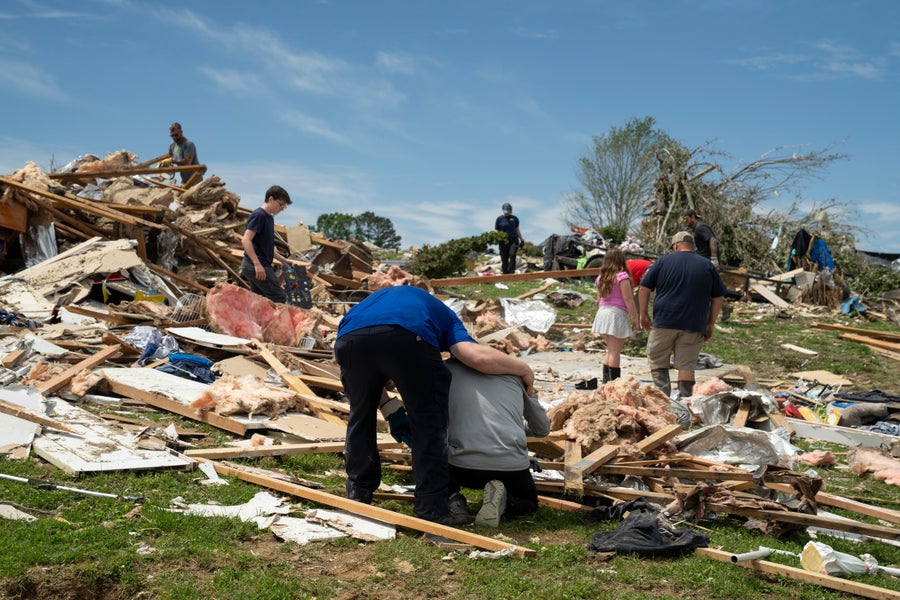
A man is comforted by a family friend while cleaning up the debris of his house on May 18, 2025, in the community of Sunshine Hills outside of London, Kentucky. A tornado struck the neighborhood of Sunshine Hills just after midnight on May 17, 2025, in London, Kentucky. Michael Swensen/Getty Images
.
.
Click the link below for the complete article:
.
__________________________________________
May 27, 2025
Business, Food For Thought, Human Interest, Political, Science, Technical amazon, business, Business News, current-events, Future, Hotels, human-rights, medicine, mental-health, research, Science, Science News, technology, Technology News, travel, vacation Leave a comment

Click the link below the picture
.
As a parent, it may feel like managing your child’s sleep habits is an uphill battle—the busy swirl of school, extra-curricular activities, and the family circus can make getting to bed a chore. But sleep is not just important for physical health—it is essential for mental health, too. Getting to bed on time can be a challenge for busy families, but it’s possible to build a good rest routine to support children’s emotional and cognitive resilience.
Clinical psychologist Brian Razzino, Ph.D., stresses the importance of sleep as the “foundation” of mental health. “Think of sleep as the foundation of a house—if it’s shaky, everything built on it becomes unstable,” he says. “Chronic sleep deprivation undermines our emotional ‘blueprints,’ making us more prone to mood swings, heightened stress responses, and persistent anxiety.”
Dr. Razzino describes an emotional blueprint as the underlying structure or framework that shapes how a person experiences, processes, and expresses emotions.
The Link Between Sleep and Mental Health
When sleep is inadequate over long periods, it can significantly impact mood regulation, emotional stability, and mental health. Research highlights a direct link between chronic sleep deprivation and mental health disorders such as anxiety and depression. In a 2020 review in the National Library of Medicine, researchers found that individuals suffering from chronic insomnia were more likely to develop mood disorders. This reinforces the understanding that poor sleep is not just a symptom, but a contributing factor to mental health challenges.
Dr. Razzino says that “over time, insufficient sleep is strongly linked to a higher risk of clinical depression and more severe anxiety disorders,” and the effects are not limited to adults. Children and adolescents with disrupted sleep patterns are also at greater risk for mental health struggles. A 2024 study by renowned sleep researcher Evelyn Touchette and colleagues revealed that kids experiencing sleep difficulties, such as trouble falling asleep, were at an elevated risk for depression, ADHD, and conduct problems by age 15.
Dr. Razzino compares a child’s brain to a cluttered office by day’s end, with sleep serving as the cleaning crew that clears out waste and reorganizes for a fresh start the next day.
“Sleep acts as the brain’s overnight maintenance crew,” Dr. Razzino explains. “During sleep, our minds consolidate memories, process stressors, and strengthen the neural connections critical for learning. But when sleep is interrupted, these repair cycles are shortened, leading to deficits in emotional regulation and cognitive performance.”
While the link between sleep and emotional well-being is undeniable, emotional regulation and emotional resilience often become key areas of concern in children and adolescents facing sleep disturbances. From a clinical standpoint, understanding how sleep deprivation affects emotional responses is crucial, and learning how to implement age-appropriate support strategies can help mitigate these effects.
Emotional Resilience
Stephanie Drew, LCSW, a therapist specializing in child and adolescent mental health, also emphasizes the benefits of adequate sleep for emotional resilience. “Well-rested children are better equipped to regulate their emotions and cope with stress effectively,” she says. “Sleep helps develop emotional regulation skills, which are essential for coping with life’s challenges.”
For children, sleep disruptions—such as long sleep latency (difficulty falling asleep)—can be particularly detrimental. “Even one aspect of sleep disruption can gradually undermine the brain’s nightly ‘maintenance,’ leading to challenges in managing everyday stress, learning effectively, and developing stable emotional patterns,” Dr. Razzino adds.
Sleep-Deprived Parents Suffer, Too
Sleep deprivation doesn’t only affect children; it also has serious repercussions for adult mental health. Rebekka Wall, a certified adolescent and adult sleep consultant, explains, “Chronic lack of sleep affects our mental health because it increases stress, impairs our emotional regulation, and reduces our overall resilience to mental, emotional, and physical challenges.” Though parents may be able to push through sleep deprivation, adults, like children, need quality sleep to maintain their mental well-being, and going without rest can lead to a similar cascade of negative effects.
“When we lack sleep, we experience irritability, brain fog, and the parts of the brain that help us manage emotions don’t function as they should,” says Wall. “This results in an inability to cope effectively with stress, increased anxiety, and even symptoms of depression.” While addressing sleep and emotional regulation in children is crucial, it’s important to recognize the immense challenge parents face in ensuring everyone gets adequate rest, particularly when caring for younger children.
.
:max_bytes(150000):strip_icc()/Parents-Sleep-Package-1-182005bddc24436db64bd202615637d0.jpg) Photo: Getty Images
Photo: Getty Images
.
.
Click the link below for the complete article:
.
__________________________________________
May 26, 2025
Business, Food For Thought, Human Interest, Political, Science, Technical amazon, business, Business News, current-events, Future, Hotels, human-rights, medicine, mental-health, research, Science, Science News, technology, Technology News, travel, vacation Leave a comment

 .
.
__________________________________________
May 26, 2025
Business, Food For Thought, Human Interest, Political, Science, Technical amazon, business, Business News, current-events, Future, Hotels, human-rights, medicine, mental-health, research, Science, Science News, technology, Technology News, travel, vacation Leave a comment
Click the link below the picture
.
Nearly 900 tornadoes have torn through more than 30 states so far this year, killing dozens of people, shredding buildings and landscapes across big chunks of the Eastern U.S., and costing billions. The oddly fickle and precise mix of atmospheric ingredients needed to generate tornadoes just happens to have occurred over and over again since mid-March, and the season isn’t over yet.
How do tornadoes form?
“In order to get a tornado, you need to have a thunderstorm that’s capable of producing a tornado,” says Jana Houser, a tornado researcher at the Ohio State University. Most often, these are what meteorologists call “supercell” thunderstorms, which feature a circulation pattern called a mesocyclone.
Supercell formation requires a set of conditions that make the atmosphere unstable, and these start with warm, moist air at the surface and cold, dry air above. The instability comes from warmer air’s greater buoyancy, which makes it rise upward. And this mix needs yet another specific ingredient, wind shear, “where winds change speed and direction as you go up with height” in the atmosphere, Houser says. This can create sort of a “tube” of horizontally rotating air. Next, the nascent twister needs an updraft, or upward-moving air, which tightens and speeds up the rotating air, taking it “from spinning like a bike tire” to “spinning like a top.”
All of these conditions are necessary, but they’re still not always enough. “Most supercells don’t even actually produce tornadoes in their lifetime,” Houser says.
The exact mechanics of tornado formation aren’t yet fully understood, but essentially, air rotation at the ground needs to meet a strong updraft aloft; this pulls the rotation in like a figure skater pulling in their arms, as Houser puts it.
Where do tornadoes form?
Tornadoes can—and do—happen wherever the right conditions are present, from Argentina to Italy to Bangladesh. But the U.S. is by far the leader in the average annual number of these storms. North America’s geography naturally promotes a crucial collision of air masses: juicy air streams northward from the bathtub warmth of the Gulf of Mexico, while cool, dry winds rush eastward over the Rockies. The air masses meet over the center of the country, which is how the region centered around northeastern Texas and Oklahoma came to be called Tornado Alley. “If you were to design a place that would get repeated severe storms, you would build something like the central U.S.,” says Rich Thompson, chief of forecast operations for the National Weather Service’s Storm Prediction Center.
But over the past decade or so, that tornado bull’s-eye has changed a bit. A “new Tornado Alley” has emerged about 400 or 500 miles to the east, in part because moist Gulf air is reaching farther east than in the past.
Why do tornadoes mainly form in spring?
“Spring tends to be the peak because it’s a transitional season,” Houser says. Coming out of winter, there is still abundant cold air at northern latitudes and aloft, and at the same time, the sun is shining much more, heating up the surface air to promote instability.
Fall is also a transitional season, but the air aloft remains generally warmer for some time after summer. Tornado activity doesn’t tend to pick up again until later in the fall, when the atmosphere has cooled down again.
The local peaks in tornado occurrence tend to move northward as spring rolls into the summer: the Gulf Coast peaks earlier in the spring, the Southern Plains in May and June, and the Northern Plains and upper Midwest in June and July.
.
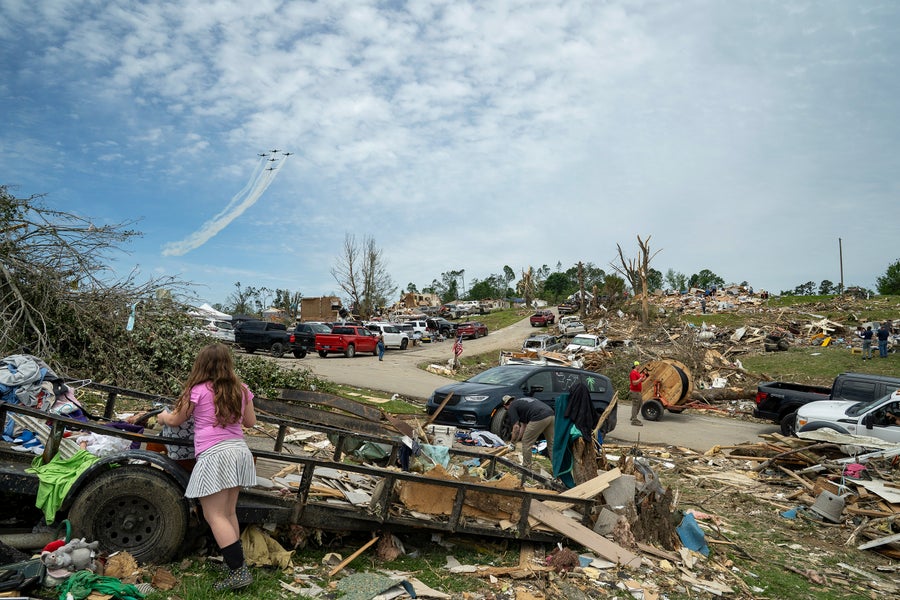
A U.S. Air Force aerobatic team flies in formation over community members and crews cleaning up debris on May 18, 2025, in the community of Sunshine Hills outside of London, Ky. A tornado struck the neighborhood just after midnight on May 17, 2025. Michael Swensen/Stringer/Getty Images
.
.
Click the link below for the complete article:
.
__________________________________________
May 26, 2025
Business, Food For Thought, Human Interest, Political, Science, Technical amazon, business, Business News, current-events, Future, Hotels, human-rights, medicine, mental-health, research, Science, Science News, technology, Technology News, travel, vacation Leave a comment

Click the link below the picture
.
Scott Galloway, a prominent marketing professor at New York University, says Elon Musk’s links to the cost-cutting White House DOGE Office fueled “one of the greatest brand destructions” of all time.
Speaking on an episode of the Pivot podcast, which he cohosts with journalist Kara Swisher, Galloway said Musk’s role with the agency had taken a major toll on Tesla.
“Tesla was a great brand,” Galloway said.
“The rivers have reversed and the tide has turned entirely against him,” he continued, citing a recent Axios Harris poll that showed Tesla had plummeted from eighth place in the ranking of America’s 100 most visible companies in 2021 to 95th in 2025.
Galloway attributed Tesla’s issues to Musk alienating the company’s core customer base with his turn toward politics over the last year.
In the United States, the Tesla CEO spent millions backing Trump’s presidential campaign and was almost inseparable from him during the transition. He then became the public face of DOGE, an advisory body tasked with reducing government spending.
While Musk became a hero to many of Trump’s supporters, the image of a tech billionaire wielding so much power also sparked a backlash, which mostly targeted Tesla.
Tesla reported a 71% drop in earnings per share year over year during its earnings call in late April and has faced widespread protests at its dealerships and showrooms.
“He is a brilliant guy, but he’s alienated his core demographic,” Galloway said on Friday. “He’s alienated the wrong people. Three-quarters of Republicans would never consider buying an EV. So he’s cozied up to the people who aren’t interested in EVs.”
During Tesla’s recent earnings call, Musk said he planned to step back from his work with DOGE and refocus on the companies that made him a household name. He reiterated that on Saturday.
“Back to spending 24/7 at work and sleeping in conference/server/factory rooms,” Musk wrote on X after the platform had battled with widespread outages.
“I must be super focused on 𝕏/xAI and Tesla (plus Starship launch next week), as we have critical technologies rolling out.”
The SpaceX CEO also told an audience at the Qatar Economic Forum on Tuesday that he planned to spend “a lot less” on political campaigns in the future.
“If I see a reason to do political spending in the future, I will do it,” Musk clarified. “I do not currently see a reason.”
.
Elon Musk says he is stepping back from his government work to refocus on his companies. Scott Olson/Getty Images
.
.
Click the link below for the complete article:
.
__________________________________________
Faith saved us from the savages that we were, losing faith makes us savages again
Where Trends Meet Truth
https://www.tangietwoods
Freelance poetry writing
Zalai Betti
INOVATION BLOG PEOPLE AND NEWS
Németh György
Konsultan Lingkungan Hidup di Lombok - NTB
Lea Krasznai (LeaArt21) – Idezetek (Idézetek) WordPress (Budapest, Hungary)
Appunti, spunti e passioni in liberta'
Gyorgy Nemeth
تعنى بتقديم نصائح للمعلمين المبتدئين، والطلبة الممتحنين، ومشاركة الاخرين تجربة الادخار في المال، بترشيد الاستهلاك المنزلي، وترتيب البيت، والحفاظ على البيئة، وتشجيع السيارات صديقةالبيئة، والسياحة والاسفار، ونماء رؤوس الاموال، والطب البديل وتشجيع التعليم الرقمي والذكاء الاصطناعي، والعناية بالنحل وتربية الاسماك، والاسثمار في رؤوس الاموال، الزراعة العضوية، والعناية باسنان الرضع، و صحة الحوامل، وتفسير القران
apprendre pour évoluer
Thoughts on books, language, meaning, and the culture around it.
Outdoor Recreation & Adventure in the Great Lakes Region
News, Info, Bio, Articles, Reviews, Lyrics, Technology, Science, Inspiration, Motivation, Philosphy and many more...
Christian Lifestyle Blogger
CEO and president of The Mullins Companies
Two Cultures. One Life. Endless Stories
Real Estate Development Specialist
¡Bienvenido de vuelta viajero!
so looking to the sky ¡ sing and from my heart to YOU ¡ bring...
CEO and Founder of Nsight Health
Catholic News, Prayers, HD Images, Rosary, Music, Videos, Holy Mass, Homily, Saints, Lyrics, Novenas, Retreats, Talks, Devotionals and Many More
Decoding Power. Defying Narratives.
A creative collaboration introducing the art of nature and nature's art.
The Home Of Entertainment News, Reviews and Reactions
•Whenever you are confronted with an opponent, conquer him with love.(Gandhi)
Algotrader at TRADING-CLUBS.COM
Film and Writing Festival for Comedy. Showcasing best of comedy short films at the FEEDBACK Film Festival. Plus, showcasing best of comedy novels, short stories, poems, screenplays (TV, short, feature) at the festival performed by professional actors.
Peace. Tranquility. Insanity.
Take a ride on the wild side
Découvre des musiques prometteuses (principalement) dans la sphère musicale française.
No tiene que Ser una Pesadilla.
Life in Kana-text (er... CONtext)
Where feelings meet metaphors and make questionable choices.
Finding hope and peace through writing, art, photography, and faith in Jesus.
Eyasu
Eyasu The Wonderful
A former medical student's journey through healthcare challenges and personal growth
love each other like you're the lyric to their music

