
On This Day: May 30, 1943
Assorted human interest posts.
May 29, 2025
Business, Food For Thought, Human Interest, Political, Science, Technical amazon, business, Business News, current-events, Future, Hotels, human-rights, medicine, mental-health, research, Science, Science News, technology, Technology News, travel, vacation Leave a comment

Click the link below the picture
.
I always wanted to understand life. What moves us? What allows us to heal and thrive? And what goes wrong when we get sick or when we eventually stop breathing and die? My search for answers to these stupendously ambitious questions led me, it now seems inexorably, to mitochondria.
In biology classes from high school through university, I learned that mitochondria are little objects that reside within each cell and serve as “powerhouses,” combining oxygen and food to yield energy for the body. This idea of mitochondria being little batteries with a built-in charger, about as interesting as the one in my phone, left me unprepared for the vital reality of these organelles when I first saw them under a microscope in 2011. They were luminous because of a glowing dye I had put in them, and they were dynamic—constantly moving, stretching, morphing, touching one another. They were beautiful. That night, a graduate student alone in a dark laboratory in Newcastle upon Tyne in England, I became a mitochondriac: hooked on mitochondria.
A profound insight by biologist Lynn Margulis helped me make some sense of what I was seeing. She postulated in 1967 that mitochondria descend from a bacterium that was engulfed by a larger ancestral cell about 1.5 billion years ago. Instead of consuming this tidbit, the larger cell let it continue living within. Margulis called this event endosymbiosis, which means, roughly, “living or working together from the inside.” The host cell had no energy source that used oxygen, which, thanks to plants, was already abundant in the atmosphere; mitochondria filled this gap. The unlikely union allowed cells to communicate and cooperate and let their awareness expand beyond their own boundaries, enabling a more complex future in the form of multicellular animals. Mitochondria made cells social, binding them in a contract whereby the survival of each cell depends on every other one, and thus made us possible.
Amazingly, my co-workers and I have discovered that mitochondria are themselves social beings. At least, they foreshadow sociality. Like the bacterium they descended from, they have a life cycle: old ones die out, and new ones are born out of existing ones. Communities of these organelles live within each cell, usually clustered around the nucleus. Mitochondria communicate, both within their own cells and among other cells, reaching out to support one another in times of need and generally helping the community flourish. They produce the heat that keeps our bodies warm. They receive signals about aspects of the environment in which we live, such as air pollution levels and stress triggers, and then integrate this information and emit signals such as molecules that regulate processes within the cell and, indeed, throughout the body.
When our mitochondria thrive, so do we. When they malfunction—when, for instance, their ability to change energy into forms required for biochemical reactions is impaired—we may experience conditions as diverse as diabetes, cancer, autism, and neurodegenerative disorders. And as mitochondria accumulate defects over a lifetime of stress and other insults, they contribute to aging and, ultimately, death. To understand these processes—to see how to sustain physical and mental health—it helps to understand how energy moves through our bodies and minds. That requires a deeper look into mitochondria and their social lives.
Long before I got my first glimpse of mitochondria, I had boned up on the basics of their structure and biology. We inherit our mitochondria from our mother—from the egg cell, to be precise. Mitochondria have their own DNA, which consists of only 37 genes, compared with the thousands of genes in the spiraling chromosomes inside the cell nucleus. This ring of mitochondrial DNA, or mtDNA, is sheltered within two membranes. The outer shell, shaped like the skin of a sausage, encases the mitochondrion and selectively allows molecules to enter or exit. The inner membrane is made of densely packed proteins and has many folds, called cristae, which serve as a site for chemical reactions, much like the plates suspended inside a battery.
Rather than being like battery chargers, mitochondria are more like the motherboard of the cell.
In the 1960s, British biochemists Peter Mitchell and Jennifer Moyle discovered how electrons derived from carbon in food combine with oxygen in the cristae, releasing a spark of energy that is captured as a gradient in electrical voltage across the membrane. This voltage provides the driving force for all processes in the body and brain, from warming to manufacturing molecules to thinking. Mitochondria also produce a molecule called adenosine triphosphate, which serves as a portable unit of energy that powers hundreds of biochemical reactions within each cell.
.
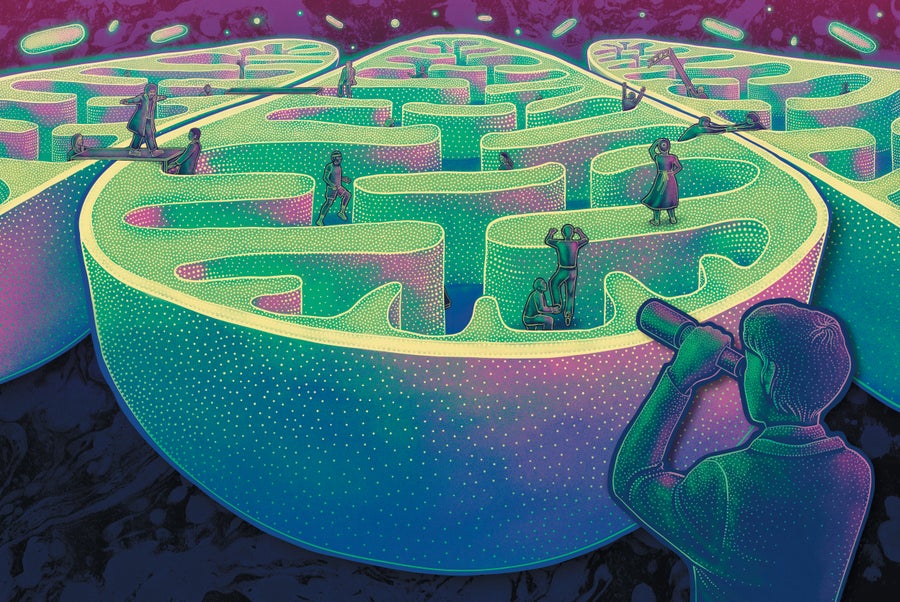 Jennifer N.R. Smith
.
.
Click the link below for the complete article:
.
__________________________________________
May 29, 2025
Business, Food For Thought, Human Interest, Political, Science, Technical amazon, business, Business News, current-events, Future, Hotels, human-rights, medicine, mental-health, research, Science, Science News, technology, Technology News, travel, vacation Leave a comment

Click the link below the picture
.
A series of court rulings have thrown the centerpiece of President Donald Trump’s economic agenda into chaos by first blocking the bulk of his sweeping tariffs and then allowing them to resume, at least for now.
Here’s what to know about where the legal battle stands, and where it could go from here.
What have the courts ruled?
Trump was handed a win on Thursday when a federal appeals court ruled in favor of his Administration and paused a Wednesday night ruling from the U.S. Court of International Trade, allowing his tariffs to remain in place for the time being.
A three-judge panel for the trade court had ruled that the President does not have “unbounded authority” to issue tariffs under the International Emergency Economic Powers Act (IEEPA). The 1977 law, which Trump drew on to levy tariffs against almost every country in the world under national emergencies related to fentanyl and trade deficits, enables the President to oversee economic transactions in the case of a national emergency, such as during an “unusual and extraordinary threat” to the economy, foreign policy, or national security.
The ruling halted a 30% tariff on China, a 25% tariff on certain goods from Mexico and Canada, and 10% baseline tariffs on most of the rest of the world, but did not affect import taxes on steel, aluminum, or automakers, which Trump levied under a different law.
The Administration swiftly appealed, and the Thursday decision to grant its emergency motion has temporarily reinstated the tariffs that were halted while the appeals court considers the case.
Adding to the confusion of the back-and-forth rulings, a federal judge issued a ruling in a separate case earlier on Thursday to bar the Trump Administration from collecting tariffs imposed under IEEPA from two Illinois educational toy companies, but paused his injunction for two weeks. The Administration has appealed that decision as well.
What comes next?
The future of Trump’s tariffs is still in limbo. The appeals court directed the plaintiffs in the case, a group comprised of U.S. businesses affected by the tariffs, to respond to federal officials’ motion to stay the trade court’s ruling by June 5. The federal government must then respond by June 9.
The appeals process could ultimately reach as far as the Supreme Court, where the Trump Administration had previously said it would pursue “emergency relief” should the lower court not reinstate the President’s tariff powers.
The levies Trump has imposed under IEEPA have also been challenged in several other lawsuits.
Prior to the reinstatement of the blocked tariffs, White House Press Secretary Karoline Leavitt told reporters at a press briefing on Thursday that the President had “other legal authorities” he could use to impose import taxes on foreign countries.
Leavitt did not specify further, but the U.S. Court of International Trade itself named another law that grants the President limited power to impose tariffs in its ruling. Section 122 of the Trade Act of 1974, it noted, allows the President to levy tariffs of up to 15% for as long as 150 days in response to “fundamental international payment problems,” including “large and serious balance-of-payments deficits,” and unfair trading practices.
Trump has himself used other laws to impose import taxes in both of his terms. His steel, aluminum, and auto tariffs, for instance, draw on his authority under Section 232 of the Trade Expansion Act of 1962, which empowers the President to put tariffs in place in response to national security threats.
.
 U.S. Court of International Trade in New York City, August 22, 2022.Getty Images
.
.
Click the link below for the complete article:
.
__________________________________________
May 28, 2025
Business, Food For Thought, Human Interest, Political, Science, Technical amazon, business, Business News, current-events, Future, Hotels, human-rights, medicine, mental-health, research, Science, Science News, technology, Technology News, travel, vacation Leave a comment
Click the link below the picture
.
Hail the size of grapefruit shattered car windows in Johnson City, Texas. In June, 2024, a storm chaser found a hailstone almost as big as a pineapple. Even larger hailstones have been documented in South Dakota, Kansas, and Nebraska. Hail has damaged airplanes and even crashed through the roofs of houses.
How do hailstones get so large, and are hailstorms getting worse?
As an atmospheric scientist, I study and teach about extreme weather and its risks. Here’s how hail forms, how hailstorms may be changing, and some tips for staying safe.
How does hail get so big?
Hail begins as tiny crystals of ice that are swept into a thunderstorm’s updraft. As these ice embryos collide with supercooled water – liquid water that has a temperature below freezing – the water freezes around each embryo, causing the embryo to grow.
Supercooled water freezes at different rates, depending on the temperature of the hailstone surface, leaving layers of clear or cloudy ice as the hailstone moves around inside a thunderstorm. If you cut open a large hailstone, you can see those layers, similar to tree rings.
The path a hailstone takes through a thunderstorm cloud, and the time it spends collecting supercooled water, dictates how large it can grow.
Rotating, long-lived, severe thunderstorms called supercells tend to produce the largest hail. In supercells, hailstones can be suspended for 10-15 minutes or more in strong thunderstorm updrafts, where there is ample supercooled water, before falling out of the storm due to their weight or moving out of the updraft.
Hail is most common during spring and summer when a few key ingredients are present: warm, humid air near the surface; an unstable air mass in the middle troposphere; winds strongly changing with height; and thunderstorms triggered by a weather system.
Larger hail, more damage
Hailstorms can be destructive, particularly for farms, where barrages of even small hail can beat down crops and damage fruit.
As hailstones get larger, their energy and force when they strike objects increases dramatically. Baseball-sized hail falling from the sky has as much kinetic energy as a typical major league fastball. As a result, property damage, such as to roofs, siding, windows, and cars, increases as hail gets larger than the size of a quarter.
.
 ljphoto7/Getty Images
.
.
Click the link below for the complete article:
.
__________________________________________
May 28, 2025
Business, Food For Thought, Human Interest, Political, Science, Technical amazon, business, Business News, current-events, Future, Hotels, human-rights, medicine, mental-health, research, Science, Science News, technology, Technology News, travel, vacation 1 Comment

Click the link below the picture
.
A federal court in New York handed President Donald Trump a big setback Wednesday, blocking his audacious plan to impose massive taxes on imports from almost every country in the world.
A three-judge panel of the U.S. Court of International Trade ruled that Trump overstepped his authority when he invoked the 1977 International Emergency Economic Powers Act to declare a national emergency and justify the sweeping tariffs.
The tariffs overturned decades of U.S. trade policy, disrupted global commerce, rattled financial markets, and raised the risk of higher prices and recession in the United States and around the world.
The U.S. Court of International Trade has jurisdiction over civil cases involving trade. Its decisions can be appealed to the U.S. Court of Appeals for the Federal Circuit in Washington and ultimately to the Supreme Court, where the legal challenges to Trump’ tariffs are widely expected to end up.
Which tariffs did the court block?
The court’s decision blocks the tariffs Trump slapped last month on almost all U.S. trading partners and levies he imposed before that on China, Mexico, and Canada.
On April 2, Trump imposed so-called reciprocal tariffs of up to 50% on countries with which the United States runs a trade deficit and 10% baseline tariffs on almost everybody else. He later suspended the reciprocal tariffs for 90 days to give countries time to agree to reduce barriers to U.S. exports. But he kept the baseline tariffs in place. Claiming extraordinary power to act without congressional approval, he justified the taxes under IEEPA by declaring the United States’ longstanding trade deficits “a national emergency.”
In February, he’d invoked the law to impose tariffs on Canada, Mexico and China, saying that the illegal flow of immigrants and drugs across the U.S. border amounted to a national emergency and that the three countries needed to do more to stop it.
The U.S. Constitution gives Congress the power to set taxes, including tariffs. But lawmakers have gradually let presidents assume more power over tariffs, and Trump has made the most of it.
The tariffs are being challenged in at least seven lawsuits. In the ruling Wednesday, the trade court combined two of the cases — one brought by five small businesses and another by 12 U.S. states.
The ruling does leave in place other Trump tariffs, including those on foreign steel, aluminum, and autos. But those levies were invoked under a different law that required a Commerce Department investigation and could not be imposed at the president’s own discretion.
Why did the court rule against the president?
The administration had argued that courts had approved then-President Richard Nixon’s emergency use of tariffs in a 1971 economic and financial crisis that arose when the United States suddenly devalued the dollar by ending a policy that linked the U.S. currency to the price of gold. The Nixon administration successfully cited its authority under the 1917 Trading With Enemy Act, which preceded and supplied some of the legal language later used in IEPPA.
The court disagreed, deciding that Trump’s sweeping tariffs exceeded his authority to regulate imports under IEEPA. It also said the tariffs did nothing to deal with problems they were supposed to address. In their case, the states noted that America’s trade deficits hardly amount of a sudden emergency. The United States has racked them up for 49 straight years in good times and bad.
So where does this leave Trump’s trade agenda?
Wendy Cutler, a former U.S. trade official who is now vice president at the Asia Society Policy Institute, says the court’s decision “throws the president’s trade policy into turmoil.”
.

.
.
Click the link below for the complete article:
.
__________________________________________
May 27, 2025
Business, Food For Thought, Human Interest, Political, Science, Technical amazon, business, Business News, current-events, Future, Hotels, human-rights, medicine, mental-health, research, Science, Science News, technology, Technology News, travel, vacation Leave a comment
Click the link below the picture
.
CLIMATEWIRE | Public officials have started pleading with the Trump administration for help in recovering from deadly disasters as President Donald Trump triggers frustration in states struck by tornadoes, floods, and storms by taking no action on requests for aid.
Trump has left states, counties and tribes in limbo as he delays making decisions on formal requests for millions of dollars in Federal Emergency Management Agency funding. Some areas that are still reeling from extreme weather are unable to start cleanup.
“We’re at a standstill and waiting on a declaration from FEMA,” said Royce McKee, emergency management director in Walthall County, Mississippi, which was hit by tornadoes in mid-March.
The county of 13,000 people can’t afford to clean up acres of debris, McKee said, and is waiting for Trump to act on a disaster request that was submitted by Gov. Tate Reeves, a Republican, on April 1 after the tornadoes killed seven people, destroyed or damaged 671 homes, and caused $18.2 million in public damage.
“I’m disappointed, especially for the people that lost their houses,” McKee said.
Trump himself assailed FEMA in January for being “very slow.”
The frustration over Trump’s handling of disasters is the latest upheaval
involving FEMA. Trump recently canceled two FEMA grant programs that gave states billions of dollars a year to pay for protective measures against disasters. The move drew protests from Republican and Democratic lawmakers.
On May 8, Trump fired FEMA leader Cameron Hamilton and replaced him with David Richardson, a former Marine Corps officer who has no experience in emergency management.
At a congressional hearing on Tuesday, Missouri Sen. Josh Hawley, a Republican, pleaded with Homeland Security Secretary Kristi Noem to push Trump to approve three disaster requests that Missouri Gov. Mike Kehoe, a Republican, had sent to Trump beginning April 2.
“We are desperate for assistance in Missouri,” Hawley said as Noem pledged to help. Her department oversees FEMA.
St. Louis Mayor Cara Spencer, whose city was badly damaged by tornadoes earlier this week, told MSNBC: “What we need right now is federal assistance. This is where FEMA and the federal government have got to come in and help communities. Our city can’t shoulder this alone.”
Trump has not acted on 17 disaster requests, a high number for this time of year, according to a FEMA daily report released Wednesday. On the same date eight years ago, during Trump’s first presidency, only three disaster requests were awaiting presidential action, the FEMA report from May 21, 2017, shows.
Eleven of the 17 pending disaster requests were sent to Trump more than a month ago.
“This looks to me like, until FEMA’s role is clarified, then we’re just going to sit on it,” said a former senior FEMA official who was granted anonymity to speak candidly.
Trump has indicated that he wants to shrink the agency, which distributes about $45 billion in disaster aid a year, helps with as many as 100 disasters at a time and, he said, “has been a very big disappointment.”
.

A man is comforted by a family friend while cleaning up the debris of his house on May 18, 2025, in the community of Sunshine Hills outside of London, Kentucky. A tornado struck the neighborhood of Sunshine Hills just after midnight on May 17, 2025, in London, Kentucky. Michael Swensen/Getty Images
.
.
Click the link below for the complete article:
.
__________________________________________
Faith saved us from the savages that we were, losing faith makes us savages again
Where Trends Meet Truth
https://www.tangietwoods
Freelance poetry writing
Zalai Betti
INOVATION BLOG PEOPLE AND NEWS
Németh György
Konsultan Lingkungan Hidup di Lombok - NTB
Lea Krasznai (LeaArt21) – Idezetek (Idézetek) WordPress (Budapest, Hungary)
Appunti, spunti e passioni in liberta'
Gyorgy Nemeth
تعنى بتقديم نصائح للمعلمين المبتدئين، والطلبة الممتحنين، ومشاركة الاخرين تجربة الادخار في المال، بترشيد الاستهلاك المنزلي، وترتيب البيت، والحفاظ على البيئة، وتشجيع السيارات صديقةالبيئة، والسياحة والاسفار، ونماء رؤوس الاموال، والطب البديل وتشجيع التعليم الرقمي والذكاء الاصطناعي، والعناية بالنحل وتربية الاسماك، والاسثمار في رؤوس الاموال، الزراعة العضوية، والعناية باسنان الرضع، و صحة الحوامل، وتفسير القران
apprendre pour évoluer
Thoughts on books, language, meaning, and the culture around it.
Outdoor Recreation & Adventure in the Great Lakes Region
News, Info, Bio, Articles, Reviews, Lyrics, Technology, Science, Inspiration, Motivation, Philosphy and many more...
Christian Lifestyle Blogger
CEO and president of The Mullins Companies
Two Cultures. One Life. Endless Stories
Real Estate Development Specialist
¡Bienvenido de vuelta viajero!
so looking to the sky ¡ sing and from my heart to YOU ¡ bring...
CEO and Founder of Nsight Health
Catholic News, Prayers, HD Images, Rosary, Music, Videos, Holy Mass, Homily, Saints, Lyrics, Novenas, Retreats, Talks, Devotionals and Many More
Decoding Power. Defying Narratives.
A creative collaboration introducing the art of nature and nature's art.
The Home Of Entertainment News, Reviews and Reactions
•Whenever you are confronted with an opponent, conquer him with love.(Gandhi)
Algotrader at TRADING-CLUBS.COM
Film and Writing Festival for Comedy. Showcasing best of comedy short films at the FEEDBACK Film Festival. Plus, showcasing best of comedy novels, short stories, poems, screenplays (TV, short, feature) at the festival performed by professional actors.
Peace. Tranquility. Insanity.
Take a ride on the wild side
Découvre des musiques prometteuses (principalement) dans la sphère musicale française.
No tiene que Ser una Pesadilla.
Life in Kana-text (er... CONtext)
Where feelings meet metaphors and make questionable choices.
Finding hope and peace through writing, art, photography, and faith in Jesus.
Eyasu
Eyasu The Wonderful
A former medical student's journey through healthcare challenges and personal growth
love each other like you're the lyric to their music

