Home

Scott Galloway says Musk’s work at DOGE fueled ‘one of the greatest brand destructions’ of all time

Leave a comment

Click the link below the picture

.

Scott Galloway, a prominent marketing professor at New York University, says Elon Musk’s links to the cost-cutting White House DOGE Office fueled “one of the greatest brand destructions” of all time.

Speaking on an episode of the Pivot podcast, which he cohosts with journalist Kara Swisher, Galloway said Musk’s role with the agency had taken a major toll on Tesla.

“Tesla was a great brand,” Galloway said.

“The rivers have reversed and the tide has turned entirely against him,” he continued, citing a recent Axios Harris poll that showed Tesla had plummeted from eighth place in the ranking of America’s 100 most visible companies in 2021 to 95th in 2025.

Galloway attributed Tesla’s issues to Musk alienating the company’s core customer base with his turn toward politics over the last year.

In the United States, the Tesla CEO spent millions backing Trump’s presidential campaign and was almost inseparable from him during the transition. He then became the public face of DOGE, an advisory body tasked with reducing government spending.

While Musk became a hero to many of Trump’s supporters, the image of a tech billionaire wielding so much power also sparked a backlash, which mostly targeted Tesla.

Tesla reported a 71% drop in earnings per share year over year during its earnings call in late April and has faced widespread protests at its dealerships and showrooms.

“He is a brilliant guy, but he’s alienated his core demographic,” Galloway said on Friday. “He’s alienated the wrong people. Three-quarters of Republicans would never consider buying an EV. So he’s cozied up to the people who aren’t interested in EVs.”

During Tesla’s recent earnings call, Musk said he planned to step back from his work with DOGE and refocus on the companies that made him a household name. He reiterated that on Saturday.

“Back to spending 24/7 at work and sleeping in conference/server/factory rooms,” Musk wrote on X after the platform had battled with widespread outages.

“I must be super focused on 𝕏/xAI and Tesla (plus Starship launch next week), as we have critical technologies rolling out.”

The SpaceX CEO also told an audience at the Qatar Economic Forum on Tuesday that he planned to spend “a lot less” on political campaigns in the future.

“If I see a reason to do political spending in the future, I will do it,” Musk clarified. “I do not currently see a reason.”

.

https://i.insider.com/67fe72c13fe8d392836317c2?width=1000&format=jpeg&auto=webpElon Musk says he is stepping back from his government work to refocus on his companies.  Scott Olson/Getty Images

.

.

Click the link below for the complete article:

https://www.businessinsider.com/elon-musk-tesla-doge-brand-scott-galloway-2025-5

.

__________________________________________

On This Day: May 26, 1924

Leave a comment

On This Day: May 26, 1924

The Very Real Health Implications of Medicaid Cuts for Older People

Leave a comment

Click the link below the picture

.

Republicans in Congress intend to cut about US$880 billion in federal health care spending.

One of their primary targets is Medicaid. That government program covers 82 million Americans with health insurance. Most of the people enrolled in the program are low income, have disabilities, or both.

Medicaid, jointly funded by the federal government and the states, is also the biggest funder in the U.S. of long-term care services, whether they are delivered in the patient’s home, another location where they spend part of their day, or a nursing home. That makes it particularly important for older adults and those with disabilities. All states must meet the basic federal guidelinesfor Medicaid coverage. But 41 states have opted to take advantage of the Affordable Care Act provision that expanded eligibility to cover more people under the program.

We are gerontology researchers who study health and financial well-being in later life. We’ve been analyzing what the potential impacts of Medicaid cuts might be.

While the debate about how to reduce the budget focuses largely on dollars and cents, we believe that cutting federal spending on Medicaid would harm the health and well-being of millions of Americans by reducing their access to care. In our view, it’s also likely that any savings achieved in the short term would be smaller than the long-term increase in health care costs born by the federal government, the states and patients, including for many Americans who are 65 and older.

Weak track record

Wary of backlash from their constituents, Republicans have agreed on a strategy that would largely cut Medicaid spending in a roundabout way.

Previous efforts by the GOP in some states, such as imposing work requirements for some people to get Medicaid benefits, have not greatly reduced costs. That’s largely because there are relatively few people enrolled in the Medicaid program who are physically able to be employed and aren’t already in the workforce. Nor have past efforts to reduce fraud, waste, and abuse led to significant savings.

According to widespread media reports, Republicans are considering changes that would cut the amount of money that the federal government reimburses states for what they spend on Medicaid.

In May 2025, the nonpartisan Congressional Budget Office estimated that 8.6 million Americans would lose their health insurance coverage should the GOP proposal become law.

Historically, states have dealt with budget cuts by reducing their payments to health care providers, limiting eligibility, or restricting benefits. These reductions all particularly affected home- and community-based services that many disabled and older adults rely on.

About 3 in 4 of the people with Medicaid coverage who receive long-term care through the program get that care at home, in their communities, or both, rather than residing in a nursing home. States save an estimated 26 cents for every dollar spent on those services delivered outside nursing homes.

Losing coverage can be harmful for your health

We recently analyzed data from a nationally representative study of approximately 6,000 people who had Medicaid coverage but lost it when they turned age 65 because their income exceeded 100% of the federal poverty level. In 2025, that cutoff is about $15,560 for a single person and $21,150 for a couple.

Medicaid income eligibility generally drops from 138% to 100% of the federal poverty level at age 65 once Medicare becomes a person’s primary health insurer.

The people who participated in the study had lost their Medicaid coverage upon turning 65 between 1998 and 2020. Our team followed the experiences of these participants over a 10-year period starting at age 65 to see how they fared compared with people who continue to be enrolled in Medicaid after their 65th birthday.

What we found was both surprising and disturbing.

Fewer activities of daily living

Over the decade following that milestone, the people who lost their Medicaid coverage had more chronic conditions and could perform fewer activities of daily living, such as bathing and getting dressed, without any assistance as compared with those who still had Medicaid coverage. In addition, they were twice as likely to experience depression and be in fair or poor health.

As people’s health worsened, they also went to the hospital more often and stayed there longer. They also used outpatient surgery services more frequently.

These services are particularly expensive for the health care system. Depending on the service, it may also be costly for patients. Unlike the comprehensive coverage of Medicaid, the Medicare program fully covers only inpatient hospitalizations, short-term nursing facility care, hospice, some short-term home care, annual wellness visits, vaccines and some basic preventive care. Beyond that, Medicare requires the payment of premiums to help with uncovered services that can also include deductibles and copays.

This arrangement can lead to significant out-of-pocket costs that make health care hard for low-income older adults to afford unless they have both Medicare and Medicaid coverage.

We also found that older people who lost Medicaid coverage were less likely to see their primary care physician for routine and follow-up care, despite being enrolled in Medicare. This explains in part why they are going to the hospital more often, likely avoiding routine health care that may incur out-of-pocket costs and eventually utilizing Medicare-covered hospital care when needed.

In short, we found that exiting the Medicaid program upon turning 65 actually leads to an increase in the use of some of the most expensive health care services, such as inpatient hospitalization and outpatient surgery. So although Medicaid may no longer pay for these costs, the rest of the health care system does.

.

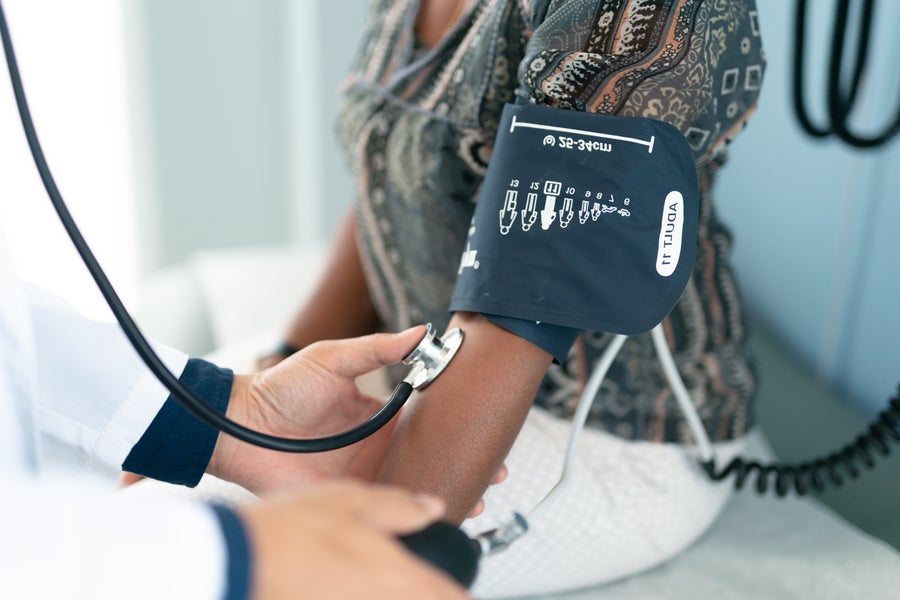
https://static.scientificamerican.com/dam/m/13854283e66e7e8e/original/Patient-Having-Her-Blood-Pressure-Checked.jpg?m=1747770253.64&w=900

Medicaid provides health insurance coverage for more than 82 million Americans. FatCamera/Getty Images

.

.

Click the link below for the complete article:

https://www.scientificamerican.com/article/medicaid-cuts-will-make-older-people-sicker/

.

__________________________________________

‘Roadmap for corruption’: Trump dive into cryptocurrency raises ethics alarm

Leave a comment

Click the link below the picture

.

Donald Trump’s push to sharply ease oversight of the cryptocurrency industry, while he and his sons have fast expanded crypto ventures that have reaped billions of dollars from investors, including foreign ones, is raising alarm about ethical and legal issues.

Watchdog groups, congressional Democrats and some Republicans have levelled a firestorm of criticism at Trump for hawking his own meme coin, $Trump, a novelty crypto token with no inherent value, by personally hosting a 22 May dinner at his Virginia golf club for the 220 largest buyers of $Trump and a private “reception” for the 25 biggest buyers.

To attend the two events, the $Trump buyers spent about $148m, which will benefit Trump and partners, according to the crypto firm Inca Digital.

Further, the Trump family crypto venture World Liberty Financial that launched last fall, which his two oldest sons have promoted hard, was tapped this month to play a key part in a $2bn investment deal by an Abu Dhabi financial fund in the crypto exchange Binance, which in 2023 pleaded guilty to US money laundering and other violations.

The new WLF deal was announced at an Abu Dhabi crypto conference that drew Eric Trump two weeks before Trump’s mid-May visit to the United Arab Emirates capital, sparking other concerns of improper foreign influence and ethics issues.

Trump’s ardent pursuit of crypto fortunes was highlighted in a report last month from the watchdog group State Democracy Defenders Fund that estimated his crypto ventures as of mid-March to be worth about $2.9bn. That is a striking sum since Trump’s crypto ventures are less than a year old.

Senate Democrats, led by Jeff Merkley of Oregon and the minority leader, Chuck Schumer of New York, introduced a bill this month that has garnered sizable Democratic backing to block Trump from using his office to benefit his crypto businesses.

Watchdogs say Trump is exploiting his office for personal gain in unprecedented and dangerous ways.

“There is the appearance if not the reality of corruption in the upcoming dinner with Trump on the 22nd at his Virginia golf club for the 220 biggest Trump meme coin buyers and the private reception he’s promised for the top 25 buyers, plus the separate $2bn deal between World Liberty Financial and the Abu Dhabi investment vehicle,” said Richard Painter, a former White House ethics adviser to George W Bush who co-authored the Democracy Defenders Fund report.

“Trump is marketing access to himself as a way to profit his memecoin,” said the Columbia Law professor Richard Briffault, an expert on government ethics. Briffault added: “People are paying to meet Trump, and he’s the regulator in chief. It’s doubly corrupt. This is unprecedented. I don’t think there’s been anything like this in American history.”

Such concerns were fueled when Trump quickly chose crypto industry allies to run the Securities and Exchange Commission and as his “czar” for crypto and AI. Among other moves, the SEC has dropped or put on hold investigations and prosecutions of over a dozen crypto firms.

Fears of possible corruption have also focused on Chinese-born Justin Sun, the biggest investor in Trump’s crypto ventures. Sun bought about $20m of $Trump to become its top purchaser before the dinner on the 22nd, which he attended. Sun previously invested at least $75m in World Liberty Financial to become its lead investor and an adviser.

.

$Trump meme coinA $Trump memecoin, a novelty crypto token that has generated millions for the president and his family as buyers vie for access. Photograph: Jonathan Raa/NurPhoto/REX/Shutterstock

.

.

Click the link below for the complete article:

https://www.theguardian.com/us-news/2025/may/25/trump-crypto-corruption-ethics

.

__________________________________________

First Black Woman Elected to Tennessee General Assembly: Dorothy Lavinia Brown

Leave a comment

First Black Woman Elected to Tennessee General Assembly: Dorothy Lavinia Brown

On This Day: May 25, 2020

Leave a comment

On This Day: May 25, 2020

One Woman’s Pharmaceutical Journey to a Good Night’s Sleep

Leave a comment

Click the link below the picture

.

I never had issues with sleep until the COVID-19 pandemic. A couple of months into lockdown in 2020, I found myself unable to fall or stay asleep. My worries played on an unstoppable loop, and the longer I lay in bed, the more anxious I became about not sleeping. This vicious cycle left me exhausted. After a few months, I became depressed. It was time to get professional help.

This was the start of a years-long odyssey to find an effective sleep aid without negative side effects. The first medication I tried was 50 milligrams of an antihistamine called hydroxyzine, prescribed to me after a five-minute telehealth appointment. It effectively knocked me out, but it left me feeling so groggy the next morning that I struggled to get out of bed. I stopped taking it.

I lacked the energy to meet with a physician again, so I went back to relying on a grab bag of pills. These included over-the-counter melatonin, a hormone used to treat sleep problems; diphenhydramine, an antihistamine and sedative commonly sold as Benadryl; my husband’s gabapentin, which is prescribed to treat epilepsy and nerve pain but is commonly given as an anti-anxiety sleep aid; and tablets of questionable provenance that were labelled as alprazolam, used to treat anxiety conditions, which I acquired on a pre-pandemic trip to Sri Lanka. I rotated through these remedies in an attempt to not become overly reliant on any one of them.

Last year, my struggle to sleep markedly worsened. Stress still seemed to be in limitless supply. My identity is wrapped up in my job as a science journalist, but as the media industry continues to collapse in on itself, it is becoming more and more difficult to make ends meet. At night, my chest would tighten as I tried to imagine a viable future in my chosen career. Layered on top of that were the stressors of the 2024 US presidential election and interpersonal drama with my increasingly conservative father.

I found a sympathetic primary-care provider in the form of a physician’s assistant (PA) — a licensed medical professional who, in some states, can prescribe medications but isn’t actually a physician. She listened to my problems and asked me questions about my life. At the end of the appointment, she agreed that I should try the antidepressant bupropion. I was still having trouble sleeping, however, and my night-time anxiety spiked following the election. “Sadly, we are getting a lot of these messages,” my PA said when I told her about this. We added buspirone, an anti-anxiety medication, to my daily regimen. I immediately started sleeping better. But buspirone left me feeling deflated, numb, and unmotivated during the day. My PA suggested that, as long as I didn’t develop serious depressive thoughts, I should stick it out for a month to give my body time to adjust.

I agreed to give it more time. Then, about three weeks in, I woke up one night from a nightmare and felt something crawling through my hair. Then, I saw a flash of light, as though someone was standing over me, taking a photograph. I quickly realized that these had been hallucinations that occurred in the transition from sleep to wakefulness. Nothing like this had ever happened to me before, and the vividness of the experience was extremely disconcerting. The next day, I learnt that disturbed sleep is a side effect of buspirone. My PA agreed that I should stop the drug.

But, I still needed help to fall asleep. The obvious choice would have been benzodiazepines or ‘Z-drugs’ — classes of medications that have a sedative effect. But these drugs can also lead to dependency. Worryingly, too, a study in mice, published this year, found that one of these drugs, zolpidem (Ambien), might interfere with the brain’s ability to clear waste, including toxic molecules associated with Alzheimer’s disease. These results still need to be replicated in humans, but they do mirror findings from at least one observational study. I told my PA I wanted to steer clear of these medications.

Through reporting for another story on sleep medication for this Nature Outlook, I was cautiously excited to learn about a new class of insomnia medications known as dual orexin receptor antagonist (DORA) drugs. These work by blocking a molecule that promotes wakefulness, and they have fewer side effects and a lower risk of dependence compared with other sleep aids. My PA was familiar with one of them, Belsomra, and said I could try it.

It took almost three weeks for me to receive the prescription, and my insurance would not cover it. There are no generic DORA drugs. Thirty daily tablets of Belsomra was going to cost me an astronomical US$500. But, I was desperate to get some sleep, and my pharmacist was able to find a coupon that knocked $150 off the bill. I sucked it up and paid.

As I write this, I’ve been taking Belsomra on and off for a month. When it works well, I fall asleep quickly and soundly, and wake up feeling clear-headed and rested. About one-quarter of the time, however, my anxiety manages to cut through the medication, and I struggle to fall asleep. My PA said that I can try doubling my dose to the maximum 20 milligrams, by taking two tablets each night. But I haven’t tried this yet, because I’m aware that each pill I pop before bed is about the same price as ordering a fancy cocktail.

.

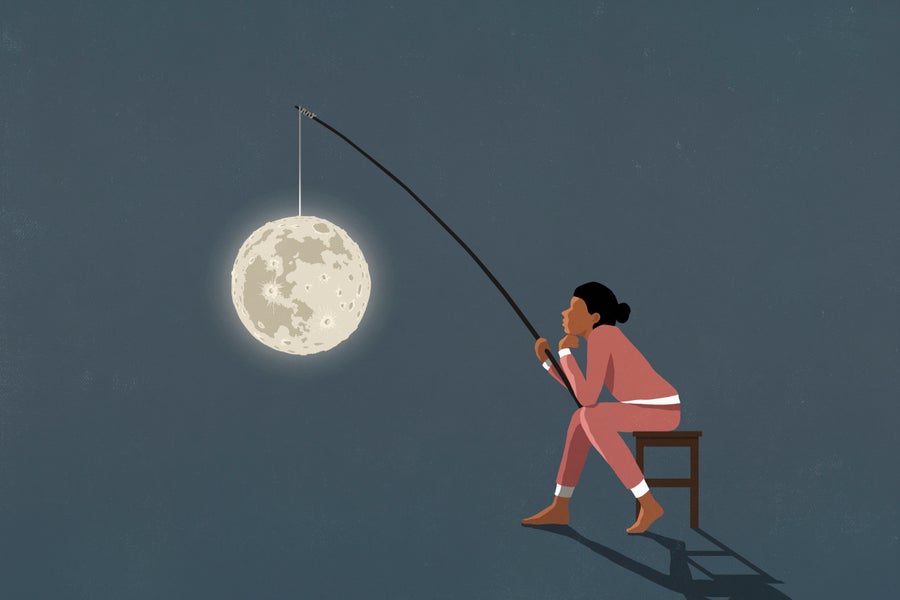
https://static.scientificamerican.com/dam/m/39a7454c4ff111e5/original/Sleep_Thinking.jpg?m=1747668539.646&w=900Malte Mueller

.

.

Click the link below for the complete article:

https://www.scientificamerican.com/article/sleep-aids-can-be-uneven-and-expensive-leaving-anxious-patients-lacking/

.

__________________________________________

The Best Fundraising Advice, According to 7 Female Founders

Leave a comment

Click the link below the picture

.

When it comes to fundraising, female-founded companies face daunting odds. In 2024, wholly women-led companies attracted just 1 percent of venture capital funding, according to PitchBook. Still, many have prevailed—often by thinking outside the box. Their stories aren’t just about the millions (and in some cases, hundreds of millions) they’ve raised, but about their strategy: executed with confidence, creativity, and zero desire to fit into anybody’s mold. 

They offer clear and candid advice on what actually worked, from pitching unlikely partners to skipping VC funding entirely. One founder even landed John Deere as a lead investor. If you’re fundraising or remotely thinking about it, here are seven tips on how to do it differently.

1. Don’t wait for perfection

“Don’t be afraid to invite people in at the ground floor. I think sometimes you can feel like you have to wait until the thing is built and it’s perfect, and it’s out in the world, and it’s successful. But I think the way you build something quick, and the way you make something successful is by inviting the right people in at the ground level.” —Elaine Welteroth, founder of birthFUND, a maternal health investment initiative, raised $1.85 million.

2. Pitch your partners

“The biggest problem with agriculture is that it’s highly consolidated. There’s just a handful of companies that sell to farmers, and they really don’t want to sell anything new. But farmers are actually great at adopting technology, they’re incredibly open-minded. We just needed to figure out how to get our technology into farmers’ hands as fast as possible. We pitched our tech to John Deere and they ended up leading our Series A. It’s an incredible partnership because we’re doing something that fits 100 percent into their strategic initiatives, and they help us increase our brand awareness.” —Shely Aronov, co-founder and CEO of InnerPlant, an agriculture tech company developing biosensing plants, raised $51.65 million.

3. Lead with belief

“Don’t be intimidated by fundraising. If you go in with energy and enthusiasm for something that you’re really passionate about and you truly believe that what you’re doing is needed, the people who are considering giving you money will want to learn more.” —Georgia Gaveras, co-founder and chief medical officer of Talkiatry, a digital mental health provider, raised $242 million.

4. Put clients before capital

“Your best investor is your client. If your clients are happy with your product, you will always have—like in the case of Creatio—a ton of investors who will be knocking [on] your doors and will be excited to invest in you. When you’re laser-focused on clients from day one—finding new clients, serving them, making them your raving fans, making them absolutely excited about the product, developing relationships with your clients—when all your focus and attention goes not into your personal PR, not into speaking engagements, startup competitions, and the fanciest products, but literally into your clients, it all starts working as a flywheel. Because clients, they actually bring life to your company, because it’s the best evidence that what you deliver actually brings value, and that’s the most important thing.” —Katherine Kostereva, founder and CEO of Creatio, a no-code platform for workflow automation and CRM, raised $268 million

5. Prove it with product

“In a venture business, there’s a lot of unconscious and conscious bias for women out there. When I first tried to raise money, I had a VC telling me, ‘I’m a Caucasian guy with gray hair. How can you raise funding for a company without even a single gray hair, and without being a Caucasian man?’ And I was like, ‘Well, you can raise money without a product, but I would rather raise money with a product.’ Eventually, we became one of the most successful companies in our portfolio.” —Siyu Huang, co-founder and CEO of Factorial Energy, a developer of solid-state battery tech, raised $250 million

6. Know what you want

“It’s also really important to understand what’s in fundraising for you. What kind of business do you want, ultimately, what kind of money do you want to make? It’s important that what you personally want is also aligned with what the investors want, and then it’s much easier to succeed. If actually what you want isn’t quite what the investors are looking for, they’ll see that, and it will be very difficult to fundraise.” —Madison Maxey, founder and CEO of Loomia, a materials science company focused on e-textiles, raised $2 million

7. Be the pioneer

“You get very few opportunities to be the first person to do something. It’s a thrill, but sometimes the pathway is so uncharted and the white space is so vast that I think there’s too much opportunity. The most difficult part of building a business on the cutting edge is there’s no playbook to follow. It’s harder to tell if you’re deploying your first-mover advantage in the right way or focusing on the right opportunity within this huge opportunity set.” —Jiani Zeng, co-founder and CPO of Butlr, an anonymous occupancy detection platform for traffic monitoring, raised $68 million

.

https://img-cdn.inc.com/image/upload/f_webp,c_fit,w_1200,q_auto/vip/2025/05/inc-ff-500-2025-verbatim-fundraising-phenoms-resize.jpg

These women know how to pitch

 .

.

Click the link below for the complete article:

https://www.inc.com/staff/the-best-fundraising-advice-according-to-7-female-founders/91168463

.

__________________________________________

First Black Woman Admitted to The Mississippi Bar: Marian Wright Edelman

Leave a comment

First Black Woman Admitted to The Mississippi Bar: Marian Wright Edelman

On This Day: May 24, 1911

Leave a comment

On This Day: May 24, 1911

Older Entries Newer Entries

JaZzArt en València

Faith saved us from the savages that we were, losing faith makes us savages again

PeopleTalky

Where Trends Meet Truth

MRS. T’S CORNER

https://www.tangietwoods

Srikanth’s poetry

Freelance poetry writing

MediaNegy

Zalai Betti

INOVATION BLOG AND NEWS

INOVATION BLOG PEOPLE AND NEWS

szigetingy | budapest

Németh György

PT. LPPL Lombok

Konsultan Lingkungan Hidup di Lombok - NTB

Idézetek – LeaArt21

Lea Krasznai (LeaArt21) – Idezetek (Idézetek) WordPress (Budapest, Hungary)

danielecolleoni

Appunti, spunti e passioni in liberta'

تعلم وعلم، ادخر،سافر واستجمم .

تعنى بتقديم نصائح للمعلمين المبتدئين، والطلبة الممتحنين، ومشاركة الاخرين تجربة الادخار في المال، بترشيد الاستهلاك المنزلي، وترتيب البيت، والحفاظ على البيئة، وتشجيع السيارات صديقةالبيئة، والسياحة والاسفار، ونماء رؤوس الاموال، والطب البديل وتشجيع التعليم الرقمي والذكاء الاصطناعي، والعناية بالنحل وتربية الاسماك، والاسثمار في رؤوس الاموال، الزراعة العضوية، والعناية باسنان الرضع، و صحة الحوامل، وتفسير القران

scientifique

apprendre pour évoluer

In Between the Lines

Thoughts on books, language, meaning, and the culture around it.

Great Lakes Mindset

Outdoor Recreation & Adventure in the Great Lakes Region

Nelsapy

News, Info, Bio, Articles, Reviews, Lyrics, Technology, Science, Inspiration, Motivation, Philosphy and many more...

Becoming HIS Tapestry

Christian Lifestyle Blogger

Joe Mullins Commissioner

CEO and president of The Mullins Companies

The Luttie Board

Two Cultures. One Life. Endless Stories

Charles Maxwell DeCook

Real Estate Development Specialist

Amor Entre Estrellas

¡Bienvenido de vuelta viajero!

Heart of Loia `'.,°~

so looking to the sky ¡ sing and from my heart to YOU ¡ bring...

Michael Ciullo

CEO and Founder of Nsight Health

Nelson MCBS

Catholic News, Prayers, HD Images, Rosary, Music, Videos, Holy Mass, Homily, Saints, Lyrics, Novenas, Retreats, Talks, Devotionals and Many More

global geopolitics

Decoding Power. Defying Narratives.

Talk Photo

A creative collaboration introducing the art of nature and nature's art.

Movie Burner Entertainment

The Home Of Entertainment News, Reviews and Reactions

C r i s t i a n a' s Fine Arts ⛄️

•Whenever you are confronted with an opponent, conquer him with love.(Gandhi)

TradingClubsMan

Algotrader at TRADING-CLUBS.COM

Comedy FESTIVAL

Film and Writing Festival for Comedy. Showcasing best of comedy short films at the FEEDBACK Film Festival. Plus, showcasing best of comedy novels, short stories, poems, screenplays (TV, short, feature) at the festival performed by professional actors.

Bonnywood Manor

Peace. Tranquility. Insanity.

Warum ich Rad fahre

Take a ride on the wild side

Madame-Radio

Découvre des musiques prometteuses (principalement) dans la sphère musicale française.

Ir de Compras Online

No tiene que Ser una Pesadilla.

Kana's Chronicles

Life in Kana-text (er... CONtext)

Jam Writes

Where feelings meet metaphors and make questionable choices.

emotionalpeace

Finding hope and peace through writing, art, photography, and faith in Jesus.

Essu Center

Eyasu The Wonderful

Wearing2Gowns.Blog

A former medical student's journey through healthcare challenges and personal growth

...

love each other like you're the lyric to their music