Home

China’s Rare Earth Restrictions Aim to Beat U.S. at Its Own Game

Leave a comment

Click the link below the picture

.

Over the past three years, Washington has claimed broad power to impose global rules that bar companies anywhere in the world from sending cutting-edge computer chips or the tools needed to make them to China. American officials have argued that approach is necessary to make sure China does not gain the upper hand in the race for advanced artificial intelligence.

But a sweeping set of restrictions announced by Beijing last week showed that two can play that game.

The Chinese government flexed its own influence over worldwide supply chains when it announced new rules clamping down on the flow of critical minerals that are used in everything from computer chips to cars to missiles. The rules, which are set to take effect later this year, shocked foreign governments and businesses, which may now need to acquire licenses from Beijing to trade their products even outside China.

With its dominance over the production of these rare earth minerals and its control of other strategic industries, China may have an even greater ability than the United States to weaponize supply chains, analysts say.

“The U.S. now has to face up to the fact it has an adversary which can threaten substantial parts of the U.S. economy,” said Henry Farrell, a political scientist at the Johns Hopkins School of Advanced International Studies. The United States and China are now very clearly “in a much more delicate stage of mutual interdependence,” he added.

“China has really begun to figure out how to take a leaf from the U.S. playbook and, in a certain sense, play that game better than the U.S. is currently playing it,” Mr. Farrell said.

China’s move has rekindled tensions between the world’s two largest economies, with Mr. Trump threatening to increase already substantial tariffs on Chinese imports by imposing an additional 100 percent tax on Nov. 1 unless Beijing backs down from its new restrictions.

The type of supply chain restriction that China is embarking on first came into play in 2020. Washington dusted off an obscure provision known as the foreign direct product rule to target the Chinese tech giant Huawei, which the U.S. government considered a national security threat. But instead of restricting American technology exports just to Huawei, the United States said any company anywhere in the world could not ship a product to Huawei if it contained U.S. parts or was made with U.S. equipment or software.

Because of the United States’ key role in the global chipmaking industry, the rules basically encompassed all advanced technology. It was a broad exertion of U.S. economic power that became the basis of a series of global tech rules during the Biden administration. Although foreign governments chafed at being told what to do, many cooperated for fear of being cut off from U.S. technology.

The question now is: Will the Chinese restrictions persuade the Trump administration to walk back its tariffs or longstanding technology restrictions, or will China’s government fold under pressure first?

The administration seemed caught off guard by China’s restrictions, which could cripple American industries. Mr. Trump threatened on Friday to cancel a planned meeting with the Chinese leader, Xi Jinping, as well as adding a 100 percent tariff. After stock markets plunged, the president posted on social media on Sunday, “Don’t worry about China, it will all be fine!”

On Tuesday, Mr. Trump renewed his barbs, telling a crowd of reporters and the president of Argentina that Mr. Xi “gets testy because China likes to take advantage of people and they can’t take advantage of us.” That afternoon, Mr. Trump wrote on social media that the United States was considering terminating cooking oil imports from China, as well as potentially other business.

On Wednesday morning, Treasury Secretary Scott Bessent and Jamieson Greer, the U.S. trade representative, described the Chinese licensing system as a global power grab and said the United States stood ready to impose its tariffs if China moved forward.

“Our expectation is that this never goes into effect,” Mr. Greer said.

Chinese officials have long criticized America’s extraterritorial enforcement of economic measures and insisted that Beijing has acted with consistency in the face of renewed threats from Washington.

.

https://static01.nyt.com/images/2025/10/16/multimedia/DC-CHINA-CHIPWAR-06-thqm/DC-CHINA-CHIPWAR-06-thqm-jumbo.jpg?quality=75&auto=webpPresident Trump has threatened to cancel a meeting with China’s top leader, Xi Jinping, who spoke at the Global Leaders’ Meeting on Women in Beijing on Monday.Credit…Pool photo by Ken Ishii

.

.

Click the link below for the complete article:

https://www.nytimes.com/2025/10/16/business/economy/china-rare-earths-supply-chain.html

.

__________________________________________

King Amda Seyon I of Ethiopia (1314 to 1344) Solomonic Dynasty Member

Leave a comment

King Amda Seyon I of Ethiopia (1314 to 1344) Solomonic Dynasty Member

Black Olympic Medalists Face Threats & Expulsion Protesting Racial Inequality

Leave a comment

Black Olympic Medalists Face Threats & Expulsion Protesting Racial Inequality

Shimon Sakaguchi Reflects on How Hunting for a Mysterious T Cell Earned Him a Nobel Prize

2 Comments

Click the link below the picture

.

In 2006, immunologist and 2025 Nobel prize winner Shimon Sakaguchi co-wrote an article in Scientific American that now feels prophetic. In the story, entitled “Peacekeepers of the Immune System,” Sakaguchi traced a time line of important studies that led to his discovery of an elusive type of immune cell he called regulatory T cells.

In the 1980s, the field had largely dismissed the existence of such a class of cells, but Sakaguchi and other scientists proved that regulatory T cells, or Tregs, are the integral “peacekeepers” that prevent the immune system from overreacting and harming the body itself. That process, known as peripheral immune tolerance, stops the body’s primary defense mechanism from entering self-destruct mode, called autoimmunity.

The experiments Sakaguchi cataloged in Scientific American nearly 20 years ago were recognized last week at the 2025 Nobel award ceremony in Stockholm, where he and immunologists Mary E. Brunkow and Fred Ramsdell shared the prize in physiology or medicine for their discoveries.

“I didn’t expect it, and of course, I was very much pleased,” Sakaguchi says. “I’m happy to have this honor. But at the same time, I really appreciate the community of scientists who have worked together. The progress of this field is really due to the collective effort of many scientists and immunologists.”

In an exclusive interview, Scientific American caught up with Sakaguchi on October 7 EDT, the day after the award announcement. He discussed the crucial findings that led to the discovery of regulatory T cells and clinical trials that harness these cells to potentially treat chronic infections, cancer, and autoimmune diseases.

What was your journey into looking for cells that suppressed the immune system? What drew you to them?

I was very much interested in autoimmune diseases because our immune system normally defends our cells from invading microbes—viruses and bacteria—but sometimes it’s aggressive and destroys our body cells and causes autoimmune diseases such as rheumatoid arthritis and type 1 diabetes. So the immune system has two aspects: good and bad. What’s the mechanism behind this? If we can understand that mechanism, we may be able to treat autoimmune diseases, or the opposite: make the immune system attack abnormal cells, such as cancer cells, arising in our body.

That was my interest when I was a student in medical school, and then I became a researcher to tackle this conundrum. At that time [in the 1980s], the only available approach to study autoimmunity was the mouse model. I happened to find that newborn mice, if you remove the thymus [an organ in the chest that produces various types of T cells], they spontaneously develop autoimmunelike diseases. And then what was interesting was: if you inoculate the thymus-free mice with normal T cells from nonaffected adult mice, you can prevent disease development—meaning that in the normal collection of T cells in the thymus, there must be some cells that can prevent or suppress disease development. That was the start of my research career.

What convinced you that regulatory T cells existed when others abandoned the theory?

I was convinced that autoimmune diseases, similar to [how they can arise] in humans, can be produced in healthy animals by just manipulating the immune system, removing certain T cells. That was always a very solid phenomenon for me. If other hypotheses or other ideas could explain what we saw, I would follow that concept or idea. I always compared what I believed and what [other theories] showed—which one had better explanatory powers. Our results were not so bad—and were even better—so that was the reason that I continued my research on regulatory T cells. It is really a key issue in modern immunology: How can we realize or understand why the immune system does not react with ourselves?

In 2006, you wrote an article for Scientific American entitled “Peacekeepers of the Immune System.” How did you come up with the name “peacekeepers” for the cells?

That was coined by my colleague and co-author of that article, Zoltan Fehervari—he’s now an editor of Nature. At that time, we talked about how we can name them and make them more relatable. And then he came up with that idea: “peacekeeper.” It was a really nice name because, later on, we gradually realized that regulatory T cells not only are immunosuppressive but also have various other functions, such as promoting tissue repair. So they are peacekeepers for many things.

You essentially documented in the article how pivotal this work was nearly two decades ago. Did you think back then that your research would be recognized for a Nobel Prize?

Actually, I didn’t. I really hoped that we could have a better understanding of immunological self-tolerance. It’s a long-standing, important question in immunology. Even the 1960 Nobel awards were awarded to Peter Medawar and Frank Macfarlane Burnet, who showed that immune tolerance is acquired, not innate. Well, that’s really interesting, but how does it happen? There have been several theories, including clonal deletion: deleting the dangerous self-reactive clones [of T cells]. They are eliminated when they are immature and being produced in the immune system. But that couldn’t explain how usual autoimmune diseases happen—for example, type 1 diabetes or rheumatoid arthritis. So it is really a key issue in modern immunology: How can we realize or understand why the immune system does not react with ourselves?

Are there any therapies or applications of your work that are close to making it to the clinic?

What is fascinating about regulatory T cells is that they are specialized for immune suppression, and so this means that if you strengthen their functions or increase their numbers, it could be a good way to treat autoimmunity or allergies, or various diseases. On the other hand, if you reduce the number of these cells or make their function weaker, then the immune response can be enhanced. So it could be good for cancer immunity. We are pursuing both directions, our team and many others. There are many, many trials underway—at the Nobel announcement, the chairperson told us that more than 200 clinical trials are ongoing now.

.

https://static.scientificamerican.com/dam/m/7d70a340b844fa7a/original/shimon_sakaguchi.jpg?m=1760373923.323&w=900

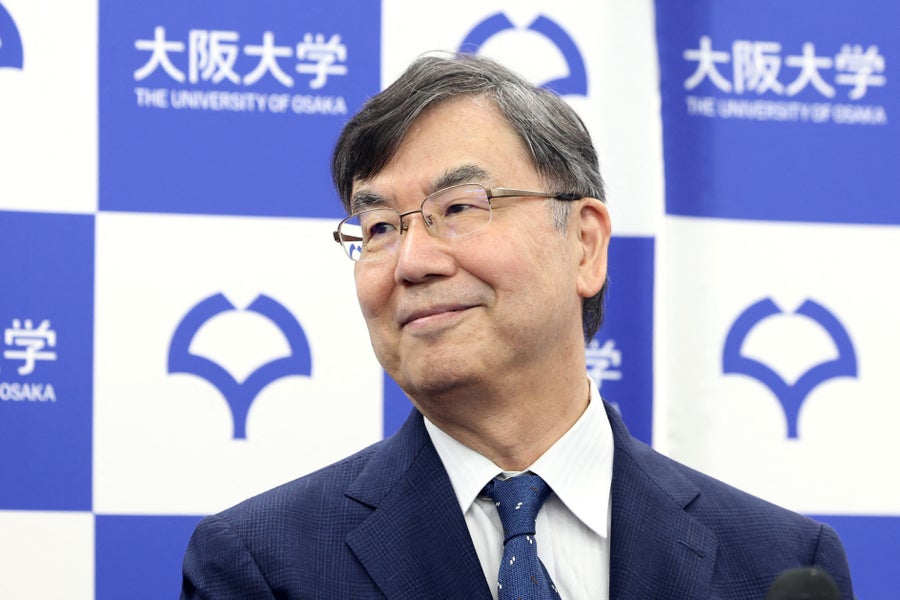
Shimon Sakaguchi, an immunologist and a distinguished professor of Osaka University, attends a press conference after winning the 2025 Nobel Prize in medicine, in Suita, Osaka prefecture, on October 6, 2025.  Paul Miller/AFP via Getty Images

.

.

Click the link below for the complete article:

https://www.scientificamerican.com/article/nobel-prize-winner-shimon-sakaguchi-reflects-on-how-he-discovered-regulatory/?_gl=1*1mp2vnq*_up*MQ..*_ga*NDg2MTUxNzEyLjE3NjA1MTQxMzg.*_ga_0P6ZGEWQVE*czE3NjA1MTQxMzckbzEkZzAkdDE3NjA1MTQxMzckajYwJGwwJGgw

.

__________________________________________

This research team studies gratitude. Here’s what they’ve found.

Leave a comment

Click the link below the picture

.

Gratitude connects us, but how we express it might matter more than we think.

Baylor professor of psychology and neuroscience Sarah Schnitker explores how practicing gratitude can lead to stronger relationships and greater well-being. Her lab found that gratitude expressed through prayer may offer even more benefits than journaling or speaking it aloud, and that feeling connected to something larger may help combat today’s growing loneliness.

SARAH SCHNITKER: So gratitude is an incredibly potent virtue. What gratitude does is tells us we are valued in relationship. And we see that when people feel genuine gratitude, they indeed help others. And it binds us to each other.

But when we practice gratitude, the devil might be in the details. It’s not just what are you grateful for? It’s to whom are you grateful? We often express it to other humans, but we can also be grateful to other entities, and in particular, many people around the world express gratitude to God.

Our research team was interested in whether gratitude, expressed in the form of prayer to a deity, would differ from gratitude practiced kind of as a self-help exercise, or expressing that gratitude to another person. And so we randomly assigned participants to one of these three conditions.

And what we found is that when people prayed, we see more health and well-being benefits than the journaling the gratitude, or journaling and reading it aloud to a person. We know this from other research that when people imbue their goals or relationships with sacred meaning, that they exert more effort and they benefit more from those relationships.

Some people might be wondering, well, what if I don’t believe in God? Well, you might also think about the fact of existence. Or I’m grateful for the things that are transcendent in my life. For a lot of people, being connected to nature is very effective in this way.

If I see a beautiful sunset, who do I thank? There’s not a human who made that sunset for me, but I can thank something beyond the self.

Gratitude is especially important at this moment in history. In the United States, we have a loneliness epidemic as declared by the Surgeon General. But expressing and feeling gratitude allows us to recognize we’re part of something bigger. And that feels a lot less lonely. It expands and can transform a relationship or a community.

And so gratitude, especially when practiced in relation to God, is really a potent force for good. It really helps you take a step back and see the bigger picture.

.

.

.

Click the link below for the complete article (sound on for video):

https://bigthink.com/the-well/how-gratitude-changes-you/

.

__________________________________________
ICE Is Cracking Down on Chicago. Some Chicagoans Are Fighting Back.

Leave a comment

Hmmmm… So this is the land of the free!

Click the link below the picture

.

Federal agents deployed tear gas on Chicago residents and more than a dozen police officers on Tuesday, the latest clash in the nation’s third-largest city as the Trump administration has carried out its immigration crackdown.

The clash began on Tuesday morning when federal agents were seen chasing a car through a working-class, heavily Latino neighborhood on the city’s far South Side, witnesses said. An S.U.V. driven by the federal agents collided with the car they were pursuing, the Chicago Police Department said, sending that car into another vehicle that was parked nearby.

After the crash, dozens of additional immigration agents in masks arrived, and residents emerged from their houses, gathering on streets and sidewalks, throwing objects at agents and shouting, “ICE go home!”

As the agents left, they released tear gas, apparently without warning, sending people coughing and running for cover. Among those affected by the gas were 13 Chicago Police Department officers, the police department said, and at least one officer was seen rinsing his eyes out with water from a neighbor’s garden hose.

A spokeswoman for the Department of Homeland Security said that the federal agents were conducting an immigration enforcement operation when two people tried to flee and hit the agents’ vehicle.

“This incident is not isolated and reflects a growing and dangerous trend of illegal aliens violently resisting arrest and agitators and criminals ramming cars into our law enforcement officers,” the D.H.S. said in a statement. The statement said that federal agents used “crowd control measures” after a group of people gathered and turned hostile.

It was one of many turbulent episodes to erupt in Chicago in recent days. Federal agents from Immigration and Customs Enforcement and the Border Patrol have roamed the city and suburbs, making arrests, often pulling up to people walking along sidewalks, stopping them, and questioning them.

The agents repeatedly have been observed releasing smoke bombs, tear gas, and pepper balls to disperse residents who gather or capture videos on cellphones, including when the agents were making arrests in densely populated neighborhoods. Chicago police officers, who have been called to the scenes of some clashes, have been exposed to tear gas from federal agents twice in the last two weeks.

As the intensity of the Trump administration’s immigration crackdown has risen, residents of Chicago are increasingly pushing back with fury.

In the last several weeks, Chicagoans have formed volunteer groups to monitor their neighborhoods for federal immigration agents, posting alerts on Facebook and in Signal group chats when agents are seen.

If agents are spotted on the street, motorists lean on their horns as a warning and sometimes give chase. Around the city last weekend, pairs of volunteers were seen with orange whistles around their necks, blowing the whistles at the first sight of immigration agents.

One Chicago resident, Chris Molitor, stationed himself on a street corner on the North Side on Tuesday, holding a sign denouncing President Trump and wearing a shirt critical of ICE.

“We’re seeing videos of people being abused,” said Mr. Molitor, 64, who works in hospitality, nodding in the direction of a local taqueria whose owners were questioned by ICE. “There’s got to be a pushback of some kind.”

Last month, Andre Vasquez, a City Council member who is chairman of Chicago’s Committee on Immigrant and Refugee Rights, sponsored a “community defense workshop” to inform residents of their rights and help them organize politically.


Smoke filled the air after federal agents used tear gas during a clash with community members on the far South Side.

.

.

Click the link below for the complete article:

https://www.nytimes.com/2025/10/14/us/chicago-ice-trump.html

.

__________________________________________

Emperor Yagbe’u Seyon of Ethiopia from 18 June 1285 to 1294, Solomonic Dynasty

Leave a comment

Emperor Yagbe’u Seyon of Ethiopia from 18 June 1285 to 1294, Solomonic Dynasty

Supreme Court Strikes Down Civil Rights Act, Legitimating Segregation

Leave a comment

Supreme Court Strikes Down Civil Rights Act, Legitimating Segregation

THE SMASHING MACHINE (2025) – My rating: 6/10

Leave a comment

The Smashing Machine is a biographical sports drama written, directed, produced, and edited by Benny Safdie. The Smashing Machine was released in the United States by A24 on October 3, 2025. It tells the story of former amateur wrestler and MMA fighter Mark Kerr. This was a hard watch since I’m not a fan of […]

THE SMASHING MACHINE (2025) – My rating: 6/10

Bacteria Use Viral Naps to Build Immunity

Leave a comment

Click the link below the picture

.

The idea that a single-celled bacterium can defend itself against viruses in a similar way as the 1.8-trillion-cell human immune system is still “mind-blowing” for molecular biologist Joshua Modell of Johns Hopkins University.

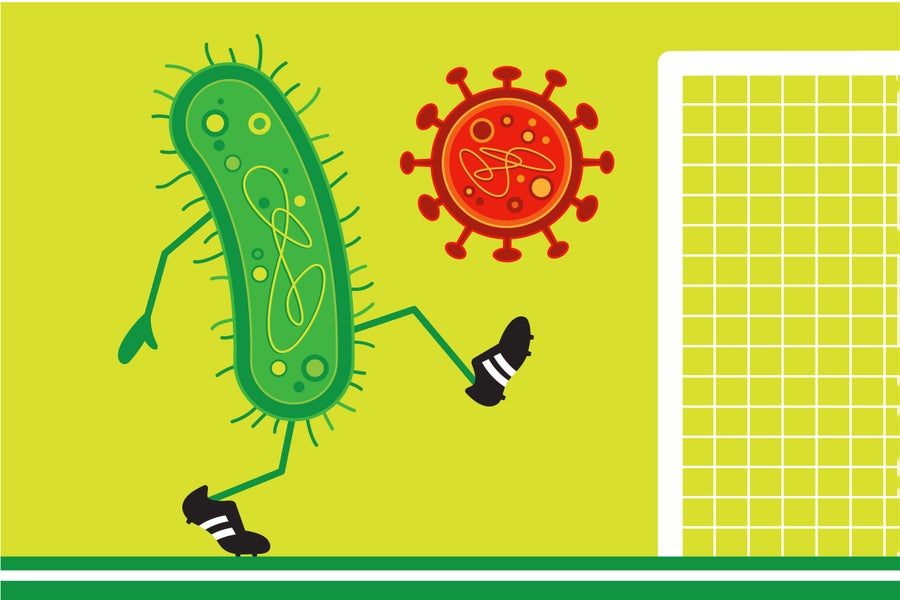
Scientists discovered 20 years ago that bacteria use an adaptive defense system called CRISPR that allows microbes to recognize and destroy viral invaders on repeat encounters. In a recent study published in Cell Host & Microbe, Modell and his team have deepened our understanding of how bacteria use this system to “vaccinate” themselves against phages, the viruses that try to kill them. The findings could help the development of treatments to fight antimicrobial resistance, which contributes to millions of deaths annually.

The CRISPR system allows bacteria to edit their own genome. After being exposed to a virus, bacteria can use a special enzyme to insert small pieces of the virus’s DNA, called spacers, into their genome, which helps them recognize and fight off the virus next time. Scientists now use this enzyme as a pair of “genetic scissors” to tweak DNA in everything from lab experiments to gene therapies, but researchers still knew little about how this process plays out in bacteria. “We called it the CRISPR mystery because we didn’t really understand what was happening inside,” Modell says.

To understand how bacteria manage to grab the DNA of invading viruses, the researchers ran controlled lab experiments using Streptococcus pyogenes bacteria and the phages that infect it. During the infectious phase, most phages rupture the cell immediately, a process known as lysis. On rare occasions, they can instead hide inside the bacterial DNA and become dormant, a state called lysogeny. This state is notoriously difficult to study.

In the lab, Modell’s team infected bacteria with phages that could go dormant as well as genetically engineered phages locked in an active state. The researchers then collected surviving cells and checked their genetic code to see if they had added new spacers taken from the viruses’ DNA.

They found that bacteria only added spacers from phages that could go dormant. During this lull, Modell explains, the bacteria have time to grab tiny pieces of viral DNA and store them in their genome. “The CRISPR system makes memories against an inactivated form of the virus just like a vaccine,” Modell says. To confirm their results, Modell and his team exposed spacer-carrying bacteria to the same phages again to observe whether the new genetic memories protected them from infection. The researchers observed that the bacterium can recognize the phages using those stored fragments and fight them off.

The findings are “pretty remarkable,” says molecular biologist Stan Brouns of Delft University of Technology in the Netherlands, who was not involved in the study. Understanding the interactions between phages and bacteria is key to improving phage therapies, an approach where scientists use viruses to treat infections caused by bacteria that have developed resistance to antibiotics.

This new understanding could also help researchers design phages that more types of infection-causing bacteria will be susceptible to, says North Carolina State University molecular biologist Rodolphe Barrangou, who co-founded Locus Biosciences, a biotech company that develops antibacterial products, and who also was not involved in the study. Various bacteria can have any of more than 150 antiphage defense mechanisms that treatments have to dodge; understanding how this one works is “going to inspire people who work on [bacteria] to think about phage therapies on a broader range of infectious diseases.”

.

https://static.scientificamerican.com/dam/m/179a4bf046bc95ca/original/saw1225Adva15_Web.jpg?m=1759863451.134&w=900Thomas Fuchs

.

.

Click the link below for the complete article:

https://www.scientificamerican.com/article/how-bacteria-use-crispr-to-vaccinate-against-viruses/

.

__________________________________________

Older Entries Newer Entries

PeopleTalky

Where Trends Meet Truth

MRS. T’S CORNER

https://www.tangietwoods

Srikanth’s poetry

Freelance poetry writing

MediaNegy

Zalai Betti

INOVATION BLOG AND NEWS

INOVATION BLOG PEOPLE AND NEWS

szigetingy | budapest

Németh György

PT. LPPL Lombok

Konsultan Lingkungan Hidup di Lombok - NTB

Idézetek – LeaArt21

Lea Krasznai (LeaArt21) – Idezetek (Idézetek) WordPress (Budapest, Hungary)

danielecolleoni

Appunti, spunti e passioni in liberta'

تعلم وعلم، ادخر،سافر واستجمم .

تعنى بتقديم نصائح للمعلمين المبتدئين، والطلبة الممتحنين، ومشاركة الاخرين تجربة الادخار في المال، بترشيد الاستهلاك المنزلي، وترتيب البيت، والحفاظ على البيئة، وتشجيع السيارات صديقةالبيئة، والسياحة والاسفار، ونماء رؤوس الاموال، والطب البديل وتشجيع التعليم الرقمي والذكاء الاصطناعي، والعناية بالنحل وتربية الاسماك، والاسثمار في رؤوس الاموال، الزراعة العضوية، والعناية باسنان الرضع، و صحة الحوامل، وتفسير القران

scientifique

apprendre pour évoluer

In Between the Lines

Thoughts on books, language, meaning, and the culture around it.

Great Lakes Mindset

Outdoor Recreation & Adventure in the Great Lakes Region

Nelsapy

News, Info, Bio, Articles, Reviews, Lyrics, Technology, Science, Inspiration, Motivation, Philosphy and many more...

Becoming HIS Tapestry

Christian Lifestyle Blogger

Joe Mullins Commissioner

CEO and president of The Mullins Companies

The Luttie Board

Two Cultures. One Life. Endless Stories

Charles Maxwell DeCook

Real Estate Development Specialist

Amor Entre Estrellas

¡Bienvenido de vuelta viajero!

Heart of Loia `'.,°~

so looking to the sky ¡ sing and from my heart to YOU ¡ bring...

Michael Ciullo

CEO and Founder of Nsight Health

Nelson MCBS

Catholic News, Prayers, HD Images, Rosary, Music, Videos, Holy Mass, Homily, Saints, Lyrics, Novenas, Retreats, Talks, Devotionals and Many More

global geopolitics

Decoding Power. Defying Narratives.

Talk Photo

A creative collaboration introducing the art of nature and nature's art.

Movie Burner Entertainment

The Home Of Entertainment News, Reviews and Reactions

C r i s t i a n a' s Fine Arts ⛄️

•Whenever you are confronted with an opponent, conquer him with love.(Gandhi)

TradingClubsMan

Algotrader at TRADING-CLUBS.COM

Comedy FESTIVAL

Film and Writing Festival for Comedy. Showcasing best of comedy short films at the FEEDBACK Film Festival. Plus, showcasing best of comedy novels, short stories, poems, screenplays (TV, short, feature) at the festival performed by professional actors.

Bonnywood Manor

Peace. Tranquility. Insanity.

Warum ich Rad fahre

Take a ride on the wild side

Madame-Radio

Découvre des musiques prometteuses (principalement) dans la sphère musicale française.

Ir de Compras Online

No tiene que Ser una Pesadilla.

Kana's Chronicles

Life in Kana-text (er... CONtext)

Jam Writes

Where feelings meet metaphors and make questionable choices.

emotionalpeace

Finding hope and peace through writing, art, photography, and faith in Jesus.

Essu Center

Eyasu The Wonderful

Wearing2Gowns.Blog

A former medical student's journey through healthcare challenges and personal growth

...

love each other like you're the lyric to their music

Luca nel laboratorio di Dexter

Comprendere il mondo per cambiarlo.