Home

Trump’s Retreat: From the Gulf to Britain, American Forces Pull Back

Leave a comment

Click the link below the picture

.

To hear President Trump and his aides describe it, the rush to withdraw 12 B-1 bombers from an air base in Britain over the weekend was a prudent precaution, in response to a threat they refused to describe.

It was no big deal, Mr. Trump insisted, and his secretary of state, Marco Rubio, tried to wave it away by noting that the Pentagon is “constantly reallocating resources where ​they need to be.”

But to anyone watching the deployment of American power around the globe in the seven months since Mr. Trump decided to attack Iran, it was another glaring example of how, time after time, Mr. Trump and his defense secretary, Pete Hegseth, have been forced into retreat, pulling back military forces that had been deployed to the Middle East and Britain as a deterrent.

Over the past several months, as the conflict has dragged on, the Iran war has come to reveal enormous new American vulnerabilities, forcing changes that the Pentagon was not contemplating a year ago. But it has also proved a bitter lesson in the unintended consequences that have flowed from Mr. Trump’s war of choice.

Mr. Trump intended the attack on Iran as another demonstration of the American military’s extraordinary power, following the successful bombing raid on three Iranian nuclear sites in June 2025 and the seizure of President Nicolás Maduro of Venezuela from his bed in Caracas in January.

But rather than enhance American power, the war has constrained it. The closing of bases in the Middle East and limiting the use of one in Britain have, at a minimum, vastly complicated the logistics of projecting power. American bombers can still reach their targets, of course, but only by flying from the United States, requiring more time and refueling. American carrier groups can still patrol in the Arabian Sea, outside the Persian Gulf, but now they must be resupplied from Diego Garcia, an island in the Indian Ocean 2,200 miles away, requiring additional weeks and huge costs.

But most importantly, the rapid withdrawals have taught a lesson to the Iranians — and potentially to other adversaries — that they hold the power to chase out a superpower. In Europe, Mr. Trump and Mr. Hegseth are thinking of reducing American forces on their terms and their schedule. In the Middle East and Britain, their hand was forced.

American and British officials said on Monday that the bombers were rushed out of the British base after commanders received specific, credible information that Iran-backed operatives were planning to launch drone strikes against the aircraft and U.S. troops from right outside the fence.

The suspected plotters may have been inspired in part by an audacious attack that Ukraine launched against Russia last year when it smuggled drones deep into the Russian heartland and launched them from semi trucks. The strikes damaged or destroyed at least a dozen aircraft.

.

https://static01.nyt.com/images/2026/10/07/multimedia/07dc-prexy-retreat-jkvw/07dc-prexy-retreat-jkvw-jumbo.jpg?quality=75&auto=avifThe R.A.F. Fairford air base, from which a dozen American B-1 bombers were withdrawn last weekend, has been a mainstay of U.S.-British military cooperation since it opened in 1944. Credit…@Craigyoungmedia, via Reuters

.

.

Click the link below for the complete article:

https://www.nytimes.com/2026/10/07/us/politics/trump-iran-retreat.html

.

__________________________________________

Why the creative brain feeds on movement

Leave a comment

Click the link below the picture

.

Luke Borsten, age 38, has been backpacking and making music since childhood. Today the Portland, Ore.–based filmmaker and musician often combines the two by writing music on the trail. Likewise, Amanda McCracken, a 48-year-old, Boulder, Colo.–based runner and author, finds movement essential to her writing practice.

“There’s something in movement that allows me to better see the things I want to describe,” Borsten says. “There’s an underlying feeling of honesty that creates a through line for writing.”

Borsten and McCracken are not unique in their habit of combining creativity with movement: from Ludwig van Beethoven to Henry David Thoreau, from Maya Angelou to Joyce Carol Oates, creative people are often in motion. And there’s solid science to back up that approach: consistent movement—especially in nature—helps unlock the words, notes or brushstrokes that make artists’ work.

Christian Rominger, a researcher in the department of psychology at the University of Graz in Austria, has spent years studying the link between creativity and movement. In 2022 he led a meta-analysis of 115 effect studies that found a link between motion and creativity. Another 2024 study found that the more movement—in terms of step count—participants engaged in, the greater the creative output they had.

“The empirical data is growing in this field,” he says. “We’re trying to capture this effect in detail.”

David Strayer, a professor of cognition and neural science at the University of Utah, co-authored a 2025 study that investigated how movement in nature influences brain activity. “We took measurements at the trail head, before and after hiking and backpacking trips,” he says. “We found a big boost in creativity after.”

Still, scientists have yet to identify exactly why movement seems to spur greater creative thinking. But there are several hypotheses. “We believe that all our multitasking on a daily basis overloads our mental workspace,” Strayer says. “Time moving outside frees up space to create.”

Another working theory is that movement often boosts mood, Rominger says, and that, in turn, allows you to create. “We know that creativity is related to mood,” he says, “but we can’t definitively tie the two together. It may also be that physical activity enhances brain health and therefore creativity. But these are all theories right now.”

When McCracken encounters writer’s block, she often takes a run or a swim to get the juices flowing again. She makes notes on her phone or on scraps of paper as ideas start popping up. “There’s something about it that shakes things loose,” McCracken says.

There is no clear optimal dose of movement that is guaranteed to boost creativity, but Strayer says that cognitive benefits appear to begin after about three sessions per week of 30 to 60 minutes of activity. “You start to develop new neurons at that dosage,” he says. “You think more clearly and have the mental space to support creative thinking.”

While the research is still nascent, McCracken is unequivocal. “Some of my best ideas have come during movement,” she says.

.

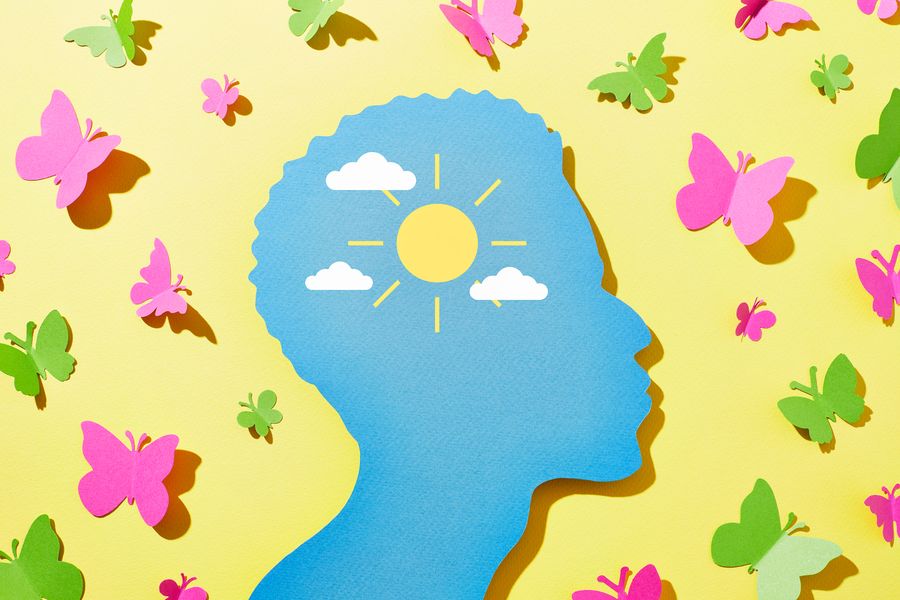
https://static.scientificamerican.com/dam/m/1631811b3301daa4/original/silhouette_with_sunshine_and_butterflies_paper_cutout.jpg?m=1791203651.123&w=900Richard Drury/Getty Images

.

.

Click the link below for the complete article:

https://www.scientificamerican.com/article/why-the-creative-brain-feeds-on-movement/

.

__________________________________________
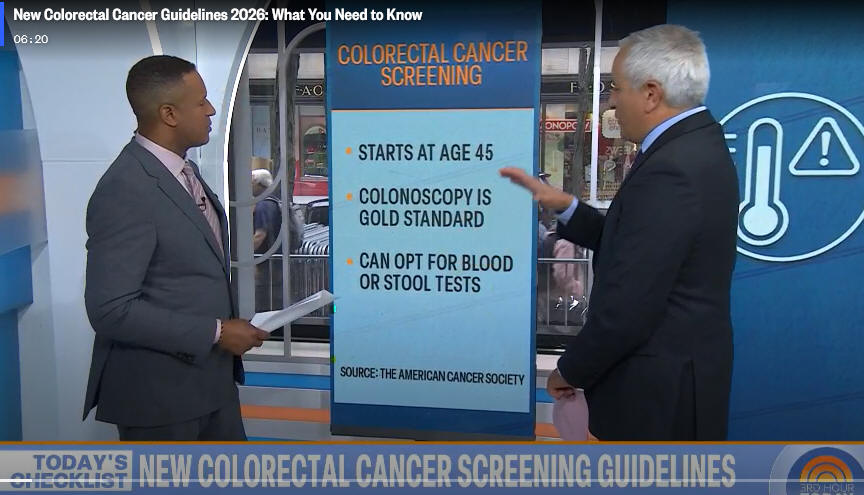
Woman, 42, Who Survived Colon Cancer 3 Times Shares Big Symptom She Hid At First

Leave a comment

Click the link below the picture

.

At 42, Danielle Ripley-Burgess has survived colon cancer three times. She was first diagnosed at 17, then at 25 and then again at 39, making her a part of the trend of colorectal cancer rates surging in younger people. The Kansas City, Missouri, mom shared her story with TODAY.com and urged others to speak up about their symptoms.I had a cancer everyone thought old people get.

Towards the end of my 8th grade year, when I was 14, I started seeing specks of blood in my stool when I’d go to the bathroom. I didn’t know what was happening. I downplayed it and tried to convince myself it was no big deal.

I thought, I’m eating something red and that’s probably what I see. So I put myself on a “no red foods diet” and stopped eating anything that was red in color: everything from candy to pizza to salsa to raspberry Popsicles.

It took me a while to accept that I was actually seeing blood, but I still hid it from just about everybody I knew. I was already embarrassed about puberty changes happening, so that on top of this thing was just too much. I didn’t want to be sick and I didn’t feel sick at first.

But it was nagging at me, so about a year or two later, I did mention something to my mom. We looked it up online, and we saw it was probably hemorrhoids. She said blood in stool could also indicate something more serious, but it was something for people who were my grandparents’ ages.

I was like, “great, I have hemorrhoids,” and went on with my life. In high school, seeing blood in the stool became something very normal, even as it got redder, darker and scarier. Eventually, I had some intense stomach pain, and I was getting fatigued. I couldn’t play volleyball anymore. I just wanted to come home and sleep.

When I was 16, I told my boyfriend I thought I needed to see a doctor, but I didn’t tell him the details. My mom overheard one of our conversations and realized I was still seeing blood. She told my dad and they called the doctor, who sent me to a gastroenterologist right away.

Just a few weeks after I turned 17, I was diagnosed with Stage 3 colon cancer. I had chemotherapy, radiation and surgery to remove the tumor. I also had surgery to move my ovaries up into my stomach to protect them from radiation. Doctors wanted to save the ovaries to preserve hormone function, but by elevating them, I couldn’t naturally conceive anymore.

I thought I had beaten cancer. I was getting colonoscopies every three years, and after one of them, I woke up and saw the very same look on the doctor’s face that I had seen eight years prior. He saw a polyp that later turned out to be cancerous. I had no symptoms. At 25, I had Stage 1 colon cancer.

Mentally and emotionally, it was way harder this time. I got really angry at a lot of things, but deep down just angry at God — how could you let this happen to me again? By this point, I was married, I had a house, I was working on a career, we’d been talking about adopting a child. All of a sudden, I realized I could lose all of these things.

.

.

.

Click the link below for the complete article:

https://www.nbcnews.com/health/womens-health/missouri-woman-survives-colon-cancer-3-times-lynch-syndrome-risk-rcna601664?utm_source=firefox-newtab-en-us

.

__________________________________________

The ‘loneliest house in the world’ is now solar-powered

Leave a comment

Click the link below the picture

.

A remote hunting lodge on a volcanic outcrop off Iceland’s south coast, dubbed the “Loneliest House in the World” on social media, has been fitted with its first solar-charged battery power, reducing its reliance on propane and petrol generators. Blanch Ancla has more.

.

.

.

Click the link below for the complete article:

https://www.reuters.com/video/watch/idRW758105102026RP1/?chan=home&utm_source=firefox-newtab-en-us

.

__________________________________________

It Can Keep Cancer in Remission. Why Is No One Talking About It?

Leave a comment

Click the link below the picture

.

Lee Colker powered on an iPad in the basement of his Pittsburgh home and logged into a virtual exercise session with Olivia Masten, a trainer who specializes in working with cancer patients.

Mr. Colker, 66, had been dealing with unpredictable fatigue and brain fog since beginning a clinical trial for metastatic kidney cancer this year. When staff at the University of Pittsburgh Medical Center told him an exercise program could improve his energy, he jumped at the opportunity. “That was a clincher for me,” he said.

The program is part of a growing effort around the country to help cancer patients exercise, as the benefits of doing so become increasingly clear.

Observational research has long suggested that exercise improves cancer survival, particularly for breast cancer patients. Last year, a landmark randomized controlled trial showed that colon cancer patients who participated in a structured exercise program with a trainer-coach over three years were less likely to see their cancers come back and had a better quality of life. Among those in the program, 90 percent were alive after eight years, compared with 83 percent in the control group.

A later study showed the program, which altogether cost $3,000 per person, also saved the health system money — “a home run,” said Dr. Scott Ramsey, a cancer researcher and health economist at the Fred Hutch Cancer Center in Washington State.

That combination of benefits is rare among cancer therapies: The new pancreatic cancer drug daraxonrasib, for example, costs $480,000 annually, has unpleasant side effects and, while it prolongs life by several months, does not increase overall long-term survival.

“If we had a drug with this magnitude of benefit, it would immediately become standard of care and funded” by insurance companies, said Dr. Christopher Booth, an oncologist and professor at Queen’s University in Kingston, Ontario, and the leader of the exercise trial.

While guidelines now recommend that oncologists help colon cancer patients achieve at least 150 minutes of moderate to rigorous exercise per week, many patients need support in the form of a structured program, with a trainer and supervised sessions, to get to that level and stick with it. But there’s not yet an insurance pathway to pay for such programs — a major barrier to rolling them out more widely.“You can tell patients that if you do this, you may survive longer,” Dr. Ramsey said. But unfortunately, he added, “we just don’t have the infrastructure.”

Current programs are largely limited to major cancer centers and dependent on philanthropy or individual out-of-pocket payments to cover costs, leaving poorer patients and those who live far from these centers without access.

Dr. Jeff Meyerhardt, a gastrointestinal oncologist at Dana-Farber Cancer Institute in Boston, refers his patients to the hospital’s center for alternative therapies, where they can consult with a trainer and access in-person and online exercise classes. But the trainer can’t continue supporting patients over time.

At the University of California, San Francisco, doctors refer eligible patients for physical therapy and rehabilitation, which can be reimbursed by insurance, while many Y.M.C.A. branches offer a free or low-cost 12-week program for cancer survivors.

Improving outcomes among cancer patients isn’t as simple as telling them to exercise more, said Kathryn Schmitz, an exercise oncology researcher at U.P.M.C. Hillman Cancer Center. “Exercise is not just biology,” she said. “It is also behavior.”

.

https://static01.nyt.com/images/2026/09/23/multimedia/00WELL-CANCER-EXERCISE1-hqfw/00WELL-CANCER-EXERCISE1-hqfw-superJumbo.jpg?quality=75&auto=avifJeff Swensen for The New York Times

.

.

Click the link below for the complete article:

https://www.nytimes.com/2026/10/06/well/cancer-prevention-exercise-treatment.html

.

__________________________________________

Can we harness the brain’s deep-cleaning system to prevent Alzheimer’s?

2 Comments

Click the link below the picture

.

When you fall asleep, your brain doesn’t just switch off. As the cognitive lights go out, housekeeping begins. Along the outer walls of blood vessels, microscopic currents flow, sweeping away waste that would otherwise cause harm.

This is the glymphatic system, a network of channels that helps the brain clear unwanted proteins and by-products of cellular metabolism. It may explain one of life’s most familiar pleasures: feeling refreshed after a good night’s sleep. Yet we only learned of its existence in 2012, and ever since, researchers have been scrambling to figure out exactly how it works.

Now, it seems this overlooked system may be crucial for our health – when clearance falters, it may contribute to Alzheimer’s and Parkinson’s disease, and possibly other hard-to-treat conditions, including migraine.

Doctors are eager to intervene, wondering whether boosting this nocturnal detox could slow or even prevent disease. “The field is filled with promise, and we’re just starting to do the studies that will find out if it’s going to make good on that promise,” says neuroscientist Jeffrey Iliff at the University of Washington in Seattle. Experiments range from using drugs and red-light therapy to inhaling bursts of carbon dioxide. There’s also talk of improving brain clearance by changing how we exercise or breathe, or even the position in which we sleep. Meanwhile, emerging techniques hint that we might already be able to gauge the health of our glymphatic system using a simple smartwatch.

Yet the young field has already been dogged by disputed methods, exaggerated headlines and the apparent detention of a key researcher. With so much at stake, it is vital to separate promise from hype, establishing what we can reliably measure, which interventions help clear the waste and whether doing so improves our health and prevents disease.

All our cells produce unwanted chemicals that become harmful if they build up. Luckily, we have an elaborate network of tubes called the lymphatic system that runs throughout the body, collecting fluid from cells, filtering it and sending it to the blood, with waste being expelled by the liver and kidneys.

The strange thing is that there are no lymph vessels in the brain. The implication was that the brain’s waste molecules left passively, drifting through the extracellular fluid surrounding brain cells. But this never made much sense for such an energy-hungry – and therefore heavily waste-creating – organ.

A breakthrough came in 2012, when Iliff and his colleagues injected a fluorescent tracer into the brains of living mice. They targeted the subarachnoid space, a thin region between two of the membranes, or meninges, that encase the brain and spinal cord. The tracers rapidly moved from this space into the brain itself. But they didn’t travel through tubes to do so. Instead, they moved along the outside of small arteries, later leaving the brain along the outer layers of small veins. The brain, it turned out, had a waste-disposal system after all – but it was unlike anything we had seen before.

Closer inspection showed that brain cells called astrocytes, which have long, branch-like projections called endfeet, were wrapped around the blood vessels. The tracer chemicals were moving in the narrow space between the astrocyte endfeet and the outer walls of the blood vessels.

Astrocytes belong to a larger group of brain cells called glial cells, inspiring the name glial lymphatic system, or glymphatic system for short.

Three years later, two groups discovered lymph vessels hidden in the meninges. Another part of the puzzle fell into place: the glymphatic system moves waste out of brain tissue, while the newly discovered lymph vessels take it away from there.

Mapping the glymphatic system was only the start, though: researchers also wanted to know what governs its flow. One vital clue came from the activity that occupies a third of our lives.

Why sleep is key to cleaning the brain

In 2013, Maiken Nedergaard at the University of Rochester in New York state and her team, which included Iliff, injected a green tracer into the cerebrospinal fluid of sleeping mice and watched it stream around the brain. After the mice were gently woken, this flow fell by about 95 per cent. The researchers also showed that beta-amyloid, a key waste product associated with Alzheimer’s disease, was cleared roughly twice as fast when the mice were asleep.

Then last year, Natalie Hauglund, a sleep scientist now at the University of Oxford, and her colleagues helped identify a control mechanism. Studying mice, they showed that concentrations of the neurotransmitter noradrenaline rose and fell about every 50 seconds during non-REM sleep. This caused arteries in the brain to alternately swell and constrict, gently pumping the fluid along the outside.

That mechanism could be key to why glymphatic function declines with age. “As you get older, your arteries become stiffer,” says Roslyn Bill at Aston University in Birmingham, UK. “So, I think that whole mechanism probably breaks down.”

Crucially, Geir Ringstad and Per Kristian Eide at the University of Oslo in Norway demonstrated that the glymphatic system also operates similarly in the human brain and that just one night without sleep is enough to reduce the removal of a tracer from people’s brains.

This was one of the first hints that the glymphatic system can go wrong overnight, but what happens when the brain’s housekeeping falters over months or years?

The strongest links between a faulty glymphatic system and disease concern Alzheimer’s. In people with this form of dementia, beta-amyloid accumulates into distinctive plaques, while abnormal tangles of another protein called tau form inside brain cells.

In 2016, researchers including Nedergaard found there was reduced glymphatic transport in mouse models of Alzheimer’s even before amyloid plaques formed. The implication was that impaired glymphatic clearance might allow beta-amyloid to accumulate in the brain, contributing to disease. Since then, evidence has grown that the glymphatic system transports these proteins in people too – this January, Iliff and his colleagues reported that it helps clear beta-amyloid and tau from the brains of people without dementia.

.

Chris Gash

.

.

Click the link below for the complete article:

https://www.newscientist.com/article/2590514-can-we-harness-the-brains-deep-cleaning-system-to-prevent-alzheimers/

.

__________________________________________

Are the Polls Too Good to Be True for Democrats?

Leave a comment

Click the link below the picture

.

Welcome to this week’s edition of the Surge, a politics newsletter that also wasn’t at the Hawks game in February 2024. That’s another misunderstanding: We were hawking game, as we like to make a little cash on the side selling rare meats.

How much politics happened this week? We’ll put it like this: On a scale from 1 to 10, it was a … 5.5 or 6, probably. Both chambers of Congress have departed D.C. through Election Day, which means they have to spend more time with their annoying constituents and their incessant, whiny demands. Hang in there, candidates.

We’ve already made fun of Eric Schmitt in this edition, and we will continue to do so later on, because it’s rare that someone is caught so red-handed being a dope. Plus, we look at Donald Trump’s campaign travel schedule, which is light on places where there are competitive campaigns and heavy on the few pockets of the country where he can rest assured crowds will be nice to him.

But first, the polls. They have reached such a point of goodness for Democrats that we are compelled to ask: Is something fishy going on?

What matters now: Are the polls for Democrats too good to be true?

Last week, we wrote about how the situation was becoming so dire for Republicans that they were hustling to defend states like Iowa, Nebraska, and Kansas. We instantly felt ashamed of ourselves. A core mission of this newsletter is to accelerate debilitating and unproductive anxiety in Democratic readers, not to make them optimistic.

So in this edition, after another week of Democratic candidates showing double-digit leads in generic ballot polling and posting more whopping leads in every battleground across the map, we’re exploring a more on-brand topic: What if the polls are overstating Democrats’ position?

We asked veteran Democratic pollster Celinda Lake if any red flags jumped out at her from the public polls showing Democrats essentially leading every race across the country by 100-point margins. She mentioned two things.

First, that “these polls assume young people are going to turn out at record-high levels,” but that “I haven’t seen enough investment to make sure that’s true.” Young people have moved sharply away from Trump since 2024, which makes sense: The biggest issue in the country is the cost of living, and young people have no money. And young people could turn out at record levels. But expecting young people to turn out at record levels is a famously risky proposition in electoral politics.

Second, she said, was that most of these polls show “depressed Republican turnout,” a problem that Republicans—who have a serious financial advantage over Democrats this cycle—are spending unlimited sums of cash to amend.

In sum: These recent, dramatic numbers are “driven by two things: a blue surge and a red drag,” she said. “And I think both may be overestimated.”

When polling has underestimated Republican energy in the Trump era, there’s a common cause: Pollsters aren’t successfully reaching enough white non-college voters relative to college-plus voters. Since red states like Nebraska, Iowa, and Kansas have relatively higher numbers of white non-college voters, the error there will be greater if pollsters are missing this cohort again.

Odder yet is how Democrats’ vast improvement in red states hasn’t been met with a similar polling surge(™) by Democratic Senate candidates in certain blue states, like Peggy Flanagan in Minnesota or Chris Pappas in New Hampshire.

“I just see warning signs of that with this idea that it looks like the Republicans are running stronger in the blue states, the Democrats are running stronger in the red states, and I tend to think that just doesn’t materialize,” Patrick Ruffini, the Republican pollster and founding partner of Echelon Insights, told us. “The fundamentals are going to end up mattering a lot more than we are maybe thinking right now.”

The polls aren’t directionally wrong. The president has a 38 percent approval rating, and voters think both he and the economy suck. It’s just a question of how good a Democratic year it will be after Republicans spend a billion dollars this month arguing that Democrats are communists who want to turn boys into girls. Ruffini’s latest poll, for example, had Democrats leading the generic ballot by 8 points. In a world like that, Democrats retake the House, flip a North Carolina Senate seat and maybe one or two more, but fall a few points short in various red-state Senate seats that Democrats began to fantasize about around Labor Day. That’s an outcome many Democrats would have locked in if they were asked a year ago. But it’s one that may come as a disappointment after the pollsters—those teases—got their hopes up about, like, Kansas.

.

A photo collage featuring the U.S. Capitol Building, a donkey, a wave, Michigan Democratic Senate candidate Abdul El-Sayed, Texas Senate candidate James Talarico, and Rep. Jared Moskowitz.Photo by Silas Baisch on Unsplash, Brandon Bell/Getty Images, Sarah Rice/Getty Images, Vasyl Helevachuk/Getty Imges Plus, and tanarch/Adobe Stock.

.

.

Click the link below for the complete article:

https://slate.com/news-and-politics/2026/10/polls-democrats-blue-wave-accuracy-november-midterms.html

.

__________________________________________

With Trump Flailing, Some Conservatives Are Having Second Thoughts About Trumpism

Leave a comment

Click the link below the picture

.

It’s a turbulent time for Trumpism. President Trump’s approval ratings have sunk to new lows, and congressional Republicans have left Washington for their districts showing greater alarm over their chances in the upcoming midterm elections.

Have the strains of Trump 2.0 taken any wind out of the sails of the populist right — and will they prompt a reconsideration of what it means to be a conservative?

Stephanie Slade, the author of “Fusionism: Liberty, Virtue and the Future of the American Right,” explored those questions in a written conversation with John Guida, an editor in Times Opinion. It has been edited for length and clarity.

John Guida: With the political fortunes of Trump and the G.O.P. looking shaky, at least for the moment, are you hearing concerns or doubts about Trumpism itself or the direction of conservatism from conservatives?

Stephanie Slade: Oh, yes. I’ll give you two examples. As I speak with conservative voters, including some who cast votes for Trump in three elections in a row, I’m increasingly hearing them say they feel betrayed — over his war of choice in the Middle East, over his reluctance to release the Epstein files, over his administration’s apparent focus on anything and everything but people’s No. 1 priority of bringing down the cost of living. Trump once said he could shoot someone on Fifth Avenue and his base would stand by him, but I think that’s finally starting to change, at least on the margin.

The second thing I would point you to is the exodus last winter of scholars, donors and board members from the Heritage Foundation. When the Heritage president, Kevin Roberts, proudly defended Tucker Carlson after Carlson hosted Nick Fuentes for a chummy interview, a number of conservatives suddenly awoke to the ideological extremism and moral rot that had taken root on parts of the right, and many people showed fairly decisively that, however they may feel about Trump, they wanted nothing to do with groyperism.

Guida: Do you see these developments as a sign that conservatives are retreating from some of the commitments of Trumpism — like, say, tariffs — or are they just disappointed with Trump himself?

Slade: There’s a dawning recognition that Trump the man is an unreliable ally. He will say one thing on the campaign trail — no new wars! — but not feel the slightest bit constrained by his promises while in office. Another thing is the self-dealing: the genuine corruption of historic proportions in which the president’s powers are being abused to enrich his allies and family members, sometimes at taxpayer expense. People see that and wonder what happened to draining the swamp?

Guida: This week, some intellectuals of the populist right — the New Right, or as you call it, the Dissident Right — are meeting at the National Conservatism conference in Jerusalem. At the first edition of these gatherings, in Washington in 2019, the Israeli philosopher Yoram Hazony declared an “independence day” from many conservative predecessors and principles. Does the decline in Trump’s standing, even at the margins, have any impact on the broader national conservative project?

Slade: Many self-described national conservatives, including Hazony and the aforementioned Kevin Roberts, bet all their chips on Trump and Trumpism as the future of the conservative movement. That bet looks at the very least more questionable now. Polling suggests that the American people do not believe the MAGA agenda is delivering for them. This is going to be a definite challenge for the folks who have turned their whole intellectual and institutional purpose to the promotion of what I call “will-to-power politics” on the theory that this is what voters really want.

Guida: What is will-to-power politics?

Slade: It’s an approach that sees politics as purely a war to determine which side will get to wield power to reward its friends and punish its enemies. On the right, it explicitly repudiates the old-school Reagan-style commitment to limited government and free markets and instead calls on conservatives to be more “muscular” and less squeamish about using the coercive power of the state to enact their values and their conception of the common good.

At the end of the day, hatred toward the opposition is treated as a virtue. The goal, above all, is to defeat and destroy the other side rather than try to figure out how to coexist peacefully in a diverse society of 342 million people.

Guida: You have argued for a different path for conservatism — related presumably to the Reaganite approach — in which Republicans rediscover fusionism, a philosophy that emerged in the postwar years and prevailed on the right until the emergence of Trumpism. What is fusionism?

Slade: It’s the idea that both liberty and virtue are necessary for human flourishing. Mid-century fusionists argued that the American founding represented a synthesis of the Judeo-Christian moral tradition, with its lessons about the habits and choices that lead to a fulfilling life, and what we would eventually come to call the classical liberal political tradition, with its commitments to individual rights, the rule of law and so forth. Until about a decade ago, this was more or less a consensus position on the American right. But that consensus has now broken down.

Guida: So it’s a synthesis of what you call virtue (the moral tradition) and liberty, or freedom. A citizen needs to know how to live virtuously with that personal freedom. You need both.

.

A photo illustration featuring President Trump in the background and Ronald Reagan in the foreground.Illustration by Sam Whitney/The New York Times

.

.

Click the link below for the complete article:

https://www.nytimes.com/2026/10/05/opinion/trump-conservatism-maga.html

.

__________________________________________

How climate change is altering petrichor, the glorious smell after it rains

Leave a comment

Click the link below the picture

.

The distinct, earthy smell that fills the air after rain following a long dry spell can trigger some serious nostalgia. This scent, petrichor, goes right to our brain’s memory and emotional centers for reasons that may be to do with our very evolution. But as climate change alters Earth’s weather and environment, petrichor is going to transform, too.

First, it helps to know why petrichor even happens. During dry periods, soil-dwelling bacteria produce a compound called geosmin that deters insects such as fruit flies. The chemical signals to the flies that the plant material the bacteria grow on isn’t appetizing and that it might be toxic. Geosmin also attracts spore-spreading animals, such as springtails, which help disperse the compound even more widely.

“Humans are extremely sensitive to geosmin,” says Johan Lundström, a psychologist specializing in olfactory perception at the Karolinska Institute in Sweden. “If there was one drop of geosmin stirred up into an Olympic-sized swimming pool, we’d still smell it.”

While bacteria in soil produce geosmin, plants discharge aromatic oils during a drought to create a shield to protect against harsh heat and minimize water loss. When raindrops hit dry ground and plants, the impact creates microscopic bubbles filled with geosmin and oils that rise into the air, pop and scatter into tiny particles that can then fill human nostrils.

Exactly how petrichor changes will depend on where you are as the effects of rising global temperatures on weather and climate patterns will vary from place to place and year to year. Overall, parts of the world that get more rainfall will experience less petrichor, whereas areas that have droughts will experience more, says Jeppe Lund Nielsen, a professor of microbial physiology at Aalborg University in Denmark.

Droughts cause geosmin to build up, and when they occur with hotter temperatures, bacteria produce even more geosmin as heat speeds up chemical reactions inside the microbes. “If you get a higher temperature, you also get a higher production of the compounds,” Nielsen says. So when it finally does rain, more geosmin is released. But if soils get too dry, “the geosmin will dry up and not be released,” Lundström says.

Where rain falls more frequently, there will be less petrichor because the aromatic compounds won’t have enough time to accumulate. And heavy downpours—which are increasing as the planet warms—are too forceful to trap the tiny air bubbles required to launch the scent into the air. Instead the compounds are diluted, pushed underground or mixed in surface floodwaters.

Soil degradation—which has also increased as a result of higher temperatures and heavier downpours—plays a role, too, because it means fewer geosmin-producing bacteria can grow.

Any changes to geosmin won’t stop at what humans smell. Insects that react to petrichor will also have to adjust their behavior, Nielsen says. For example, areas with large amounts of petrichor will likely see an increase in mosquitoes, because the smell indicates to these insects that the dry ground is now a moist fertile environment in which to lay their eggs.

.

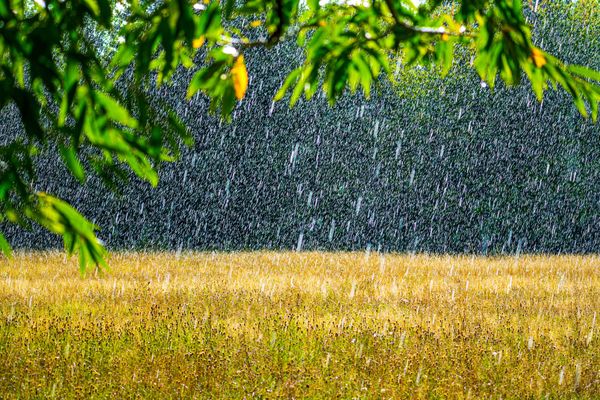
Rain drops falling down on a golden field with leaves from a tree branch in the foreground top of the imageGary Mayes/Getty Images

.

.

Click the link below for the complete article:

https://www.scientificamerican.com/article/how-climate-change-is-altering-petrichor-the-glorious-smell-after-it-rains/

.

__________________________________________

Buying a New iPhone 18 or Android Phone? Read These Tips Before You Spend Your Cash

Leave a comment

Click the link below the picture

.

The iPhone 18 Pro, Samsung Galaxy S26 Ultra and Google Pixel 11 Pro are among the best phones you can buy right now in 2026. They have a whole bunch in common from their blistering processors to their top-notch photography skills. Throw in their big, vibrant displays and of course their slew of AI tricks nobody asked for and it’s no surprise that these flagships have something else in common: whopping price tags. 

Even before the component shortage putting one of these phones in your pocket meant parting with a huge amount of cash but the scarcity of RAM and flash memory is driving up costs of all electronics, with phones being no exception. If we look at foldable phones then those prices get even more eye-watering with the iPhone Duo costing up to $3,199. Ouch.

When top phones already cost $1,000 or more, any price increase is going to sting so it’s never been more important to make every penny count.

Thankfully, there’s a huge array of options out there catering to all needs and budgets, whether you’re looking for a top-end model packing cutting-edge tech or a more affordable option for everyday use like the Pixel 10A or Nothing Phone 4A Pro. 

.

Click the link below

Image showing a OnePlus phoneAndrew Lanxon/CNET

.

.

Click the link below for the complete article:

https://www.cnet.com/tech/mobile/shopping-for-a-new-iphone-or-android-phone-read-this-before-you-buy-2/

.

__________________________________________

Older Entries Newer Entries

Moara de Vânt

Să facem glume, nu război

🇲🇲Dear all peace-loving people around the world🇲🇲

In the world, human beings are facing various problems. People who are full of greed, anger, and ignorance are seen to be fighting with each other in words and deeds. As the fighting continues, various problems such as civil wars, wars of aggression, and wars of aggression are occurring. As world peace is being destroyed, humans are facing unbearable problems. Innocent children and women are not getting the rights they deserve and deserve. I can't think of one thing every time. What is it? The United Nations. If we look at the responsibilities and duties of the United Nations, I think it is not suitable for solving the problems that are happening in the world today. In fact, the United Nations and the World Security Council, such an organization must rule the world, must be able to give orders, and must have various ways to obey orders. There must be no organization that can influence more than that organization. There should be experts from each country. They can even dominate the superpowers like the US, China, and Britain. Only then will global peace be achieved quickly. Now, if a country with power develops more militarily, economically, or socially than its own country, then powerful countries will jealously seek out enemies and wage war. Or they will attack with fighter jets. In this, innocent people are losing their lives. No one understands the value of a life. You should think about how to achieve global peace by controlling these. If the US continues to be the permanent president of the UN, world peace will never be achieved. If you think carefully, no one sees that they are working for the common good, but for their own benefit, for the benefit of their own country. The permanent president of the UN and the Security Council has rejected this, As a young Rohingya, I have come to realize that only by electing the president and secretary from among the countries in the world through a secret ballot system and governing the world fairly can we achieve global peace. The United Nations and the Security Council are organizations in which any country must govern, give orders, and make them obey their orders. For example, only when a defendant is tried in court can we hold the leaders of the countries in check and control them, can we achieve global peace smoothly. Otherwise, it will not be easy for powerful countries to use various excuses to end this war every year, every year, for the benefit of themselves and their countries. No country's leaders pay any attention to the words of the United Nations and the Security Council. If we look at it in practice, look at the Rohingya issue. Myanmar is a small country. Even that country has been under siege for 8 years. What action can be taken? Why is the UN and the Security Council Powerless? Without such Power, how can the organization bring about global peace? Everyone should think about it. Whether there is a veto or a strong one, all countries in the world can only achieve global peace if they are subject to the UN and the Security Council. Seek peace in the quiet embrace of nature. Peace is an indispensable need of the human race. It is not as if one person can kill another person, and it is as if one country can attack another country, but instead of trying to build peace, we must try to destroy the peace now, and the world is getting hotter and is on the verge of collapse. I especially appeal to all the world experts to urgently try to bring about peace in all parts of the world. Mr, Noor Muhamed Arkhan Rohingya Youth Myanmar

Gazeta cuiburilor de cuc

Publicație umoristică dedicată glumeților de pretutindeni

JaZzArt en València

Faith saved us from the savages that we were, losing faith makes us savages again

PeopleTalky

Where Trends Meet Truth

MRS. T’S CORNER

https://www.tangietwoods

Srikanth’s poetry

Freelance poetry writing

MediaNegy

Zalai Betti

INOVATION BLOG AND NEWS

INOVATION BLOG PEOPLE AND NEWS

szigetingy | budapest

Németh György

PT. LPPL Lombok

Konsultan Lingkungan Hidup di Lombok - NTB

Idézetek – LeaArt21

Lea Krasznai (LeaArt21) – Idezetek (Idézetek) WordPress (Budapest, Hungary)

danielecolleoni

Appunti, spunti e passioni in liberta'

تعلم وعلم، ادخر،سافر واستجمم .

تعنى بتقديم نصائح للمعلمين المبتدئين، والطلبة الممتحنين، ومشاركة الاخرين تجربة الادخار في المال، بترشيد الاستهلاك المنزلي، وترتيب البيت، والحفاظ على البيئة، وتشجيع السيارات صديقةالبيئة، والسياحة والاسفار، ونماء رؤوس الاموال، والطب البديل وتشجيع التعليم الرقمي والذكاء الاصطناعي، والعناية بالنحل وتربية الاسماك، والاسثمار في رؤوس الاموال، الزراعة العضوية، والعناية باسنان الرضع، و صحة الحوامل، وتفسير القران

scientifique

apprendre pour évoluer

In Between the Lines

Thoughts on books, language, meaning, and the culture around it.

Great Lakes Mindset

Outdoor Recreation & Adventure in the Great Lakes Region

Nelsapy

News, Info, Bio, Articles, Reviews, Lyrics, Technology, Science, Inspiration, Motivation, Philosphy and many more...

Becoming HIS Tapestry

Christian Lifestyle Blogger

Joe Mullins Commissioner

CEO and president of The Mullins Companies

The Luttie Board

Two Cultures. One Life. Endless Stories

Charles Maxwell DeCook

Real Estate Development Specialist

Amor Entre Estrellas

¡Bienvenido de vuelta viajero!

Heart of Loia `'.,°~

so looking to the sky ¡ sing and from my heart to YOU ¡ bring...

Michael Ciullo

CEO and Founder of Nsight Health

Nelson MCBS

Catholic News, Prayers, HD Images, Rosary, Music, Videos, Holy Mass, Homily, Saints, Lyrics, Novenas, Retreats, Talks, Devotionals and Many More

global geopolitics

Decoding Power. Defying Narratives.

Talk Photo

A creative collaboration introducing the art of nature and nature's art.

Movie Burner Entertainment

The Home Of Entertainment News, Reviews and Reactions

C r i s t i a n a' s Fine Arts ⛄️

•Whenever you are confronted with an opponent, conquer him with love.(Gandhi)

TradingClubsMan

Algotrader at TRADING-CLUBS.COM

Comedy FESTIVAL

Film and Writing Festival for Comedy. Showcasing best of comedy short films at the FEEDBACK Film Festival. Plus, showcasing best of comedy novels, short stories, poems, screenplays (TV, short, feature) at the festival performed by professional actors.

Bonnywood Manor

Peace. Tranquility. Insanity.

Warum ich Rad fahre

Take a ride on the wild side

Madame-Radio

Découvre des musiques prometteuses (principalement) dans la sphère musicale française.

Ir de Compras Online

No tiene que Ser una Pesadilla.

Kana's Chronicles

Life in Kana-text (er... CONtext)

Jam Writes

Where feelings meet metaphors and make questionable choices.

emotionalpeace

Finding hope and peace through writing, art, photography, and faith in Jesus.

Essu Center

Eyasu The Wonderful