.
News You might have missed!
Use your browser or smartphone back arrow (<-) to return to this table for your next selection.
.
__________________________________________
Assorted human interest posts.
July 11, 2024
Business, Crime, Food For Thought, Human Interest, Medical, missed News, Political, Science, Technical amazon, business, Business News, current-events, Future, Hotels, human-rights, medicine, mental-health, research, Science, Science News, technology, Technology News, travel, vacation Leave a comment

.
.
__________________________________________

July 11, 2024
Business, Food For Thought, Human Interest, Political, Science, Technical amazon, business, Business News, current-events, Future, Hotels, human-rights, medicine, mental-health, research, Science, Science News, technology, Technology News, travel, vacation Leave a comment

Click the link below the picture
.
For the most part, Cori Lint was happy.
She worked days as a software engineer and nights as a part-time cellist, filling her free hours with inline skating and gardening, and long talks with friends. But a few days a month, Lint’s mood would tank. Panic attacks came on suddenly. Suicidal thoughts did, too.
She had been diagnosed with anxiety and depression, but Lint, 34, who splits her time between St. Petersburg, Florida, and Tulsa, Oklahoma, struggled to understand her experience, a rift so extreme she felt like two different people.
“When I felt better, it was like I was looking back at the experience of someone else, and that was incredibly confusing,” Lint said.
Then, in 2022, clarity pierced through. Her symptoms, she realized, were cyclical. Lint recognized a pattern in something her doctors hadn’t considered: her period.
For decades, a lack of investment in women’s health has created gaps in medicine. The problem is so prevalent that, this year, President Joe Biden signed an executive order to advance women’s health research and innovation.
Women are less likely than men to get early diagnoses for conditions from heart disease to cancer, studies have found, and they are more likely to have their medical concerns dismissed or misdiagnosed. Because disorders specifically affecting women have long been understudied, much remains unknown about causes and treatments.
That’s especially true when it comes to the effects of menstruation on mental health.
When Lint turned to the internet for answers, she learned about a debilitating condition at the intersection of mental and reproductive health.
Sounds like me, she thought.
What Is PMDD?
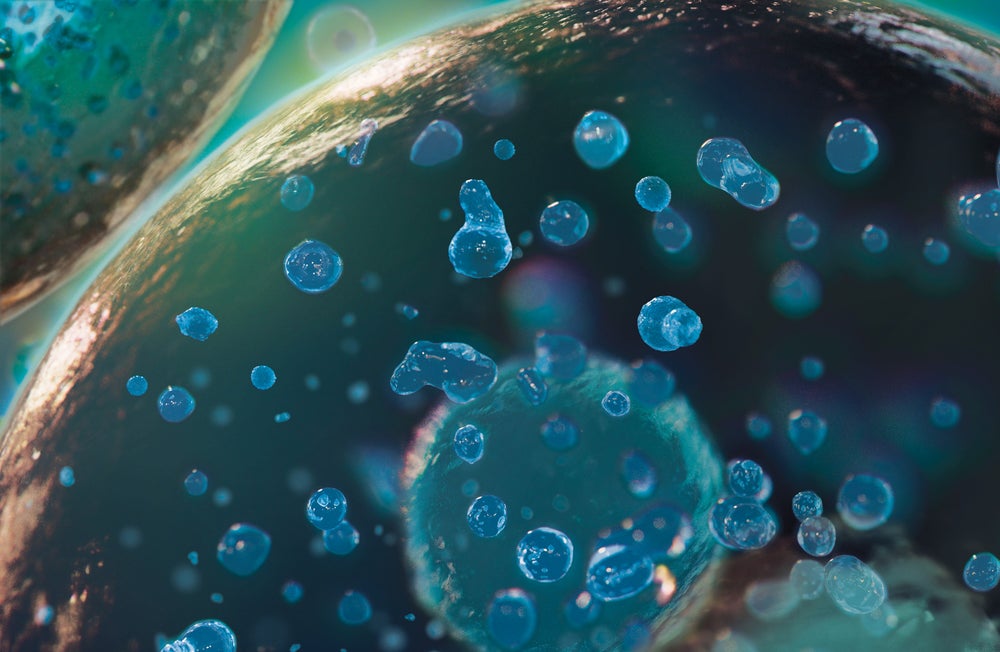
Premenstrual dysphoric disorder, or PMDD, is a negative reaction in the brain to natural hormonal changes in the week or two before a menstrual period. Symptoms are severe and can include irritability, anxiety, depression, and sudden mood swings. Others include fatigue, joint and muscle pain, and changes to appetite and sleep patterns, with symptoms improving once bleeding begins.
.

PMDD is a negative reaction in the brain to natural hormonal changes in the week or two before a menstrual period. coldsnowstorm/Getty Images
.
.
Click the link below for the article:
.
__________________________________________
July 11, 2024
Business, Food For Thought, Human Interest, Political, Science, Technical amazon, business, Business News, current-events, Future, Hotels, human-rights, medicine, mental-health, research, Science, Science News, technology, Technology News, travel, vacation Leave a comment

Click the link below the picture
.
Clueless or complicit.
That’s Ted Cruz’s take on the media’s coverage of Joe Biden’s age and mental acuity, which came under scrutiny after the president publicly unraveled in last week’s debate.
On Monday, the Republican senator from Texas tweeted to me: “There are only two options: (1) the Dems & their media shills were so clueless that they had no idea that Biden is mentally incompetent, or (2) they KNEW & they deliberately LIED about it. Both are damning. I vote #2.”
Cruz isn’t the only one taking aim at the media after the debate.
Right-wing commentators are imagining that news outlets covered up Biden’s frailty for years. Some on the left are asserting that the White House press corps should have probed Biden’s health more closely, which could have prompted a fuller primary process. Journalists (including the one writing this column) are doing some reassessing of their own, asking if the clearly aging 81-year-old president was given the benefit of the doubt too many times.
But I’m sorry, Ted Cruz, there are more than two options.
And after talking to top reporters on the White House beat, what emerges is a far more nuanced picture.
The national media wasn’t dodging the story: The biggest newspapers in the country published lengthy stories about Biden’s mental fitness. The public wasn’t in the dark about Biden’s age: Most voters (67 percent in a June Gallup poll) thought he was too old to be president even before the debate. But questions about Biden’s fitness for office were not emphasized as much as they should have been.
That’s the third option: The stories should have been tougher, the volume should have been louder.
“The hard thing about ‘Biden is old’ as a story is that it had a dead-end quality to it,” said Charlotte Alter, senior correspondent for Time magazine. “Biden is old. We know. So now what? You can’t turn back time. You can’t make him younger.”
.

.
.
Click the link below for the article:
.
__________________________________________
July 10, 2024
Business, Crime, Food For Thought, Human Interest, Medical, missed News, Political, Science, sports, Technical amazon, business, Business News, current-events, Future, Hotels, human-rights, medicine, mental-health, research, Science, Science News, technology, Technology News, travel, vacation Leave a comment

.
.
__________________________________________
July 10, 2024
Business, Food For Thought, Human Interest, Political, Science, Technical amazon, business, Business News, current-events, Future, Hotels, human-rights, medicine, mental-health, research, Science, Science News, technology, Technology News, travel, vacation Leave a comment

Click the link below the picture
.
Science is by nature an iterative process. For every question a scientist might answer, more questions arise. The results of these investigations guide us, step by inquisitive step, to a deeper awareness of our universe.
But some lines of inquiry do more. They provide a path toward unraveling the most profound mysteries we can imagine: the emergence of consciousness, the search for life on Earth-like planets, and the creation of programmable matter.
Every two years, The Kavli Prize is awarded to scientists whose work has transformed the fields of neuroscience, nanoscience, or astrophysics. We asked three of this year’s prize winners about those eureka moments, when nature reveals a tightly held secret. Their tales highlight their persistence and boldness in venturing into uncharted territory, and those rare flashes of insight when answers are glimpsed that forever alter our understanding of the world.
Co-recipient of the 2024 Kavli Prize in Astrophysics: Sara Seager, Massachusetts Institute of Technology
Sara Seager shared The Kavli Prize in Astrophysics with David Charbonneau, finding and characterizing exoplanets—those that orbit stars other than our Sun—and their atmospheres. Fresh out of graduate school at Harvard, where she modeled the atmospheres of giant “hot Jupiter” exoplanets, Seager realized that by observing Earth-like exoplanets that passed in front of a star, or “transits,” astronomers could reveal chemicals in the atmosphere that were potential signs of life.
I have this ability to focus with intense persistence. I credit my autism with that. When I was finishing my thesis, I became obsessed with transiting planets. Something deep inside me told me transits were going to be what moved the field forward.
I started working on this idea that when a planet moves in front of its star, the starlight will filter through the planet’s atmosphere—and that the spectral features of the atmosphere’s gases would then be imprinted on the starlight. The gist of it is that we can look for the wavelength where the transiting planet appears the tiniest bit bigger—because its atmosphere is strongly absorbing and so it blocks out a little more of the starlight. We can then map out which atoms or molecules are responsible.
I suggested looking for sodium, the gas found in streetlights. At the temperatures of these hot Jupiters, sodium absorbs very strongly at visible wavelengths. So, like a skunk spray, even tiny amounts produce a huge signal.
When I found out that Dave Charbonneau had discovered the first transiting planet, I dropped everything, so I could get my paper out the door. My theory about using transit transmission to study exoplanet atmospheres was no longer a random idea for the future—it was an idea for now.
.

Prize winning flashes of insight that have moved the needle in the fields of neuroscience, nanotechnology, and astronomy. vchal/Getty Images
.
.
Click the link below for the article:
.
__________________________________________
July 10, 2024
Business, Food For Thought, Human Interest, Political, Science, Technical amazon, business, Business News, current-events, Future, Hotels, human-rights, medicine, mental-health, research, Science, Science News, technology, Technology News, travel, vacation Leave a comment
Click the link below the picture
.
This spring, a European study came out with the provocative conclusion that having children contributes “little to nothing” to the persistent gap in earnings between men and women.
The study caught my attention because I know the threat of earning less as a parent has had a chilling effect on people in my generation considering starting families. Last year, while I was reporting on motherhood dread in the US, young women told me they feared having kids would mean they’d be penalized in the workplace, affecting their financial security and opportunities. Meanwhile, the media does little to allay that concern: “One of the worst career moves a woman can make is to have children,” the New York Times once declared.
But while these economists found that Danish women who used in vitro fertilization experienced a large earnings penalty right after the birth of their first child, over the course of their careers, this penalty faded out. Eventually, the mothers even benefitted from a child premium compared to women who were not initially successful with IVF.
In other words, the so-called “motherhood penalty” that says women pay a price in the workplace for becoming moms might be less severe than previously thought.
“As children grow older and demand less care, we see that the mother’s earnings start to recover, with much of the immediate penalties made up 10 years after the birth of the first child,” the researchers wrote.
What makes this new European research so notable is that it relies on the same high-quality data that has informed previous studies on the motherhood penalty (including one Vox covered in 2018) but used an even broader sample and an approach the authors argue is better suited for long-term conclusions.
This wasn’t the first time I’d seen research that complicates our understanding of the motherhood penalty. After the essay on motherhood dread was published, I heard from Sharon Sassler, a Cornell University sociologist who studies relationships and gender.
She had recently published a paper on gender wage gaps in the computer science field and found that mothers in computer science actually earned more than childless women (though this “wage premium” was significantly less than what fathers earned).
“It was difficult for me to find a home for the attached article because reviewers cannot fathom that mothers might out-earn single women, though there is a growing body of evidence that [they] do,” she wrote in her email to me. “It might be selection [bias] … but given that folks have found this across disciplines suggests that the motherhood penalty really needs to be reassessed.”
.
Tiffany Hagler-Geard/Bloomberg/Getty Images
.
.
Click the link below for the article:
.
__________________________________________
July 9, 2024
Business, Food For Thought, Human Interest, Political, Science, Technical amazon, business, Business News, current-events, Future, Hotels, human-rights, medicine, mental-health, research, Science, Science News, technology, Technology News, travel, vacation Leave a comment

Click the link below the picture
.
You have to wonder how people originally figured out how to eat some foods that are beloved today. The cassava plant is toxic if not carefully processed through multiple steps. Yogurt is basically old milk that’s been around for a while and contaminated with bacteria. And who discovered that popcorn could be a toasty, tasty treat?
These kinds of food mysteries are pretty hard to solve. Archaeology depends on solid remains to figure out what happened in the past, especially for people who didn’t use any sort of writing. Unfortunately, most stuff people traditionally used made from wood, animal materials or cloth decays pretty quickly, and archaeologists like me never find it.
We have lots of evidence of hard stuff, such as pottery and stone tools, but softer things – such as leftovers from a meal – are much harder to find. Sometimes we get lucky, if softer stuff is found in very dry places that preserve it. Also, if stuff gets burned, it can last a very long time.
Corn’s ancestors
Luckily, corn – also called maize – has some hard parts, such as the kernel shell. They’re the bits at the bottom of the popcorn bowl that get caught in your teeth. And since you have to heat maize to make it edible, sometimes it got burned, and archaeologists find evidence that way. Most interesting of all, some plants, including maize, contain tiny, rock-like fragments called phytoliths that can last for thousands of years.
Scientists are pretty sure they know how old maize is. We know maize was probably first farmed by Native Americans in what is now Mexico. Early farmers there domesticated maize from a kind of grass called teosinte.
Before farming, people would gather wild teosinte and eat the seeds, which contained a lot of starch, a carbohydrate like you’d find in bread or pasta. They would pick teosinte with the largest seeds and eventually started weeding and planting it. Over time, the wild plant developed into something like what we call maize today. You can tell maize from teosinte by its larger kernels.
There’s evidence of maize farming from dry caves in Mexico as early as 9,000 years ago. From there, maize farming spread throughout North and South America.
Popped corn, preserved food
Figuring out when people started making popcorn is harder. There are several types of maize, most of which will pop if heated, but one variety, actually called “popcorn,” makes the best popcorn. Scientists have discovered phytoliths from Peru, as well as burned kernels, of this type of “poppable” maize from as early as 6,700 years ago.
You can imagine that popping maize kernels was first discovered by accident. Some maize probably fell into a cooking fire, and whoever was nearby figured out that this was a handy new way of preparing the food. Popped maize would last a long time and was easy to make.
.
gojak/Getty Images
.
.
Click the link below for the article:
.
__________________________________________
July 9, 2024
Business, Food For Thought, Human Interest, Political, Science, Technical amazon, business, Business News, current-events, Future, Hotels, human-rights, medicine, mental-health, research, Science, Science News, technology, Technology News, travel, vacation Leave a comment

Click the link below the picture
.
Is building up your co-parent in the eyes of your children part of being a good parent? This question had not occurred to me until recently. Over the past year, as my older son has become a teen, my husband has made it a habit to build me up in my children’s esteem. “Isn’t Mom the best?” he will ask them, rhetorically, when I do ordinary acts of parental service like buying someone new shoes or driving someone somewhere they need to go. “Be nice to Mom!” he will remonstrate when either child tries to give me an attitude.
You might assume that this has pleased me a great deal, but in truth, I haven’t always known what to think about it. At first, I felt ambivalent, like it was playing into a vaguely patriarchal form of mother-worship, “angel of the hearth” and all that. I also felt uncertain when my husband praised me around our sons because I knew I wasn’t returning the favor for him.
When I think about why I was hesitant to gas up my husband around my children, it’s not at all because he didn’t deserve it. It’s because I never witnessed this kind of behavior among adults when I was growing up, and it didn’t feel natural to me. My parents split up when I was young, and they were effortfully amicable, but the dramas of their own lives absorbed them, and they rarely appeared to make deliberate choices about how they communicated to me about each other. What I mostly watched them do, when I was young, was cope.
Meanwhile, I was highly skeptical of all adults. I assumed adult behavior was always in service of a selfish agenda. If either of my parents had ever praised the other to me, I would have suspected something horrible was about to happen — that one of them was on the verge of a nervous breakdown or was about to make a dreadful announcement that would seriously complicate my life. The possibility of thinking, “Dad’s right — Mom really is the best, and I should remember to treat her that way,” was nowhere near my repertoire of possible experiences.
But much to my amazement, my husband’s remarks have made a noticeable difference, and our children have started treating me with more consideration. They thank me often and ask me how my day was. They sincerely appear to see me more clearly as a person who works hard to give them a happy life. It is astonishing to me that all my husband had to do was explain this to them, and remind them to notice it, and they did. I had no idea it could work that simply.
Gassing up your co-parent in front of your children is a loaded act in this era where domestic equality is contested on a granular daily basis, to the degree that who replaces the toilet-paper roll can be a meaningful piece of evidence in a case for who is and is not showing up. If you’re trying to untangle your home life from the norms and expectations that have gagged and bound mothers for centuries, it might seem counterintuitive to make a habit out of shouting out your partner. But creating an equitable home can be counterintuitive in many ways — some of our intuition is, after all, steeped in centuries of bad compromises. I think part of me was equating spousal praise with compensation for unfair labor. But I’ve realized that praise can be as much in the service of equality as in the reinforcement of outmoded roles.
There are so many ways of developing a political consciousness in children that are little more than glorified consumer choices — Little Feminist board books, anyone? — but teaching by example is what we all aspire to do. A political consciousness begins with noticing the gears that make community work, and I wonder if praising your co-parent is a way of revealing some of that to children, by teaching them to show gratitude for what sustains them. Could praising our co-parents actually, on a micro level, be a political act?
.
Illustration: Hannah Buckman
.
.
Click the link below for the article:
.
__________________________________________
July 8, 2024
Arts, Food For Thought, Human Interest, Medical, missed News, Political, Science, Technical amazon, business, Business News, current-events, Future, Hotels, human-rights, medicine, mental-health, research, Science, Science News, technology, Technology News, travel, vacation 2 Comments

.
.
__________________________________________
July 8, 2024
Business, Food For Thought, Human Interest, Political, Science, Technical amazon, business, Business News, current-events, Future, Hotels, human-rights, medicine, mental-health, research, Science, Science News, technology, Technology News, travel, vacation Leave a comment

Click the link below the picture
.
If you believe decades of headlines, olive oil could be the closest thing to a life-fixing panacea we have—and now it’s even helping physicists in their experiments.
Researchers at the FOM Institute for Atomic and Molecular Physics (AMOLF) used a single drop of olive oil to create a mirror effect within a system of interacting photons, and the results generate a reaction that mimics memory.
Have you ever used a computer that’s bogged down by too many open programs, and as you type or move the mouse, the screen responds a fraction of a second late? Your action has been logged, but it hasn’t yet occurred. This behavior is analogous to what the AMOLF scientists studied, which is a physical phenomenon called hysteresis, or the way the interacting items within a system are reliant on what has happened before—their memory.
To study hysteresis in photons, these researchers positioned two mirrors so that photons bounced between them, and then added a drop of oil so they could measure how photons behaved inside the drop. This oil forms a laser cavity.
“Scanning the laser-cavity frequency detuning at different speeds across an optical bistability, we find a hysteresis area that is a nonmonotonic function of the speed,” the researchers write in their paper. Photons enter the area and get muddled up in a memory system.
Photons in oil aren’t the only hysteresistic systems. Boiling water is a closely studied example of hysteresis, and scientists have studied every way to magnify the phenomenon, because it varies so much based on a bunch of different factors.
“Experimental boiling curves with hysteresis have different trends, depending on thermal and geometrical parameters of the enhancement structure and boiling liquid physical properties,” a 2015 paper explains.
Hysteresis is often linked with nucleation—the two phenomena have related definitions and frequently appear together. In a seeded raincloud, nucleation is what turns the fixed cloud vapors into drops big enough to fall as rain, and this process, too, is set in motion before it fully expresses. Nucleation acts differently and takes different amounts of time depending on temperature and other factors. The variation is on the same level as with tinkering with boiling water to fine-tune hysteresistic reactions.
There’s some heated (so to speak) debate about what really causes hysteresis. Even though parts of it have been observed for a long time, explaining what’s happening is a different question that hasn’t been fully answered. For that reason, the olive oil scientists are excited about their findings and keeping their future research within a narrow scope.
“The equations that describe how light behaves in our oil-filled cavity are similar to those describing collections of atoms, superconductors, and even high energy physics,” researcher Said Rodriguez explained. And by continuing to study only the hysteresis of the oil-filled cavity, the team can focus on those potential applications rather than the broader entire idea of hysteresis.
.
Michelle Arnold/EyeEm/Getty Images
.
.
Click the link below for the article:
.
__________________________________________
https://www.tangietwoods
¡Bienvenido de vuelta viajero!
so looking to the sky ¡ will sing and from my heart to YOU ¡ bring...
CEO and Founder of Nsight Health
Catholic News, Prayers, HD Images, Rosary, Music, Videos, Holy Mass, Homily, Saints, Lyrics, Novenas, Retreats, Talks, Devotionals and Many More
Decoding Power. Defying Narratives.
A creative collaboration introducing the art of nature and nature's art.
The Home Of Entertainment News, Reviews and Reactions
Hollow Earth Society
•Whenever you are confronted with an opponent, conquer him with love.(Gandhi)
Algotrader at TRADING-CLUBS.COM
Film and Writing Festival for Comedy. Showcasing best of comedy short films at the FEEDBACK Film Festival. Plus, showcasing best of comedy novels, short stories, poems, screenplays (TV, short, feature) at the festival performed by professional actors.
Peace. Tranquility. Insanity.
Take a ride on the wild side
Découvre des musiques prometteuses (principalement) dans la sphère musicale française.
No tiene que Ser una Pesadilla.
Life in Kana-text (er... CONtext)
Where feelings meet metaphors and make questionable choices.
Finding hope and peace through writing, art, photography, and faith in Jesus.
Eyasu
The Community for Wounded Healers: Former Medical Students, Disabled Nurses, and Faith-Fueled Pivots
love each other like you're the lyric to their music
Comprendere il mondo per cambiarlo.
Mid-Life Ponderings
Travel,Tourism, Life style "Now in hundreds of languages for you."
I speak the honest truth. I share my honest opinions. I share my thoughts. A platform to grow and get surprised.
User-generated ratings for ethical consumerism
Travel and Lifestyle Blog
Questo è un piccolo angolo di poesie, canzoni, immagini, video che raccontano le nostre emozioni
“Log your journey to success.” “Where goals turn into progress.”
scrivo per dare forma ai silenzi e anima alle storie che il mondo dimentica.
“Dream deeper. Believe bolder. Live transformed.”
Vichar, Motivation, Kadwi Baat ( विचार दर्शनम्)
Traum zur Realität
Savor. Style. See the world.
معا نحو النجاح
Best Forex Broker Ratings & Reviews
art, writing and music by James McFarlane and other musicians
living life in conscious reality
Freelance poetry writing
Peace 🕊️ | Spiritual 🌠 | 📚 Non-fiction | Motivation🔥 | Self-Love💕
Reiseberichte & Naturfotografie