February 13, 2022
Mohenjo
Business, Food For Thought, Human Interest, Overlooked Past Article, Science, Technical
amazon, business, Business News, current-events, Future, Hotels, human-rights, medicine, mental-health, research, Science, Science News, technology, Technology News, travel, vacation

Click the link below the picture
.
When the Rosetta space probe sent back its first close-up pictures of a comet last year, scientists got a bit of a surprise: Instead of the ball of rock and ice they had expected, the comet turned out to have two distinct lobes connected by a “neck.”
Some said it looked like a giant rubber duck. Researchers have now concluded that the comet 67P Churyumov-Gerasimenko was probably formed when two separate objects collided during the early stages of the solar system, according to a paper published Monday in the journal Nature.
Using data collected by the OSIRIS cameras onboard Rosetta, scientists were able to determine that the flat planes and arcs on 67P’s surface are in fact terraces that wrap around the two lobes like layers around an onion. “For the first time, this study gives observational evidence on how the primordial bodies formed,” said Matteo Massironi, one of the study’s authors.
Thanks to the high resolution of the images, scientists were able to see that the layers on the larger lobe — some up to 650 meters (2,130 feet) thick — are independent of the layers on the smaller lobe. In essence, this means the comet is made of two separate cores.
.
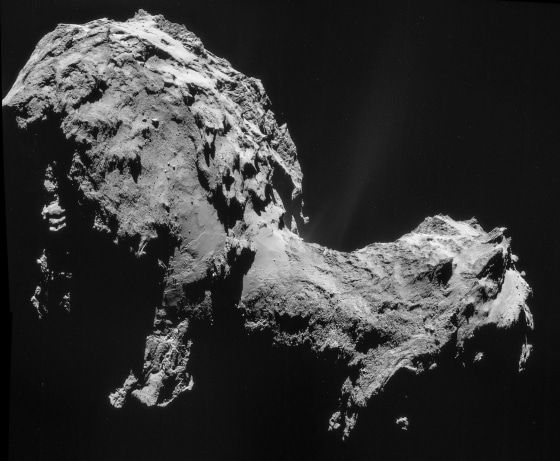 A file handout photo released on September 19, 2014, by the European Space Agency shows a four-image NAVCAM mosaic of Comet 67P/Churyumov-Gerasimenko. The characteristic “rubber duck” shape of the comet was the result of a low-velocity impact billions of years ago between two objects which fused, a study said on September 28, 2015.AFP – Getty Images
.
.
Click the link below for the article:
.
__________________________________________
February 12, 2022
Mohenjo
Business, Enthralling, Human Interest, Photographs
amazon, business, Business News, current-events, Future, Hotels, human-rights, medicine, mental-health, research, Science, Science News, technology, Technology News, travel, vacation

Click the link below the picture
.
A dehesa is a multifunctional, agrosylvopastoral system (a type of agroforestry) and cultural landscape of southern and central Spain and southern Portugal; in Portugal, it is known as a montado. Its name comes from the Latin ‘defensa’ (fenced) referring to land that was fenced, and usually destined for pasture. Dehesas may be private or communal property (usually belonging to the municipality). Used primarily for grazing, they produce a variety of products, including non-timber forest products such as wild game, mushrooms, honey, cork, and firewood. They are also used to raise the Spanish fighting bull and the Iberian pig. The main tree component is oaks, usually holm (Quercus rotundifolia) and cork (Quercus suber). Other oaks, including melojo (Quercus pyrenaica) and quejigo (Quercus faginea), may be used to form dehesa, the species utilized depending on geographical location and elevation. Dehesa is an anthropogenic system that provides not only a variety of foods but also wildlife habitat for endangered species such as the Spanish imperial eagle.
By extension, the term can also be used for this style of rangeland management on estates.
The dehesa is derived from the Mediterranean forest ecosystem, consisting of grassland featuring herbaceous species, used for grazing cattle, goats, and sheep, and tree species belonging to the genus Quercus (oak), such as the holm oak (Quercus ilex sp. ballota), although other tree species such as beech and pine trees may also be present. Oaks are protected and pruned to produce acorns, which the famous black Iberian pigs feed on in the fall during the montanera. Ham produced from Iberian pigs fattened with acorns and air-dried at high elevations is known as Jamón ibérico (“presunto ibérico”, or “pata negra” in Portuguese), and sells for premium prices, especially if only acorns have been used for fattening.
In a typical dehesa, oaks are managed to persist for about 250 years. If cork oaks are present, the cork is harvested about every 9 to 12 years, depending on the productivity of the site. The understory is usually cleared every 7 to 10 years to prevent the takeover of the woodland by shrubs of the rock rose family (Cistaceae), often referred to as “jara“, or by oak seedlings. Oaks are spaced to maximize overall productivity by balancing light for the grasses in the understory, water use in the soils, and acorn production for pigs and game.
There is debate about the origins and maintenance of the dehesa, and whether or not the oaks can reproduce adequately under the grazing densities now prevailing. Wikipedia
.
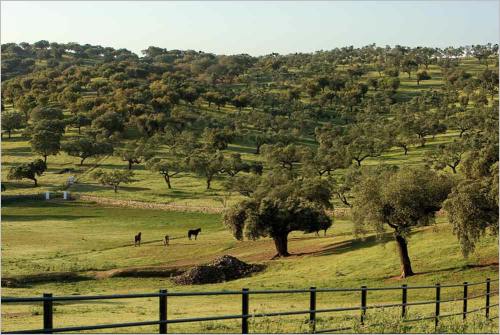 An image from Spain’s Dehesa System
.
.
Click the link below for images:
.
__________________________________________
February 12, 2022
Mohenjo
Business, Food For Thought, Human Interest, Science, Technical
amazon, business, Business News, current-events, Future, Hotels, human-rights, medicine, mental-health, research, Science, Science News, technology, Technology News, travel, vacation

Click the link below the picture
.
Kelly Korreck is still thinking about the time her spacecraft flew into the sun, how one moment, the probe was rushing through a stormy current of fast-moving particles, and the next, it was plunging somewhere quieter, where the plasma rolled like ocean waves. No machine had ever crossed that mysterious boundary before. But Korreck and her team had dispatched a mission for that exact purpose, and their plan worked. For the first time in history, a spacecraft had entered the sun’s atmosphere.
“This is a totally cool place to go—well, I guess, hot place to go,” Korreck, a solar physicist at NASA, told me. “We’ve touched plasma and gas that actually belongs to the sun.”
The NASA probe, named Parker, made the historic dive in April of last year, but scientists waited until last month to announce the news, after they’d analyzed the data and made sure that the spacecraft had indeed crossed into the top layer of the sun’s atmosphere, known as the corona. NASA then declared that Parker had “touched the sun,” basking in a bit of poetic license. The spacecraft can’t reach down to the photosphere, the layer that radiates light, what’s commonly understood to be the “surface” of the sun. But even that isn’t a distinct, solid surface like the ground on Earth, hence the quotation marks. So touch, shmuch: Parker certainly has, to use a less scientific term, booped the sun.
.
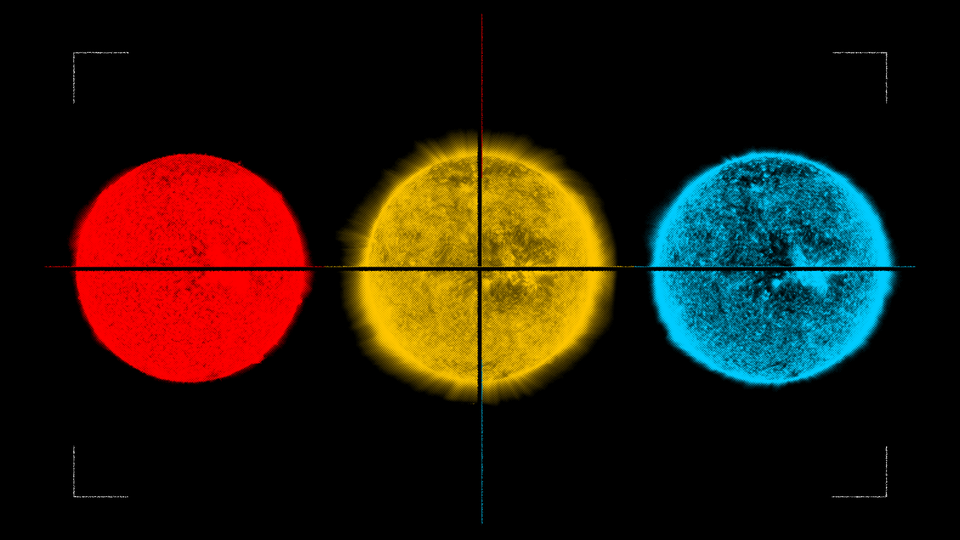 The sun, in three different wavelengths (NASA / SDO; The Atlantic)
.
.
Click the link below for the article:
.
__________________________________________
February 12, 2022
Mohenjo
Business, Food For Thought, Human Interest, Overlooked Past Article, Science, Technical
amazon, business, Business News, current-events, Future, Hotels, human-rights, medicine, mental-health, research, Science, Science News, technology, Technology News, travel, vacation

Click the link below the picture
.
A record-breaking distance has been achieved in the bizarre world of quantum teleportation, scientists say.
The scientists teleported photons (packets of light) across a spool of fiber optics 63 miles long, four times farther than the previous record. This research could one day lead to a “quantum Internet” that offers next-generation encryption, the scientists said.
Teleporting an object from one point in the universe to another without it moving through the space in between may sound like science fiction pulled from an episode of “Star Trek,” but scientists have actually been experimenting with “quantum teleportation” since 1998.
Quantum teleportation depends on capturing the fundamental details of an object — its “quantum states” — and instantly transmitting that information from one area to another to recreate the exact object someplace else.
.
 Quantum teleportation?
.
.
Click the link below for the article:
.
__________________________________________
February 12, 2022
Mohenjo
Crime, Food For Thought, Human Interest, Medical, missed News, Political, Science, Technical
amazon, business, Business News, current-events, Future, Hotels, human-rights, medicine, mental-health, research, Science, Science News, technology, Technology News, travel, vacation

.
News You might have missed!
Use your browser or smartphone back arrow (<-) to return to this table for your next selection.
.
__________________________________________
February 11, 2022
Mohenjo
Business, Enthralling, Human Interest, Photographs
amazon, business, Business News, current-events, Future, Hotels, human-rights, medicine, mental-health, research, Science, Science News, technology, Technology News, travel, vacation

Click the link below the picture
.
Sofia is the capital and largest city of Bulgaria. It is situated in the Sofia Valley at the foot of the Vitosha mountain in the western parts of the country. The city is built west of the Iskar river and has many mineral springs, such as the Sofia Central Mineral Baths. It has a humid continental climate. Being in the center of the Balkans, it is midway between the Black Sea and the Adriatic Sea, and closest to the Aegean Sea.
Known as Serdica in Antiquity and Sredets in the Middle Ages, Sofia has been an area of human habitation since at least 7000 BC. The recorded history of the city begins with the attestation of the conquest of Serdica by the Roman Republic in 29 BC from the Celtic tribe Serdi. During the decline of the Roman Empire, the city was raided by Huns, Visigoths, Avars, and Slavs. In 809 Serdica was incorporated into the Bulgarian Empire by Khan Krum and became known as Sredets. In 1018, the Byzantines ended Bulgarian rule until 1194, when it was reincorporated by the reborn Bulgarian Empire. Sredets became a major administrative, economic, cultural, and literary hub until its conquest by the Ottomans in 1382. From 1530 to 1826, Sofia was the regional capital of Rumelia Eyalet, the Ottoman Empire’s key province in Europe. Bulgarian rule was restored in 1878. Sofia was selected as the capital of the Third Bulgarian State in the next year, ushering a period of intense demographic and economic growth.
Sofia is the 14th largest city in the European Union. It is surrounded by mountainsides, such as Vitosha by the southern side, Lyulin by the western side, and the Balkan Mountains by the north, which makes it the third-highest European capital after Andorra la Vella and Madrid. Being Bulgaria’s primate city, Sofia is home of many of the major local universities, cultural institutions, and commercial companies. The city has been described as the “triangle of religious tolerance”. This is due to the fact that three temples of three major world religions—Christianity, Islam, and Judaism—are situated within one square: Sveta Nedelya Church, Banya Bashi Mosque, and Sofia Synagogue. This triangle was recently expanded to a “square” and includes the Catholic Cathedral of St Joseph.
Sofia has been named one of the top ten best places for start-up businesses in the world, especially in information technologies. It was Europe’s most affordable capital to visit in 2013. In 1979, the Boyana Church in Sofia was included onto the World Heritage List, and it was deconstructed in the Second Bulgarian Empire, holding much patrimonial symbolism to the Bulgarian Orthodox Church. With its cultural significance in Southeast Europe, Sofia is home to the National Opera and Ballet of Bulgaria, the National Palace of Culture, the Vasil Levski National Stadium, the Ivan Vazov National Theatre, the National Archaeological Museum, and the Serdica Amphitheatre. The Museum of Socialist Art includes many sculptures and posters that educate visitors about the lifestyle in communist Bulgaria.
The population of Sofia declined from 70,000 in the late 18th century, through 19,000 in 1870, to 11,649 in 1878, after which it began increasing. Sofia hosts some 1.24 million residents within a territory of 492 km2, a concentration of 17.9% of the country population within the 200th percentile of the country territory. The urban area of Sofia hosts some 1.54 million residents within 5723 km2, which comprises Sofia City Province and parts of Sofia Province (Dragoman, Slivnitsa, Kostinbrod, Bozhurishte, Svoge, Elin Pelin, Gorna Malina, Ihtiman, Kostenets) and Pernik Province (Pernik, Radomir), representing 5.16% of the country territory. The metropolitan area of Sofia is based upon one hour of car travel time, stretches internationally and includes Dimitrovgrad in Serbia. The metropolitan region of Sofia is inhabited by a population of 1.67 million. Wikipedia
.
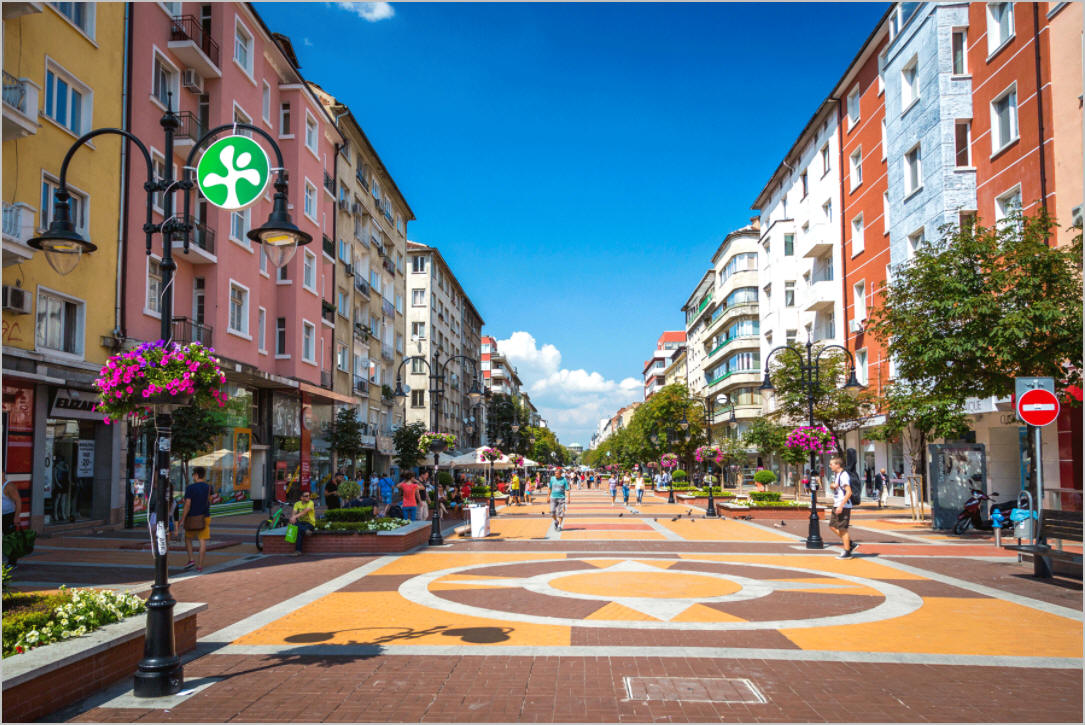 An image from Sofia, Bulgaria
.
.
Click the link below for images:
.
__________________________________________
February 11, 2022
Mohenjo
Business, Food For Thought, Human Interest, Science, Technical
amazon, business, Business News, current-events, Future, Hotels, human-rights, medicine, mental-health, research, Science, Science News, technology, Technology News, travel, vacation
Some content on this page was disabled on April 15, 2025 as a result of a DMCA takedown notice from Guardian Media Group. You can learn more about the DMCA here:
https://wordpress.com/support/copyright-and-the-dmca/
February 11, 2022
Mohenjo
Business, Food For Thought, Human Interest, Science, Technical
amazon, business, Business News, current-events, Future, Hotels, human-rights, medicine, mental-health, research, Science, Science News, technology, Technology News, travel, vacation

Click the link below the picture
.
Pluto is the gift that keeps on giving as more photos from the distant dwarf planet continue to roll in from NASA’s New Horizons spacecraft.
The first hi-res color shot of the planet, a strange image of Pluto’s rippled, “snakeskin” surface, and a close-up of a couple of ice mountains were issued Thursday.
In the color image of the entire planet, Pluto’s surface sports a remarkable range of subtle colors, enhanced in this view to a rainbow of pale blues, yellows, oranges, and deep reds, NASA said. Many landforms have their own distinct colors, telling a complex geological and climatological story that scientists have only just begun to decode.
Speaking about the “snakeskin” region (below), “it’s a unique and perplexing landscape stretching over hundreds of miles,” said William McKinnon from Washington University in St. Louis.
It captures a vast rippling landscape of strange, aligned linear ridges that “astonished” New Horizons team members, according to NASA.
“It looks more like tree bark or dragon scales than geology,” McKinnon said in a statement. “This’ll really take time to figure out; maybe it’s some combination of internal tectonic forces and ice sublimation driven by Pluto’s faint sunlight.”
In the other photo, a textured surface of the plain surrounds two isolated ice mountains.
.
 A high-resolution color-enhanced image of Pluto NASA
.
.
Click the link below for the article:
.
__________________________________________
February 11, 2022
Mohenjo
Arts, Crime, Food For Thought, Human Interest, Medical, missed News, Political, Science, Technical
amazon, business, Business News, current-events, Future, Hotels, human-rights, medicine, mental-health, research, Science, Science News, technology, Technology News, travel, vacation
.
News You might have missed!
Use your browser or smartphone back arrow (<-) to return to this table for your next selection.
.
__________________________________________
February 10, 2022
Mohenjo
Business, Enthralling, Human Interest, Photographs
amazon, business, Business News, current-events, Future, Hotels, human-rights, medicine, mental-health, research, Science, Science News, technology, Technology News, travel, vacation
Click the link below the picture
.
The Roman Forum, also known by its Latin name Forum Romanum (Italian: Foro Romano), is a rectangular forum (plaza) surrounded by the ruins of several important ancient government buildings at the center of the city of Rome. Citizens of the ancient city referred to this space, originally a marketplace, as the Forum Magnum, or simply the Forum.
For centuries the Forum was the center of day-to-day life in Rome: the site of triumphal processions and elections; the venue for public speeches, criminal trials, and gladiatorial matches; and the nucleus of commercial affairs. Here statues and monuments commemorated the city’s great men. The teeming heart of ancient Rome, it has been called the most celebrated meeting place in the world, and in all history. Located in the small valley between the Palatine and Capitoline Hills, the Forum today is a sprawling ruin of architectural fragments and intermittent archaeological excavations attracting 4.5 million or more sightseers yearly.
Many of the oldest and most important structures of the ancient city were located on or near the Forum. The Roman Kingdom’s earliest shrines and temples were located on the southeastern edge. These included the ancient former royal residence, the Regia (8th century BC), and the Temple of Vesta (7th century BC), as well as the surrounding complex of the Vestal Virgins, all of which were rebuilt after the rise of imperial Rome.
Other archaic shrines to the northwest, such as the Umbilicus Urbis and the Vulcanal (Shrine of Vulcan), developed into the Republic’s formal Comitium (assembly area). This is where the Senate—as well as Republican government itself—began. The Senate House, government offices, tribunals, temples, memorials, and statues gradually cluttered the area.
Over time the archaic Comitium was replaced by the larger adjacent Forum and the focus of judicial activity moved to the new Basilica Aemilia (179 BC). Some 130 years later, Julius Caesar built the Basilica Julia, along with the new Curia Julia, refocusing both the judicial offices and the Senate itself. This new Forum, in what proved to be its final form, then served as a revitalized city square where the people of Rome could gather for commercial, political, judicial, and religious pursuits in ever greater numbers.
Eventually much economic and judicial business would transfer away from the Forum Romanum to the larger and more extravagant structures (Trajan’s Forum and the Basilica Ulpia) to the north. The reign of Constantine the Great saw the construction of the last major expansion of the Forum complex—the Basilica of Maxentius (312 AD). This returned the political center to the Forum until the fall of the Western Roman Empire almost two centuries later.
.
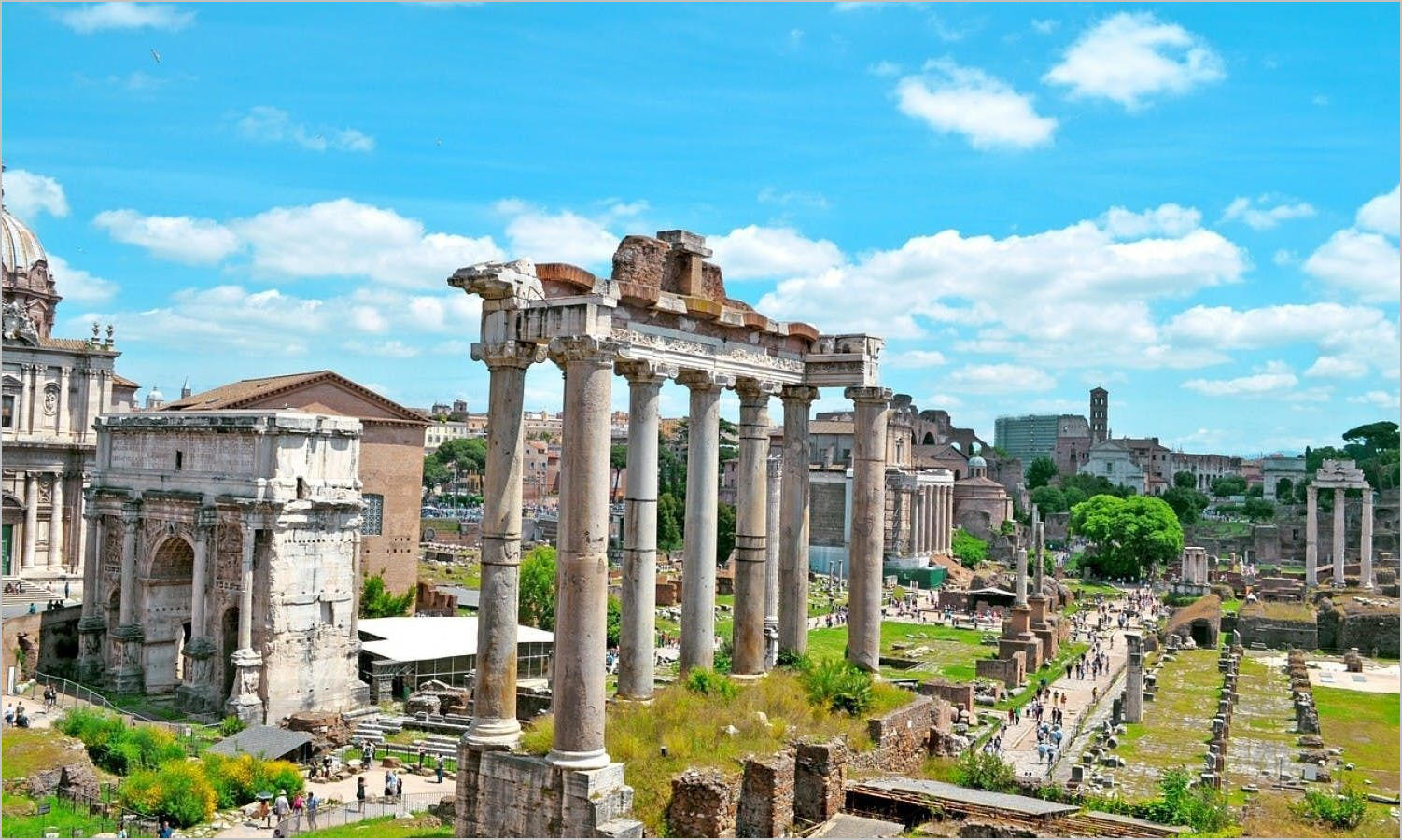 An image of the Roman Forum
.
.
Click the link below for images:
.
__________________________________________
Older Entries
Newer Entries

