April 20, 2024
Mohenjo
Business, Food For Thought, Human Interest, Political, Science, Technical
amazon, business, Business News, current-events, Future, Hotels, human-rights, medicine, mental-health, research, Science, Science News, technology, Technology News, travel, vacation

Click the link below the picture
.
A new research study has uncovered ancestry details previously thought lost to the history of some deceased slaves at Catoctin Mountain Park in Maryland. These slaves worked for decades and have surviving descendants living in the United States to this day.
Many slaves from the trans-African slave trade were brought to America without extensive documentation, which leaves many of their descendants unsure of their own family history. tangie
.
24 slides
 1 / 24 Slides
.
.
Click the link below for the slideshow:
.
__________________________________________
April 19, 2024
Mohenjo
Business, Food For Thought, Human Interest, Political, Science, Technical
amazon, business, Business News, current-events, Future, Hotels, human-rights, medicine, mental-health, research, Science, Science News, technology, Technology News, travel, vacation

Click the link below the picture
.
Invisible vacuum energy is all around us. We could use it to power propulsion, enhance nanostructures, and build levitating devices.
.
 Light Speed
.
.
Click the link below for the article:
.
__________________________________________
April 19, 2024
Mohenjo
Business, Food For Thought, Human Interest, Political, Science, Technical
amazon, business, Business News, current-events, Future, Hotels, human-rights, medicine, mental-health, research, Science, Science News, technology, Technology News, travel, vacation

Click the link below the picture
.
Federal Judge Aileen Cannon has been a thorn in special counsel Jack Smith’s side for almost two years. Cannon, who was appointed to the bench by Donald Trump in 2020, first drew widespread attention in 2022, when she oversaw a civil lawsuit Trump filed related to the classified-documents case against him. Cannon’s decision to allow Trump a “special master” in the case stunned legal observers, who saw it as a legally questionable gift to the former president. That earned her a strong rebuke from a conservative-leaning panel of the 11th Circuit Court of Appeals, which overturned the ruling.
Since last year, Cannon has presided over Trump’s criminal trial in the documents case and has continued to issue a series of puzzling decisions, almost all of which have benefited Trump, while maintaining a lethargic pace that is also advantageous for the former president — who has made no secret of his Cannon fandom. Recently, Cannon and Smith clashed over a confounding set of instructions she handed down involving Trump’s attempt to have his case dismissed over the Presidential Records Act.
What explains Cannon’s judicial behavior, and what, if anything, can Jack Smith do about it? For perspective on those questions, I spoke with University of Texas law professor Lee Kovarsky, who has frequently opined on the documents case.
Last week, Judge Cannon dismissed Trump’s attempt to have his case thrown out with the claim that taking and keeping classified documents is legal under the Presidential Records Act. But even in that ruling, observers thought she may have undermined Jack Smith. Can you explain how?
She dismissed Trump’s motion to dismiss, meaning she said that she wasn’t going to dismiss the whole case because Trump had conclusively proven that the Presidential Records Act foreclosed prosecution. But by deferring decision on whether the Presidential Records Act is a viable defense, she avoids deciding it now, when her mistake could be corrected, and defers the decision for later, when it can’t.
Meaning it couldn’t be appealed.
It couldn’t be appealed. You’ve heard the phrase “double jeopardy.”
Yeah.
The moment when jeopardy attaches at a trial is a really significant thing — it’s when the jury is impaneled and sworn in. And basically, if she gives the instruction to the jury and the jury acquits based on that flawed instruction, Trump can’t be retried after the acquittal because of double jeopardy. Alternately, she doesn’t even have to send it to the jury. She could direct a verdict in Trump’s favor before she sends anything to the jury on that basis. And that also would not be reviewable because of double jeopardy. The fact that she’s left the issue open to be the basis of an instruction or a directed verdict later is what’s so canny about it. Not canny, but deceptive.
Because she may be setting up a land mine?
Yeah. Whereas if she had just decided it now, even if she had decided it wrongly, then Smith could have taken it up to the 11th Circuit for correction before jeopardy ever attached, so it wouldn’t affect the outcome of the trial. But she’s deferred.
.
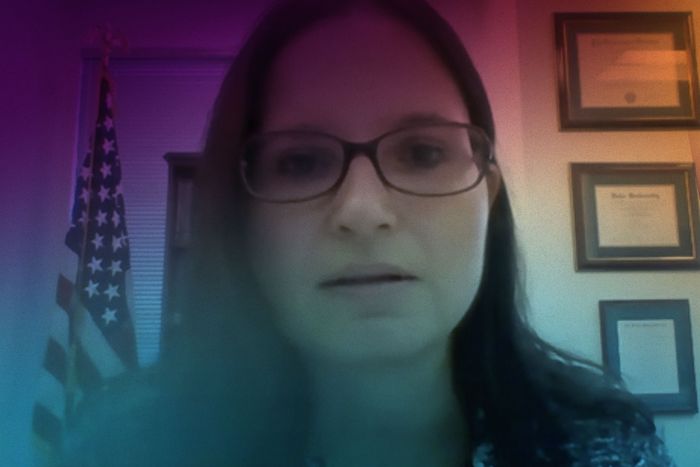 One of the few publicly available photos of Judge Cannon. Photo-Illustration: Intelligencer; Photo: Shutterstock
.
.
Click the link below for the article:
.
__________________________________________
April 18, 2024
Mohenjo
Business, Food For Thought, Human Interest, Political, Science, Technical
amazon, business, Business News, current-events, Future, Hotels, human-rights, medicine, mental-health, research, Science, Science News, technology, Technology News, travel, vacation

Click the link below the picture
.
For globe trotters, few experiences rival the thrill of touching down in a new city, the adventures that await just beyond the tarmac. But, then there’s the dreaded jet lag – the physiological price of long-distance travel. However, recent studies out of the US might just have presented the ideal solution. With strategic eating patterns and a dose of sunlight, travelers may soon bid goodbye to jet lag. As one dives into the heart of this research, one thing becomes evident: our body’s internal clocks and the disruption they face during travel plays a pivotal role.
What Causes Jetlag?
Jetlag arises from disruptions to the body’s circadian rhythm – an innate 24-hour cycle governing numerous bodily functions. This rhythm is synced to Earth’s daily rotation. Thus, jet-setting across multiple time zones can wreak havoc on this internal system, leading to insomnia, fatigue, erratic hunger, digestive issues, and even severe headaches.
Determined to find a remedy, researchers at Northwestern University, Evanston, Illinois, and the Santa Fe Institute in New Mexico undertook a comprehensive study.
“Having a larger meal in the early morning of the new time zone can help overcome jet lag,” revealed Yitong Huang, the study’s author from Northwestern University. Huang emphasized the importance of maintaining meal schedules, noting, “Constantly shifting meal schedules or eating at night can cause misalignment between internal clocks.”
Our body’s central time-keeper, the circadian rhythm, influences sleep patterns. Recent studies show that virtually every tissue and cell in our body harbors its own circadian clock, each potentially differing. The brain houses the main clock, the suprachiasmatic nucleus (SCN), comprising roughly 20,000 nerve cells, directly linked to our eyes.
.
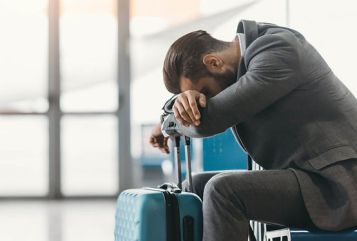
Jetlag arises from disruptions to the body’s circadian rhythm – an innate 24-hour cycle governing numerous bodily functions. (CREDIT: Creative Commons)
.
.
Click the link below for the article:
.
__________________________________________
April 17, 2024
Mohenjo
Business, Food For Thought, Human Interest, Political, Science, Technical
amazon, business, Business News, current-events, Future, Hotels, human-rights, medicine, mental-health, research, Science, Science News, technology, Technology News, travel, vacation

Click the link below the picture
.
“I don’t think anyone in the United States government, Americans, do not support actual Nazis or white supremacists. I know that I certainly do not,” said Greene, who is well known for her white nationalist leanings.
“It’s interesting to hear my colleague just now talk about disavowing white supremacists when in 2022, she spoke at an event led by white supremacists and white nationalist Nick Fuentes,” said Frost.
“And when asked about it, doubled down on it and said ‘We’re going to focus on people not labels.’ So get out of here with that damn hypocrisy,” said Frost.
He was exactly right. Greene did attend the “America First Political Action Conference” in Orlando which was organized by noted anti-semite Nick Fuentes — the infamous hatemonger who would later team up with Kanye West and meet with Donald Trump.
The truth is that Marjorie Taylor Greene knows that her party is infested with white nationalists and she panders to that base to cement her political future.
.

.
.
Click the link below for the article:
.
__________________________________________
April 17, 2024
Mohenjo
Business, Food For Thought, Human Interest, Political, Science, Technical
amazon, business, Business News, current-events, Future, Hotels, human-rights, medicine, mental-health, research, Science, Science News, technology, Technology News, travel, vacation

Click the link below the picture
.
For tens of millions of years, Australia has been a playground for evolution, and the land Down Under lays claim to some of the most remarkable creatures on Earth.
It is the birthplace of songbirds, the land of egg-laying mammals, and the world capital of pouch-bearing marsupials, a group that encompasses far more than just koalas and kangaroos. (Behold the bilby and the bettong!) Nearly half of the continent’s birds and roughly 90 percent of its mammals, reptiles, and frogs are found nowhere else on the planet.
Australia has also become a case study in what happens when people push biodiversity to the brink. Habitat degradation, invasive species, infectious diseases, and climate change have put many native animals in jeopardy and given Australia one of the worst rates of species loss in the world.
In some cases, scientists say, the threats are so intractable that the only way to protect Australia’s unique animals is to change them. Using a variety of techniques, including crossbreeding and gene editing, scientists are altering the genomes of vulnerable animals, hoping to arm them with the traits they need to survive.
“We’re looking at how we can assist evolution,” said Anthony Waddle, a conservation biologist at Macquarie University in Sydney.
It is an audacious concept, one that challenges a fundamental conservation impulse to preserve wild creatures as they are. But in this human-dominated age — in which Australia is simply at the leading edge of a global biodiversity crisis — the traditional conservation playbook may no longer be enough, some scientists said.
“We’re searching for solutions in an altered world,” said Dan Harley, a senior ecologist at Zoos Victoria. “We need to take risks. We need to be bolder.”
The extinction vortex
The helmeted honeyeater is a bird that demands to be noticed, with a patch of electric-yellow feathers on its forehead and a habit of squawking loudly as it zips through the dense swamp forests of the state of Victoria. But over the last few centuries, humans and wildfires damaged or destroyed these forests, and by 1989, just 50 helmeted honeyeaters remained, clinging to a tiny sliver of swamp at the Yellingbo Nature Conservation Reserve.
.
 Credit…Photo illustration by Lauren Peters-Collaer
.
.
Click the link below for the article:
.
__________________________________________
April 17, 2024
Mohenjo
Business, Food For Thought, Human Interest, Political, Science, Technical
amazon, business, Business News, current-events, Future, Hotels, human-rights, medicine, mental-health, research, Science, Science News, technology, Technology News, travel, vacation

Click the link below the picture
.
Charles Duhigg is a Pulitzer Prize-winning reporter and New York Times best-selling author of The Power of Habit and Smarter Faster, Better. He is a graduate of Yale University and Harvard Business School. Duhigg has been a frequent contributor to This American Life, NPR, The Colbert Report, PBS’s NewsHour, and Frontline. He is a winner of the National Academies of Sciences, National Journalism, and George Polk awards.
Below, Duhigg shares five key insights from his new book, Supercommunicators: How to Unlock the Secret Language of Connection.
1. We are all supercommunicators.
We all access our instincts and figure out how to how to connect with someone else. We all have the ability to ask ourselves, “What kind of conversation is actually happening? Is this a social conversation, practical conversation, or emotional conversation?” We can then match the other person and invite them to match us. Within psychology, this is actually known as the matching principle. What it says is that we need to be having the same kind of conversation at the same time, if we want to connect with each other.
2. Ask deep questions.
Science has a pretty easy technique for figuring out our current type of conversation. This technique is to ask questions, but certain kinds of deep questions. Studies of supercommunicators have found that oftentimes, they ask 10 to 20 times as many questions as everyone else. But we don’t often notice that they’re asking these questions because so many of the questions are so easy to hear and respond to. These questions include: What do you think of that? Why do you think that happened? What happens next? What do you think was going on inside his head when he said that?
. Ketut Subiyanto/Pexels
.
.
Click the link below for the article:
.
__________________________________________
April 16, 2024
Mohenjo
Business, Food For Thought, Human Interest, Political, Science, Technical
amazon, business, Business News, current-events, Future, Hotels, human-rights, medicine, mental-health, research, Science, Science News, technology, Technology News, travel, vacation

Click the link below the picture
.
When Daniel Campos heard that the 99 Cents Only stores were shuttering all 371 locations late last week, a surprising wave of emotions hit him.
As the child of immigrants, Campos, a Los Angeles native, said the 99 Cents Store was “an institution” ― a place where you could get a dollar Hot Wheels toy or an ice cream bar while your parents stocked up on groceries, household cleaning items and chintzy decorations for family parties.
“For those of us that grew up in a low-income background, this place meant a lot to us,” Campos, the chief creative director at XXXDCD Clothing, told HuffPost. “As a kid, if your parents drove by it and stopped, you knew you were in for a treat.”
Because the inventory was always shifting in and out, there was a “treasure hunt” quality to visiting the store: One week you’d find off-brand Barbie dolls and Star Wars-branded “space punch,” the next, marked-down Halloween decorations and a hair cap with packaging that inexplicably featured Beyoncé. (Something tells us she didn’t license that one.)
Growing up, Campos usually beelined to the ice cream section before snatching up a bag of Hot Cheetos. As an adult, he valued the store for its healthier options: You could be dead broke but never feel like it because the 99 Cents Store kept you well-fed with Yukon Gold potatoes, tortillas, milk, rice, fresh produce (grapes, avocados, lettuce and bell peppers) and canned ones, too.
As columnist Gustavo Arellano wrote in the Los Angeles Times on Tuesday, “Even though it was a multibillion-dollar company, 99 Cents Only operated under a premise straight from the Great Depression: a fair shake for everyone who entered.”
That’s what Campos loves ― or loved, as it were ― about the store, too.
“They have vegetables, eggs, milk and so many of the name brand products you’d find at a regular grocery store,” he said. “For me, it turned into a nostalgia of remembering where I would get snacks too, wow, this is where I can get essentials at a much lower price.”
The discount chain, which operates in California, Arizona, Nevada and Texas, made the closure announcement on Friday, citing COVID setbacks, inflation, and product theft.
The stores, which first opened their doors in 1982, began liquidation sales on Friday. Social media, TikTok in particular, is full of videos of penny-pinchers scouring the aisles for one last haul.
The 99 Cents Store news comes on the heels of an announcement that nearly 600 Family Dollar locations are set to close this year, while 400 more stores under the Family Dollar and Dollar Tree banners are expected to close in the next few years as their leases expire.
.

Allen J. Schaben via Getty Images Shoppers at the 99 Cents Only store in Huntington Beach on April 5 ― the day the company announced it would be shuttering all 371 of its stores.
.
.
Click the link below for the article:
.
__________________________________________
April 16, 2024
Mohenjo
Business, Food For Thought, Human Interest, Political, Science, Technical
amazon, business, Business News, current-events, Future, Hotels, human-rights, medicine, mental-health, research, Science, Science News, technology, Technology News, travel, vacation

Click the link below the picture
.
I am an Aries through and through—bold, ambitious, fiery, and confident. Today, March 27, marks my 50th year on this planet, something I could never have imagined. I was diagnosed with an undetermined type of muscular dystrophy as a young child, and doctors told my parents I wouldn’t live to become an adult. My immigrant parents cried when they heard the news. Even though this news was devastating, they never treated me like a fragile egg about to break. In fact, as the first born child of three girls, I had a lot of responsibilities and expectations which only reinforced my Aries tendencies.
While my parents always supported me, I knew at an early age that my life was different. And since they didn’t sugarcoat anything to me, I had a very clear sense that my time was limited. In my bedroom, with a scary clown ceiling light above me at night, my vivid imagination wondered how I would die–would it be a slow and painful death? Would it be fast from a medical emergency? Knowing my muscles are progressively weakening as I struggled to walk as a child and breathe as a teenager always kept death at the forefront of my mind. Believing I had no future shaped me in ways I am still processing today.
Birthdays have given me pause for reflection, especially this year. I recently looked at a picture taken from my 40th birthday party and could not recognize myself. I wasn’t wearing a BiPap mask because at the time I only had to use it intermittently to support my breathing. I did not wear a belt across my chest which I need now because my upper body has grown weaker. I recalled being exhausted after the party. When I got home, I immediately put my mask on and turned on the ventilator. It was a sweet relief. Shortly after I started to use it for longer periods of time until I began using it all day and night. I didn’t see it as a failure of my body but part of the inevitable downward slide toward my final destination.
Two years ago, I experienced the most harrowing and traumatic series of medical crises that led to weeks in the ICU which left me without the ability to speak due to a tracheostomy, a tube in the throat connected to a ventilator, and the ability to swallow and eat or drink by mouth. This resulted in needing a feeding tube that goes into my stomach and intestine. During my hospitalization, I also lost sensation in my bladder so now I urinate through a catheter four to five times a day. Those weeks were like a fever dream–I couldn’t sleep for days because every time I closed my eyes I feared I would never wake up. I was in tremendous pain and could only communicate by mouthing words to my sisters or scrawling on a pad of paper. In the few moments when I could write, I outlined instructions to my sisters on what to do if I didn’t make it. Was this the way I would die? It was my closest brush with death in a series of many but I lived to tell another tale. But I was determined to claw my way forward to another day.
I am still adjusting to life again in a new body and way of life that requires a considerable number of resources, supplies, and machinery to stay alive and avoid institutionalization. The amount of maintenance and administrative work it takes to be disabled in America has also taken a toll—the additional out-of-pocket home care that I need now is $840 a day. With the donations from my GoFundMe dwindling, managing and directing a team of caregivers for my daily activities requires a lot of forethought and clear communication. Being disabled in a nondisabled world is precarious, one of constant adaptation. I remade myself into a new cyborg form that still has a voice, a breath, and a will to live.
.
 Courtesy of Alice Wong—Eddie Hernandez Photography
.
.
Click the link below for the article:
.
__________________________________________
April 15, 2024
Mohenjo
Business, Food For Thought, Human Interest, Political, Science, Technical
amazon, business, Business News, current-events, Future, Hotels, human-rights, medicine, mental-health, research, Science, Science News, technology, Technology News, travel, vacation

It ain’t over till it’s over!…
.
Whoops!
.
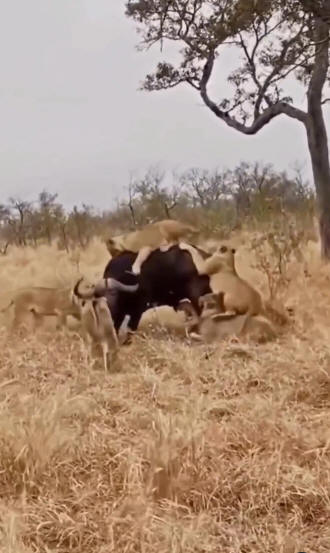 So sad! Nature!
.
.
Click the link below for the article:
.
__________________________________________
Older Entries
Newer Entries

