
.
News You might have missed!
Use your browser or smartphone back arrow (<-) to return to this table for your next selection.
.
__________________________________________
Assorted human interest posts.
April 15, 2024
Food For Thought, Human Interest, missed News, Political, Science, Technical amazon, business, Business News, current-events, Future, Hotels, human-rights, medicine, mental-health, research, Science, Science News, technology, Technology News, travel, vacation Leave a comment
.
.
__________________________________________
April 15, 2024
Business, Food For Thought, Human Interest, Political, Science, Technical amazon, business, Business News, current-events, Future, Hotels, human-rights, medicine, mental-health, research, Science, Science News, technology, Technology News, travel, vacation Leave a comment

Click the link below the picture
.
In late 2016 U.S. diplomats and family members based in Cuba began reporting a wide swath of neurological symptoms, including dizziness, headaches, deafness and difficulty concentrating, following exposure to ear-splitting noises around their homes. This “Havana syndrome” outbreak disrupted U.S. relations with Cuba, spawned congressional hearings on the “attacks” and left some people with years of disabling symptoms. Reports from people with these symptoms also occurred in other countries, and the U.S. government labeled these cases as “anomalous health incidents” (AHIs).
The abrupt onset of these symptoms led to years of debate among scientists and those affected about possible causes, which ranged from pesticides to group psychology to noise from crickets. Now two medical studies that were conducted by the National Institutes of Health and released on Monday morning might finally have an answer. The researchers compared more than 80 of these affected individuals with similar healthy people. The results, detailed in the Journal of the American Medical Association, show no clinical signs or brain image indications to explain those widely varied symptoms. The JAMA findings follow the 2023 release of an intelligence community assessment that found that the injuries were not the result of foreign attacks. More likely, the assessment suggested, they were tied to previous injuries, stress, environmental concerns and “social factors” such as group psychology, in which illness symptoms reported by one individual in a community can spread serially among its members. Such outbreaks have been seen everywhere, from hiccupping in high schools to “repetition strain” cases among Australian typists in the 1980s.
“These individuals have real symptoms and are going through a very tough time,” said NIH rehabilitation medicine expert Leighton Chan, who led one of the studies, at a briefing for reporters last Friday. Nothing in the new medical findings contradicts the assessment of the injuries in the intelligence community report, he said.
In the first study, led by Chan, investigators examined 86 people with AHIs, 42 women and 44 men, who last experienced an incident 76 days prior, on average. The participants were U.S. government staff and family members who had been in locations that included parts of Cuba, China and Austria, as well as the U.S. (All of these areas were past sites of Havana syndrome outbreak reports.) A third of these affected participants were unable to work because of their symptoms. (According to Chan, a few of the cases dated to 2015, which was prior to the previously reported cases in Cuba.) Clinical tests for hearing, balance, cognition, eyesight and blood work were matched against the results from 30 people with similar working backgrounds but no symptoms. The researchers found that the only significant differences between the two groups were increased self-reported symptoms of fatigue, stress and depression in people with AHIs, as well as self-reported trouble with balancing that was confirmed through testing.
.

Hundreds of Cubans and visitors from other countries gather across the street from the newly reopened U.S. Embassy to observe the flag-raising ceremony August 14, 2015, in Havana, Cuba. Chip Somodevilla/Getty Images
.
.
Click the link below for article:
.
__________________________________________
April 15, 2024
Business, Food For Thought, Human Interest, Political, Science, Technical amazon, business, Business News, current-events, Future, Hotels, human-rights, medicine, mental-health, research, Science, Science News, technology, Technology News, travel, vacation Leave a comment

Click the link below the picture
.
50. Changing of the Guards (1978)
Street Legal delivered fans a shock: Dylan fronting a large band, with female backing singers to the fore. The words, meanwhile, might well represent an oblique personal history, from adolescence through marriage to religious conversion: whatever they were about, they reduced Patti Smith to tears on first hearing.
49. This Wheel’s on Fire (1967)
Subsequently covered by everyone from Siouxsie and the Banshees to Kylie Minogue, in every style from psychedelic to electro-glam stomp, the original Basement Tapes recording of This Wheel’s on Fire – both a great song and another of Dylan’s umpteen apocalyptic visions – has a uniquely intense, eerie quality that no one else has subsequently matched.
48. Pay in Blood (2012)
Should you wonder if Dylan’s capacity for rage had been dulled by his advancing years, listen to Pay in Blood, a gentle musical backdrop for an expression of literally murderous fury: at first he’s so angry that the lyrics are incomprehensible, his voice just a phlegmy snarling noise; when they come into focus, he’s demanding vengeance on bankers and politicians “pumping out [their] piss”. Bracing.
.
 Bob Dylan plays piano with a harmonica around his neck while recording the album ‘Highway 61 Revisited’ at Columbia’s Studio A during the summer of 1965 in New York City. Photo by Michael Ochs Archives / Getty Images.
.
.
Click the link below for the article:
.
__________________________________________
April 14, 2024
Business, Food For Thought, Human Interest, Political, Science, Technical amazon, business, Business News, current-events, Future, Hotels, human-rights, medicine, mental-health, research, Science, Science News, technology, Technology News, travel, vacation Leave a comment

Click the link below the picture
.
I found it while walking through the home-goods section of T.J. Maxx, the American retail equivalent of the Garden of Earthly Delights, at 8:00 on a Tuesday night in 2015. It was two days after Easter, and in this Hieronymus Bosch land of shopping anarchy, the shelves were stocked with pastel-colored objects of uncertain usefulness: sacks of fruit-medley popcorn dyed green and purple; a giant tub of millennial-pink Himalayan crystal salt. Somewhere among these novelties, I spotted a carelessly abandoned gadget calling itself the Dash Rapid Egg Cooker. The cashier who rang me up did not share my enthusiasm for the cheery cockiness of its packaging, which proclaimed that it “Perfectly Cooks 6 Eggs at a Time!” Baffled, she asked me a question, the answer to which would have embarrassed anyone but me: “Don’t you know how to boil water?”
No. I didn’t.
And at 22, not only did I not know how to boil water, I didn’t even know how to turn on a stove. Now, these may both seem like gaps in knowledge that could have been easily rectified with a 60-second trip to the kitchen, but you see: I did not have one.
Earlier that day, I had finally moved into my first solo “apartment”: the garden-level basement of a Manhattan brownstone that was rented to me by an absentee owner, which, in lieu of a real kitchen, came outfitted with a minifridge, a hot plate, and a microwave. That evening, after a long day of unpacking, I sat down on the building’s stoop, ate my way through a bag of discounted Cadbury Mini Eggs and, after 20 minutes spent wallowing in disbelief at where life had deposited me, broke into a series of earthquake-size sobs. But it wasn’t misery making me dry-heave — it was relief.
In 2013, I fled my old life for New York, the promised land for stunted young adults evading responsibility. I had spent my childhood, teenhood, and earliest adulthood consumed with daydreams of an imaginary future in which I lived alone — my only ambition in life. In these painstakingly detailed fantasies, the greatest luxury I could imagine was that my space and my empty hours all belonged to me and me only. In these visions, there was no one snatching “storybooks” (the beloved Indian-parent euphemism even if you read adult fiction) from my hands and barking at me to get up and make tea whenever guests came to visit, or grating at me to bring out hot rotis straight from the stove and put them onto the plates of fathers and uncles. The milieu I was raised in tried to drill into me the idea that keeping a home, and the domestic labor it entails — the cooking, the serving, the dusting, the wiping — were acts of profound nobility. That they were crucial to the formation of the only life I was predestined for, one that came prepackaged with a husband and children, two species, I had been warned, that were equally incapable of feeding themselves, and whose supervision would fall to me.
.
 Alistair Matthews for The New York Times
.
.
Click the link below for the article:
.
__________________________________________
April 14, 2024
Business, Food For Thought, Human Interest, Political, Science, Technical amazon, business, Business News, current-events, Future, Hotels, human-rights, medicine, mental-health, research, Science, Science News, technology, Technology News, travel, vacation Leave a comment

Click the link below the picture
.
When Steve Edsel was a boy, his adoptive parents kept a scrapbook of newspaper clippings in their bedroom closet. He would ask for it sometimes, poring over the headlines about his birth. Headlines like this: “Mother Deserts Son, Flees From Hospital,” Winston-Salem Journal, December 30, 1973.
The mother in question was 14 years old, “5 feet 6 with reddish brown hair,” and she had come to the hospital early one morning with her own parents. They gave names that all turned out to be fake. And by 8 o’clock that evening, just hours after she gave birth, they were gone. In a black-and-white drawing of the mother, based on nurses’ recollections, she has round glasses and sideswept bangs. Her mouth is grimly set.
.
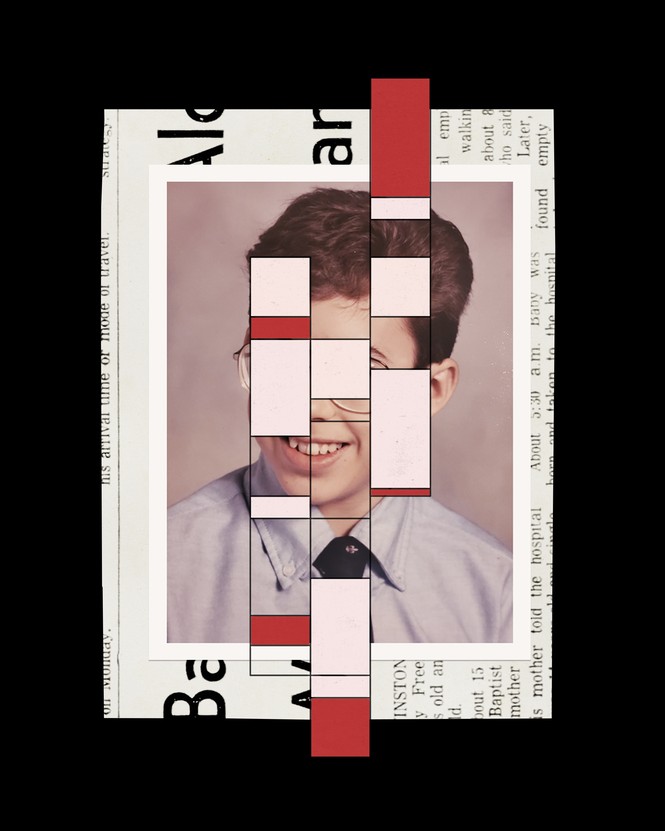 Illustration by The Atlantic. Sources: The Herald Sun; courtesy of Steve Edsel.
.
.
Click the link below for the article:
.
__________________________________________
April 13, 2024
Business, Food For Thought, Human Interest, Political, Science, Technical amazon, business, Business News, current-events, Future, Hotels, human-rights, medicine, mental-health, research, Science, Science News, technology, Technology News, travel, vacation Leave a comment

Click the link below the picture
.
Runners were some of the first people to embrace smartwatches. I remember back when a “running watch” was a brick-like GPS device strapped to your wrist, and it was a game-changer when those bricks started tracking heart rate as well.
These days, every smartwatch can track your heart rate, not to mention your location and potentially a half-dozen other things. So what makes a running watch special? Tons of extra fitness-centric features—and some critical small details, like physical buttons. Read on for my picks.
What to look for in a running watch
It’s easy to get lost in spec sheets and marketing claims, but at the end of the day what matters in a watch is whether it can do what you want a watch to do. Think of it like hiring an employee: you don’t want the person who can do the most things, you want the person who can do the job that you need done.
So here are some things to think about when crafting the “job description” for your running watch. Some might be critical to you; some might be irrelevant.
Does it have physical buttons?
For most everyday functions, it may not matter if you’re clicking a physical button or booping an icon on a screen. But when you’re running laps at the track, your shaky, sweaty fingers are going to have a hard time with a touchscreen. For that reason, runners often prefer a watch with real buttons. All of our picks below have physical buttons.
.
 Credit: Composite / Alisa Stern; Shutterstock / PeopleImages.com – Yuri A
.
.
Click the link below for the article:
.
__________________________________________
April 13, 2024
Business, Food For Thought, Human Interest, Political, Science, Technical amazon, business, Business News, current-events, Future, Hotels, human-rights, medicine, mental-health, research, Science, Science News, technology, Technology News, travel, vacation Leave a comment

Click the link below the picture
.
On the day that I was born—winter solstice, 1959—a headline in Life magazine proclaimed “Target Venus: There May be Life There!” It told of how scientists rode a balloon to an altitude of 80,000 feet to make telescope observations of Venus’s atmosphere, and how their discovery of water raised hopes that there could be living things there. As a kid, I thrilled to tales of undersea adventure with telepathic Venusian frogs in Isaac Asimov’s juvenile science-fiction novel Lucky Starr and the Oceans of Venus. In 1975, when I was 15, a family friend—a planetary scientist—gave me a picture of the first-ever photograph taken from the surface of another planet: Venus. The Soviet Venera 9 probe had sent back a black-and-white image of a landscape with angular rocks and fine-grained dirt. A bright patch of sky made it seem much less unearthly than the Apollo moon shots I had obsessed over, and more like a strange, overcast desert land that you might hope to visit someday.
For many of my peers, though, Venus quickly lost its romance. The very first thing that scientists discovered with a mission to another planet was that Venus was not at all the Earthly paradise that fiction and speculative science had portrayed. It is nearly identical to our own planet in bulk properties such as mass, density, and size. But its surface has been cooked and desiccated by a suffocating ocean of carbon dioxide. Trapped in the scorching death-grip of a runaway greenhouse effect, Venus has long been held up as a cautionary tale for everything that could go wrong on a planet like Earth. As a possible home for alien life, it has been voted the planet least likely to succeed.
But I have refused to give up on Venus, and over the years my stubborn loyalty has been vindicated. The rocky vistas glimpsed by Venera 9 and other Russian landers suggested a tortured volcanic history. That was confirmed in the early 1990s by the American Magellan orbiter, which used radar to peer through the planet’s thick clouds and map out a rich, varied, and dynamic surface. To judge from the paucity of impact craters, the surface formed mostly in the last billion years, which makes it fresher and more recently active than any rocky planet other than Earth. Russian and American spacecraft also found hints that the primordial climate might have been wetter, cooler, and possibly even friendly to life. Measurements of density and composition imply that Venus originally formed out of basically the same stuff as Earth. That presumably included much more water than the trace equivalent to one thousandth of 1 percent of Earth’s oceans that we find wafting in the thick air today.
Confirmation comes from the measured ratio of deuterium (heavy hydrogen) to normal hydrogen. Venus’s atmosphere has proportionately much more deuterium than Earth’s does. This skew is a sign that the planet’s hydrogen has gradually escaped to space; deuterium, being heavier, leaks out more slowly than its lighter cousin, so that a difference builds up over time. Winding the clock backward, Venus must once have had much more hydrogen, which is to say, much more water.
.
 Venus
Venus
.
.
Click the link below for the article:
.
__________________________________________
April 12, 2024
Business, Food For Thought, Human Interest, Political, Science, Technical amazon, business, Business News, current-events, Future, Hotels, human-rights, medicine, mental-health, research, Science, Science News, technology, Technology News, travel, vacation Leave a comment

Click the link below the picture
.
OJ Simpson, the former American football star turned actor who was controversially cleared of double murder, has died aged 76.
San Francisco-born Orenthal James Simpson rose to fame in college before playing in the NFL.
In 1995, he was acquitted of the murder of his former wife Nicole Brown and her friend in a trial that gripped America.
In 2008, he was sentenced to 33 years’ imprisonment on unrelated charges of armed robbery. He was released in 2017.
Diagnosed with prostate cancer, Simpson had been receiving chemotherapy treatment, the Pro Football Hall of Fame said in a statement.
According to his family, he died “surrounded by his children and grandchildren”.
In 1994, he was arrested as a suspect in the murder of his ex-wife Nicole Brown and her friend Ron Goldman. The pair were found stabbed to death outside Ms Brown’s home in Los Angeles. Simpson became an immediate person of interest in the case.
On the day he was due to turn himself in, he fled in a white Ford Bronco with a former teammate, and led the police on a slow-speed chase through the Los Angeles area.
That chase engrossed audiences in the US and abroad as it was broadcast live on “rolling” 24-hour news channels still in their relative infancy.
In the ensuing court case, dubbed the “trial of the century” by US media, prosecutors argued Simpson had killed Ms Brown in a jealous fury. Evidence included blood, hair, and fiber tests linking Simpson to the murders.
The defense argued Simpson had been framed by police motivated by racism.
In one of the trial’s most memorable moments, prosecutors asked Simpson to put on a pair of blood-stained gloves allegedly found at the scene of the murder, but Simpson struggled to fit his hands into them. It led to one of Simpson’s lawyers, Johnnie Cochran, telling the jury in his closing arguments: “If it doesn’t fit, you must acquit.”
.
 Reuters
.
.
Click the link below for the article:
.
__________________________________________
April 12, 2024
Business, Food For Thought, Human Interest, Political, Science, Technical amazon, business, Business News, current-events, Future, Hotels, human-rights, medicine, mental-health, research, Science, Science News, technology, Technology News, travel, vacation Leave a comment
Click the link below the picture
.
Around the world, children are far more likely than ever before to develop food allergies.
Inquiries into the deaths of British teenagers after eating buttermilk, sesame, and peanuts have highlighted the sometimes tragic consequences. In 2018, a six-year-old girl in Western Australia died as the result of a dairy allergy.
The rise in allergies in recent decades has been particularly noticeable in the West. Food allergy now affects about 7% of children in the UK and 9% of those in Australia, for example. Across Europe, 2% of adults have food allergies.
Life-threatening reactions can be prompted even by traces of the trigger foods, meaning patients and families live with fear and anxiety. The dietary restrictions which follow can become a burden to social and family lives.
While we can’t say for sure why allergy rates are increasing, researchers around the world are working hard to find ways to combat this phenomenon.
What Causes an Allergy?
An allergy is caused by the immune system fighting substances in the environment that it should see as harmless, known as allergens.
These innocent substances become targets, leading to allergic reactions.
Symptoms range from skin redness, hives, and swelling to – in the most severe cases – vomiting, diarrhea, difficulty breathing, and anaphylactic shock.
.
 Photo from Getty Images.
.
.
Click the link below for the article:
.
__________________________________________
April 12, 2024
Business, Food For Thought, Human Interest, Political, Science, Technical amazon, business, Business News, current-events, Future, Hotels, human-rights, medicine, mental-health, research, Science, Science News, technology, Technology News, travel, vacation Leave a comment

Click the link below the picture
.
In this week’s edition:
• How Israel uses AI for assassination in the Gaza War.
• A father reflects on his son’s development.
• The rise of the term, “gaslighting.”
• Toni Morrison’s expansive rejection letters.
• The history of PostSecret.1. ‘Lavender’: The AI Machine Directing Israel’s Bombing Spree in Gaza
Yuval Abraham | +972 and Local Call | April 3, 2024 | 8,066 words
The biggest news out of Gaza this week was the deaths of seven aid workers affiliated with the non-profit organization World Central Kitchen. The incident was nothing short of perverse: Israel targeted and killed people trying to make a dent in the imminent famine that Israel itself has engineered as part of its strategy to demoralize and destroy, in whole or in part*, the Palestinian population. etc, etc,etc —SD
.
 Illustration by Krista. Image by Getty.
.
.
.
__________________________________________
Publicație umoristică dedicată glumeților de pretutindeni
Faith saved us from the savages that we were, losing faith makes us savages again
Where Trends Meet Truth
https://www.tangietwoods
Freelance poetry writing
Zalai Betti
INOVATION BLOG PEOPLE AND NEWS
Németh György
Konsultan Lingkungan Hidup di Lombok - NTB
Lea Krasznai (LeaArt21) – Idezetek (Idézetek) WordPress (Budapest, Hungary)
Appunti, spunti e passioni in liberta'
Gyorgy Nemeth
تعنى بتقديم نصائح للمعلمين المبتدئين، والطلبة الممتحنين، ومشاركة الاخرين تجربة الادخار في المال، بترشيد الاستهلاك المنزلي، وترتيب البيت، والحفاظ على البيئة، وتشجيع السيارات صديقةالبيئة، والسياحة والاسفار، ونماء رؤوس الاموال، والطب البديل وتشجيع التعليم الرقمي والذكاء الاصطناعي، والعناية بالنحل وتربية الاسماك، والاسثمار في رؤوس الاموال، الزراعة العضوية، والعناية باسنان الرضع، و صحة الحوامل، وتفسير القران
apprendre pour évoluer
Thoughts on books, language, meaning, and the culture around it.
Outdoor Recreation & Adventure in the Great Lakes Region
News, Info, Bio, Articles, Reviews, Lyrics, Technology, Science, Inspiration, Motivation, Philosphy and many more...
Christian Lifestyle Blogger
CEO and president of The Mullins Companies
Two Cultures. One Life. Endless Stories
Real Estate Development Specialist
¡Bienvenido de vuelta viajero!
so looking to the sky ¡ sing and from my heart to YOU ¡ bring...
CEO and Founder of Nsight Health
Catholic News, Prayers, HD Images, Rosary, Music, Videos, Holy Mass, Homily, Saints, Lyrics, Novenas, Retreats, Talks, Devotionals and Many More
Decoding Power. Defying Narratives.
A creative collaboration introducing the art of nature and nature's art.
The Home Of Entertainment News, Reviews and Reactions
•Whenever you are confronted with an opponent, conquer him with love.(Gandhi)
Algotrader at TRADING-CLUBS.COM
Film and Writing Festival for Comedy. Showcasing best of comedy short films at the FEEDBACK Film Festival. Plus, showcasing best of comedy novels, short stories, poems, screenplays (TV, short, feature) at the festival performed by professional actors.
Peace. Tranquility. Insanity.
Take a ride on the wild side
Découvre des musiques prometteuses (principalement) dans la sphère musicale française.
No tiene que Ser una Pesadilla.
Life in Kana-text (er... CONtext)
Where feelings meet metaphors and make questionable choices.
Finding hope and peace through writing, art, photography, and faith in Jesus.
Eyasu
Eyasu The Wonderful
A former medical student's journey through healthcare challenges and personal growth

