December 21, 2022
Mohenjo
Business, Food For Thought, Human Interest, Political, Science, Technical
amazon, business, Business News, current-events, Future, Hotels, human-rights, medicine, mental-health, research, Science, Science News, technology, Technology News, travel, vacation

Click the link below the picture
.
The effect of exercise on health is profound. It can protect you from a range of conditions, including heart disease, type 2 diabetes, and some cancers. But the type and amount of exercise you should do changes as you age. To ensure that you are doing the right type of exercise for your age, follow this simple guide.
Childhood and Adolescence
In childhood, exercise helps control body weight, builds healthy bones, and promotes self-confidence and healthy sleep patterns. The government recommends that children should get at least one hour of exercise a day.
.
 Photo by zhu difeng/Shutterstock.
.
.
Click the link below for the article:
.
__________________________________________
December 21, 2022
Mohenjo
Crime, Food For Thought, Human Interest, Medical, missed News, Political, Science, Technical
amazon, business, Business News, current-events, Future, Hotels, human-rights, medicine, mental-health, research, Science, Science News, technology, Technology News, travel, vacation

.
News You might have missed!
Use your browser or smartphone back arrow (<-) to return to this table for your next selection.
.
__________________________________________
December 20, 2022
Mohenjo
Business, Human Interest
amazon, business, Business News, current-events, Future, Hotels, human-rights, medicine, mental-health, research, Science, Science News, technology, Technology News, travel, vacation

Click the link below the picture
.
WhatsApp has started rolling out a feature to let you chat with yourself. Sending messages to your own account can be a way to keep a piece of information easily accessible, right next to your other WhatsApp conversations.
Called “Message Yourself,” the feature lets users send notes, reminders, and shopping lists to themselves on WhatsApp.
On Monday, the Meta-owned instant messaging app announced the rollout of the new messaging feature that will reach all its Android and iPhone users in the coming weeks. It was initially tested with some beta testers, WhatsApp beta tracker WABetaInfo reported in late October. The company has confirmed to TechCrunch that the feature has begun rolling out globally.
Users will see their contact at the top of the contacts list on WhatsApp when they create a new chat. Tapping that contact will take them to the chat screen they can use to send messages to themselves.
Although the native feature to message yourself is new on WhatsApp, some users have already been using a workaround for some time. You could already send messages to yourself using the app’s “click to chat” feature. Nonetheless, the new offering removes the additional steps that users needed to self-chat using the wa.me URL.
.
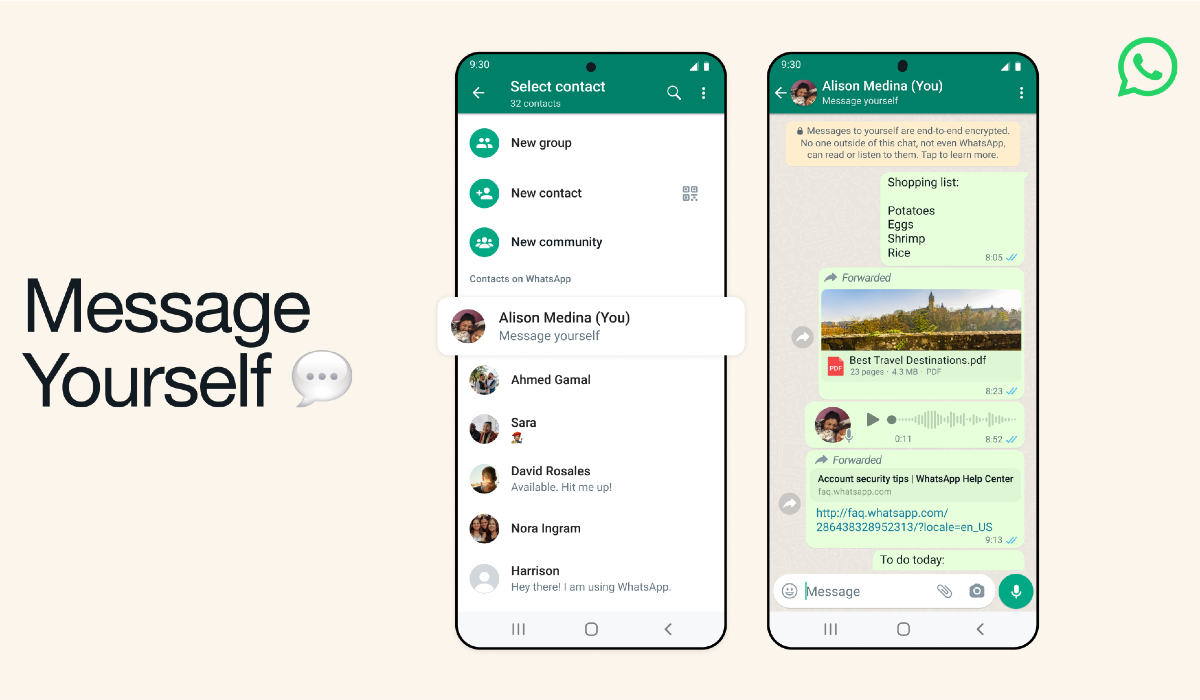 Image Credits: WhatsApp
.
.
Click the link below for the article:
.
__________________________________________
December 20, 2022
Mohenjo
Business, Food For Thought, Human Interest, Political, Science, Technical
amazon, business, Business News, current-events, Future, Hotels, human-rights, medicine, mental-health, research, Science, Science News, technology, Technology News, travel, vacation

Click the link below the picture
.
There are a ton of decisions that come with new parenthood. Cloth diapers or disposable? Breastfeeding or formula? One parent’s last name, or something hyphenated? Scheduled feeding or on-demand? A family name, or something more unique? The gravity of these decisions vary, but few will have as long-lasting and regular impact as choosing your baby’s name. Here’s how to choose a good one.
Finding a baby name that’s unique, has long-term appeal, and goes well with your last name isn’t easy. If you’ve combed all the baby name books and tried all the name generators and are still stuck, consider finding inspiration in an Indian baby name. If your background is Indian, choosing an Indian baby name for your boy or girl is a great way to signify your baby’s heritage. But even if you have no relation to Indian culture, choosing a modern Indian baby name will ensure your child’s name is as unique and beautiful as they are
.
 Mayur Kakade/Moment/Getty Images
.
.
Click the link below for the article:
.
__________________________________________
December 20, 2022
Mohenjo
Crime, Food For Thought, Human Interest, Medical, missed News, Political, Science, Technical
amazon, business, Business News, current-events, Future, Hotels, human-rights, medicine, mental-health, research, Science, Science News, technology, Technology News, travel, vacation
.
News You might have missed!
Use your browser or smartphone back arrow (<-) to return to this table for your next selection.
.
__________________________________________
December 19, 2022
Mohenjo
Business, Food For Thought, Human Interest, Political, Science, Technical
amazon, business, Business News, current-events, Future, Hotels, human-rights, medicine, mental-health, research, Science, Science News, technology, Technology News, travel, vacation

Click the link below the picture
.
There are many sides to the beloved figure of Santa Claus – a giant of pop culture, he also has “miraculous” powers and ties to the celebration of the birth of Jesus. Santa’s blend of religion and popular culture is, however, not modern at all. Several of Santa’s modern features, such as his generosity, miracle-working, and focus on morality (being “naughty or nice”), were part of his image from the very beginning. Others, like the reindeer, came later.
The original Santa, Saint Nicholas, was a fourth-century CE bishop of Myra (in modern Turkey) with a reputation for generosity and wonder-working. St Nicholas became an important figure in eighth-century Byzantium before hitting pan-European stardom around the 11th century.
He became a focus, not just for religious devotion, but Medieval dramas and popular festivals – some popular enough to be suppressed during the Reformation
The naughty list
St Nicholas had his own version of the naughty list, including the fourth-century “arch-heretic” Arius, whose views annoyed the saint so much he supposedly smacked Arius in the face in front of Emperor Constantine and assembled bishops at Nicaea.
.
 .
.
.
Click the link below for the article:
.
__________________________________________
December 19, 2022
Mohenjo
Business, Food For Thought, Human Interest, Political, Science, Technical
amazon, business, Business News, current-events, Future, Hotels, human-rights, medicine, mental-health, research, Science, Science News, technology, Technology News, travel, vacation

Click the link below the picture
.
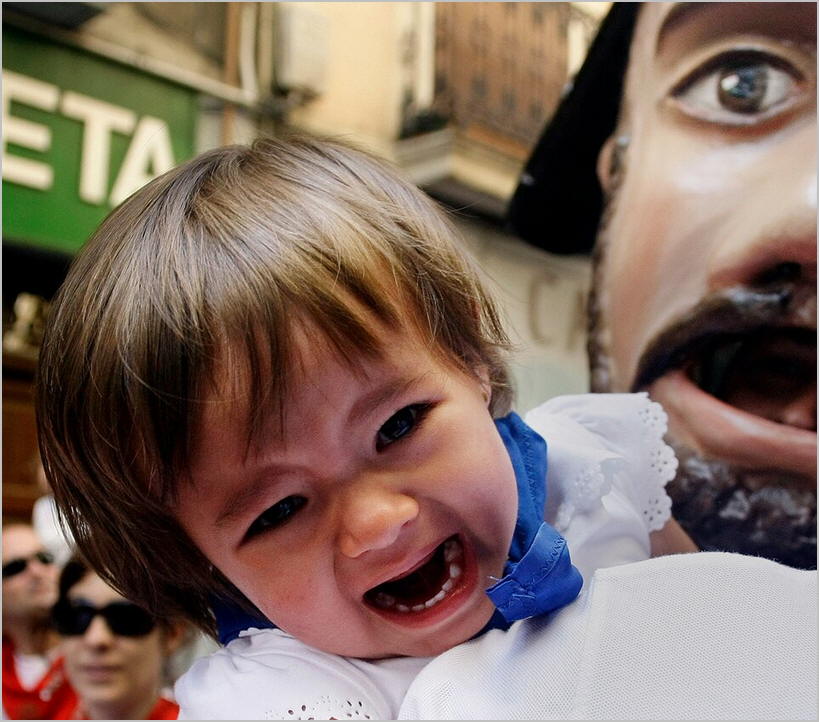
As children, many of us are warned not to judge a book by its cover. Yet, as adults, people frequently jump to conclusions about the character traits of strangers based on their facial appearance. These first impressions are striking in that they are often based on stable facial features – such as the shape of someone’s nose or the distance between their eyes – as opposed to facial behaviors like smiling, frowning, laughing, or shouting.
First impressions can exert an influence in various areas of our lives. Research suggests that, when we think politicians look competent, we’re more likely to vote for them. When we think someone looks untrustworthy, we’re less likely to offer them employment or lend them money, and more likely to think they’re guilty of crimes. First impressions of people of color formed by police officers and the judiciary can have fatal consequences.
The influence of face-based first impressions on behavior is particularly troubling given evidence that they are typically inaccurate; there appears to be little or no relationship between individuals’ actual psychological traits and the ones that others attribute to them based on their facial features. The distorting effects of racial stereotypes on impressions of intelligence and aggression are well documented. Research also indicates that face-based judgments of trustworthiness do not predict how individuals perform in economic games designed to measure trustworthiness. Similarly, judgments of CEOs’ leadership ability based on their facial appearance do not predict their performance.
.
 The San Fermin festival in Pamplona, Spain. Photo by Susana Vera/Reuters
.
.
Click the link below for the article:
.
__________________________________________
December 19, 2022
Mohenjo
Crime, Food For Thought, Human Interest, Medical, missed News, Political, Science, sports, Technical
amazon, business, Business News, current-events, Future, Hotels, human-rights, medicine, mental-health, research, Science, Science News, technology, Technology News, travel, vacation
.
News You might have missed!
Use your browser or smartphone back arrow (<-) to return to this table for your next selection.
.
__________________________________________
December 18, 2022
Mohenjo
Business, Food For Thought, Human Interest, Political, Science, Technical
amazon, business, Business News, current-events, Future, Hotels, human-rights, medicine, mental-health, research, Science, Science News, technology, Technology News, travel, vacation

Click the link below the picture
.
Nicholas Yung considered himself a lucky man. A German who immigrated to the United States in 1848, Yung had worked hard to carve out a living for himself and eventually prosper as the owner of a mortuary in San Francisco. The business allowed him and wife Rosina to purchase a modest lot on the top of California Street Hill, where they built a quaint, cottage-style home and planted a beautiful garden. Every day, California sunlight and fresh air would stream in through their windows.
Yung had no reason to believe that anything could interrupt his idyllic life, or that any one person could somehow deprive him of the beautiful days he had worked so hard to enjoy. But Yung also hadn’t accounted for Charles Crocker, a very rich and very petty man who would eventually become both his neighbor and the bane of his existence. With enough lumber to build a 40-foot-tall, blighting fence around much of Yung’s property, Crocker and his spite fence became a legendary revenge tale, a tourist attraction, and a lesson in the danger of escalating tempers.
At 6 feet tall and 300 pounds, Charles Crocker cut an imposing figure. He had filled his bank account by being one of the “Big Four” barons behind the building of the Central Pacific Railroad. By the 1870s, he could afford whatever he desired. And what he wanted was to loom over San Francisco like a gargoyle.
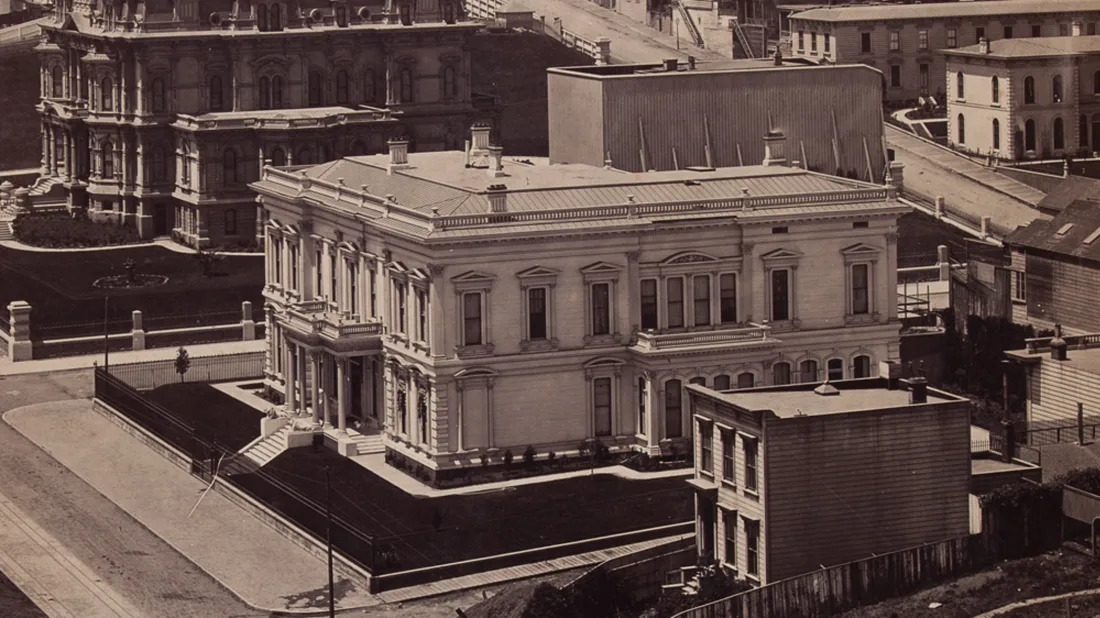
Crocker and his wealthy partners began scouting California Street Hill for its scenic views and proximity to the city’s financial district. One of his “Big Four” associates, Leland Stanford—former governor of California and future founder of Stanford University—suggested that the area would make for a beautiful residential plot if a cable car could bring residents up and down the hill. Stanford arranged to have one installed, and soon a group of wealthy men, including Crocker, were buying up all the homes on their chosen blocks. By the time Crocker was finished, he had erected a 12,000-square-foot mansion. With its new, wealthy inhabitants, California Street Hill was renamed Nob Hill.
.
.
.
Click the link below for the article:
.
__________________________________________
December 18, 2022
Mohenjo
Business, Food For Thought, Human Interest, Political, Science, Technical
amazon, business, Business News, current-events, Future, Hotels, human-rights, medicine, mental-health, research, Science, Science News, technology, Technology News, travel, vacation

Click the link below the picture
.
Gmail has now been around for 18 years, and it’s the default email service for billions of people. That’s partly because it’s free, but also because it does a few things really well. Searching your email, for example, is something you’d expect Google to be pretty good at, and Gmail is definitely among the best.
Still, it can be a hassle if you’re trying to find an email with a tracking number, for example, because you’re expecting a package. Wouldn’t it be a lot easier if your inbox let you keep track of packages without having to search through hundreds of emails?
Well, now Google has added exactly that. Google says that, over the next few weeks, it’s adding the ability to track your packages directly from your inbox.
Sometimes Google adds new features and it’s not clear who thought it was a good idea. For example, earlier this year Google integrated its Chat and Meet services into Gmail. I doubt most Gmail users care about Google Chat or Google Meet, or even know the difference. Still, it’s right there at the bottom of your inbox.
Occasionally, however, Google adds Gmail features that are actually useful. The latest example is one of those.
If Gmail detects that an email includes a tracking number, it will show a label on the message in your inbox that lets you know when to expect your delivery. In addition, Gmail will let you know when a package has shipped, and if it gets delayed, Google will surface the email and let you know. If you’ve ever changed your plans in order to be home when a package was supposed to arrive, you know how frustrating it can be to find out that the delivery has been delayed for some reason.
.
 Photo: Getty Images
.
.
Click the link below for the article:
.
__________________________________________
Older Entries
Newer Entries

