June 29, 2024
Mohenjo
Business, Food For Thought, Human Interest, Political, Science, Technical
amazon, business, Business News, current-events, Future, Hotels, human-rights, medicine, mental-health, research, Science, Science News, technology, Technology News, travel, vacation

Click the link below the picture
.
The vast majority of the cosmos is made of different kinds of stuff we cannot see. We know it’s there, but it emits no light and may not even interact directly with normal matter (so we cannot touch it, either). How do you even begin to understand such things?
The key is to study them through the ways they do affect the universe. Dark matter has gravity, so it influences the way normal matter moves around and clumps up in galaxies. (Given how there’s five or more times as much dark matter as normal matter in the universe, I often wonder which one we should call “normal,” though.) It even dictates how light flows through the space it warps by its gravity. And dark energy is causing the expansion of the universe to accelerate, which changes how we measure distances to far-flung galaxies and alters the distribution of galaxies and galaxy clusters in larger-scale cosmic structures.
These are measurable effects, if you’re clever and have access to advanced technology. We humans are, and we do, and now the European Space Agency (or ESA) has put an exceptionally powerful new tool into our kit: Euclid, a space-based observatory that is designed to reveal the secrets of the dark universe—and quite a bit about the visible universe, too.
As telescopes go, in some ways, Euclid is modest. It sports a 1.2-meter-wide mirror, only half the width of Hubble’s and one-fifth the size of the one for the James Webb Space Telescope (JWST). But despite its smaller size, Euclid’s mirror is in one important respect superior to those of these two huge observatories: Unlike the narrow field of view provided by Hubble’s and JWST’s mirrors, Euclid’s offers a panoramic vista. Each of the telescope’s celestial snapshots can capture a staggering half a square degree of sky, more than twice the apparent area of the full moon. It scans a long, wide strip of the sky every day, and its lifetime goal is to observe an incredible 15,000 square degrees in total, more than one-third of the entire sky. And it will do so in high resolution—the ability to see small details.
.

A close-up of the star-forming region M78, from a large image captured by the European Space Agency’s Euclid telescope. ESA/Euclid/Euclid Consortium/NASA, image processing by J.-C. Cuillandre (CEA Paris-Saclay), G. Anselmi (CC BY-SA 3.0 IGO)
.
.
Click the link below for the article:
.
__________________________________________
June 29, 2024
Mohenjo
Business, Food For Thought, Human Interest, Political, Science, Technical
amazon, business, Business News, current-events, Future, Hotels, human-rights, medicine, mental-health, research, Science, Science News, technology, Technology News, travel, vacation

Click the link below the picture
.
Summer vacation has begun for many of us, and chances are your kids are spending their free time in front of a screen instead of enjoying the nice weather. We won’t repeat the warnings about children and screen time here, but we admit it: Pulling them away from whatever video game is capturing their attention can be tricky. If they’re bouncing off the walls, however, then some sunshine and exercise might change their attitude. “My kids are the best selves outside, and we’ve noticed a difference,” says Shirra Baston, the founder and editor of the blog Get the Kids Outside.
If you’re looking for ways to get them to spend time outdoors, here are a few ways to find some fun and help instill in them an appreciation of nature.
Learn about nature (and the nighttime sky) with an app
True, you’re trying to get your kid off screens. But that doesn’t mean you can’t use technology to help instill a sense of curiosity in children and learn more about the world around them.
For daytime exploring, check out PlantNet (iOS, Android)—a free app that identifies plants. Reviewers say the app gives quick and accurate results without annoying ads. And get your kids interested in their winged neighbors with the Merlin app, which will record and ID any birds in the vicinity.
Baston recommends trying the SkyView app (links to the “lite” version: iOS/Android) when the sun goes down. Point your camera at the sky, and the app will identify planets, stars, constellations, and even satellites.
Attempt a science experiment
A few years ago, I made a mess in my backyard by putting Mentos in a bottle of Diet Coke, but my boys loved it (and learned a bit from it). That’s just one of the science experiments you can try outdoors. You can show your kids how people told time before watches by building a sundial or making a homemade solar oven to make s’mores. This website is a great place to start if you need some inspiration, and this video also has some fun, simple activities that will hold your child’s attention:
.
 Credit: New Africa/Shutterstock
.
.
Click the link below for the article:
.
__________________________________________
June 28, 2024
Mohenjo
Business, Food For Thought, Human Interest, Political, Science, Technical
amazon, business, Business News, current-events, Future, Hotels, human-rights, medicine, mental-health, research, Science, Science News, technology, Technology News, travel, vacation
Click the link below the picture
.
NASA’s beloved Voyager 1 mission is back to normal science operations for the first time in more than six months, according to agency personnel. The announcement was made after NASA received data from all four of the spacecraft’s remaining science instruments.
The venerable spacecraft launched in 1977 and passed into interstellar space in 2012, becoming the first human-made object to accomplish that feat. Today, Voyager 1 and its twin, Voyager 2, are NASA’s longest-running missions. But the title has been challenging to hold on to for spacecraft that were designed to operate for just four years. The aging probes are stuck in the deep cold of outer space, their nuclear power sources are producing ever less juice, and glitches are becoming increasingly common.
Most recently, Voyager 1 faced a communications issue that began in November 2023. “We’d gone from having a conversation with Voyager, with the 1’s and 0’s containing science data, to just a dial tone,” said Linda Spilker, Voyager project scientist at NASA’s Jet Propulsion Laboratory (JPL), of the spacecraft’s troubles in an interview with Scientific American in March.
After more than six months of long-distance troubleshooting—Voyager 1 is more than 15 billion miles from Earth, and any signal takes more than 22.5 hours to travel from our planet to the spacecraft—mission personnel have finally coaxed Voyager 1 to gather and send home data with all its remaining science instruments, according to a NASA statement.
The fix required months of analysis to track the issue to a particular chip within the spacecraft’s flight data subsystem. That chip’s code couldn’t be relocated in one fell swoop, however, so mission personnel split the information chip into chunks that could be tucked into stray corners of the rest of the system’s memory. NASA began implementing the new commands in April. And in May the agency directed the aging spacecraft to resume collecting and transmitting science data. Voyager 1’s plasma-wave subsystem and magnetometer bounced back immediately. Its cosmic-ray detector and ow-energy-charged-particles instrument required additional troubleshooting, but both are now finally operating normally, according to NASA.
.
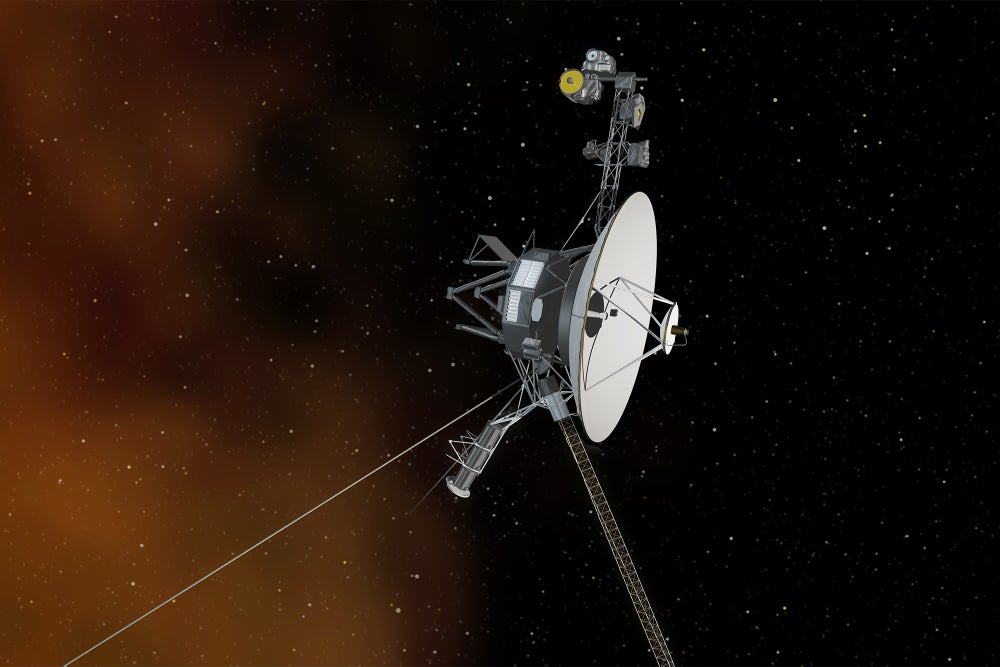
Artist concept of Voyager 1. NASA/JPL-Caltech
.
.
Click the link below for the article:
.
__________________________________________
June 28, 2024
Mohenjo
Business, Food For Thought, Human Interest, Political, Science, Technical
amazon, business, Business News, current-events, Future, Hotels, human-rights, medicine, mental-health, research, Science, Science News, technology, Technology News, travel, vacation

Click the link below the picture
.
Before I became a mother, I was certain I’d have two children — possibly three. In our many conversations about our future family, my husband wasn’t sure about a second. “Let’s see how we’re doing with one,” he would say, “then decide.”
“I already know I want two,” I said. “I’m already sure.”
My daughter was born in the spring of 2020. We spent nearly two years on all the day care waitlists in town, desperate for help, as my husband and I both worked from home. My daughter did not nap; she did not sleep; breastfeeding did not come easy. I was totally in love with my baby, totally isolated, and totally overwhelmed. While feverish with my third bout of mastitis, at the onset of the most dangerous depression of my life, I had the thought: I can’t do this again. It would be the death of me.
We had no money to spare; no more hours in the day to work; no sleep to lose. I was so humbled, so in awe that anyone had more than one child. I didn’t understand how they were making it through the day with everyone intact. As I looked closer, I saw they weren’t. They were falling apart.
My vision of having two or more children was not a fantasy, I realized, so much as a received image of what a family should look like. Having two children seemed more inevitable than desirable. I hadn’t considered having one child as a real option — and now I couldn’t imagine it any other way.
I was very fortunate that my husband agreed. We were obsessed with our daughter, we were so happy we’d made parents of ourselves, and we were at capacity. We were a kingdom of three.
My mother says that after I was born, she felt another child waiting for her.
.
 PeopleImages/Getty Images
.
.
Click the link below for the article:
.
__________________________________________
June 27, 2024
Mohenjo
Business, Food For Thought, Human Interest, Political, Science, Technical
amazon, business, Business News, current-events, Future, Hotels, human-rights, medicine, mental-health, research, Science, Science News, technology, Technology News, travel, vacation
Click the link below the picture
.
Mosquitoes are masters of speed and subtlety. Rarely do we catch one on our skin mid-bite. And when we do, the damage is often already done: the blood has been sucked, the itch-inducing saliva has been secreted, and, in some cases, a disease has already been transmitted.
This elusiveness means we have to rely on insect repellents for the best chance of evading bites. Not all mosquito-deterring products are created equal, though, says Dina Fonseca, a molecular ecologist and chair of the department of ecology at Rutgers University. Store shelves may be lined with a plethora of sprays and gadgets such as bracelets, candles, and bug zappers purported to ward off the insects, but Fonseca and other experts say only those with a few key active ingredients are effective. And as greenhouse gas emissions drive up global temperatures and make already mosquito-prone habitats even buggier, repellents may become increasingly essential.
Scientific American spoke with experts in mosquito behavior and avoidance about which products are worth the purchase and how they protect us from the pests.
What essential active ingredients should people look for in bug sprays?
Despite the vast number of brands and concoctions on the market in the U.S., only those containing Environmental Protection Agency–registered active ingredients such as diethyl toluamide (DEET), p-Menthane-3,8-diol (PMD) or icaridin (also known as picaridin) have been scientifically proved effective. Spray based on DEET, however, have long been considered supreme, Fonseca says. “It is the oldest tried-and-true gold standard among all of the repellents,” she says. “Back when I was a graduate student doing field work in a mosquito-filled bog, DEET was my best friend.”
The U.S. Department of Agriculture developed this synthetic chemical in 1946 for Army personnel deployed to mosquito-infested environments. At that time, it was used in a spray—nicknamed “bug juice”—that was 75 percent DEET and 25 percent ethanol. Bug juice irritated skin with scratches or cuts, and it held mosquitoes off for only a couple of hours. But later, the USDA and Army produced a new, longer-lasting, and gentler formula called extended duration topical insect/arthropod repellent (EDTIAR), which had no ethanol and contained just 33 percent DEET. It also included polymers that thickened the spray to help slow its evaporation—and it remains the go-to repellent for today’s military.
.

Only insect repellants with Environmental Protection Agency–registered active ingredients such as diethyl toluamide (DEET)[AS1], p-Menthane-3,8-diol (PMD), or icaridin (also known as picaridin) have been scientifically proved to effectively keep mosquitoes away. SeventyFour/Getty Images
.
.
Click the link below for the article:
.
__________________________________________
June 27, 2024
Mohenjo
Business, Food For Thought, Human Interest, Political, Science, Technical
amazon, business, Business News, current-events, Future, Hotels, human-rights, medicine, mental-health, research, Science, Science News, technology, Technology News, travel, vacation
Some content on this page was disabled on April 15, 2025 as a result of a DMCA takedown notice from Guardian Media Group. You can learn more about the DMCA here:
https://wordpress.com/support/copyright-and-the-dmca/
June 26, 2024
Mohenjo
Business, Food For Thought, Human Interest, Political, Science, Technical
amazon, business, Business News, current-events, Future, Hotels, human-rights, medicine, mental-health, research, Science, Science News, technology, Technology News, travel, vacation
Click the link below the picture
.
As people age, a simple slip can have devastating consequences. Falls are the leading cause of injury and death from injury among older people in the U.S., where more than a quarter of adults aged 65 and older report taking a tumble at least once in a given year.
A new study in JAMA Network Open estimates that at least 13 percent of people in this age group have endured a traumatic brain injury in roughly the last two decades, and falling is a leading cause. Even relatively healthy older adults, who aren’t already affected by underlying conditions such as cardiovascular disease or cognitive decline, aren’t spared from this somber statistic, says the study’s lead author Erica Kornblith, a clinical neuropsychologist at the University of California, San Francisco. Head injuries are generally more common among older adults because, for them, “injuries are likely to happen due to a fall in the course of everyday activities,” she says.
Fortunately, research points to lifestyle adjustments that can help. For example, it might seem that moving around more could increase the chances of a catastrophic slip, but a group of independent primary care experts on the U.S. Preventive Services Task Force recently recommended regular exercise as the simplest strategy to ward off future falls, especially if older adults start early.
Risk Factors
During the twilight years, the body inevitably weakens. Everyone’s muscle mass tends to decline with age, but people with a condition called sarcopenia experience more serious age-related muscle atrophy. Muscle loss whittles away at balance and gait, and shortens the reaction time needed to catch ourselves if we stumble.
A slippery bathroom floor, a loose rug, or other common obstacles can also pose tripping hazards for older adults who might already be unsteady on their feet. Poor lighting may hinder navigation among older adults with deteriorating vision and hence lower their spatial awareness.
Seniors are also more likely than younger people to have chronic health conditions that further increase the risk of falling. Diabetes and cardiovascular disease, for example, can contribute to a loss of sensory and motor function. Medications to treat these conditions as well as others may also inadvertently increase the chances of a tumble, says Kathleen Cameron, senior director of the nonprofit National Council on Aging’s Center for Healthy Aging. Waning kidney and liver function makes the body less efficient at metabolizing drugs. The resulting toxic buildup of such substances increases the risk of adverse effects such as lightheadedness, drowsiness, and confusion; this can impair cognition and threaten navigational ability. “Balancing the risks and the benefits of those medications is really important,” Cameron says.
.
 BraunS/Getty Images
.
.
Click the link below for the article:
.
__________________________________________
June 26, 2024
Mohenjo
Business, Food For Thought, Human Interest, Political, Science, Technical
amazon, business, Business News, current-events, Future, Hotels, human-rights, medicine, mental-health, research, Science, Science News, technology, Technology News, travel, vacation

Click the link below the picture
.
Social media is often an integral part of teenage life. But what was once a simple way to stay connected with friends and family, has now evolved into a medium where distinguishing the real from the fake amid alarming trends has become increasingly difficult.
One such trend, sadfishing, is raising concern, particularly among teenagers. The term, which researchers defined in the Journal of American College Health in 2021, refers to social media users who “exaggerate their emotional state online to generate sympathy.” It could be in the form of a sad photo, an ominous quote, or a vague post.
Journalist Rebecca Reid coined the term in 2019 after a questionable Instagram post by Kendall Jenner. In the post, Jenner described a “debilitating struggle” with acne and received a large amount of sympathetic responses from her followers. However, it was later revealed her post was just an elaborate marketing scheme for her skincare partnership with Proactiv, and Reid labeled her behavior as sadfishing.
We all may be guilty of posting something vulnerable and emotional on social media from time to time, which isn’t a bad thing. But excessive posting could be a sign of a larger mental health issue in teens, or a cry for help.
.
 .
.
.
Click the link below for the article:
.
__________________________________________
June 25, 2024
Mohenjo
Business, Food For Thought, Human Interest, Political, Science, Technical
amazon, business, Business News, current-events, Future, Hotels, human-rights, medicine, mental-health, research, Science, Science News, technology, Technology News, travel, vacation
Click the link below the picture
.
CLIMATEWIRE | Hordes of giant viruses are living on the world’s second-largest body of ice — and may be slowing the impacts of climate change.
Scientists announced the discovery in a recent paper on the Greenland ice sheet. Some of the viruses, they say, have infected algae, potentially limiting the growth of colored snow blooms that can speed up ice melt and raise global sea levels.
“They infect the microalgae,” said Laura Perini, one of the paper’s lead authors and a researcher at Denmark’s Aarhus University. “If they kill the algae, … then they kind of reduce the speed with which the ice is melting.”
The Greenland ice sheet is the largest single contributor to global sea level rise. Algae can darken the surface of the snow, causing it to absorb more sunlight and melt at faster rates.
Researchers suspect that the newly discovered viruses help control that algal growth.
That theory isn’t yet confirmed — and scientists aren’t sure exactly how much algae contributes to melting on the Greenland ice sheet. But algal blooms are growing larger as the planet warms, Perini said, making it important to investigate the factors that affect their growth.
Since being classified in the 1980s, scientists have found giant viruses — or nucleocytoplasmic large DNA viruses — all over the world in soil, rivers, and oceans. Perini and her team wanted to find out if they also inhabited icy Greenland.
Researchers conducted genetic analyses on samples taken from the ice sheet. They found viral genes hiding in algal cells, indicating that the viruses have been infecting the algae populations for a while — likely hundreds of years.
Those pathogens are likely killing algae cells and obstructing the growth of blooms, though that was not investigated in the paper, said Frederik Schulz, a microbiologist at Lawrence Berkeley National Laboratory and one of the world’s top giant virus researchers.
“We have some examples that are reasonably well studied” of marine algal blooms, Schulz said in an interview. “Giant viruses play a role there in terminating the algae.”
If the viruses are keeping the algae population in check on the Greenland ice sheet, he said, that would mean they are allaying climate-driven global sea-level rise.
.
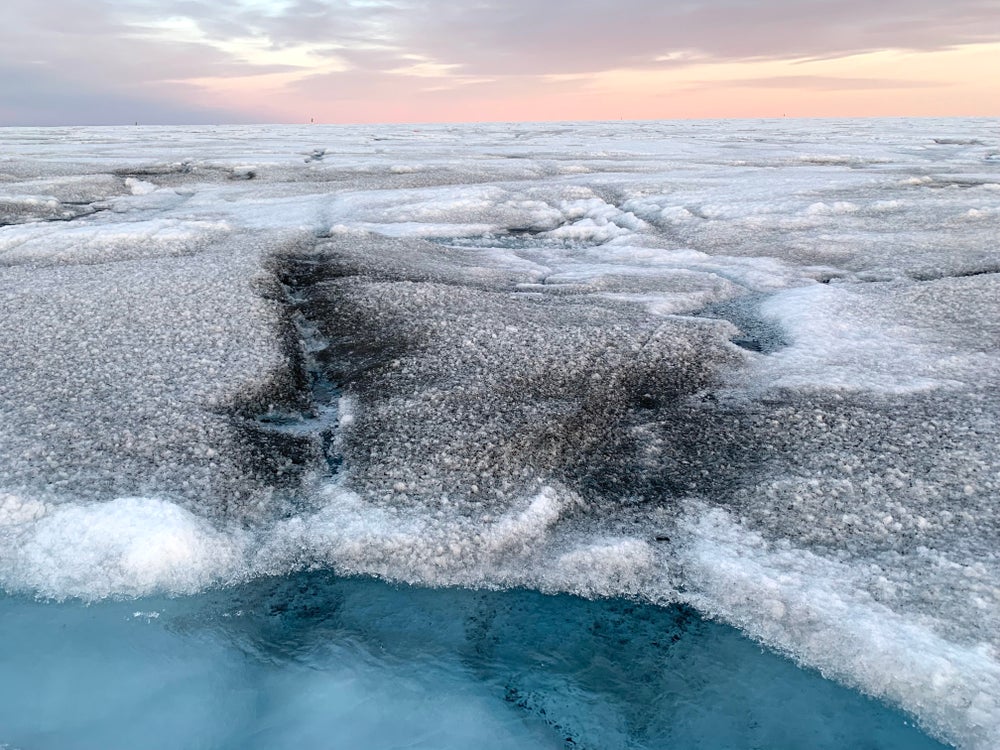
Several areas in Greenland are covered with black algae, which could speed ice melt by absorbing sunlight. Laura Perini
.
.
Click the link below for the article:
.
__________________________________________
June 25, 2024
Mohenjo
Business, Food For Thought, Human Interest, Political, Science, Technical
amazon, business, Business News, current-events, Future, Hotels, human-rights, medicine, mental-health, research, Science, Science News, technology, Technology News, travel, vacation
Click the link below the picture
.
While people don’t eat houseplants and rarely munch on shrubs or ground cover, your pets probably do. That’s why you need to be really, really sure your pet won’t try to snack on your plants before installing a plant that might be toxic—and it turns out that a lot of plants are.
While people don’t eat houseplants and rarely munch on shrubs or ground cover, your pets probably do. That’s why you need to be really, really sure your pet won’t try to snack on your plants before installing a plant that might be toxic—and it turns out that a lot of plants are.
Toxic vs. poisonous
Not all plants are toxic to pets; some are merely poisonous—and yes, there’s a difference. Toxic plants can do harm in all kinds of ways—through surface contact or inhalation. Just being around them can be bad for your pet, even if they’re not likely to chew. Poisonous plants, on the other hand, have to be ingested to be dangerous, so they are mildly less problematic. That said, some plants are poisonous enough that they only need to be consumed once to have dire consequences, so you’d need to really trust that your pet is isolated from the plant or would never look at, for example, a hydrangea branch as a chew toy. Dan Teich, DVM, who runs District Veterinary Hospitals in Washington, DC, notes, “The good news is most plants will not cause permanent damage to your pet. Many are irritants, can cause excessive salivation, and upset stomach, but usually these signs will pass. This is common with philodendrons, poinsettias, pothos, and many common houseplants.”
Avoid these common plants
Teich notes that the most common plant-related incidents they see involve a commonly gifted flower. “True lilies are the most dangerous of all plants for cats; even the pollen can be deadly. Lilies can lead to irreversible kidney failure in a cat within days. Calla lilies and peace lilies are not true lilies and may cause intestinal upset in your pet.” He warns that if you suspect lily ingestion, you should seek immediate care for your cat.
Other plants present similar risks, according to Teich. Consuming large amounts of azalea leaves can lead to cardiac collapse, and even death. Ingesting sago palms—a popular outdoor and indoor plant—can be fatal, and any consumption by a pet should be treated as an emergency.
Foxglove, an easily spread outdoor flower, is also dangerous. Like lily of the valley and oleander, it can have a grave effect on your pet’s heart.
If you are uncertain if a plant is dangerous to your pet, you may contact the ASPCA 24/7 Poison Control Hotline at 888-426-4435 or the Pet Poison Helpline at 855-764-7661.
.
 Credit: Tienuskin/Shutterstock
.
.
Click the link below for the article:
.
__________________________________________
Older Entries
Newer Entries

