“Dorothy” was deliberately fed to an Oklahoma F5 tornado about 30 years ago in the classic disaster movie Twister. The film followed storm-chasing scientists trying to use that special apparatus (a meteorological device containing hundreds of sensors and named after the tornado-jockey ingénue in The Wizard of Oz) to understand the inner workings of one of nature’s most fearsome phenomena. Now its just released stand-alone sequel, Twisters, follows another band of storm chasers who want to actually disrupt and dissipate these monster phenomena with today’s technology and knowledge.
Contrasting the two films shows how much tornado science has changed since the original flick, which featured radar and computer technologies that are now outdated. “We’ve come a long way since [Twister],” says Elizabeth Smith, a research meteorologist at the National Oceanic and Atmospheric Administration Administration’s National Severe Storms Laboratory (NSSL). And much of this progress has come through what she calls “the sum total of incremental change,” not singular projects like those depicted in the original movie. Some advances since then have in the decades transformed fiction into reality, enabling the latest film to explore even greater possibilities in managing and responding to dangerous weather events.
In the 1996 original, Helen Hunt’s character, Jo Harding, wanted to increase the warning times for tornadoes from three to 15 minutes by getting data from inside a funnel cloud to better understand how they work. And over the decades since, this science-fiction dream has turned into reality. “Now, when we issue a warning, the average lead time is 15 minutes,” says Harold Brooks, a senior research scientist at the NSSL. Though this may seem like a minor increase in the grand scheme of things, it offers considerably more time for people to reach shelter.
This improvement stems from a variety of new technologies, including more detailed radar readings and more powerful computers. But Smith says the most crucial development is computer models that can render storms in far greater detail—and can process observations much more quickly and accurately to better predict what those storms will do.
Early work in modeling focused on building a digital rendering of a storm from observational data—akin to Dorothy’s mission. But today’s tornado simulations are actually displaying never-before-observed aspects of the structure of tornadoes across different simulations. Storm chasers have later validated these phenomena in the field. “Instead of trying to go out and sample something to represent in the model, the opposite is now happening,” Smith says. “That’s a huge paradigm shift.”
Modern forecast models sometimes even predict tornado touchdowns more than an hour in advance. This extended warning time isn’t always helpful, though. “People tend to prioritize other activities over immediate safety with one to two hours of advance notice, which isn’t the reaction we want,” says Sean Waugh, a research scientist at the NSSL. A 2011 study found through public surveys that about 30 minutes is the preferred warning time, balancing urgency with enough lead time to get to safety.
.
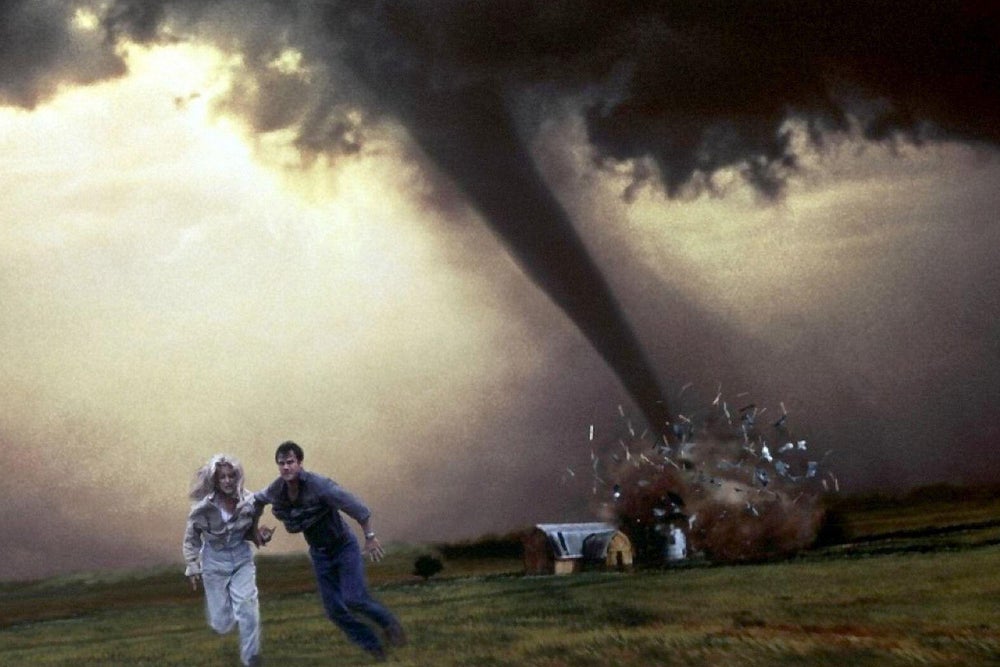
Helen Hunt and Bill Paxton as their characters Jo and Bill Harding in the 1996 movie Twister. Universal Pictures/Maximum Film/Alamy Stock Photo
When Olivia Myers became pregnant with her first child, she was so nauseated that she had to either miss work or work from home in Calera, Alabama, from bed, with a trash can nearby. With her doctor, she attempted to ease the nausea and vomiting. She tried an anti-nausea medication, and then another and another — more than 10 different medications in all. A nurse came to her home to administer IVs to help with the dehydration from vomiting. She would walk around with a needle in her arm, wheeling around a pole that held the fluid slowly flowing into her body. She tried a Zofran pump — an anti-nausea medication that entered her body through a small needle she wore on her skin and a pump that she carried around in a backpack.
“It wasn’t working,” she says.
At her lowest point, when she was about 12 weeks pregnant and bedridden due to nausea and vomiting, she became terrified she wouldn’t be able to remain pregnant. “I was so scared that I was either going to miscarry or that I just wasn’t going to be able to do this for nine months,” she says. “I was having a mental breakdown.” Her husband considered taking her to the hospital on her worst day, a day she vomited 12 times.
Although most people experience some pregnancy nausea, an unlucky group that Myers belongs to experiences such severe nausea that can have serious effects on their bodies and lives. Myers had hyperemesis gravidarum, often known abbreviated as HG — severe pregnancy nausea characterized by a disruption in regular life, the inability to eat or drink regularly, weight loss, and sometimes malnutrition. It can become so severe that it can lead to miscarriage, organ damage, or death. About 0.3% to 2% of pregnancies are estimated to have severe HG. But pregnancy nausea and HG are on a spectrum, and even mild HG can be miserable.
Marlena Fejzo, a geneticist at the University of Southern California, was one of those unlucky 2%. Fejzo had HG in two pregnancies. Her first pregnancy, in 1996, left her with nausea and vomiting so severe she couldn’t work for two months, and she received IV treatments twice, The New York Times reported. In her second pregnancy in 1999, she became so malnourished from severe nausea and vomiting that she was put on a feeding tube. “I didn’t eat or drink for over a month,” she tells me. She miscarried at 15 weeks. When she came back to work after the loss, she told her boss she wanted to find the cause of HG. Her boss, the chair of the genetics department at the University of California, Los Angeles, laughed at her.
So for the next two decades, Fejzo researched HG in her free time, when she wasn’t researching ovarian cancer. “There was sort of a ‘don’t ask, don’t tell’ phase also where I worked on it on the side,” she says. “I couldn’t talk about it, really. It was a bit isolating — until recently.”
Fejzo started her first HG study in 2000 by posting a survey about pregnancy nausea on the Internet. Responders faxed their answers to her. One of the women who took the survey was Kimber MacGibbon, who had HG and went on to co-found the HER Foundation, dedicated to research, education, and support for those with HG.
.
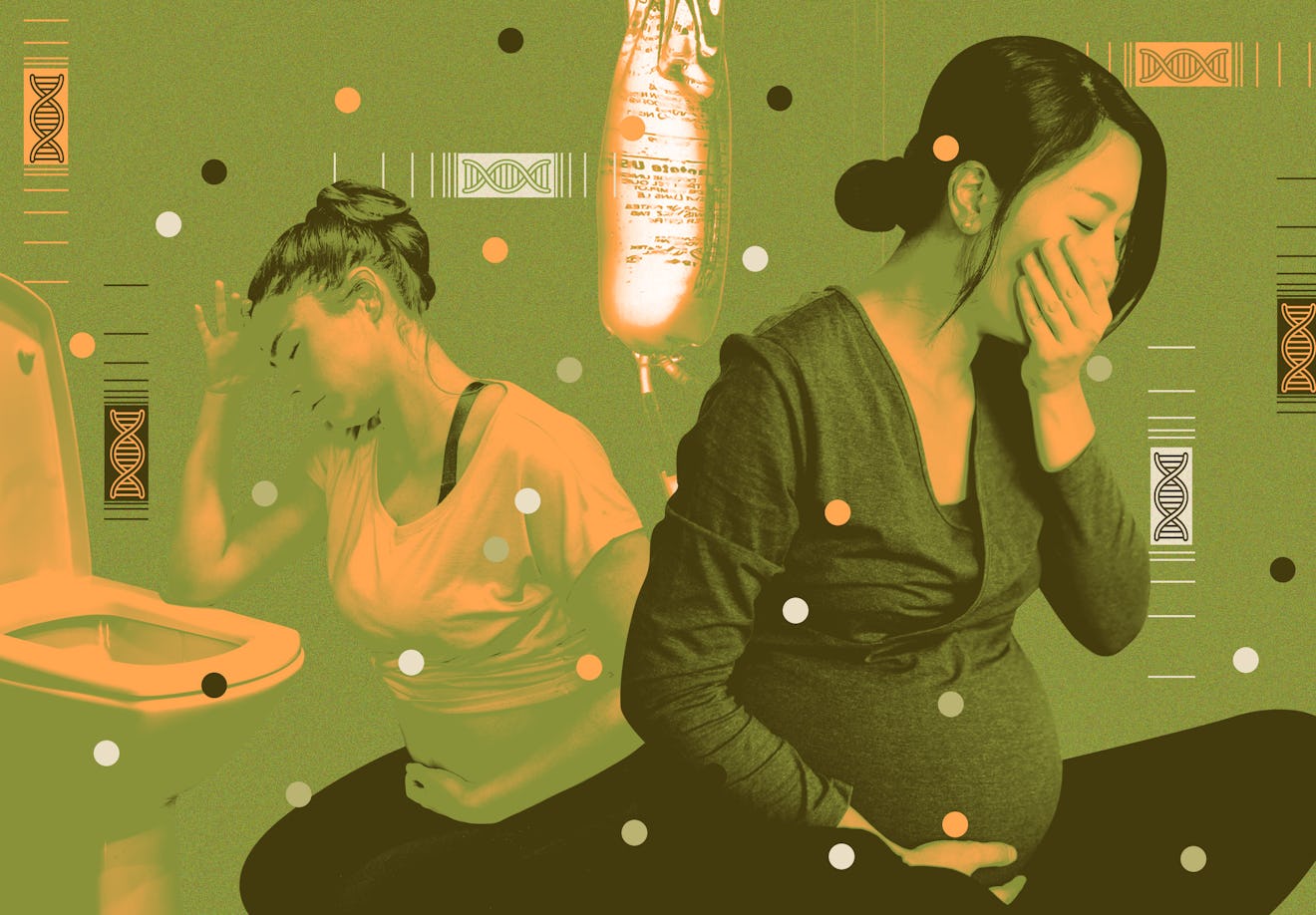
Hyperemis gravidarum, or HG, is a debilitating pregnancy nausea that affects 2% of pregnancies. Researchers know how to cure it — if they could only get funding.
Nicolás Maduro, who was elected president of Venezuela in April 2013, has divided opinion almost as much as his predecessor, Hugo Chávez.
The first half of his presidency saw the opposition regain control of parliament and launch a united effort to remove him from office. That bid failed – and his second term began in 2019 after an election marred by an opposition boycott.
Since taking power, he has been accused of undermining democracy and violating human rights in Venezuela, which is in the grip of a severe economic crisis.
Scores of anti-government protesters have been killed in clashes with the security forces since 2014. in the US, the Trump administration says Mr. Maduro is running a “devastating dictatorship”.
And yet, despite the outrage from within and beyond Venezuela, he remains a commanding figure there – and not just because of his 1.90m (6ft 3in) stature.
Many followers of the country’s leftist Bolivarian Revolution say that while he lacks the magnetism of Mr Chávez, the president is a loyal defender of his legacy.
In August 2017, Mr Maduro controversially set up a new constituent assembly with the power to rewrite the constitution, or to bypass and even dissolve the opposition-led National Assembly.
He pitched it as a way of promoting “reconciliation and peace”, but critics saw an attempt to strengthen his grip on power.
The European Union and major Latin American nations said they would not recognize the new body, and the US imposed sanctions on Mr Maduro.
He found himself further isolated after his re-election. National Assembly leader Juan Guaidó proclaimed himself interim president in January 2019, alleging widespread vote rigging and arguing that the presidency was vacant as a result.
More than 20 nations branded Mr Maduro’s presidency illegitimate, and recognized Mr Guaidó.
.
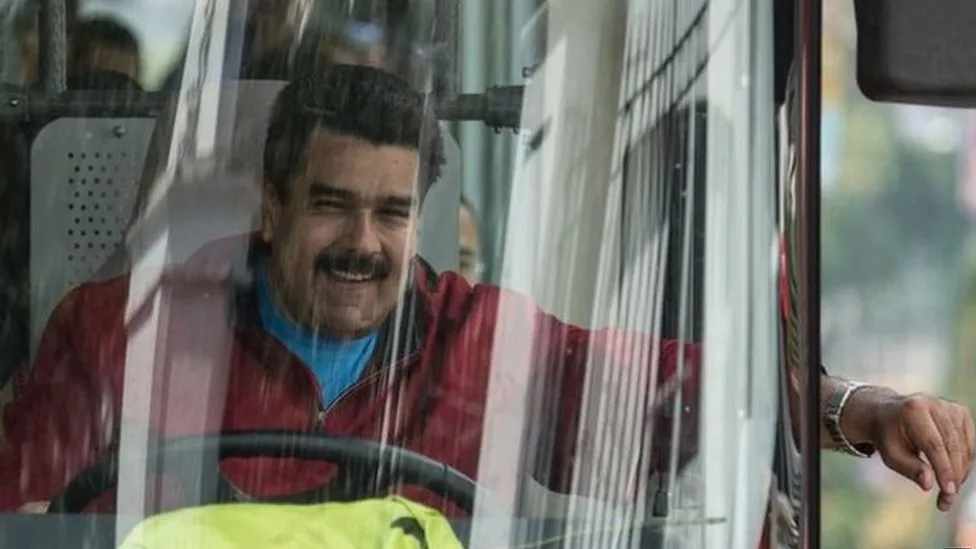
Mr Maduro, a former bus driver, likes to be behind the wheel himself and is proud of his modest beginnings
It’s that time of year: a thick, oppressive heat blankets everything, people huddle inside air-conditioned homes, offices, shops and cafes for respite—and COVID is surging again.
Levels of SARS-CoV-2, the virus that causes COVID, have increased in wastewater samples across the U.S., with the biggest uptick in the West. The percentage of positive tests—though not a perfect metric because people aren’t testing as much—has also increased, but hospitalizations have remained relatively low. Most viral respiratory infections, such as influenza, peak in the winter. But for the four years that SARS-CoV-2 has circled the globe, it has caused peaks not just in winter but every summer, too. The question is, why?
Possible reasons for the summer COVID peak are complex, but they fall into three main categories: characteristics of the virus itself, characteristics of its human hosts, and environmental factors.
SARS-CoV-2 continues to evolve new variants. One rises to the fore every six months or so, according to Peter Chin-Hong, a professor of medicine at the University of California, San Francisco, who specializes in infectious diseases. In recent weeks, several new subvariants of the virus’s Omicron variant have emerged as dominant—including the so-called “FLiRT” variants (such as KP.2 and KP.3), as well as a newer variant called LB.1. These variants may be slightly more transmissible or better at evading the immune system than previous ones, Chin-Hong says.
Human behavior and the environment are other likely drivers of summer surges. During the summer, many people gather for events, travel for vacations or simply spend more time inside to beat the heat. The Northern Hemisphere winter has a string of holiday gatherings that are perfect for
spreading disease; likewise, “in the summer, it’s Father’s Day, graduation, Fourth of July, and then summer travel,” Chin-Hong says. “It’s kind of a like a one-two-three punch.”
“We know that nearly all [COVID] transmission happens indoors, in places with poor ventilation and/or poor filtration,” says Joseph Allen, an associate professor at the Harvard T.H. Chan School of Public Health and director of the Harvard Healthy Buildings Program. “One hypothesis is that these building factors and human behavior are driving the summertime increases in cases.” Although many offices or other large buildings have an HVAC system that can pull in fresh air from outside, many houses and apartment buildings with window-mounted air conditioners do not. Instead, these ACs simply recirculate stale, virus-laden air inside a room.
.
COVID cases have increased every summer in the U.S., thanks in part to summer travel and gatherings. Scott Olson/Getty Images
Some content on this page was disabled on April 15, 2025 as a result of a DMCA takedown notice from Guardian Media Group. You can learn more about the DMCA here:
CLIMATEWIRE | U.S. cities want more research from scientists to help them handle extreme heat — especially the way high temperatures influence human behavior and health.
That was the message from a panel discussion Wednesday at Columbia University. Officials from Miami and New York City shared their heat research wishlists, and social studies — centered on high-risk populations — made the top of the list.
The use of cooling centers — specifically, who goes to them and why — was a big question for Isabelle Thomas, a policy adviser in the New York City mayor’s office.
“Why do people go to cooling centers? Why don’t people go to cooling centers?” she asked. “What is their perception of the urgency — or lack thereof — as it relates to extreme heat?”
She noted some communities face more risk from skyrocketing temperatures, such as outdoor workers and people experiencing homelessness. Better insight on the experiences of these vulnerable populations would help decision-makers craft more effective heat-related policies.
“We still in New York City are lacking some data on occupational heat exposure and health impacts, specifically as it relates to food vendors and delivery workers and other workers who are outside in the city,” Thomas said.
Cities also need better data on the number of people who die or fall sick during heat waves, said Jane Gilbert, the chief heat officer in Miami-Dade County. As of right now, these estimates are often vastly undercounted.
Extreme temperatures can directly lead to heat exhaustion, heat stroke or even death. These cases are easy to spot. But heat can have indirect effects on human health as well, such as exacerbating preexisting health conditions, increasing the risk of workplace injuries or affecting mental health. These indirect effects often go unrecorded on hospitalization records or death certificates.
“Really, direct heat deaths, illnesses, hospitalizations is the tip of the iceberg of health impacts,” Gilbert said.
Studies investigating how many people are actually hospitalized or dying from extreme heat — as well as where it’s happening and which populations are the most affected — can help policymakers design better protections for vulnerable communities.
“For us to design and prioritize interventions, having that situational understanding of where these illnesses and deaths are — where that exposure is happening — is very important for us,” Gilbert said.
.
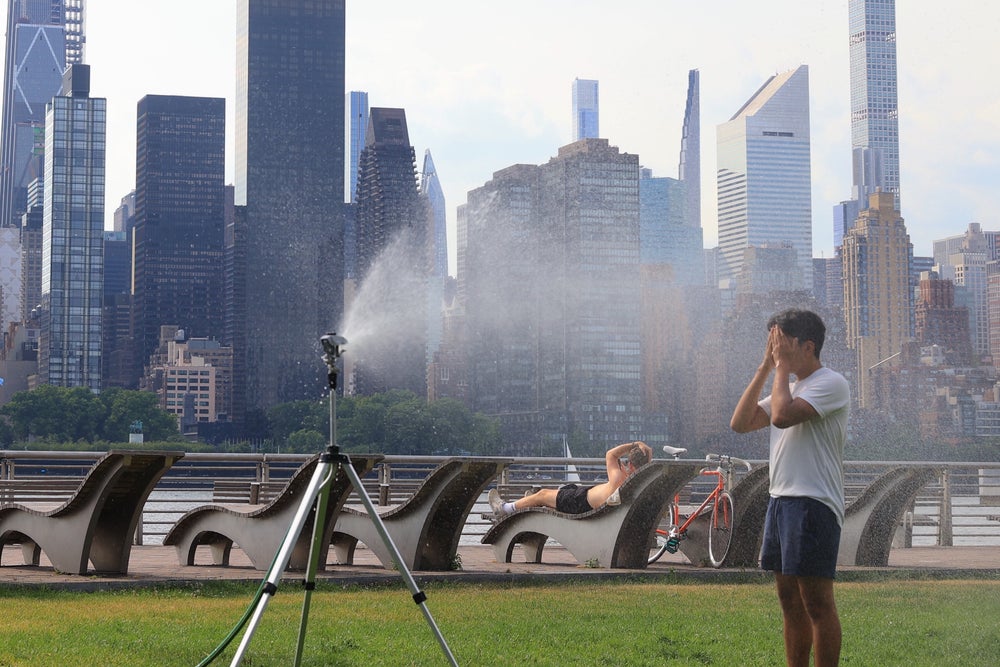
Sprinklers help people to cool off in Long Island City, N.Y., as temperatures soared on June 21, 2024. Selcuk Acar/Anadolu via Getty Images
So you’re in your 30s or 40s, and you constantly feel forgetful and frazzled: Maybe it’s your first time balancing a high-powered role at work while juggling daycare drop-off and pickup times, or you’re really trying to maintain old and new friendships while also caring for an aging parent. Or perhaps you’re aiming to stick to a consistent workout schedule ever since your back started aching, and you’re also trying to cook every meal and go to therapy, and be a loving partner. Whatever your personal brand of scatterbrained adulthood looks like, it only makes sense that you’d feel like your memory is a little shot as a result.
Your brain is less capable of remembering things like that one person’s name or even why you walked into a room when you’re being pulled in a million directions. The competing demands of life in these decades can “tax the function of your prefrontal cortex,” Charan Ranganath, PhD, professor at the Center for Neuroscience in the Department of Psychology at the University of California Davis and author of Why We Remember, tells SELF. This is the part of your brain responsible for executive functions—things like planning, organizing, and, yes, remembering what’s needed to finish a task. To make matters worse, this section of the brain also naturally begins to shrink (albeit, very slowly) in your 30s, Dr. Ranganath adds, making it even tougher to access those little bits of memory.
Certain lifestyle habits, like getting solid sleep, exercising regularly, and cutting back on alcohol, can help slow that downward memory slide as you age. But according to experts, there are also simple tweaks to everyday behaviors—like how you snap pics on your phone and where you hang out with friends—that can help you feel sharper in the here and now. Here’s how to feel a little less forgetful and scatterbrained as you navigate your 30s and 40s.
1. Work on a single task at a time (and turn off push notifications).
You can’t really do multiple things at once, brain-wise. When you’re “multitasking,” you’re actually just switching between tasks, which strains your brain, forcing it to focus on one thing and then on the other and back again.
The same thing happens with media multitasking, whether you’re popping between your email and Instagram, for instance, or you’re, say, scrolling on your phone while also watching a TV show. You’re putting conflicting priorities on your attention, threatening your memory of any one thing you’re doing.
When you’re task-switching, you’re essentially forming “these little blurry fragmented memories” of each action because you weren’t mentally focused on either, making them easier to forget, Dr. Ranganath says.
The key is to cut out as many distractions as possible when you’re doing something you want to remember (that means silencing any form of ping or ding), so you can lock in on it. The more attention you give to a task now—in brain talk, the more you’re engaging your prefrontal cortex—the better chance it’ll stick with you later, Dr. Ranganath says.
2. Take photos to capture the vibes, not just the facts of an event.
Subscribing to a “pics, or it didn’t happen” mentality doesn’t just potentially jeopardize your enjoyment of, say, a concert or a cool trip. When you snap photos of entire scenarios or events, you’re actually less likely to remember key details about them because of the photo-taking impairment effect: Your brain knows it can rely on the camera to “remember” things, so it essentially opts out.
In a solar system full of wonders, Jupiter’s Great Red Spot still stands out.
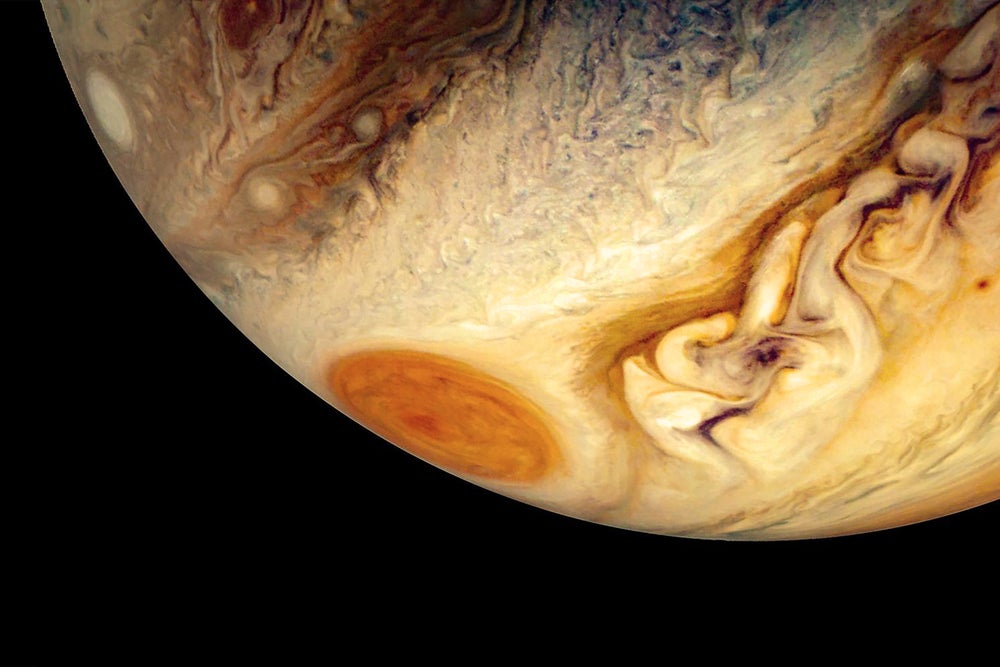
This lushly red oval is obvious even through small telescopes, looking like a baleful eye staring out from the enormous gas giant planet. The Great Red Spot (or GRS) is so huge that you could drop the entire Earth into it and our planet would plunge through without touching the sides.
It’s been around for centuries and holds many mysteries, but we’re learning more about it all the time. Research recently published in the journal Geophysical Research Letters indicates that the GRS isn’t as old as once thought and implies that while it may yet last for many years to come, its days are numbered.
The GRS is Jupiter’s most iconic feature. I’d say “surface” feature, except Jupiter doesn’t really have a surface; what we see is actually clouds atop an atmosphere that’s thousands of kilometers deep. The GRS is in reality a spot of remarkably vast and persistent weather churning in the planet’s clouds; technically speaking, it’s an anticyclonic vortex—a counterclockwise-rotating high-pressure system—with gases spinning around the center at speeds of 450 kilometers per hour. That’s about as fast as the highest wind speeds ever recorded in a tornado on Earth!
This giant storm—the largest known in the solar system—is made up of two regions. One is an oval made up of reddish gases, and the other is a surrounding whiter, thinner band of gas (called the Hollow). The GRS lives in Jupiter’s South Equatorial Belt, one of the many bands across the planet’s face that give it a striped appearance. These bands are latitudinal wind patterns akin to the jet stream on Earth, but they are more complicated because of Jupiter’s lack of surface, the enormous convective currents of gases rising and falling through the atmosphere and immense air-bending forces from the giant planet’s rapid nine-hour-and-55-minute rotation.
Unlike Earth’s hurricanes that can wander across sizable swaths of our planet, storms on Jupiter tend to stay in their latitudinal lane, confined by powerful jet streams. That confinement also sustains the GRS, making the storm extremely long-lived, but its actual age has been an ongoing astronomical enigma.
In 1665 Italian astronomer Giovanni Cassini spotted—so to speak—a dark oval on Jupiter’s face. It was seen on and off again until 1713, and the recorded location of this “permanent spot” was the same as that of the current GRS. Cassini is credited with discovering it, though it may have been seen by another astronomer in 1632; if that is true, it lasted at least 80 years.
Despite astronomers’ ongoing monitoring of Jupiter, however, after 1713 this spot seems to have disappeared. The next known sighting of a storm at that latitude dates to 1831, well over a century later, when astronomers reported a dark spot there. (It wasn’t described as red until the 1870s!) This spot—our familiar, beloved GRS—has been continuously observed ever since, making it nearly 200 years old.
.
A view of Jupiter’s south temperate belt and Great Red Spot, as captured by NASA’s Juno spacecraft on December 30, 2020. NASA/JPL-Caltech/SwRI/MSSS/Navaneeth Krishnan (CC BY 4.0)
Television shows getting terrible reviews isn’t anything new. But there’s something fascinating happening with the fourth season of The Boys. It’s not just that people have suddenly turned on Amazon’s hit superhero satire, it’s who those people are and why they’ve changed their tune that’s so interesting.
Since premiering to critical praise on June 13, alleged fans have been review-bombing the show’s latest season on sites like Rotten Tomatoes and IMDB. The most vocal and eye-catching of these takedowns pronounce that the show has gone “woke” or is so obviously “anti-Donald Trump.”
They’re not wrong, but they’re excruciatingly late to this observation.
Since the show’s inception in 2019, The Boys has been a superhero allegory about Trump, dangerous authoritarianism, political fanaticism, Nazis, and America’s sway toward fascism. Its showrunner, Eric Kripke, has said as much interview after interview: This is a show explicitly about the allure of Trump and a critique of corporate America. The only thing that’s seemingly different in this fourth season is that it skates so close to what’s happening in the US now: Homelander (Antony Starr), a Superman-like sociopath who functions as the Trump stand-in, is facing a criminal trial and is fanning the flames of a January 6-like insurrection.
These angry public admissions from conservatives that they’ve spent the previous seasons cheering on this horrible character — only to now realize they’re the butt of the joke — have become bigger than the show itself. It’s a testament to our culture’s ever-diminishing media literacy.
This isn’t the first time in pop culture that a superhero satire has served as a warning about fascism, and its biggest fans have whiffed on the point. That it keeps happening is a testament to how difficult it may be for all of us to not be lost in the allure of powerful people.
What’s happening on this season of The Boys
At the heart of The Boys is a brash deconstruction of the superhero fantasy, taking apart the traditional comic book superhero arc where super-powered beings save the day and defend those who can’t defend themselves.
In The Boys, however, every character, every line, every shot, and every scene paints a larger portrait of how extremely screwed we would all be if superheroes existed in real life. The Boys’scynical counter to the fantasy is a worldview that humans — even super ones — are morally flawed beings and that power always compromises morality. No matter how good we could be or think we could be, our selfishness, biases, envy, and everything in between will always get the better of us.
People aren’t meant to be superheroes.
These human failings take the form of heroes like the terminally narcissistic Homelander or any of his coworkers, known as The Seven (a parallel to DC Comics’s Justice League or Marvel’s Avengers). Homelander and his pals rape and kill and lie, but their powers and, more importantly, their celebrity status keep them from facing any semblance of justice. The Seven are all propped up by Vought International, an ultra-powerful pharma-entertainment-military defense corporation originated by a Nazi who invented a serum that gave normal people superpowers.
Film and Writing Festival for Comedy. Showcasing best of comedy short films at the FEEDBACK Film Festival. Plus, showcasing best of comedy novels, short stories, poems, screenplays (TV, short, feature) at the festival performed by professional actors.


 Hyperemis gravidarum, or HG, is a debilitating pregnancy nausea that affects 2% of pregnancies. Researchers know how to cure it — if they could only get funding.

 Mr Maduro, a former bus driver, likes to be behind the wheel himself and is proud of his modest beginnings