In American history, four out of 46 US presidents have been assassinated.
Other presidents, including Ronald Reagan and George W. Bush, escaped attempts on their lives.
Former President Donald Trump says he was shot in the ear at a Pennsylvania campaign rally on Saturday.
Four out of 45 US presidents have been assassinated over the course of American history.
Many more chief executives escaped assassination attempts thanks to heroic bystanders, diligent guards, misfiring pistols, and sheer luck.
Most recently, former President Donald Trump said he was struck in the ear during a campaign rally in Butler, Pennsylvania, on Saturday after a shooter opened fire from a nearby rooftop. A
spokesperson said Trump was “fine” following the incident. The FBI said they are investigating the shooting as an assassination attempt.
Two presidents who were assassinated escaped previous attempts on their lives.
On a hot August night in 1864, a sniper shot Lincoln’s hat off his head — missing his skull by inches — as he took a solo ride on his favorite horse “Old Abe,” according to “1864: Lincoln at the Gates of History.” Lincoln was later shot and killed by Confederate sympathizer John Wilkes Booth, just five days after the surrender of Robert E. Lee.
Almost a century later, in 1960, retired postal worker Richard Paul Pavlick crammed his car with dynamite and plotted to ram the vehicle into
Kennedy’s limo in Palm Beach, Florida, Smithsonian magazine reported. He was motivated by his intense hatred of Catholics and the Kennedy family, but backed off when he saw that the president was with his wife and young children. Pavlick was later arrested and institutionalized until 1966, three years after Kennedy was assassinated by Lee Harvey Oswald while visiting Dallas, Texas.
These 13 other presidents all experienced serious assassination threats and ultimately survived — and these are only the most dramatic, most-publicized instances. Undoubtedly, the Secret Service has thwarted many more over the years.
Here are 13 presidents who escaped attempts on their lives. (Click or tap the slides)
.
.
.
Click the link belowfor the article and slideshow:
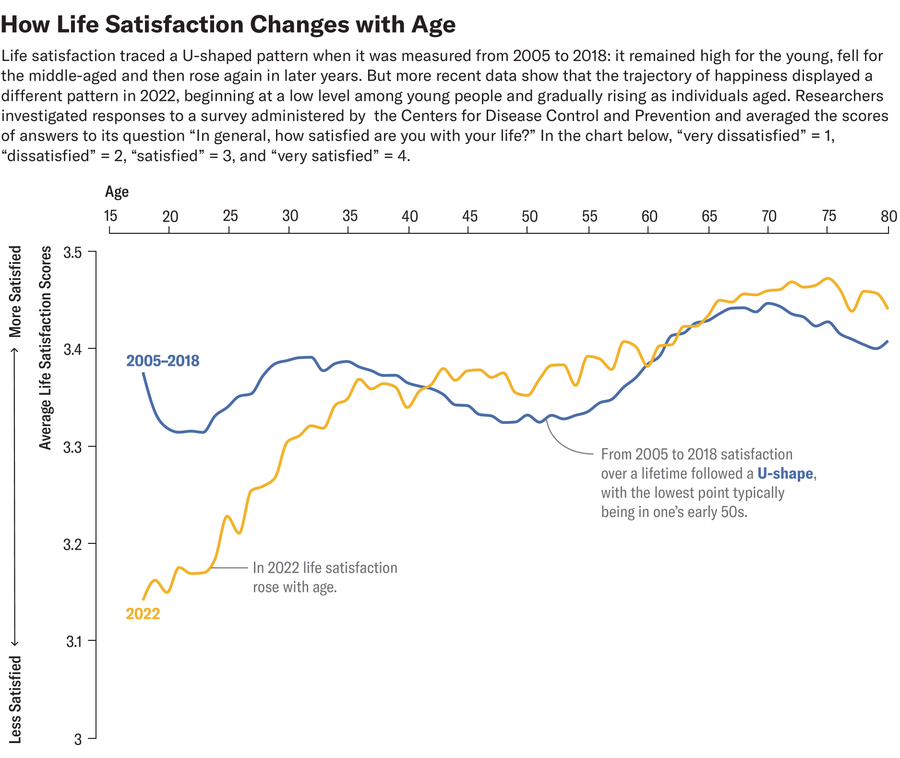
Is the midlife crisis a common rite of passage—or just a mythical concept that makes for grabby headlines? Research measuring well-being has typically provided solid evidence for such a period of soul searching. Over the course of a lifetime, happiness tends to start out high early in adulthood and decline in middle age, only to rise later in life. Unhappiness follows a mirror pattern—with the youngest and oldest tending to be the least unhappy and those in middle age being the most unhappy.
Plotting both qualities against age, the happiness curve is U-shaped (with the left and right peaks of the “U” corresponding to youth and old age), and the graph for unhappiness is depicted as a hump shape. Reduced to simpler terms, the midlife crisis seems to be real: happiness reaches its low point at around age 50, with peaks at age 30 and after age 70. This finding has been replicated in 146 countries and has held true for data reaching as far back as 1973—and does not just apply to Homo sapiens. Researchers have even identified similar patterns in nonhuman apes.
Is the midlife crisis a common rite of passage—or just a mythical concept that makes for grabby headlines? Research measuring well-being has typically provided solid evidence for such a period of soul searching. Over the course of a lifetime, happiness tends to start out high early in adulthood and decline in middle age, only to rise later in life. Unhappiness follows a mirror pattern—with the youngest and oldest tending to be the least unhappy and those in middle age being the most unhappy.
Plotting both qualities against age, the happiness curve is U-shaped (with the left and right peaks of the “U” corresponding to youth and old age), and the graph for unhappiness is depicted as a hump shape. Reduced to simpler terms, the midlife crisis seems to be real: happiness reaches its low point at around age 50, with peaks at age 30 and after age 70. This finding has been replicated in 146 countries and has held true for data reaching as far back as 1973—and does not just apply to Homo sapiens. Researchers have even identified similar patterns in nonhuman apes.
“We have to focus on the people at the extremes,” Blanchflower says. “Think about those who are most susceptible to commit suicide, to have deaths of despair. These are the people who say, ‘Every day of my life is a bad mental health day.’” Between 2020 and 2022, more than half of respondents reported no bad mental health days. But 7 percent acknowledged exactly 30. The proportion of those with this response nearly doubled from 1993 to 2023. That rate has grown most quickly among the young, especially women 18 to 25 years old. “This fact alone is the most striking and scary: my estimates are that 11 percent of … young women are in despair,” Blanchflower says.
Carol Graham, a senior fellow at the Brookings Institution whose work focuses on well-being, acknowledges the seriousness of this finding. “We never really thought about the lowest point being in youth,” she says. “That is when people are just starting their lives. It shouldn’t be when they are most anxious, are most depressed, and have no hope for the future. There is something profoundly wrong there.”
These trends have resulted in an altered relationship between age and ill-being. Between 2009 and 2018, despair remained hump-shaped, jibing with the preexisting research. A rapid rise in despair before age 45, especially before age 25, however, means that in 2019 unhappiness showed up more frequently at younger ages. “Danny Blanchflower has been hell-bent on showing the U-curve in so many countries…, and all of a sudden he’s writing a paper that’s showing the opposite,” Graham says.
.
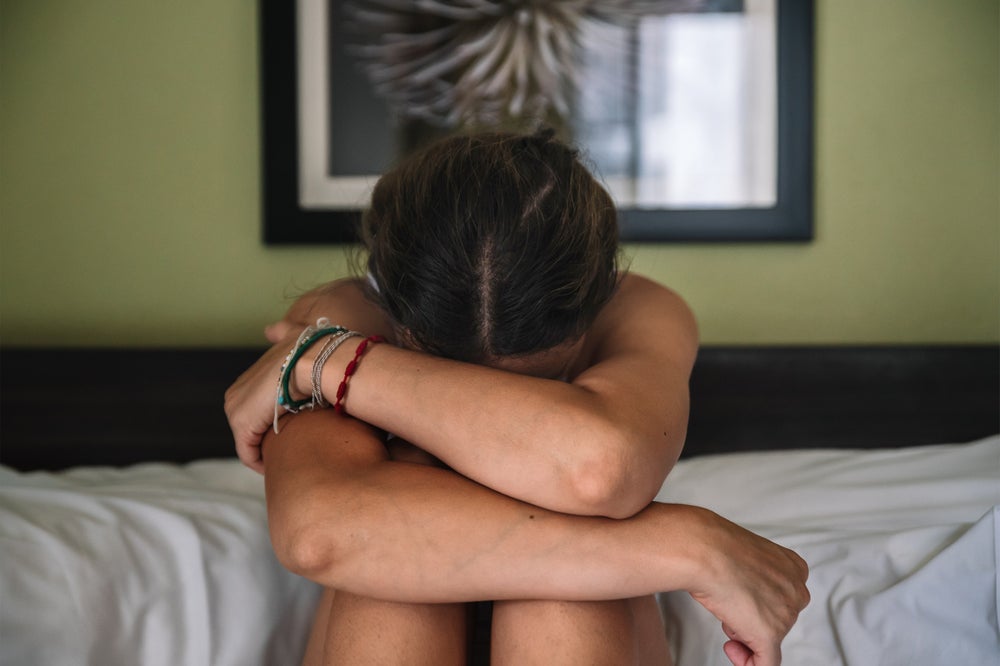
Antonio Hugo Photo/Getty Images
Shuyao Xiao; Source: “The Global Loss of the U-Shaped Curve of Happiness,” by David Blanchflower and Alex Bryson. Posted online June 6, 2024
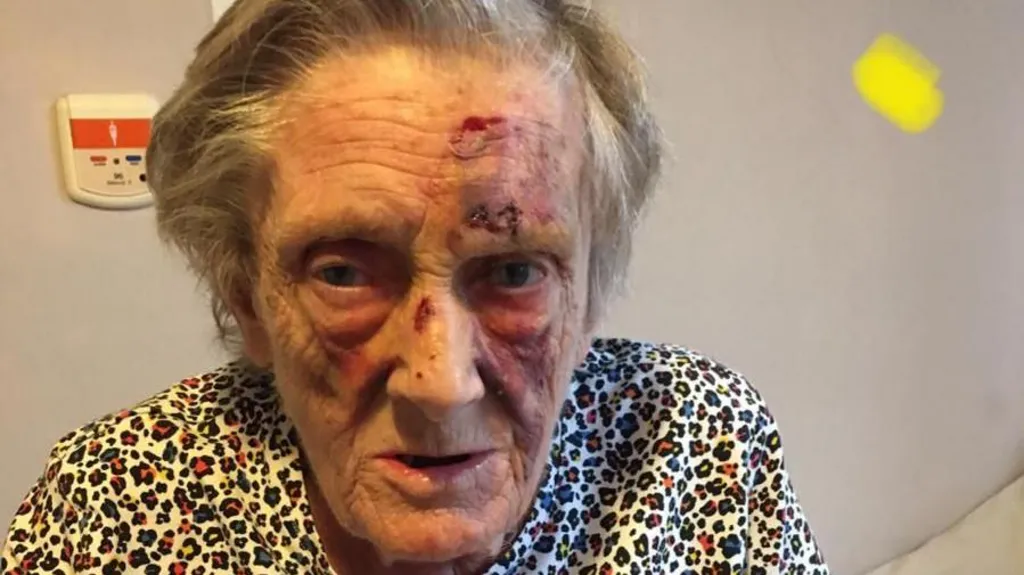
The daughter of an elderly care home resident who suffered 32 falls in only 11 months said she had sent social services “a begging email” to warn her mother “was going to die” unless urgent improvements were made.
“She suffered neglect in every way – it was devastating to see,” said Kylie Gobin, whose mother Winifred Tubb lived at St Luke’s in Runcorn, Cheshire.
Mrs. Gobin spoke to the BBC as part of an in-depth investigation which found nearly one in five care homes across England were rated as either “requiring improvement” or “inadequate”.
A spokesman for Halton Borough Council, which operates St Luke’s, said it had “fully investigated” the complaints and “some lessons have been learned”.
BBC England’s data journalism team analyzed Care Quality Commission (CQC) statistics and found the regulator now regards more than 2,500 care homes across England as “requiring improvement”.
The number of “inadequate” homes stands at 194 across England, but this figure is down on both 2022 and 2023.
This could either be due to services improving, care homes closing down, or both.
Common themes in struggling homes included:
Gaps in staff training
Mismanagement of medicines
Accurate records not being kept
Facilities not meeting safety and cleanliness standards
Residents’ rights to privacy and dignity not being upheld
Poor management oversight
Mrs Gobin said her mum – who had worked in the care sector before being diagnosed with dementia in 2010 – moved to St Luke’s in June 2021.
“From the August, she had repeated falls and broke her hip in October 2021,” she said.
“There was an internal inquiry, but no lessons were learned until I emailed in April 2022.”
A lower bed, sensory mats, and alarms – controlled by a key switch outside Mrs Tubb’s room – were installed so staff could be alerted if she attempted to get out of bed.
On at least two occasions, though, Mrs Gobin says she discovered the alarm had been disabled.
“In November 2022 I visited and found mum on the floor, with the alarms off,” she said.
“I was crying – every emotion you can imagine went through my body. I had to leave the room because I was so angry.
“It would have taken her two or three hours to get into that position because she wasn’t mobile.”
.
Winifred Tubb suffered 32 falls in less than a year
When Ron Klain admitted to me a year ago that the White House could have worked harder to elevate Kamala Harris’s profile, he didn’t know that the Democratic Party, and perhaps American democracy itself, would soon be riding on her readiness to be president. But perhaps he should have.
It was July 2023, and while interviewing President Joe Biden’s former chief of staff in his law office in downtown Washington, D.C., I’d asked if the administration had done enough to showcase Harris as a governing partner to the oldest president in history. Promoting one’s vice president is “always hard,” Klain, who was known to be an advocate of Harris’s, told me then. “Obviously, I wish, you know—you could always do more, and you should do more.”
Four months before the election, and one week after Biden’s disastrous debate performance against Donald Trump, Harris’s capacity to lead the Democratic Party and the free world has never been more relevant. And yet many Americans, after three years of the West Wing’s poor stewardship of Harris, are now looking at their vice president as if for the first time.
In another version of the Biden presidency, this would indeed be Kamala Harris’s moment. A growing list of prominent Democrats, including Representative James Clyburn of South Carolina and, in a conversation with me this week, Senator Laphonza Butler of California, are touting Harris as the candidate best positioned to take on Trump in the event that Biden decides to withdraw from the race. Tim Ryan, the former congressman from Ohio who challenged both Biden and Harris in the 2020 Democratic primary, has taken his support one step further, calling on the president to “rip the band aid off” and promote Harris immediately. A recent CNN poll shows the vice president now running closer to Trump than the president is.
.
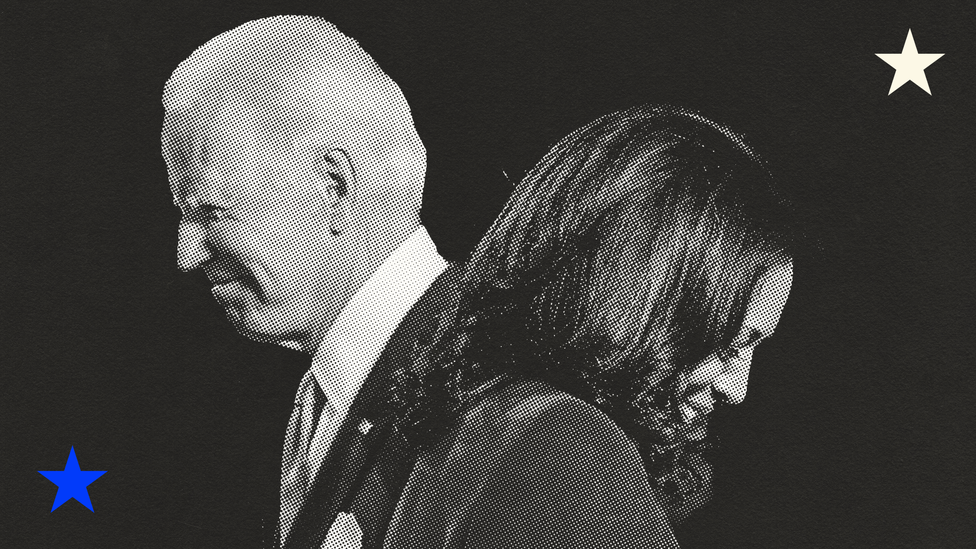
Illustration by The Atlantic. Source: Drew Angerer / Getty.
Michael Cohen, Donald Trump’s former attorney who testified against him in his hush money trial, spoke out Saturday night after the former president was shot at during a rally.
Cohen shared a photo of the aftermath of the shooting in Butler, Pennsylvania, along with a brief statement on X, formerly Twitter.
“Whether you agree or disagree with someone’s political position, THIS IS NOT THE SOLUTION!” he posted alongside the photo of Trump surrounding by Secret Service agents with blood on his face.
Cohen, who worked for Trump as his attorney and within the Trump Organization between 2006 and 2018, later became an outspoken critic of his former boss.
In the past week, Cohen asked the U.S. Supreme Court to take up a case regarding Trump, asking whether citizens can hold a former president to account for their actions.
He recently had a prominent role in the New York hush money trial involving adult film star Stormy Daniels. Cohen had sent Daniels money in the leadup to the 2016 presidential election after she claimed that she had sex with Trump years prior.
Federal authorities began investigating Cohen in April 2018. He pleaded guilty in August 2018 to charges of tax evasion, making false statements to a federally insured bank, and campaign finance violations.
In December 2018, he was sentenced to 3 years in prison, fined $50,000, ordered to forfeit $500,000, and paid more than $1.3 million in restitution to the IRS.
In May, the U.S. Drug Enforcement Administration (DEA) proposed officially reclassifying marijuana as a less dangerous drug. The move would effectively make weed legal with a prescription, thereby ending a key provision of the war on drugs instituted by then president Richard Nixon in the early 1970s. That “war” has traumatized, stigmatized, and incarcerated millions of people, particularly Black and Hispanic minorities. It also has greatly hindered science.
It should end with the complete removal of research barriers nationwide, and the DEA action is a beneficial step in that direction.
Specifically, this step by the Biden administration would reclassify marijuana from a Schedule I to Schedule III drug within the Controlled Substances Act (CSA), moving it away from heroin, LSD, and peyote, and into the prescription drugs group. If successful, the initiative would further decriminalize marijuana use while also, to some extent, reconciling federal and state laws. Making marijuana legal nationwide at the prescription drug level may make it easier for researchers to study its impacts and therapeutic uses. Nevertheless, some significant hurdles to marijuana research will remain after the rescheduling.
Ironically, most Americans already enjoy a degree of leniency with marijuana that goes beyond Schedule III. Currently, 38 states support its medical use, and 24 states plus Washington, D.C., are allowing recreational marijuana consumption.
While this misalignment might seem inconsequential, it has a dark side. With the poorly controlled expansion of marijuana across the country, the drug will inadvertently end up in the hands of vulnerable individuals. Atop that list are the unborn, children and teens, for whom marijuana can interfere with brain development, as well as individuals with mental health disorders, such as anxiety, clinical depression, and schizophrenia; the symptoms of such conditions can worsen with use of the drug.
Although additional research is needed to confirm such vulnerabilities, the risks are real. And while the rescheduling of marijuana is a step in the right direction, it will likely fall short of giving scientists unrestricted access for research. To that end, marijuana should be removed from the schedule of drugs or placed in a different framework altogether. That would make marijuana fully research-accessible—a status commensurate with recreational marijuana in many states. Lawmakers need to support not just cannabis enthusiasm but, more importantly, the health and well-being of their constituents.
Success depends largely on how effectively the U.S. Food and Drug Administration (FDA) navigates the reschedule and ensures there’s enough high-grade marijuana to meet increasing research demands. The agency must establish reliable product consistency standards, particularly for the psychoactive tetrahydrocannabinol (THC) ingredient in marijuana as well as toxic pollutants, ensuring consumer safety and public health. Unintentional overdosing has been linked to anxiety and panic attacks and, later, more severe mental, digestive, heart, and respiratory health issues. Scientists need reliable standards to enable reproducible studies, which can then also determine doses for medical uses.
Some content on this page was disabled on April 15, 2025 as a result of a DMCA takedown notice from Guardian Media Group. You can learn more about the DMCA here:
Imagine a weapon with no human deciding when to launch or pull its trigger. Imagine a weapon programmed by humans to recognize human targets, but then left to scan its internal data bank to decide whether a set of physical characteristics meant a person was friend or foe. When humans make mistakes, and fire weapons at the wrong targets, the outcry can be deafening, and the punishment can be severe. But how would we react, and who would we hold responsible if a computer programmed to control weapons made that fateful decision to fire, and it was wrong?
This isn’t a movie; these were the kinds of questions delegates considered at the April Conference on Autonomous Weapons Systems in Vienna. In the midst of this classically European city, famous for waltzes, while people were picking up kids from school and having coffee, expert speakers sat in special high-level panels, microphones in hand, discussing the very real possibility that the development and use of machines programmed to independently judge who lives and who dies might soon be too far gone to come back from.
“This is the ‘Oppenheimer moment’ of our generation,” said Alexander Schallenberg, the Austrian federal minister for European and international affairs, “We cannot let this moment pass without taking action, now is the time to agree on international rules and norms to assure human control.”
I reported on these meetings, these extraordinary discussions about our future happening parallel to the ordinary moments of our present, as the United Nations reporter for a Japanese media organization—Japan being the only nation in history to have experienced nuclear bombings, and thus very interested. And Schallenberg’s statement rang true: the need for international rules to prevent these machines from being given full rein to make life and death decisions in warfare is bleakly urgent. But there is still very little actual rulemaking happening.
The decades following the first “Oppenheimer moment” brought with it a simmering cold war and a world on the edge of a catastrophic nuclear apocalypse. Even today there are serious threats to use nuclear weapons despite their capacity to collapse civilization and bring human extinction. Do we really want to add autonomous weapons into the mix? Do we really want to arm computer screens that could mistake the body heat of a child for that of a soldier? Do we want to live in a world inhabited by machines that could choose to mass bomb a busy town square in minutes? The time to legislate is not next week, next year, next decade. It is now.
In these inflationary times, the price of friendship has gone up. As your social calendar fills up this summer, you may be looking at the brunches and parties and group trips and wondering how on Earth you can afford all of it.
And if you find yourself with a smaller budget than those in your social circle, things can get awkward, either because you feel pressured to overspend to maintain a connection with your richer friends or because you’re unsure how to handle or repay their generosity.
Etiquette experts say there’s more than one way to navigate these dynamics, but generally agree on one thing: Whether it’s a destination wedding or just a fancy dinner, you are under no obligation to go if it will hurt your budget. And you don’t have to make excuses either.
“If I don’t want to attend an event, I just say, ’I appreciate the invitation, but I’ll have to pass,” says Diane Gottsman, a national etiquette expert and founder of the Protocol School of Texas. “I might say I have an early morning tomorrow. But it could be an early morning because I have to brush my teeth.”
If an invitation is too expensive, offer alternatives
Etiquette and financial experts alike approve of a social trend that emerged on TikTok known as “loud budgeting.” The gist is that, as budgets tighten, more and more people are feeling comfortable setting boundaries with the people in their life about what they can and can’t afford.
A loud budgeter might turn down an invitation to a fancy restaurant by saying, “Sorry, I only have $30 left in my food budget for the month.”
While that kind of communication may be appropriate between close friends, you needn’t even go that far, says Thomas Farley, an etiquette expert and keynote speaker known as Mister Manners. “You don’t need to give some hard-driving rationale for why you can’t make it, whether that’s money or some sort of conflict,” he says.
If it’s an opulent destination wedding that’s out of your price range, you’re fine sending your regrets along with a gift off the registry, Gottsman says. If it’s a luxury trip, you may say you can’t swing it this year, that you just made another major purchase, or that you simply don’t have room in your schedule. No need to go into specifics.
“You simply don’t have to take every invitation that’s offered to you,” she says.
Film and Writing Festival for Comedy. Showcasing best of comedy short films at the FEEDBACK Film Festival. Plus, showcasing best of comedy novels, short stories, poems, screenplays (TV, short, feature) at the festival performed by professional actors.




 Winifred Tubb suffered 32 falls in less than a year

 Andrey Kulagin/Getty Images
 Maskot | Getty Images
