July 23, 2024
Mohenjo
Business, Food For Thought, Human Interest, Political, Science, Technical
amazon, business, Business News, current-events, Future, Hotels, human-rights, medicine, mental-health, research, Science, Science News, technology, Technology News, travel, vacation

Click the link below the picture
.
The flat, pitch-black seabed of the Pacific Ocean’s Clarion-Clipperton Zone (CCZ) is littered with what looks like hunks of charcoal. These unassuming mineral deposits, called polymetallic nodules, host a unique deep-sea ecosystem, much of which scientists have yet to catalog. And the deposits are also a key target for companies that are looking to mine the deep sea because they contain metals, such as manganese and cobalt, that are used to make batteries.
Now researchers have discovered that these valuable nodules do something remarkable: they produce oxygen and do so without sunlight. “This is a totally new and unexpected finding,” says Lisa Levin, an emeritus professor of biological oceanography at the Scripps Institution of Oceanography, who was not involved in the research. The oxygen gas on planet Earth is typically understood to come from living organisms that convert sunlight, carbon dioxide and water into oxygen and sugar. The idea that some of the gas may come from these inanimate minerals and be produced in total darkness “really strongly goes against what we traditionally think of as where oxygen is made and how it’s made,” says Jeffrey Marlow, a microbiologist at Boston University and a co-author of the study, which was published on Monday in Nature Geoscience.
The story of discovery goes back to 2013, when deep-sea ecologist Andrew Sweetman was facing a frustrating problem. He was part of a research team that had been trying to measure how much oxygen organisms on the CCZ seafloor consumed. The researchers sent landers down more than 13,000 feet to create enclosed chambers on the seabed that would track how oxygen levels in the water fell over time.
But oxygen levels did not fall. Instead they rose significantly. Thinking the sensors were broken, Sweetman sent the instruments back to the manufacturer to be recalibrated. “This happened four or five times” over the course of five years, says Sweetman, who studies seafloor ecology and biogeochemistry at the Scottish Association for Marine Science. “I literally told my students, ‘Throw the sensors in the bin. They just do not work.’”
Then, in 2021, he was able to go back to the CCZ on an environmental survey expedition sponsored by a deep-sea mining firm called the Metals Company. Again, his team used deep-sea landers to make enclosed chambers on the seafloor. The chambers enclosed encased sediment, nodules, living organisms and seawater and monitored oxygen levels. Sweetman and his team used a different technique to measure oxygen this time, but they observed the same strange results: oxygen levels increased dramatically.
“Suddenly I realized that … I’d been ignoring this hugely significant process, and I just kicked myself,” Sweetman says. “My mindset completely changed [to] focus on what is causing this.”
“My first thought was microbiology, and that’s because I’m a microbiologist,” Marlow says. It wasn’t a far-fetched idea: scientists had recently uncovered some ways that microbes such as bacteria and archaea could generate “dark oxygen” in the absence of sunlight. In lab tests that reproduced conditions on the seafloor in the new study, the researchers poisoned the seawater with mercury chloride to kill off microbes. Yet the oxygen levels still increased.
If this dark oxygen didn’t come from a biological process, then it must have come from a geological one, the researchers reasoned. They tested and ruled out a few possible hypotheses—such as that radioactivity in the nodules was separating oxygen out of the seawater or that some other environmental factor was separating oxygen gas out of the manganese oxide in the nodules.
.
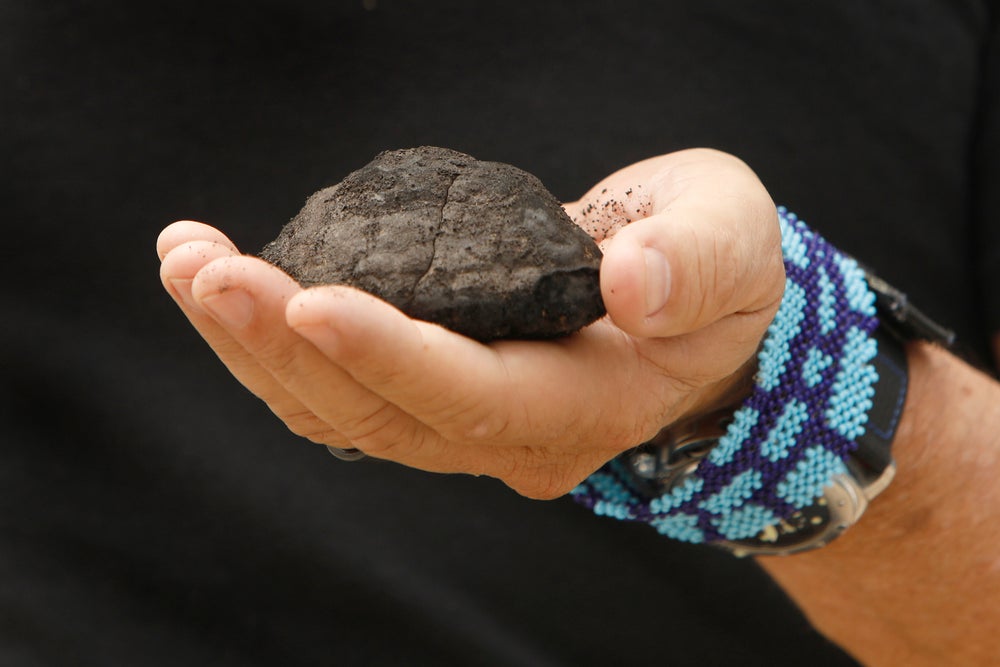
Gerard Barron, CEO of the Metals Company, holds a polymetallic nodule. The company helped fund new research that found that such nodules can produce oxygen without sunlight. Carolyn Cole/Los Angeles Times via Getty Images
.
.
Click the link below for the article:
.
__________________________________________
July 23, 2024
Mohenjo
Business, Food For Thought, Human Interest, Political, Science, Technical
amazon, business, Business News, current-events, Future, Hotels, human-rights, medicine, mental-health, research, Science, Science News, technology, Technology News, travel, vacation

Click the link below the picture
.
Key points
- Outdoor activities can boost physical health through exercise, muscle growth, and disease prevention.
- Connecting with nature can build empathy, resilience, and environmental stewardship.
- Outdoor play can foster creativity, social skills, and independence.
Is it just me or are screens dominating much of our children’s (and our own!) lives? It seems like a good time to remind all of us, parents and non-parents, that the importance of outdoor activities cannot be overstated. Nature and outdoor adventures offer a wealth of benefits that contribute significantly to building resilience and overall well-being in children. Here’s how engaging with the great outdoors can foster resilience in young minds.
Enhancing Physical Health
Outdoor activities promote physical exercise that is critical for children’s health. Running, climbing, and exploring nature can build muscles, improve cardiovascular health, and maintain a healthy weight. Regular physical activity reduces chronic conditions like obesity and type 2 diabetes, enhancing motor skills and coordination during growth.
Physical health closely correlates with mental well-being; active children are often happier and more confident. Outdoor physical activities lower stress and anxiety levels, increasing endorphins and serotonin for improved mood. Overcoming outdoor challenges boosts self-esteem and resilience.
Integrating outdoor activities into daily routines supports holistic child development, enhancing physical health and mental well-being.
Promoting Mental Well-Being
Nature has a calming effect on the mind, supported by numerous studies demonstrating its beneficial impact on mental health. Research published in Frontiers in Psychology indicates that spending time in green spaces can significantly reduce stress, anxiety, and symptoms of depression. These natural environments provide children with a peaceful retreat from the pressures of daily life, offering them a chance to unwind and recharge.
For children, outdoor play serves as a natural outlet for their energy and emotions. Research in the Journal of Environmental Psychology highlights that outdoor activities allow children to freely express themselves, enhancing their emotional well-being and reducing feelings of frustration or restlessness. This is further supported by findings from the University of Illinois Urbana-Champaign, which suggest that exposure to natural settings can improve attention span and impulse control in children.
By incorporating outdoor play into children’s routines, caregivers can help cultivate a positive relationship with nature while promoting mental resilience and emotional balance.
.

Young girl smiling in the trees. Source: Unsplash+ In collaboration with Colin + Meg
.
.
Click the link below for the article:
.
__________________________________________
July 22, 2024
Mohenjo
Business, Crime, Food For Thought, Human Interest, missed News, Political, Science, Technical
amazon, business, Business News, current-events, Future, Hotels, human-rights, medicine, mental-health, research, Science, Science News, technology, Technology News, travel, vacation

.
News You might have missed!
Use your browser or smartphone back arrow (<-) to return to this table for your next selection.
.
__________________________________________
July 22, 2024
Mohenjo
Business, Food For Thought, Human Interest, Political, Science, Technical
amazon, business, Business News, current-events, Future, Hotels, human-rights, medicine, mental-health, research, Science, Science News, technology, Technology News, travel, vacation
Click the link below the picture
.
Throughout Joe Biden’s presidency, he leaned on the outspoken former prosecutor and senator he selected as his vice president, Kamala Harris, to be the White House’s voice of unflinching support for reproductive health rights.
Now, as Democrats rebuild their presidential ticket just a few months before Election Day, Harris would widely be expected to take an aggressive stance in support of abortion access if she became the party’s new presumptive nominee — hitting former President Donald Trump on an issue that could undermine his chances of victory. Biden endorsed Harris on Sunday when he announced his decision to leave the race.
While Biden sought to keep abortion center stage in his reelection bid, abortion advocates had harbored doubts that the president — a practicing Catholic who has said he is not “big on abortion” — could be an effective standard-bearer as Republican efforts erode access to abortion and other women’s health care around the country.
Harris, on the other hand, became the first vice president to visit a clinic run by the Planned Parenthood Federation of America. She undertook a nationwide tour focused on reproductive rights. And when Sen. JD Vance of Ohio was named Trump’s running mate, Harris used her next campaign appearance to criticize him for blocking protections for in vitro fertilization.
“Most significantly, Harris would be the face of the drive to protect abortion rights,” Larry Levitt, executive vice president for health policy at KFF, a health information nonprofit that includes KFF Health News, said in an interview before Biden stepped aside. “Abortion access would likely be front and center in her campaign.”
A strong stance on abortion is not the only major contrast to the GOP that Harris offers: She is well versed in health policy. As a child, Harris often accompanied her mother to work on the weekends, visiting the lab where she was studying breast cancer.
While running for president in 2019, she backed “Medicare for All,” a single-payer insurance proposal that established her bona fides as a more progressive voice on health policy. And as California’s attorney general, she fought against consolidation in the health industry over concerns it would drive up prices.
She stumped for a Biden administration rule setting minimum staffing levels at federally funded nursing homes in April.
“She deserves credit, she’s talked about them on the campaign trail. I don’t see any change there in the priorities on what Democrats want to do on health care if she becomes the nominee,” said Debbie Curtis, vice president at McDermott + Consulting.
.
 Vice President Kamala Harris speaks about Florida’s new 6-week abortion ban during an even the Prime Osborn Convention Center on May 1, 2024, in Jacksonville, Florida. Joe Raedle/Getty Images
.
.
Click the link below for the article:
.
__________________________________________
July 22, 2024
Mohenjo
Business, Food For Thought, Human Interest, Political, Science, Technical
amazon, business, Business News, current-events, Future, Hotels, human-rights, medicine, mental-health, research, Science, Science News, technology, Technology News, travel, vacation
Click the link below the picture
.
Janet Wangari-Olivero: We estimate that over a third of people around the world have curly hair, and this number will reach 40% by 2030. Along with that recognition is a growing body of research looking at what makes curly hair unique, all the way down to the individual. Our scientific endeavors are part of an effort to redefine what, historically, has been a one-size-fits-all approach to hair health.
Our research not only broadens our understanding of the different hair types, but reflects our commitment to inclusivity. The haircare industry can no longer assume what works for someone with straight hair also works for a person with textured, wavy or curly hair. Our research involves better understanding the diversity within the curly hair spectrum. How people live, how people see and want to see their hair, and their preferred styling routines.
Researchers originally classified hair into a few broad geographic categories. But in an effort to diversify these categories, at L’Oréal, we studied the hair types of almost 2,500 people in 22 countries. We measured the diameter of curls, the curvature, the number of waves, and the tendrils. The result of this research was a classification system we call the curl scale.
We identified eight categories of curls across ethnicities. On one end of the scale, the hair has nearly no curvature to it. And on the other end, the curls are tightly coiled. Along with the incredible diversity of curly hair types are vastly different biological processes. We’ve learned that sebum, the oil that is naturally produced in our scalp, is extremely important for hydrating hair with curly texture. By looking at the rate at which sebum travels down each of these eight curl types, our research has found that it moves more slowly to the end of a curled strand, the more coiled the hair is.
As a result, we have a better understanding of the importance of hydration practices, like scalp cleansing, for people with curly hair. Many women on the curlier end of the spectrum may not wash their hair as often, leading to dandruff and itchy scalp. These symptoms are caused by a type of fungi, Malassezia, and our research has shown that weekly hair washing can help reduce it.
And finally, there’s been robust field research on the impact that environmental factors like humidity, UV light, and pollution can have on hair. A recent study found that hair exposed to extreme climate conditions in urban environments underwent the same type of cell damage associated with aging — the same process that causes hair to go gray and brittle.
All of this research is just a start. We recently partnered with Verily to launch the largest skin and hair health study, tracking women aged 18 to 70 across socio-economic and cultural backgrounds over several years. The goal is to learn even more about how environment, lifestyle, haircare routines, and age affects hair health.
Our commitment to understanding and celebrating the diversity of hair worldwide isn’t just about the science of curls or the impact of environmental factors. It’s also about ensuring that our research reflects communities globally, especially those historically overlooked in dermatology.
.
 Curls
Curls
.
.
Click the link below for the article:
.
__________________________________________
July 22, 2024
Mohenjo
Business, Food For Thought, Human Interest, Political, Science, Technical
amazon, business, Business News, current-events, Future, Hotels, human-rights, medicine, mental-health, research, Science, Science News, technology, Technology News, travel, vacation

Click the link below the picture
.
Welcome to Summerween season! You know: that magical time of year when homes are decorated with jack-o-melons (carved watermelons, obviously), and everyone dresses in scary costumes. This ominous-sounding fake holiday was inspired by the Disney Channel cartoon Gravity Falls, in which the titular town celebrates Halloween twice a year.
Sadly, unlike other TV-show inspired observances like Galentine’s Day, Summerween hasn’t fully caught on with the masses. So far. You might not be able to go trick-or-treating, but you can still throw a party to celebrate. Before you send out your invites, here are a few items you should pick up to take your party to the next level.
Watermelon knife
You need the right tool to sculpt your jack-o-melons, and this easy-to-control, non-stick stainless steel knife will help you slice the scariest-looking specimens on your street. It comes with a protective guard to prevent your guests from finding your fingers in the fruit dish.
Halloween gummies
If you want your guests to get creeped out, put these fruit-flavored gummies in your candy bowl. Guests can indulge in their cannibalistic tendencies and nibble on fingers, eyeballs, bones, and—for your zombie friends—brains.
Inflatable coffin cooler
Drinks liven up any party, and this durable drink cooler keeps with the macabre Summerween theme. Should your party head over to the pool, this coffin doubles as a flotation device.
Black tea lights
These tea lights may be black as night, giving your Summerween party a gothic atmosphere, but the 24 flickering LED lights inside glow so bright that you won’t miss any of the subtle details hidden in your guests’ costumes. They also have excellent battery life—important for when your party goes late into the evening.
Black witch hats and bats
These themed decorations will put a spell on your coven of friends. Some reviewers say they’re sturdy, too, so you can use them again for your October party.
.
 Credit: Gravity Falls/YouTube
.
.
Click the link below for the article:
.
__________________________________________
July 21, 2024
Mohenjo
Business, Food For Thought, Human Interest, Political, Science, Technical
amazon, business, Business News, current-events, Future, Hotels, human-rights, medicine, mental-health, research, Science, Science News, technology, Technology News, travel, vacation

Click the link below the picture
.
-
Scientists have the most convincing evidence yet of an underground cave on the moon.
-
The large cave could be a safe, warm place for astronauts to work and live on the moon.
-
The researchers want to use radar technology to identify even more caves under the lunar surface.
In the ongoing effort to establish a permanent lunar base where humans can live and work on the moon, scientists have discovered a possible game changer: a large underground cave.
For decades, scientists have suspected the moon may harbor caves below its surface. Now, a new paper from a team of Italian researchers offers the most convincing evidence yet.
“Lunar caves have remained a mystery for over 50 years. So it was exciting to be able to finally prove the existence,” authors Leonardo Carrer and Lorenzo Bruzzone of the University of Trento told The Associated Press.
Judging from the data, the researchers estimate the cave is approximately 150 feet wide and up to 260 feet long, which is slightly smaller than an American football field with the end zones cut off.
The cave sits deep within a pit, called the Mare Tranquillitatis pit, which likely formed when a lava tube collapsed. The moon has no active volcanoes today, but billions of years ago, its surface was covered with lava that flowed down and through valleys, carving tubes across the lunar surface.
Over millennia, some of those tubes became unstable and collapsed, creating pits, like the one the research team studied from radar images taken by NASA’s Lunar Reconnaissance Orbiter. We don’t have a clear picture of what the caves look like inside, but lava tubes, like those in Hawaii, can offer some idea.
NASA’s LRO has identified over 200 of these pits on the moon, suggesting there could be hundreds of underground caves, too. These caves could offer future astronauts protection against the extreme conditions on the moon’s surface, the researchers reported in the paper published Monday in the peer-reviewed journal Nature Astronomy.
The pros and cons of living in moon caves
“The thick cave ceiling of rock is ideal to protect people and infrastructure from the wildly varying day-night lunar surface temperature variations and to block high energy radiation which bathes the lunar surface,” Katherine Joy, a professor in earth sciences at the University of Manchester who wasn’t involved with the study, told The Guardian.
.

Lava tubes, like this one in Hawaii, could exist on the moon. George Rose/Getty Images © George Rose/Getty Images
.
.
Click the link below for the article:
.
__________________________________________
July 21, 2024
Mohenjo
Business, Food For Thought, Human Interest, Political, Science, Technical
amazon, business, Business News, current-events, Future, Hotels, human-rights, medicine, mental-health, research, Science, Science News, technology, Technology News, travel, vacation
Click the link below the picture
.
Nitrous oxide might make root canals bearable, but the world-warming gas is no laughing matter for the planet.
It is commonly called laughing gas for its ability to create a state of euphoria when inhaled. Experts at the Norwegian University of Life Sciences also know it as the “forgotten greenhouse gas,” because it warms the planet around 300 times more effectively than carbon dioxide, according to a lab summary — an estimate supported by the U.S. National Oceanic and Atmospheric Administration, for a 100-year time span.
Per the lab report, it represents 4.8% of Norway’s heat-trapping pollution and also damages the ozone layer. That’s why the researchers are growing bacteria that can consume the fume at its leading source: fertilizer.
“We have a major challenge because we need to maintain global food production while reducing N2O emissions,” doctoral student Elisabeth Gautefall Hiis, who is working on the project, said.
While bacteria are plentiful in soil, they often create nitrous oxide when they consume nitrogen, a component of fertilizer that on its own can cause big problems in our waterways when it is washed off fields and into rivers and streams. The runoff can cause large fish kills and other disasters, the U.S. Environmental Protection Agency notes.
Hiis and other researchers had to scour through soil samples that contain billions of bacteria per teaspoon to find the kind that are hungry for laughing gas (and converting it into a harmless nitrogen gas), according to the lab summary. They eventually found one that fascinatingly “eats” it, reducing nitrogren pollution from soil by between 40% and 95%.
“Some of the bacteria we initially looked at can both eat and produce nitrous oxide. That made it complicated. One bacterium, for example, would eat nitrous oxide in the laboratory, but once it was in the soil, it had little effect,” Hiis said.
A type of cloacibacterium, dubbed the “one-armed bandit” by the team, was found to be the nearly perfect fit for the task.
“It simply does not have the gene to produce nitrous oxide, it can only eat it,” she said in the summary.
Experts at labs elsewhere are working on technology to help farmers better manage fertilizer use. The University of Texas at Austin is developing a hydrogel that can catch excess nitrate from fields before it pollutes the surrounding environment. There are around 895 million acres of farmland in the U.S. alone, per the Department of Agriculture.
Growing your own food at home in gardens or raised beds is an excellent way to learn about sustainable agriculture while reducing waste and pollution. A $70 investment can produce $600 worth of food each season. Composting food scraps prevents the would-be garbage from filling gassy landfills. The process also creates great soil for future gardens, limiting fertilizer use.
.

Now the team is working to commercialize the science. © Provided by The Cool Down
.
.
Click the link below for the article:
.
__________________________________________
July 20, 2024
Mohenjo
Business, Food For Thought, Human Interest, Political, Science, Technical
amazon, business, Business News, current-events, Future, Hotels, human-rights, medicine, mental-health, research, Science, Science News, technology, Technology News, travel, vacation
Click the link below the picture
.
Project 2025, the sweeping right-wing blueprint for a new kind of U.S. presidency, would sabotage science-based policies that address climate change, the environment, abortion, health care access, technology, and education. It would impose religious and conservative ideology on the federal civil service to such an extent that Republican presidential candidate Donald Trump has, dubiously, tried to distance himself from the plan. But in 2022 Trump said the Heritage Foundation—the think tank that authored Project 2025—would “lay the groundwork and detail plans for exactly what our movement will do.” The project’s main document, a lengthy policy agenda, was published the following year.
Although Trump is not among its 34 authors, more than half are appointees and staff from his time as president; the words “Trump” and “Trump Administration” appear 300 times in its pages. At least 140 former Trump officials are involved in Project 2025, according to a CNN tally. It’s reasonable to expect that a second Trump presidency would follow many of the project’s recommendations.
Project 2025 presents a long-standing conservative vision of a smaller government and describes specific, detailed steps to achieve this goal. It would shrink some federal departments and agencies while eliminating others—dividing the Centers for Disease Control and Prevention into two weaker entities, for instance, and abolishing the Department of Education (ED) entirely.
What is even more unusual, and also mapped out in detail, is a plan to exert more presidential control over traditionally nonpartisan governmental workers—those Trump might describe as members of the “deep state,” or regulatory bureaucracy. For example, Project 2025 claims that the the National Oceanic and Atmospheric Administration and other scientific institutions are “vulnerable to obstructionism” unless appointees at these agencies are “wholly in sync” with presidential policy. To that end, it would reclassify tens of thousands of civil service jobs as political positions that answer to the president.
“The independence of science is being attacked across the board in this document,” says Rachel Cleetus, policy director of the Climate and Energy program at the nonpartisan Union of Concerned Scientists. “The importance of this science is that’s how we can ensure people’s health and the environment are being safeguarded.” (Cleetus notes that her comments address the policy agenda’s contents, not the upcoming presidential election.)
.
 Brendan Smialowski / AFP via Getty Images
.
.
Click the link below for the article:
.
__________________________________________
July 20, 2024
Mohenjo
Business, Food For Thought, Human Interest, Political, Science, Technical
amazon, business, Business News, current-events, Future, Hotels, human-rights, medicine, mental-health, research, Science, Science News, technology, Technology News, travel, vacation
Click the link below the picture
.
Kids grow fast, which makes shopping for kid’s clothes—and adding to the “donate” pile—a second job for parents. For those caregivers looking for a deal on children’s clothing or a way to pocket a few extra bucks while they declutter, plenty of great options are available online.
Hanna-Me-Downs
Hanna Anderson clothing is high-quality stuff—and it’s pricey. Last year, the clothing company started a resale program called Hanna-Me Downs, where customers can sell the threads their kids have outgrown for cash or store credit. Sellers list their items and set their own price—or let the site do it for them. Once an item is purchased, sellers get a prepaid, pre-addressed shipping label and must send items out in three business days.
- Pro: Shoppers get nearly 50 percent off retail prices.
- Con: The inventory is limited to Hanna Anderson products only.
Kidizen/Tea Rewear
This popular app/website is specifically for maternity and children’s clothing. Parents can start by setting up a “shop” to list and post pictures of the items they wish to sell. Like Hanna-Me-Downs, once an item is sold, you’ll be given a shipping label, and Kidizen keeps 12 percent plus $0.50 of the sale. Kidizen has built up such a loyal customer community that Tea Collection has partnered with the site to offer parents a place to resell their clothes.
- Pro: If you’re short on time, you can work with a “Style Scout” in your area to sell your clothes.
- Con: The Style Scout will take half your profit.
Out&Back
Kids wear outdoor and winter clothes for only a few months out of the year, only to have outgrown their barely used hoodies and jackets when the cold weather comes around again. Out&Back knows this, and their resale process works similarly to trading in your smartphone: Answer a few questions about what you’re selling on their site, and you can either ship your items with a prepaid label or drop them off at a select location. Once they’ve confirmed the condition of your articles, you’ll receive payment through Venmo, PayPal, or a gift card.
- Pro: The trade-in process works fast, especially if you live in an area where you can drop off your items.
- Con: Those drop-off locations are currently limited to seven states.
The Swoondle Society
Paid memberships support The Swoondle Society. When you sign up, you request a prepaid, reusable trade-in bag to fill with the clothing you wish to sell. What you send is credited using a point system determined by factors that include brand, condition, size, and demand—Level 1 through Level 5. You can use these credits to purchase similarly classified clothing. For example, If the clothing you sold was assigned a Level 2, you can swap for other Level 2 items.
.

Credit: White bear studio/Shutterstock
.
.
Click the link below for the article:
.
__________________________________________
Older Entries
Newer Entries

