The HuffPost presidential forecast gives Democratic presidential nominee Hillary Clinton a 98 percent chance of winning the general election on Tuesday. That means we’re pretty darn certain that ― barring some major catastrophe, scandal or nearly every single poll being wrong ― Clinton will be elected.
But that doesn’t necessarily mean Clinton will win in a landslide. It’s still a close race in several states; Clinton could win with as few as 273 electoral votes. Or she could blow the race out and win 341 or more. The high win probability doesn’t choose between those scenarios ― it just means that the model shows Clinton below 270 is very unlikely.
In simple terms, here’s how the model does that: We take all the polls entered into the HuffPost Pollster database in each state and calculate a trendline to estimate what they say in the aggregate. Unlike the Pollster charts, which stop on the current date, the forecast model keeps running to Nov. 8 (although there’s not much difference four days out). And then we bump up the uncertainty in the model to account for the undecided proportions in the polls.
Three days before a historic election, a disturbing twist has emerged: the possibility that agents in the country’s preeminent investigative service are attempting to swing the outcome.
Reuters reported on Thursday that FBI Director James Comey wrote his unprecedented letter to Congress last week in part because he feared his own employees might leak word of the Hillary Clinton email investigation to the press. Two sources told Reuters that investigators in the FBI’s New York field office are “known to be hostile” to Clinton. On Thursday, The Guardian reported its sources described the FBI as a “Trumpland,” where agents have “deep antipathy” toward Clinton.
Those reports follow a whirlwind week of leaks from the FBI that appear intended to cast a shadow over Clinton.
.
Image: Breaking News and Opinion on The Huffington Post
Rudy Giuliani said Friday that he knew the FBI planned to review more emails tied to Hillary Clinton before a public announcement about the investigation last week, confirming that the agency leaked information to Donald Trump’s presidential campaign.
The former New York City mayor and Trump surrogate has recently dropped a series of hints that he knew in advance that the FBI planned to look at emails potentially connected to Clinton’s private server. The agency discovered the messages while investigating former Rep. Anthony Weiner (D-N.Y.) for allegedly sexting with a minor. (Weiner’s estranged wife, Huma Abedin, is a top aide to Clinton.)
Giuliani has bragged about his close ties to the FBI for months, mentioning in interviews that “outraged FBI agents” have told him they’re frustrated by how the Clinton investigation was handled. And two days before FBI Director James Comey announced that the agency was reviewing the newly uncovered emails, Giuliani teased that Trump’s campaign had “a couple of surprises left.”
“You’ll see, and I think it will be enormously effective,” he said in an interview with Fox News.
.
Image: Breaking News and Opinion on The Huffington Post
.
.
Click link below for article, video and slideshow:
Republican nominee Donald Trump has been treading treasonous territory for months now, raising eyebrows around the nation for a foreign policy that openly supports the ambitions of Vladimir Putin, the dictator of the Russian Federation. He’s surrounded himself with men with close ties to the Kremlin and the oligarchs that pull the strings behind the scenes; he’s being openly supported by Russian state-controlled media and by Russian intelligence services, who have breached the electronic servers of Democratic Party operatives and released selected pieces of information in an attempt to sow discord.
.
Throughout all of this, Trump has insisted that he has no business ties to Russia. “For the record, I have ZERO investments in Russia” he tweeted in July. Now – brace yourself, this might come as a shock – it appears he’s been lying to us the whole time.
Two U.S. service members were killed during a fierce battle with Taliban fighters in Afghanistan early Thursday — which local officials said resulted in the deaths of dozens of civilians.
The Americans were on a “train, advise and assist” mission led by Afghan forces when they came under heavy fire miles north of the restive city of Kunduz, according to U.S. and Afghan officials.
Said Mahmood Danish, spokesman for Kunduz Governor Asadullah Omarkhel, told NBC News that Afghan special forces called in airstrikes to try to beat back the militants, and that 30 civilians were killed in the fighting, many of them children.
.
A map showing the Afghan city of Kunduz. Google Maps
With just one week left to go until the 2016 presidential election, Hillary Clinton and Donald Trump are quite close in the polls, but a few pieces of data in particular are looking good for the Democratic candidate.
As of November 2nd, Real Clear Politics’ polling average has Donald Trump ahead of Hillary Clinton by 0.8 percentage points in Florida. That is a shift from this time last week, when Clinton was ahead of Trump in the state by an average of 2.4 percentage points.
But the latest poll that’s gaining a significant amount of attention is from William & Mary College, and it has Clinton ahead of Trump in Florida by eight points, 48 percent to 40 percent. Most surprisingly, though, that poll has Clinton winning 28 percent of Florida’s Republican early voters. On the other hand, Donald Trump is winning just six percent of Democratic early voters. Clinton is also winning early voters overall, with 55 percent of early voters saying they voted for Hillary Clinton and 43 percent saying they voted for Donald Trump. Among those who have not yet voted, though, this poll showed the race to be much tighter: 43 percent of these voters back Donald Trump, and 42 percent of them back Hillary Clinton.
.
Donald Trump and Hillary Clinton at the second presidential debate at Washington University in St. Louis. (Getty)
Last month, several American white nationalists traveled to an anti-immigration conference in Wismar, Germany, and told attendants that Donald Trump’s presidential campaign represents a win for the movement—even if he loses the election.
Official speakers at the event— sponsored by an association of nationalistic parties in the European Union —included Kevin MacDonald, a retired professor at California State University, Long Beach who defends anti-Semitism and Tom Sunic, who has spoken at meetings sponsored by Klansmen, Holocaust deniers and neo-Nazis, and who was “serving as interpreter … for a very classy private German audience,” he told The Huffington Post. William Johnson, a white nationalist who was briefly a Trump delegate, made an unscheduled address at the event. Non-U.S. speakers included Frank Rennicke, a German singer-songwriter who is also a far-right extremist and Nick Griffin, a British politician who was once convicted of incitement to racial hatred. (Griffin “chewed all white activists out for not getting married and not having children,” Johnson said.)
.
Image: Breaking News and Opinion on The Huffington Post
Sen. Richard Burr (R-N.C.) made a noteworthy declaration about his post-election political intents on Monday, though it was lost amid his joke, for which he has since apologized, about shooting Hillary Clinton.
Should he head back to the Senate, Burr pledged, he would try to block any Supreme Court nomination from a President Clinton.
“If Hillary Clinton becomes president, I am going to do everything I can do to make sure four years from now, we still got an opening on the Supreme Court,” he said.
This is how constitutional crises are made. And it’s also why Sen. Tim Kaine (D-Va.), Clinton’s running mate, told The Huffington Post that Senate Democrats would try to nuke the filibuster option on Supreme Court nominees should they regain power in that chamber.
.
Image: Breaking News and Opinion on The Huffington Post
The greatest miracle of the Internet is that it exists—the second greatest is that it persists. Every so often we’re reminded that bad actors wield great skill and have little conscience about the harm they inflict on the world’s digital nervous system. They invent viruses, botnets, and sundry species of malware. There’s good money to be made deflecting these incursions. But a small, tightly-knit community of computer scientists who pursue such work—some at cyber-security firms, some in academia, some with close ties to three-letter federal agencies—is also spurred by a sense of shared idealism and considers itself the benevolent posse that chases off the rogues and rogue states that try to purloin sensitive data and infect the Internet with their bugs. “We’re the Union of Concerned Nerds,” in the wry formulation of the Indiana University computer scientist L. Jean Camp.
In late spring, this community of malware hunters placed itself in a high state of alarm. Word arrived that Russian hackers had infiltrated the servers of the Democratic National Committee, an attack persuasively detailed by the respected cyber-security firm CrowdStrike. The computer scientists posited a logical hypothesis, which they set out to rigorously test: If the Russians were worming their way into the DNC, they might very well be attacking other entities central to the presidential campaign, including Donald Trump’s many servers. “We wanted to help defend both campaigns, because we wanted to preserve the integrity of the election,” says one of the academics, who works at a university that asked him not to speak with reporters because of the sensitive nature of his work.
.
Donald Trump gives a fist-pump to the ground crew as he arrives on his plane in St. Augustine, Florida, on Oct. 24.
Film and Writing Festival for Comedy. Showcasing best of comedy short films at the FEEDBACK Film Festival. Plus, showcasing best of comedy novels, short stories, poems, screenplays (TV, short, feature) at the festival performed by professional actors.


 Image: Breaking News and Opinion on The Huffington Post
 Image: Breaking News and Opinion on The Huffington Post
 .
.



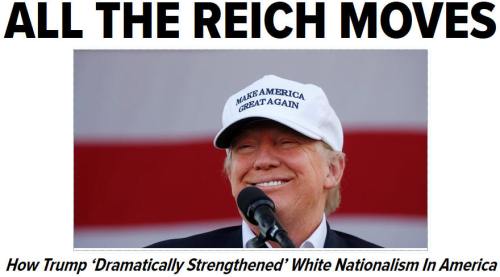 Image: Breaking News and Opinion on The Huffington Post
 Image: Breaking News and Opinion on The Huffington Post

 James' World 2