May 10, 2013
Mohenjo
Medical
Africa, amazon, business, Cambodia, climate, CNN, current-events, drug-resistant, Environment, Health, Hotels, journal nature genetics, mahidol university, Mahidol University in Bangkok, malaria drugs, medicine, mental-health, Nature Genetics, new malaria drugs, Nicholas White, Oxford, research, Science, Science News, Southeast Asia, technology, Technology News, Thailand, travel, UK, University of Oxford, University of Oxford in the UK, vacation, WHO, World Health Organization, World Health Organization (WHO), Worldwide elimination of malaria

Click link below picture
.
Worldwide elimination of malaria would save hundreds of thousands of lives each year, according to the World Health Organization (WHO). But eradication remains elusive, because the parasite that causes the disease can evolve to withstand the effects of new malaria drugs and become drug-resistant.
Researchers, however, now believe they have discovered a way to track the spread of drug-resistant malaria, and this discovery may help to finally eradicate the disease. Their study was recently published in the journal Nature Genetics.
“We’ve seen past cases of (malaria) drug resistance spread in a specific pattern,” said study author Nicholas White from Mahidol University in Bangkok, Thailand, and the University of Oxford in the UK. “It starts in Cambodia, spreads across Southeast Asia and crosses over to Africa, killing millions of children in the process.”
.

.
.Click link below for article:
http://thechart.blogs.cnn.com/2013/05/09/new-discovery-may-be-step-toward-ending-malaria/?utm_source=dlvr.it&utm_medium=twitter&utm_campaign=Feed%3A+rss%2Fcnn_gupta+%28Blog%3A+Paging+Dr.+Gupta%29
.
____________________________________________________
January 27, 2013
Mohenjo
Medical
aviation, business, climate, extreme rainfall, huffingtonpost, Jan Stripling, maing, mathematical concepts, mathematician, max little, medicine, mental-health, millions worldwide have Parkinson's, molecules, myaol, Oxford, Parkinson's disease, research, Science, Science News, scientific problems, simple mathematical concepts, speech recordings, technology, travel, vacation, Video, virtuoso ballet dancer
FROM

Click link below picture
.
I’m a mathematician and am constantly amazed that the world around us can be described mathematically. All it takes is a combination of a handful of simple mathematical concepts. I’m insatiably curious, and I want to understand how things fit together, so, I get involved in many kinds of scientific problems — everything from the changing statistics of extreme rainfall, to the behavior of life at the scale of molecules, to analyzing voice and speech recordings for forensics. But there’s one project, on Parkinson’s disease that has occupied me for the last seven years. I fell into it almost by accident.
,

.
.Click link below for Ted talk:
http://www.huffingtonpost.com/max-little/parkinsons-diagnosis-test_b_2545128.html?icid=maing-grid7|myaol|dl3|sec1_lnk3%26pLid%3D262169
.
_____________________________________________________
December 20, 2012
Mohenjo
Technical
16 hours per week globally, Are We Becoming Cyborgs, Brain Pickings, broadband, business, climate, eclectic interestingness, gaming, Health, human-rights, international herald tribune, internet, Internet use has expanded at a cosmic rate, Maria Popova, mental-health, millenium internet, number of internet users, Oxford, research, Science, Science News, Serge Schmemann, susan greenfield, synaptic pharmacology at Oxford, technology, The Dark Side of Internet Freedom, The Net Delusion, The New Republic, travel, vacation

.
Click link below picture
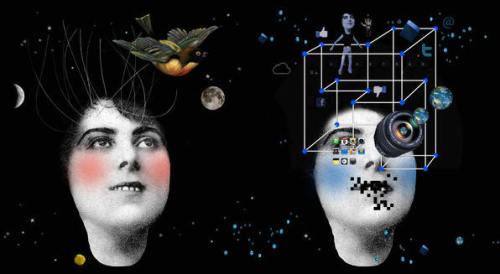
SINCE broadband began its inexorable spread at the start of this millenium, Internet use has expanded at a cosmic rate. Last year, the number of Internet users topped 2.4 billion — more than a third of all humans on the planet. The time spent on the screen was 16 hours per week globally — double that in high-use countries, and much of that on social media. We have changed how we interact. Are we also changing what we are?
We put that question to three people who have written extensively on the subject, and brought them together to discuss it with Serge Schmemann, the editor of this magazine. The participants: Susan Greenfield, professor of synaptic pharmacology at Oxford. She has written and spoken widely on the impact of new technology on users’ brains.
.
.
.Click link below for multiple page article:
http://www.nytimes.com/2012/11/30/opinion/global/maria-popova-evgeny-morozov-susan-greenfield-are-we-becoming-cyborgs.html?adxnnl=1&ref=globalagenda2012&adxnnlx=1355980478-ztao+PvVHgxhEdihqaJYJQ
.
_____________________________________________________
 James' World 2