May 2021. The 212-foot-tall rocket, the core stage and final major piece of NASA’s new Space Launch System (SLS), arrives at Kennedy Space Center. Assembly begins within the towering, iconic Vehicle Assembly Building, which hasn’t seen a human-rated deep-space rocket since the end of the Apollo program 50 years ago.
But the SLS isn’t an all-new ride; it’s got some familiar parts. Mounted at the bottom of the center stage are four RS-25 engines supplied by Aerojet Rocketdyne. Originally designed in the 1970s, the engines are seasoned, upgraded veterans, with 25 previous Space Shuttle flights among them. The most poignant of the four is engine number 2060, used on July 8, 2011, to launch the shuttle’s final mission, STS-135.
Doug Bradley was at Kennedy Space Center during that final launch, working as a chief engineer for Rocketdyne. “I’ve been to many flights, but it was different for 135,” Bradley tells Popular Mechanics. “It was electric. It was a very emotional flight.”
The grounding of the Space Shuttle left Rocketdyne with a backlog of 16 unused RS-25 engines, which the company mothballed. “For us, it was a bit sad to have engines in the stable that could fly dozens of times more,” says Bradley.
Now with the title of Chief Engineer of Advanced Space and Launch at Aerojet Rocketdyne, Bradley is overseeing the rebirth of the RS-25 engine. (A 2013 merger with Aerojet led to the company’s current two-word name.) And it’s quite a comeback: SLS is the custom-built, off-planet ride for NASA’s Artemis program, a multiyear campaign to return humans to the lunar surface and later to land people on Mars. That puts the RS-25, originally created with slide rules and graph paper, at the foundation of 21st-century human exploration of the solar system.
“It’s very gratifying to see those engines resurrected,” Bradley says. “And what’s better than going to the moon and Mars?”
Anyone who has ever tried to teach a child to tie their shoes knows how long it can take for them to get it right—and how frustrated they may feel in the meantime. But eventually, there comes that moment when it clicks. And it’s in that moment when their failures turn to successes and their perseverance pays off, that a little confidence in their own ability is built.
Some kids are born naturally confident in themselves, but for others, confidence is a muscle that needs to be strengthened over time. Here are some ways parents can help instill more confidence in their kids—and maybe even in themselves.
Be an example when you learn something new
The saying goes, “Fake it ‘till you make it.” And that expression can actually apply to setting an example for your kids when you are learning something new. Child Mind Institute suggests that it’s okay to acknowledge your own anxiety when mastering a new skill—but project enthusiasm as you grasp it. Similarly, Psychology Today adds that parents should keep any negative comments to yourself and treat yourself with grace and kindness. You wouldn’t say anything mean to your kids when they struggle or make a mistake, so don’t speak that way about yourself either.
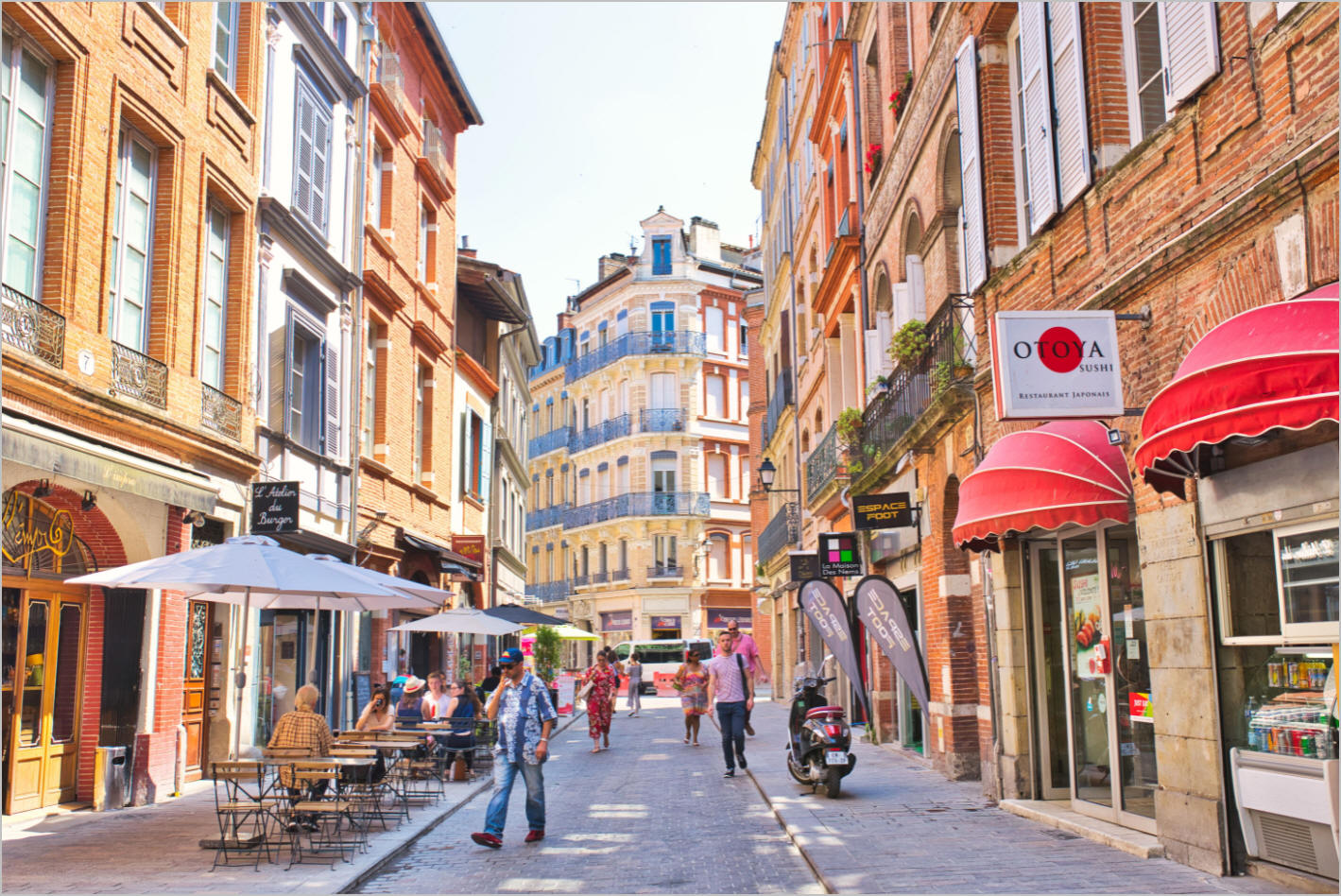
Toulouse is the capital of the French department of Haute-Garonne and of the region of Occitanie. The city is on the banks of the River Garonne, 150 kilometers (93 miles) from the Mediterranean Sea, 230 km (143 mi) from the Atlantic Ocean, and 680 km (420 mi) from Paris. It is the fourth-largest city in France, with 479,553 inhabitants within its municipal boundaries (as of January 2017), and 1,360,829 inhabitants within its wider metropolitan area (also as of January 2017), after Paris, Lyon, and Marseille, and ahead of Lille and Bordeaux.
Toulouse is the center of the European aerospace industry, with the headquarters of Airbus (formerly EADS), the SPOT satellite system, ATR, and the Aerospace Valley. It also hosts the European headquarters of Intel and CNES’s Toulouse Space Centre (CST), the largest space center in Europe. Thales Alenia Space, ATR, SAFRAN, Liebherr-Aerospace, and Airbus Defence and Space also have a significant presence in Toulouse. Wikipedia
I know I’m not the only one feeling this right now. It’s a sentiment I’ve been hearing a lot from friends and on social media, and it’s no surprise given the strange and stressful circumstances we find ourselves in. The unpredictability of the pandemic and the global economy, coupled with the strain of adjusting to new realities of work, childcare, and school, have almost everyone I know craving an escape.
Yet with travel restricted in many places, a carefree getaway isn’t in the cards for most people.
Still, vacations are an important part of well-being. One study, for example, showed that when men at risk for heart disease didn’t take annual vacations, they had a 32 percent higher risk of having a fatal heart attack than those who did. Likewise, a study of women showed that those who took vacation rarely — i.e., once every six years or less often — were eight times more likely to develop heart disease. Other studies have shown an increase in sleep quality and an improvement in reaction times of up to 80 percent after taking a vacation.
Still other research has shown that regular vacations are more important than money to overall well-being, so much that a regular vacationer making less than $24,000 a year might even be happier than a non-vacationer making more than $120,000 a year.
Many parents of young children struggle to introduce new foods into their kids’ diets. About half of American children are picky eaters by the age of two; they are, in the vernacular of nutritionists, “food neophobic.” Our pediatrician once told me that one of our sons, who was a fussy eater, would need to try new food at least six times before the taste would no longer fill him with fear and loathing. My wife and I wanted to fight our son’s food neophobia for some practical, nutritional reasons, but more fundamentally, we wanted him to eat adventurously so he could enjoy this part of life. Openness to a wide variety of tastes and smells enhances the pleasure of eating.
This is an instance of a larger truth: Openness to a wide variety of life experiences, from visiting interesting places to considering unusual political views, brings happiness. “Only someone who is ready for everything, who doesn’t exclude any experience, even the most incomprehensible,” Rainer Maria Rilke wrote in his Letters to a Young Poet, “will himself sound the depths of his own being.”
Tortuguero is a village on the Northern Caribbean coast of Costa Rica in the Limón Province. The small village, which can be reached only by boat or airplane, is sustained almost entirely by eco-tourism. The population is estimated at around 1200-1500. Tortuguero can be translated as Land of Turtles and gave its name to the neighboring Tortuguero National Park. The village is situated on a sand bar island, separated from the mainland by Tortuguero River and bordering the Caribbean Sea. Tortuguero is renowned for its navigable canals that run through the rainforest in the national park, and has earned the nickname of ‘Central America’s Amazon’.
The beaches around Tortuguero are key nesting sites for four species of sea turtle, including two critically endangered species. The National Park is also host to an incredible biodiversity of insects, resident and migratory birds, and mammals, including jaguars and four species of monkey. Accordingly, there are four biological stations — the John H. Phipps Biological Field Station, the Caño Palma Biological Research Station, the ASVO station (Asociación de Voluntarios para Servicio en Areas Protegidas), and the GVI Jalova Biological Station — which operate from the area immediately around the village and concentrate on research and conservation of the local ecology, particularly the turtles. The ocean here can be dangerous to swim in due to rough surf and strong currents. Wikipedia
An image from Tortuguero Conservation Area Costa Rica
When Singaporean car dealer Keith Oh first read the Facebook message, he wasn’t sure it was real. A Chinese client ordered a S$1.1 million ($830,000) Bentley—sight unseen—over the social network.
“They just asked for the price and when we could do the delivery, that’s all,” he said. “It’s a million dollars to us but it’s probably nothing to them.”
The quick sale was the latest sign of a wider trend: Money is sloshing around Singapore like never before. As the coronavirus pandemic hammers Southeast Asia and political turmoil threatens Hong Kong, the city has become a safe harbor for some of the region’s wealthiest tycoons and their families.
For rich people “who can decide where they want to live and settle down, Singapore is a place of choice now,” said Stephan Repkow, who founded Wealth Management Alliance in 2015 after four years at Union Bancaire Privee. He said two of his foreign clients had become residents in the past 12 months and more are on the way.
Singapore has long been a draw for wealthy Chinese, Indonesians and Malaysians who would come for short trips to shop, play baccarat at the casino or get medical check-ups at world-class clinics. Mount Elizabeth Hospital Orchard, just steps from the flagship stores of Gucci and Rolex, features a UOB Privilege Banking Centre in the lobby.
The pandemic has changed all that, prompting many tycoons and their families to stay for months, in some cases seeking residency to ride out the storm. On a per-capita basis, the mortality rates in Malaysia and Indonesia are more than 10 and 30 times higher than in Singapore, according to data collected by Johns Hopkins University.
.
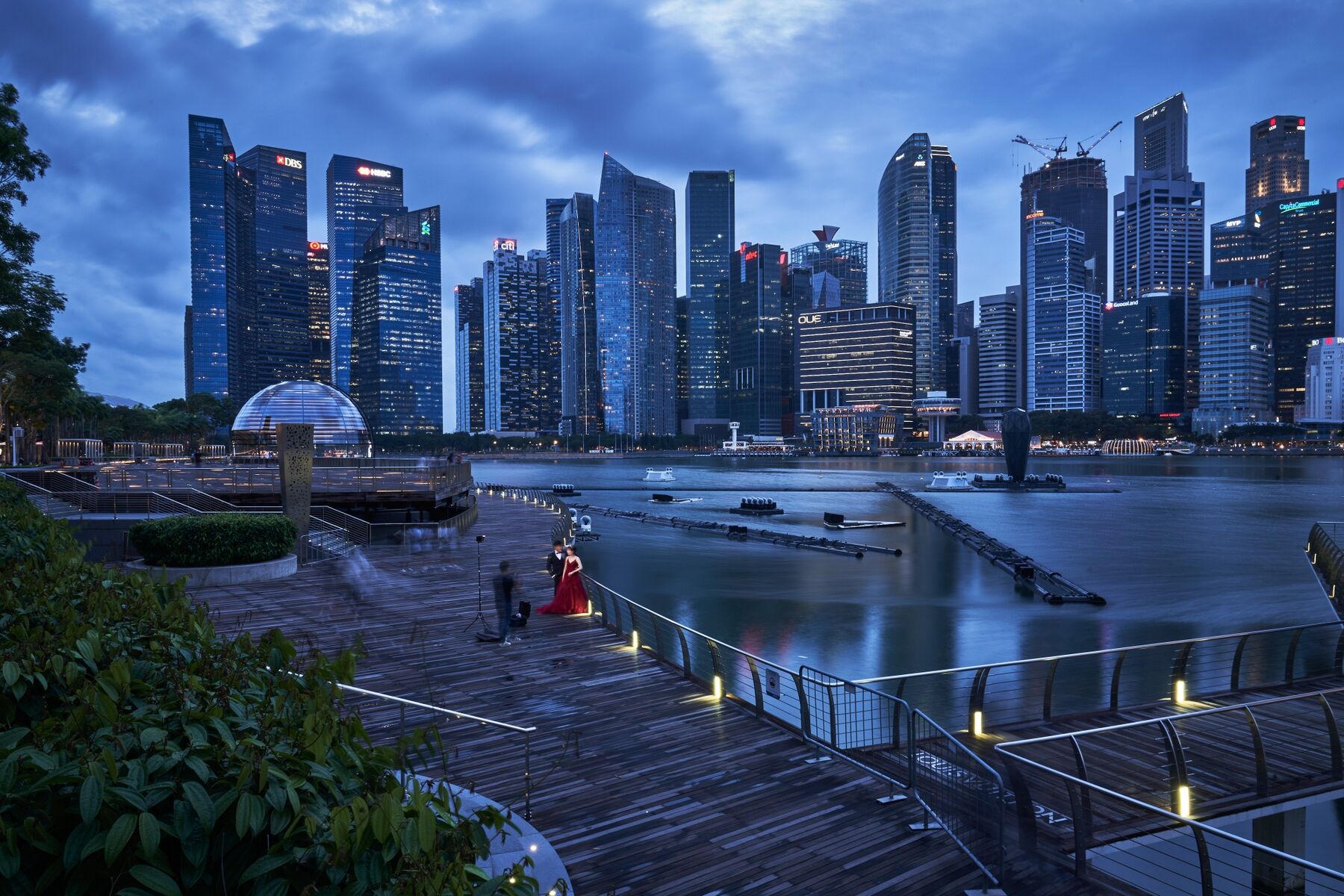
Marina Bay in Singapore, on Jan. 28, 2021. Photographer: Lauryn Ishak/Bloomberg
The word “gerrymandering” prompts an image: district maps that look less like a tangible community than a Rorschach blot—perhaps one that suggests a “broken-winged pterodactyl,” as one federal judge referred to Maryland’s 3rd district. Read a line like that, and a certain intuition kicks in: There must be something wrong here.
The problem is that our intuition isn’t necessarily correct.
“While badly shaped districts are a fairly successful flag that somebody was trying to do something, they don’t really tell us what their agenda was, or whether it was nefarious or benign,” says Moon Duchin, a mathematician at Tufts University and an expert on gerrymandering. “Bad shapes are not necessarily bad, and good shapes are not necessarily good.”
For the past five years, Duchin has led Tufts’ Metric Geometry and Gerrymandering Group, a lab that has quietly upended conventional wisdom about how gerrymandering works by approaching the issue less as a political problem than a mathematical one. As the country sprints into a new redistricting cycle, understanding redistricting in those terms has taken on new importance—especially in light of a controversial change to the Census Bureau data that will be used to draw the new district maps.
Film and Writing Festival for Comedy. Showcasing best of comedy short films at the FEEDBACK Film Festival. Plus, showcasing best of comedy novels, short stories, poems, screenplays (TV, short, feature) at the festival performed by professional actors.

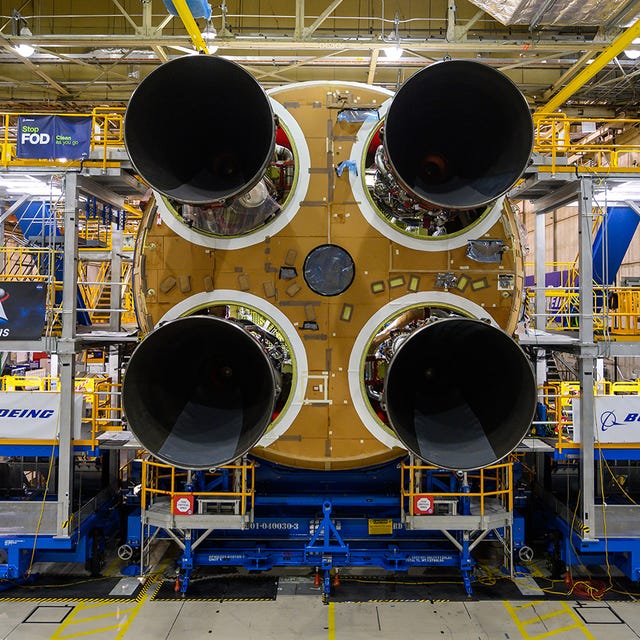

 Photo: Rawpixel.com (Shutterstock)


 Avalon Nuovo
 JAN BUCHCZIK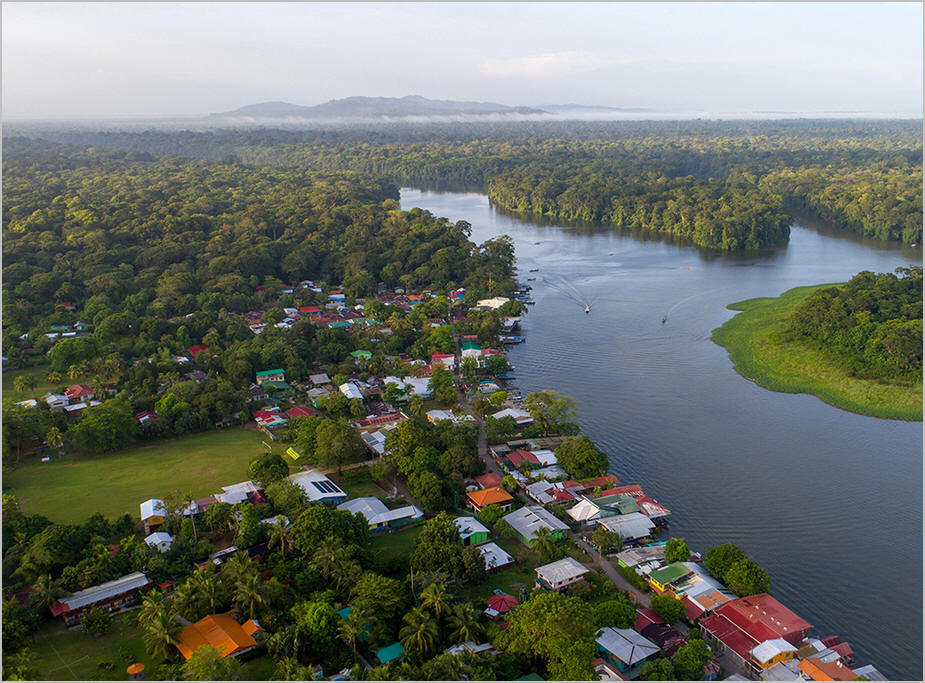


 James' World 2