September 28, 2021
Mohenjo
Business, Enthralling, Human Interest, Photographs
amazon, business, Business News, current-events, Future, Hotels, human-rights, medicine, mental-health, research, Science, Science News, technology, Technology News, travel, vacation

Click the link below the picture
.
Inner Mongolia, officially the Inner Mongolia Autonomous Region, is a landlocked autonomous region of the People’s Republic of China. Its border includes most of the length of China’s border with the country of Mongolia. Inner Mongolia also accounts for a small section of China’s border with Russia (Zabaykalsky Krai). Its capital is Hohhot; other major cities include Baotou, Chifeng, Tongliao, and Ordos.
The Autonomous Region was established in 1947, incorporating the areas of the former Republic of China provinces of Suiyuan, Chahar, Rehe, Liaobei, and Xing’an, along with the northern parts of Gansu and Ningxia.
Its area makes it the third-largest Chinese administrative subdivision, constituting approximately 1,200,000 km2 (463,000 sq mi) and 12% of China’s total land area. Due to its long span from east to west, Inner Mongolia is geographically divided into eastern and western divisions. The eastern division is often included in Northeastern China (former Manchuria) with major cities including Tongliao, Chifeng, Hailaer, Ulanhot. The western division is included in Northwestern China, with major cities including Baotou, Hohhot. It recorded a population of 24,706,321 in the 2010 census, accounting for 1.84% of Mainland China’s total population. Inner Mongolia is the country’s 23rd most populous province-level division. The majority of the population in the region are Han Chinese, with a sizeable Mongol minority close to 5,000,000 (2019) which is the largest Mongolian population in the world (bigger than that in the country of Mongolia). Inner Mongolia is one of the most economically developed provinces in China with annual GDP per capita close to US$13,000 (2019), often ranked 5th in the nation. The official languages are Mandarin and Mongolian, the latter of which is written in the traditional Mongolian script, as opposed to the Mongolian Cyrillic alphabet, which is used in the state of Mongolia (formerly often described as “Outer Mongolia”). Wikipedia
.
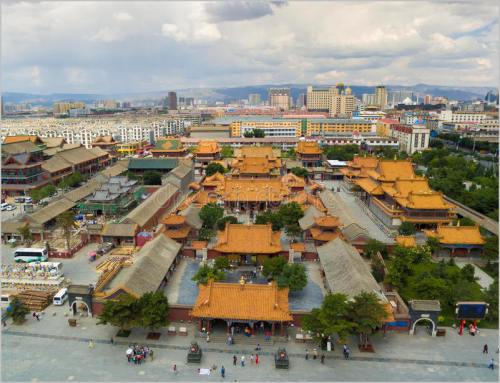 An image from Inner Mongolia China
.
.
Click the link below for images:
.
__________________________________________
September 28, 2021
Mohenjo
Business, Food For Thought, Human Interest, Science, Technical
amazon, business, Business News, current-events, Future, Hotels, human-rights, medicine, mental-health, research, Science, Science News, technology, Technology News, travel, vacation

Click the link below the picture
.
After we got married, my husband would forget … a lot. He’d take out the trash and forget to put a new bag in the bin. He’d jot down a grocery list, hop in his car, and take off … sans grocery list. He’d drop the kids off to school and jet off to work, forgetting to mention that they’d decided to be car riders, not bus riders. These slips drove me bonkers.
To make matters worse, I wasn’t faultless either. I had a habit of overbooking appointments, once even quadruple booking us to be in different places across town in a single afternoon. I was tired of bickering, exhausted of upsetting friends I’d promised to carve time for, and completely over my husband’s and my endless cycle of forgetfulness.
One day, I reached my wit’s end. I’d triple booked, committing to a birthday party, a lunch date with friends, and dinner at my mom’s all without realizing until the day of. By the time we arrived at my mom’s, we learned she’d left on a grocery run and locked her keys inside the home. Even better, my husband’s forgetfulness kicked in. He reassured her he had her spare set stowed in our glove compartment, but after scouring the car in a frenzy, muttering he knew they were there somewhere, he turned up empty-handed. In the end, I jumped the fence and learned how to jimmy open a window, tearing my favorite skirt in the process.
By the time we made it home, we fell into bed exhausted by the spectacle that had become our lives. I began wondering if, in this age of technology, there was a magical app for couples like us who had trouble keeping our heads on straight. Full disclaimer: I get that “there’s an app for that,” and there are people for that app—I’m just not one of them. (I still use the browser version of YouTube on my phone!) However, users downloaded over 36 billion apps from Google Play and the Apple App Store combined in just the first quarter of 2021. And I was about to become one of them.
After a bit of research, I found a few apps that let every family member (and even babysitters) with a smartphone keep in sync with one another.
.
 Photograph: Getty Images
.
.
Click the link below for the article:
.
__________________________________________
September 28, 2021
Mohenjo
Business, Food For Thought, Human Interest, Science, Technical
amazon, business, Business News, current-events, Future, Hotels, human-rights, medicine, mental-health, research, Science, Science News, technology, Technology News, travel, vacation

Click the link below the picture
.
Emergencies often are unpredictable. But you can still plan for them.
During this week alone, millions of people across the country experienced catastrophic emergencies. Hurricane Ida left millions of Louisiana residents without power or without access to food and water. Flash floods in New Jersey and New York caught many people off guard. Near Lake Tahoe, some residents evacuated in less than an hour after an evacuation order as fires threatened their homes. In August, flash floods ravaged Central Tennessee, and earlier this year, millions of people in Texas were left without electricity and water following a winter storm.
Unfortunately, climate scientists now warn that weather emergencies like these may be the new normal, as global warming leads to heavier rains, stronger hurricanes, more tornadoes, and bigger wildfires. The average number of climate- and weather-related disasters per decade has increased nearly 35 percent since the 1990s, according to the World Disasters Report.
.
 Credit…Eden Weingart
.
.
Click the link below for the article:
.
__________________________________________
September 28, 2021
Mohenjo
Arts, Crime, Food For Thought, Human Interest, Medical, missed News, Science, sports, Technical
amazon, business, Business News, current-events, Future, Hotels, human-rights, medicine, mental-health, research, Science, Science News, technology, Technology News, travel, vacation

.
News You might have missed!
Use your browser or smartphone back arrow (<-) to return to this table for your next selection.
.
__________________________________________
September 27, 2021
Mohenjo
Business, Enthralling, Human Interest, Photographs
amazon, business, Business News, current-events, Future, Hotels, human-rights, medicine, mental-health, research, Science, Science News, technology, Technology News, travel, vacation

Click the link below the picture
.
Bangalore, is the capital and the largest city of the Indian state of Karnataka. It has a population of more than 8 million and a metropolitan population of around 11 million, making it the third-most populous city and fifth-most populous urban agglomeration in India. Located in southern India on the Deccan Plateau, at a height of over 900 m (3,000 ft) above sea level, Bangalore is known for its pleasant climate throughout the year. Its elevation is the highest among the major cities of India.
The city’s history dates back to around 890 CE, in a stone inscription found at the Nageshwara Temple in Begur, Bangalore. The Begur inscription is written in Halegannada (ancient Kannada), mentions ‘Bengaluru Kalaga’ (battle of Bengaluru). It was a significant turning point in the history of Bangalore as it bears the earliest reference to the name ‘Bengaluru’. In 1537 CE, Kempé Gowdā – a feudal ruler under the Vijayanagara Empire – established a mud fort considered to be the foundation of modern Bangalore and its oldest areas, or petes, which exist to the present day. After the fall of Vijayanagar empire in 16th century, the Mughals sold Bangalore to Chikkadevaraja Wodeyar (1673–1704), the then ruler of the Kingdom of Mysore for three lakh rupees. When Haider Ali seized control of the Kingdom of Mysore, the administration of Bangalore passed into his hands.
The city was captured by the British East India Company after victory in the Fourth Anglo-Mysore War (1799), who returned administrative control of the city to the Maharaja of Mysore. The old city developed in the dominions of the Maharaja of Mysore and was made capital of the Princely State of Mysore, which existed as a nominally sovereign entity of the British Raj. In 1809, the British shifted their cantonment to Bangalore, outside the old city, and a town grew up around it, which was governed as part of British India. Following India’s independence in 1947, Bangalore became the capital of Mysore State and remained capital when the new Indian state of Karnataka was formed in 1956. The two urban settlements of Bangalore – city, and cantonment – which had developed as independent entities merged into a single urban center in 1949. The existing Kannada name, Bengalūru, was declared the official name of the city in 2006.
Bangalore is widely regarded as the “Silicon Valley of India” (or “IT capital of India”) because of its role as the nation’s leading information technology (IT) exporter. Indian technological organizations are headquartered in the city. A demographically diverse city, Bangalore is the second-fastest-growing major metropolis in India. Recent estimates of the metro economy of its urban area have ranked Bangalore as either the fourth- or fifth-most productive metro area of India. As of 2017, Bangalore was home to 7,700 millionaires and 8 billionaires with a total wealth of $320 billion. It is home to many educational and research institutions. Numerous state-owned aerospace and defense organizations are located in the city. The city also houses the Kannada film industry. It was ranked the most liveable Indian city with a population of over a million under the Ease of Living Index 2020. Wikipedia
.
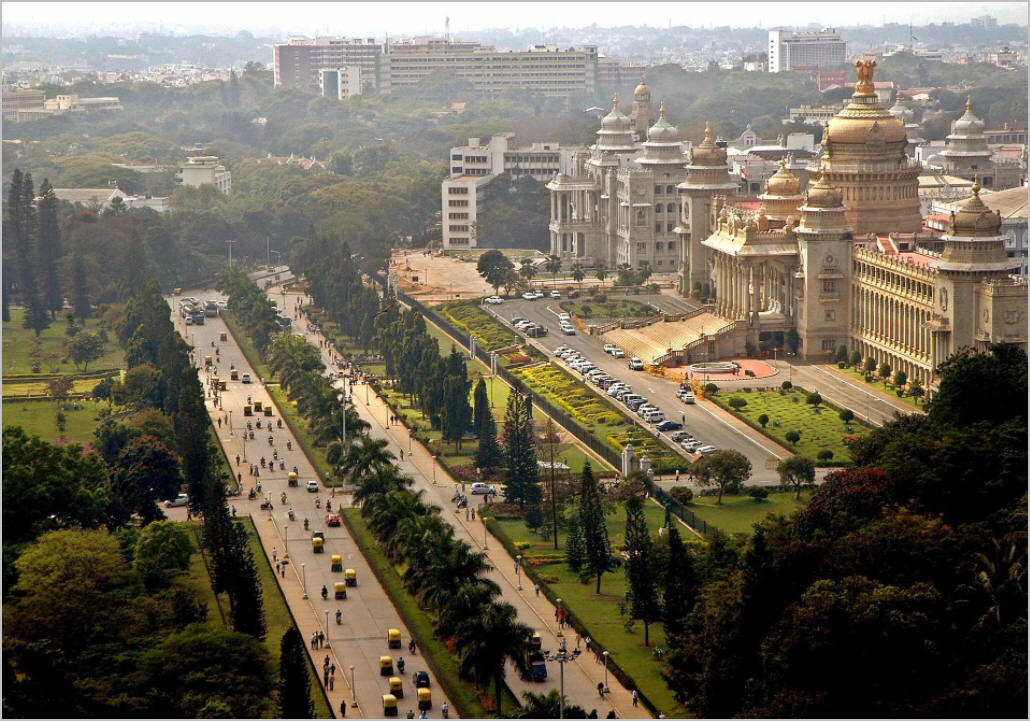 An image from Bangalore, karnataka, India
.
.
Click the link below for images:
.
__________________________________________
September 27, 2021
Mohenjo
Business, Food For Thought, Human Interest, Science, Technical
amazon, business, Business News, current-events, Future, Hotels, human-rights, medicine, mental-health, research, Science, Science News, technology, Technology News, travel, vacation

Click the link below the picture
.
The year was 1993 and, aged 16, I was about to sit my Geography GCSE exam. This was an ‘old school’ style public examination, held in the school’s gymnasium. A stifling odor of floor wax and dust hung heavy in the air. Victorian-era single desks featuring ink wells that had been utterly redundant for about three generations were arranged into rows with unerring precision. The silence was so unnatural and oppressive, it seemed to have a tangible density.
Nonetheless, I had crammed for this exam like a champion and was feeling confident. I took a deep breath, opened my examination booklet, and glanced over the first page of questions. A gut-wrenching realization quickly dawned on me, captured perfectly by a single piece of graffiti etched into the haggard surface of my desk. It read: ‘Oh Sh*t! There goes college, 1992.’
Clearly, I hadn’t been the only one whose confidence in their exam preparation was misplaced. However, it wouldn’t be until I started teaching psychology some 12 years later that I fully understood why. Here’s the bad news: research from psychology indicates that our ability to accurately monitor and evaluate our level of knowledge or skill (referred to as metacognitive ability) is often flawed. These flaws tend to give us an inflated perception of our knowledge and understanding, encouraging us to persevere with ineffective methods of studying that quietly, but persistently, undermine our efforts to learn. It’s easy to demonstrate this by examining some preferred study practices and considering the misconceptions about learning that they reflect. Let’s kick off things by looking at that perennial favorite: cramming.
.
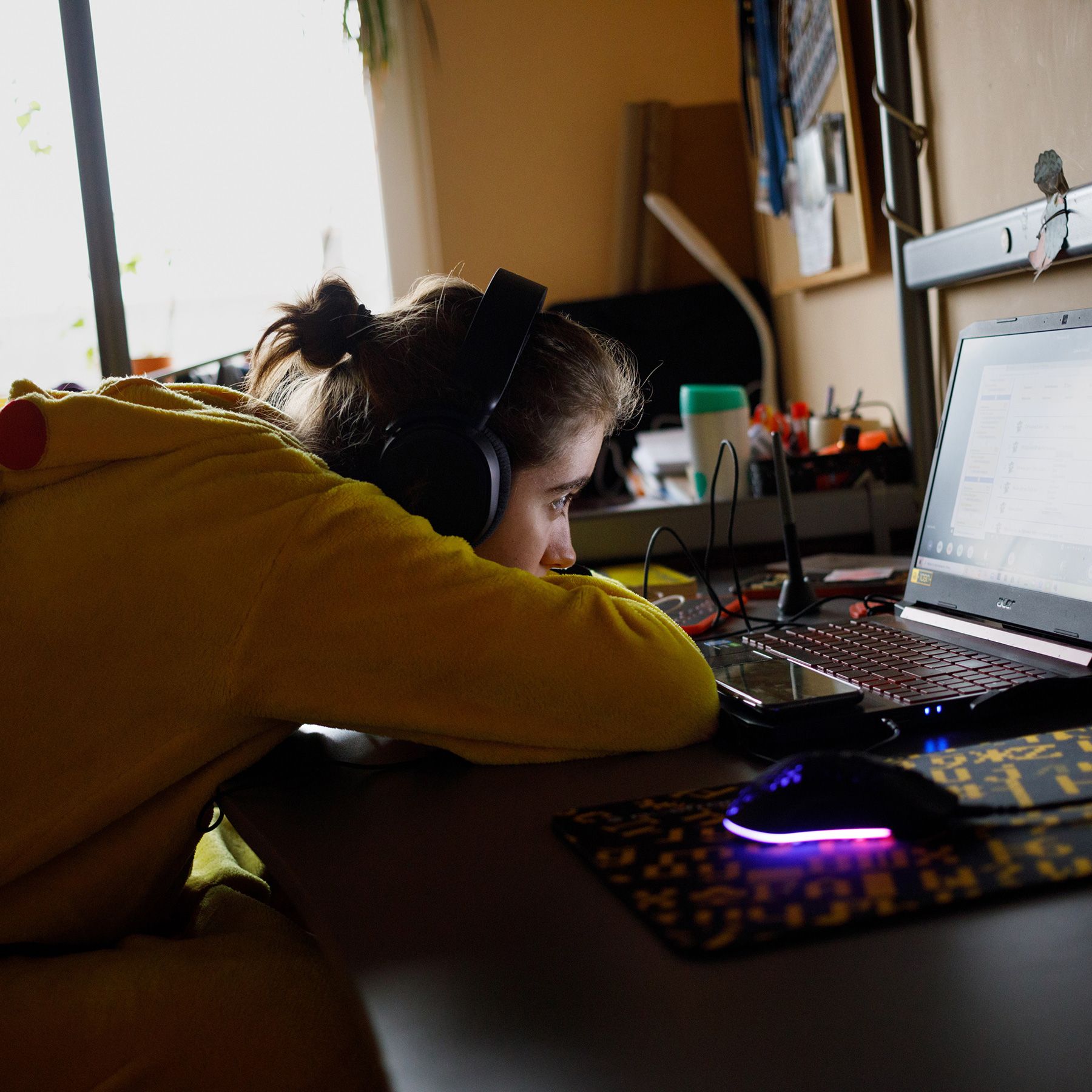 Photo by Piotr Malecki/Panos Pictures
.
.
Click the link below for the article:
.
__________________________________________
September 27, 2021
Mohenjo
Business, Food For Thought, Human Interest, Made Me Laugh, Political
amazon, business, Business News, current-events, Future, Hotels, human-rights, medicine, mental-health, research, Science, Science News, technology, Technology News, travel, vacation

Click the link below the picture
.
Nick Anderson/Tribune Content Agency
.
 Slide 1
.
.
Click the link below for the slideshow (66 slides):
.
__________________________________________
September 27, 2021
Mohenjo
Business, Crime, Food For Thought, Human Interest, missed News, Political, Science, Technical
amazon, business, Business News, current-events, Future, Hotels, human-rights, medicine, mental-health, research, Science, Science News, technology, Technology News, travel, vacation
.
News You might have missed!
Use your browser or smartphone back arrow (<-) to return to this table for your next selection.
.
__________________________________________
September 26, 2021
Mohenjo
Business, Enthralling, Human Interest, Photographs
amazon, business, Business News, current-events, Future, Hotels, human-rights, medicine, mental-health, research, Science, Science News, technology, Technology News, travel, vacation
Click the link below the picture
.
Zion National Park is an American national park located in southwestern Utah near the town of Springdale. A prominent feature of the 229-square-mile (590 km2) park is Zion Canyon, which is 15 miles (24 km) long and up to 2,640 ft (800 m) deep. The canyon walls are reddish and tan-colored Navajo Sandstone eroded by the North Fork of the Virgin River. The lowest point in the park is 3,666 ft (1,117 m) at Coalpits Wash and the highest peak is 8,726 ft (2,660 m) at Horse Ranch Mountain. Located at the junction of the Colorado Plateau, Great Basin, and Mojave Desert regions, the park has unique geography and a variety of life zones that allow for unusual plant and animal diversity. Numerous plant species as well as 289 species of birds, 75 mammals (including 19 species of bats), and 32 reptiles inhabit the park’s four life zones: desert, riparian, woodland, and coniferous forest. Zion National Park includes mountains, canyons, buttes, mesas, monoliths, rivers, slot canyons, and natural arches.
Human habitation of the area started about 8,000 years ago with small family groups of Native Americans, one of which was the semi-nomadic Basketmaker Anasazi (c. 300 CE). Subsequently, the Virgin Anasazi culture (c. 500) and the Parowan Fremont group developed as the Basketmakers settled in permanent communities. Both groups moved away by 1300 and were replaced by the Parrusits and several other Southern Paiute subtribes. Mormons came into the area in 1858 and settled there in the early 1860s. In 1909, President William Howard Taft named the area Mukuntuweap National Monument in order to protect the canyon. In 1918, the acting director of the newly created National Park Service, Horace Albright, drafted a proposal to enlarge the existing monument and change the park’s name to Zion National Monument, Zion being a term used by the Mormons. According to historian Hal Rothman: “The name change played to a prevalent bias of the time. Many believed that Spanish and Indian names would deter visitors who, if they could not pronounce the name of a place, might not bother to visit it. The new name, Zion, had greater appeal to an ethnocentric audience.” On November 19, 1919, Congress redesignated the monument as Zion National Park, and the act was signed by President Woodrow Wilson. The Kolob section was proclaimed a separate Zion National Monument in 1937 but was incorporated into the national park in 1956.
The geology of the Zion and Kolob canyons area includes nine formations that together represent 150 million years of mostly Mesozoic-aged sedimentation. At various periods in that time warm, shallow seas, streams, ponds and lakes, vast deserts, and dry near-shore environments covered the area. Uplift associated with the creation of the Colorado Plateau lifted the region 10,000 feet (3,000 m) starting 13 million years ago. Wikipedia
.
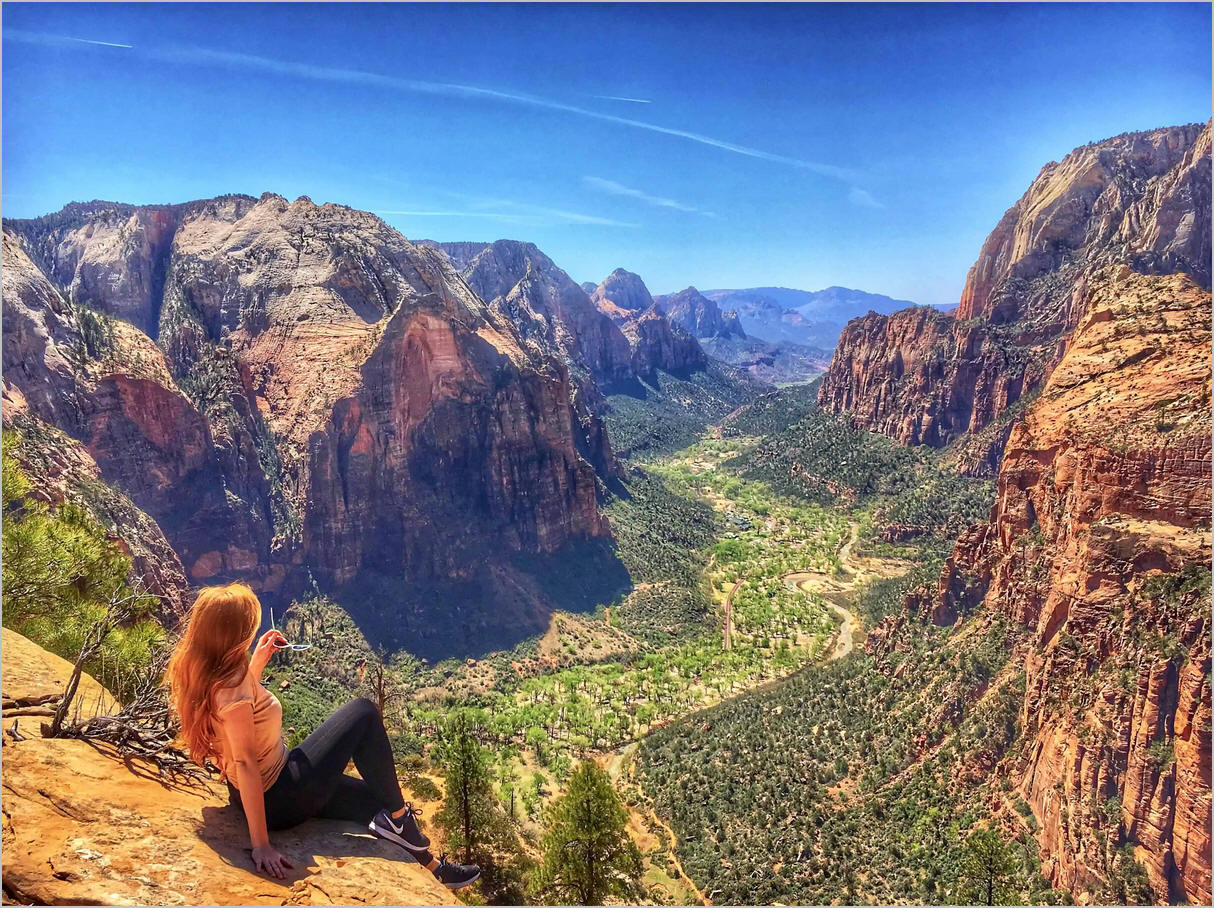 An image from Zion National Park
.
.
Click the link below for images:
.
__________________________________________
September 26, 2021
Mohenjo
Business, Food For Thought, Human Interest, sports, Technical
amazon, business, Business News, current-events, Future, Hotels, human-rights, medicine, mental-health, research, Science, Science News, technology, Technology News, travel, vacation
Some content on this page was disabled on April 15, 2025 as a result of a DMCA takedown notice from Guardian Media Group. You can learn more about the DMCA here:
https://wordpress.com/support/copyright-and-the-dmca/
Older Entries
Newer Entries
 James' World 2