May 28, 2022
Mohenjo
Business, Enthralling, Human Interest, Photographs
amazon, business, Business News, current-events, Future, Hotels, human-rights, medicine, mental-health, research, Science, Science News, technology, Technology News, travel, vacation

Click the link below the picture
.
Amami Guntō National Park is a national park in Kagoshima Prefecture, Japan. Established in 2017, the park comprises a land area of 42,181 ha (104,230 acres) and a sea area of 33,082 ha (81,750 acres). The national park includes areas of these islands: Tokunoshima, Kikai, Amami, Yoron, Okinoerabujima, Uke Island, Kakeromajima, and Yoroshima.
On 15 February 1974, the Amami Guntō Quasi-National Park was founded on Amami Ōshima. On 7 March 2017, the Amami Guntō National Park was established and it subsumed the former Amami Guntō Quasi-National Park. The Amami Guntō National Park includes parts of the municipalities of Amagi, Amami, China, Isen, Kikai, Setouchi, Tatsugō, Tokunoshima, Uken, Wadomari, Yamato, and Yoron.
The designation of the new National Park, alongside that of Yanbaru National Park, is part of the movement to have Amami-Oshima Island, Tokunoshima Island, the northern part of Okinawa Island, and Iriomote Island inscribed on the UNESCO World Heritage List.
The Amami Wildlife Center is managed by Japan’s Ministry of the Environment to protect and preserve the natural ecosystem of the Amami Islands.
Total designated area is 75,263 ha (185,980 acres) (land: 42,181 ha, water: 33,082 ha). It is a World Heritage Site candidate. The national park consists of areas from these islands: Tokunoshima, Kikai, Amami, Yoron, Okinoerabujima, Uke Island, Kakeromajima and Yoroshima. This national park features coral reefs, mangrove forests, and tidal flats. A unique ecosystem has developed with endemic species such as the Amami rabbit, Ryukyu spiny rat, birds: Amami’s jay, Ryukyu robin. There are also snakes such as Habu and amphibians such as Ishikawa’s frog, Japanese warty newt, and the Ryūkyū scops owl. Wikipedia
.
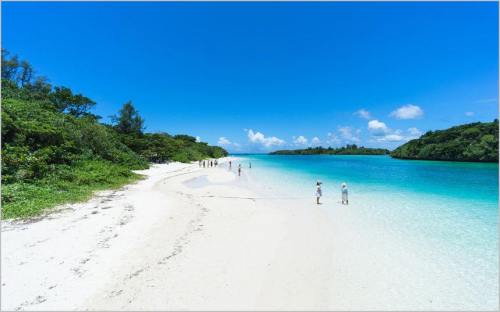 An image from Amami Gunto National Park
.
.
Click the link below for images:
.
__________________________________________
May 28, 2022
Mohenjo
Business, Food For Thought, Human Interest, Science, Technical
amazon, business, Business News, current-events, Future, Hotels, human-rights, medicine, mental-health, research, Science, Science News, technology, Technology News, travel, vacation

Click the link below the picture
.
Mobility is everything, or so the fitness gurus would have you believe. But the focus on mobility and movement isn’t new. It’s as old as 1965 when a Japanese firm launched the pedometer and popularised the idea that taking 10,000 steps daily leads to better health. The company was Yamasa Clock and Instrument Company, and its pedometer was called Manpo-kei, which translates to “10,000 steps meter” in Japanese. A 2019 study on daily step count by researchers from Harvard Medical School, surmised that this is where the magic number of 10,000 steps comes from. In a separate study published in Lancet last month, researchers wrote that “Although 10,000 steps per day is widely promoted to have health benefits, there is little evidence to support this recommendation.”
For this study, published in the Lancet, researchers analyzed 15 studies that covered the health and fitness of over 47,000 people, over a period of seven years. They found that while “10,000 steps” is a myth, there are health benefits for adults who clocked more steps. Adults who walked more had a 40% to 53% lower risk of mortality. They also found that taking more steps per day was associated with a progressively lower risk of all-cause mortality but varied by age. There was progressively lower risk of mortality among adults aged 60 years and older who walked about 6,000–8,000 steps per day, and among adults younger than 60 years who walked about 8,000–10,000 steps per day.
.
 Should you be walking 10,000 steps everyday? (Istockphoto)
.
.
Click the link below for the article:
.
__________________________________________
May 28, 2022
Mohenjo
Business, Food For Thought, Human Interest, Medical, Science, Technical
amazon, business, Business News, current-events, Future, Hotels, human-rights, medicine, mental-health, research, Science, Science News, technology, Technology News, travel, vacation

Click the link below the picture
.
It’s likely you eat three meals a day – modern life is designed around this way of eating. We’re told breakfast is the most important meal of the day, we’re given lunch breaks at work, and then our social and family lives revolve around evening meals. But is this the healthiest way to eat?
Before considering how frequently we should eat, scientists urge us to consider when we shouldn’t.
Intermittent fasting, where you restrict your food intake to an eight-hour window, is becoming a huge area of research.
Giving our bodies at least 12 hours a day without food allows our digestive system to rest, says Emily Manoogian, clinical researcher at the Salk Institute for Biological Studies in California, and author of a 2019 paper entitled “When to eat”.
Rozalyn Anderson, an associate professor at the University of Wisconsin’s School of Medicine and Public Health, has studied the benefits of calorie restriction, which is associated with lower levels of inflammation in the body.
“Having a fasting period every day could reap some of these benefits,” she says. “It gets into the idea that fasting puts the body in a different state, where it’s more ready to repair and surveil for damage and clear misfolded proteins.” Misfolded proteins are faulty versions of ordinary proteins, which are molecules that perform a huge range of important jobs in the body. Misfolded proteins have been associated with a number of diseases.
.
 Ok
Ok
.
.
Click the link below for the article:
.
__________________________________________
May 28, 2022
Mohenjo
Crime, Food For Thought, Human Interest, Medical, missed News, Political, Science, Technical
amazon, business, Business News, current-events, Future, Hotels, human-rights, medicine, mental-health, research, Science, Science News, technology, Technology News, travel, vacation

.
News You might have missed!
Use your browser or smartphone back arrow (<-) to return to this table for your next selection.
.
__________________________________________
May 27, 2022
Mohenjo
Business, Enthralling, Human Interest, Photographs
amazon, business, Business News, current-events, Future, Hotels, human-rights, medicine, mental-health, research, Science, Science News, technology, Technology News, travel, vacation

Click the link below the picture
.
Guyana, officially the Co‑operative Republic of Guyana, is a country on the northern mainland of South America. The capital city is Georgetown. Guyana is bordered by the Atlantic Ocean to the north, Brazil to the south and southwest, Venezuela to the west, and Suriname to the east. With 215,000 square kilometers (83,000 sq mi), Guyana is the third-smallest sovereign state by area in mainland South America after Uruguay and Suriname, and is the second-least populous sovereign state in South America after Suriname; it is also one of the least densely populated countries on Earth. It has a wide variety of natural habitats and very high biodiversity.
The region known as “the Guianas” consists of the large shield landmass north of the Amazon River and east of the Orinoco River known as the “land of many waters”. There are nine indigenous tribes residing in Guyana: the Wai Wai, Macushi, Patamona, Lokono, Kalina, Wapishana, Pemon, Akawaio, and Warao. Historically dominated by the Lokono and Kalina tribes, Guyana was colonized by the Dutch before coming under British control in the late 18th century. It was governed as British Guiana, with a mostly plantation-style economy until the 1950s. It gained independence in 1966 and officially became a republic within the Commonwealth of Nations in 1970. The legacy of British rule is reflected in the country’s political administration and diverse population, which includes Indian, African, Amerindian, Chinese, Portuguese, other European, and various multiracial groups. In 2017, 41% of the population of Guyana lived below the poverty line.
Guyana is the only South American nation in which English is the official language. However, the majority of the population speak Guyanese Creole, an English-based creole language, as a first language. Guyana is part of the Anglophone Caribbean. It is part of the mainland Caribbean region maintaining strong cultural, historical, and political ties with other Caribbean countries as well as serving as the headquarters for the Caribbean Community (CARICOM). In 2008, the country joined the Union of South American Nations as a founding member.
The name “Guyana” derives from Guiana, the original name for the region that formerly included Guyana (British Guiana), Suriname (Dutch Guiana), French Guiana, and parts of Colombia, Venezuela, and Brazil. According to the Oxford English Dictionary, “Guyana” comes from an indigenous Amerindian language and means “land of many waters”. The Co‑operative Republic in the official name referred to co-operative socialism. Wikipedia
.
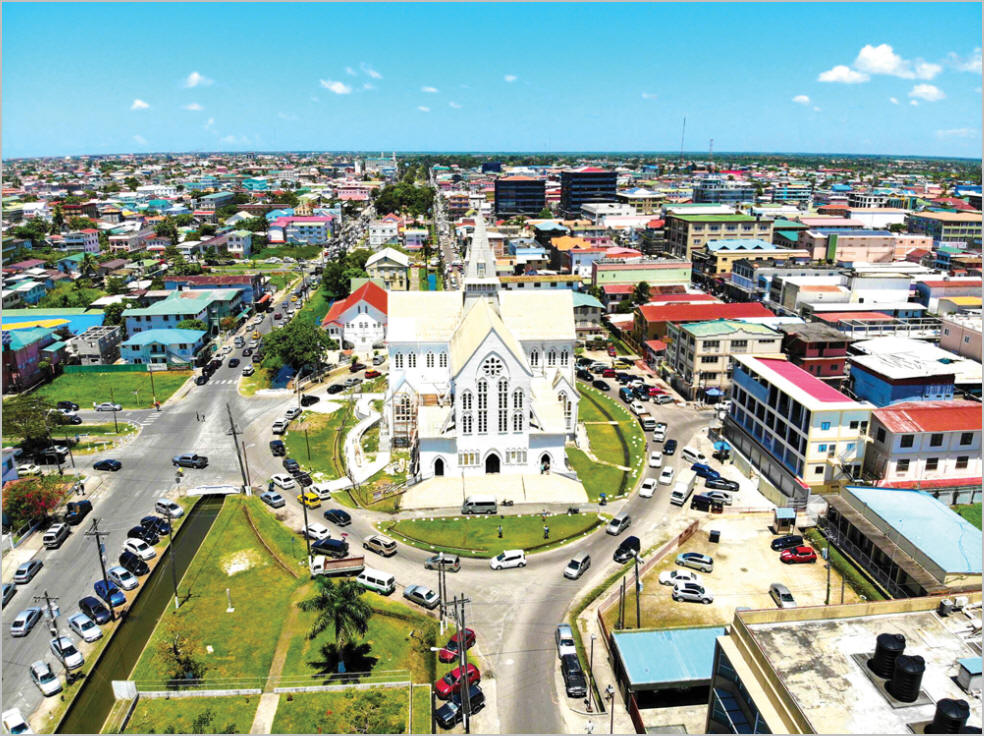 An image from Guyana
.
.
Click the link below for images:
.
__________________________________________
May 27, 2022
Mohenjo
Business, Food For Thought, Human Interest, Science, Technical
amazon, business, Business News, current-events, Future, Hotels, human-rights, medicine, mental-health, research, Science, Science News, Technology News, travel, vacation

Click the link below the picture
.
¡Hola, Papi!
I regret not thinking of you sooner, but I think you’re the man for this question.
How does a person deal with knowing that an online presence would likely increase their chances of success in their field but they don’t want to be known online? My career would undoubtedly benefit and I care a lot about my work, so I might have to suck it up, put myself out there, and face the horror of a public Instagram profile with hashtagged posts. Sharing art is hard enough without the mortifying ordeal of being online.
My anxiety is specifically about being on social media. I’m severely online. You and I both know it’s bad out there. How does anyone see an upside nowadays?
I also feel like a hypocrite. I consume and engage with public/semi-public content (what feels like every hour of every day), but I don’t add to it. Can you call that a “lurker mentality”? How do you participate in the world?
Signed,
Digital Debutante
.
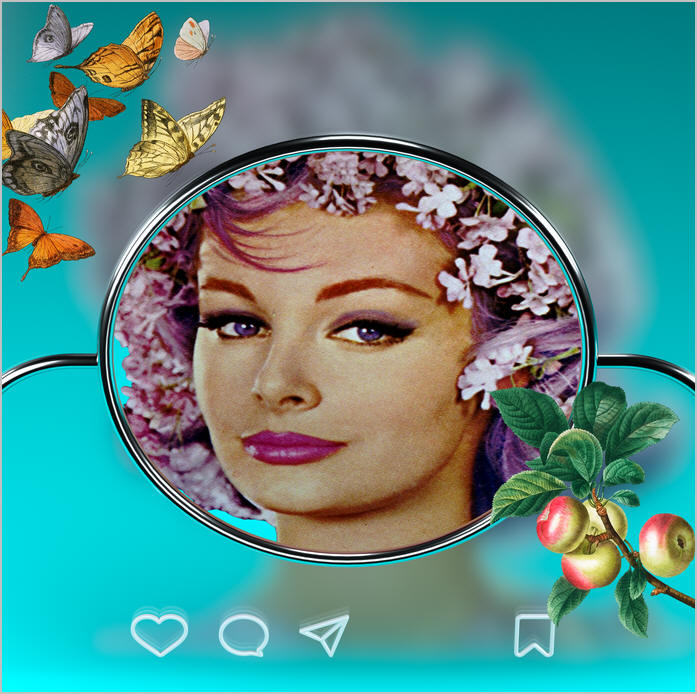 Photo-Illustration: Pedro Nekoi
.
.
Click the link below for the article:
.
__________________________________________
May 27, 2022
Mohenjo
Business, Food For Thought, Human Interest, Science, Technical
amazon, business, Business News, current-events, Future, Hotels, human-rights, medicine, mental-health, research, Science, Science News, technology, Technology News, travel, vacation

Click the link below the picture
.
Are you tackling a new and difficult problem at work? Recently promoted and trying to both understand your new role and bring a fresh perspective? Or are you new to the workforce and seeking ways to meaningfully contribute alongside your more experienced colleagues? If so, critical thinking — the ability to analyze and effectively break down an issue in order to make a decision or find a solution — will be core to your success. And at the heart of critical thinking is the ability to formulate deep, different, and effective questions.
Consider this: Clayton M. Christensen was perhaps the greatest management thinker of the last 30 years. His “How Will You Measure Your Life” is a Harvard Business Review bestseller and one of the five best articles on personal development I’ve read, and his theories on innovation and disruption changed business. But my most memorable encounter with Christensen was a talk at Harvard Business School where he discussed his own approach to his time as an MBA student decades before.
He said HBS was where he learned to ask great questions. Impressed with his classmates, he would carry a notebook to class and write down the most insightful questions other students asked. He’d then go home and reflect on how and why the students had formulated them. Ever curious, Christensen laid the foundation for his future insights by first studying the process by which people formulated their best queries.
.
 Juan Moyano/Getty Images
.
.
Click the link below for the article:
.
__________________________________________
May 27, 2022
Mohenjo
Arts, Crime, Food For Thought, Human Interest, Medical, missed News, Political, Science, Technical
amazon, business, Business News, current-events, Future, Hotels, human-rights, medicine, mental-health, research, Science, Science News, technology, Technology News, travel, vacation
.
News You might have missed!
Use your browser or smartphone back arrow (<-) to return to this table for your next selection.
.
__________________________________________
May 26, 2022
Mohenjo
Business, Enthralling, Human Interest, Photographs
amazon, business, Business News, current-events, Future, Hotels, human-rights, medicine, mental-health, research, Science, Science News, technology, Technology News, travel, vacation
Click the link below the picture
.
Cape Le Grand National Park is a national park in Western Australia, 631 km (392 mi) south-east of Perth and 56 km (35 mi) east of Esperance. The park covers an area of 31,801 hectares (78,580 acres) The area is an ancient landscape which has been above sea level for well over 200 million years and remained unglaciated. As a result, the area is home to many primitive relict species. Established in 1966, the park is managed by the Department of Parks and Wildlife. The name Le Grand is from one of the officers on L’Espérance, one of the ships in the 1792 expedition of Bruni d’Entrecasteaux.
The largely granite shoreline and white sand beaches are picturesque features of the area. The park is a used for fishing, off-roading, tourism, and hiking. Beaches within the Park include those at Lucky Bay, Rossiter Bay, Hellfire Bay, Le Grand Beach, and Thistle Cove. The islands and waters to the south of the park are known as the Recherche Archipelago Nature Reserve, another protected area of the Recherche Archipelago and nearby coastal regions. The Cape Arid National Park is located to the east. The southwest section of the park is dominated by rock outcrops of gneiss and granite. These form a distinctive chain of peaks including Mount Le Grand (345 m), Frenchman Peak (262 m), and Mississippi Hill (180 m, named after the Mississippi, a French whaler). Further inland, the park comprises mostly heath-covered sandplain, interspersed with swamps and pools of freshwater.
The sandplains support dense stands of banksias.
Other flora that can be found around the park include species of Melaleuca, Grevillea, sheoak, Christmas tree and grass trees. Wildflower blooms peak in the austral spring, lasting until October and species such as blue china orchid Cyanicula gemmata, Diuris corymbosa, Hakea laurina, Thysanotus sparteus and Thelymitra macrophylla are represented within the park.
Fauna that are commonly found within the park include bandicoots, pygmy honey possums, ring tailed possums, quenda and western grey kangaroos. Some of the relict species with gondwanan links that are found within the park include species of legless lizard, like the common scaly-foot Pygopus lepidopodus, and Delma fraseri, Delma australis and Aprasia striolata. The ancient, although non-gondwanan, blind snake Ramphotyphlops australis is also found within the park. Endemic frogs found within the area include the |quacking frog Crinia georgiana, the banjo frog Limnodynastes dorsalis and the humming frog Neobatrachus pelobatoides. Wikipedia
.
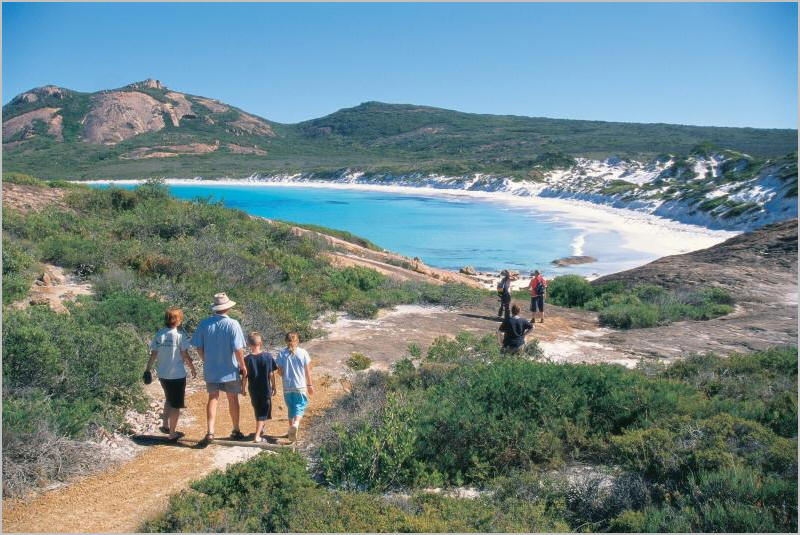 An image from Cape Le Grand National Park
.
.
Click the link below for images:
.
__________________________________________
May 26, 2022
Mohenjo
Business, Food For Thought, Human Interest, Science, Technical
amazon, business, Business News, current-events, Future, Hotels, human-rights, medicine, mental-health, research, Science, Science News, technology, Technology News, travel, vacation

Click the link below the picture
.
We all love a 4.0-grade point average, a complete winning record for the season, or a flawless performance review at the end of the year. Perfection makes us feel comfortable and safe.
Growing up as a Taiwanese American, I often found myself struggling with perfectionism. My parents gave me a map with specific stopping points — and any detours would be a sign of failure.
There was no discussion about the benefits of failure. Everything was framed around avoiding it at all costs, and over time it became damaging to my mental health.
As a psychologist, I see this same pattern with a lot of my patients today: No one invites us to fail as a path to success.
.

Keep It 100 | Digitalvision | Getty Images
.
.
Click the link below for the article:
.
__________________________________________
Older Entries
Newer Entries

