Amboseli National Park is in southern Kenya. It’s known for its large elephant herds and views of immense Mount Kilimanjaro, across the border in Tanzania. Observation Hill offers panoramas of the peak and the park’s plains and swamps. Varied wildlife includes giraffes, zebras, cheetahs and hundreds of bird species. The western section is dominated by vast Lake Amboseli, which is dry outside the rainy season.
What are dreams for? A handful of theories predominate. Sigmund Freud famously contended that they reveal hidden truths and wishes. [1] More recent research suggests that they may help us process intense emotions, [2] or perhaps sort through and consolidate memories, [3] or make sense of random neuron activity, [4] or rehearse responses to threatening situations. [5] Others argue that dreams have no evolutionary function, but simply dramatize personal concerns. [6]
Despite being largely unsupported by evidence, Freud’s view maintains a strong following around the world. Researchers found that students in the U.S., South Korea, and India were much more likely to say that dreams reveal hidden truths than to endorse better-substantiated theories. [7] Relatedly, people put great stock in their dreams: In the same study, respondents said that dreaming about a plane crash would cause them more anxiety than an official warning about a terrorist attack.
Even if dreams can’t foretell the future, they seem to expose our shared fascinations. The majority of dreams occur during REM sleep cycles, of which the average person has four or five a night. Eight percent of dreams are about sex, a rate that holds for both women and men—though women are twice as likely as men to have sexual dreams about a public figure, while men are twice as likely to dream about multiple partners.
Something strange is happening at America’s colleges and universities.A movement is arising, undirected and driven largely by students, to scrub campuses clean of words, ideas, and subjects that might cause discomfort or give offense. Last December, Jeannie Suk wrote in an online article for The New Yorker about law students asking her fellow professors at Harvard not to teach rape law—or, in one case, even use the word violate (as in “that violates the law”) lest it cause students distress. In February, Laura Kipnis, a professor at Northwestern University, wrote an essay in The Chronicle of Higher Education describing a new campus politics of sexual paranoia—and was then subjected to a long investigation after students who were offended by the article and by a tweet she’d sent filed Title IX complaints against her. In June, a professor protecting himself with a pseudonym wrote an essay for Vox describing how gingerly he now has to teach. “I’m a Liberal Professor, and My Liberal Students Terrify Me,” the headline said. A number of popular comedians, including Chris Rock, have stopped performing on college campuses (see Caitlin Flanagan’s article in this month’s issue). Jerry Seinfeld and Bill Maher have publicly condemned the oversensitivity of college students, saying too many of them can’t take a joke.
Rent was due and, once again, I didn’t have it. I did, however, have three maxed-out credit cards, a negative account balance, and a closet full of useless junk I’d bought during a 2 a.m. online shopping binge a few weeks prior.
I wasn’t financially illiterate. I knew how credit scores can be damaged and interest charges accumulate over time thanks to my mom, a single parent who taught me to prioritize financial independence and frequently references the teachings of financial expert and lesbian style icon Suze Orman.
I fully understood what I was supposed to be doing with my money, and that I didn’t have much of it. As a freelance writer, I don’t make the kind of money to support a fun, quirky shopping addiction a la ”Confessions Of A Shopaholic.” I wasn’t trying to live out a broke-but-fabulous Carrie Bradshaw fantasy, and I was way past the point in my 20s when being broke stops being cute.
A zorse is the offspring of a zebra stallion and a horse mare.This cross is also called a zebrula, zebrule, or zebra mule. The rarer reverse pairing is sometimes called a horbra, hebra, zebrinny, or zebret. Like most other animal hybrids, the zorse is sterile.
The air is getting more dangerous to breathe all over the world — and a suite of companies are hoping to capitalize with a new fashion item.
Last fall, two different wildfires destroyed huge swaths of California. The Camp Fire in Northern California covered 153,336 acres, destroyed nearly 20,000 structures, and killed 85 people; it also left a shroud of smoke and ash hovering over the area. Public schools in five Bay Area counties were closed, and residents were warned to stay inside and protect their lungs from the dangerous air quality. Stores for miles around sold out of everything from surgical masks to the recommended N95 painter’s masks — the only kind that can effectively filter 95 percent of the tiny particles that do the most damage to your lungs.
Walking around the Bay Area in the weeks following the Camp Fire felt like living in a dystopian future — the sky a matte grey, the sun a red, alien-like orb, the streets empty save a handful of souls, nearly all wearing painter’s masks or bandannas or scarves over their mouths. Those two weeks might have been not just a dark blip, but rather a glimpse into our collective future. And there are entrepreneurs poised to capitalize on it. Because in the tomorrow that the Camp Fire portends, we’re all going to need a good face mask.
.
Air filtering masks are already popular across Asia, but will they become common in the US?Sarah Lawrence for Vox
Robert Mueller’s investigation of Russian interference in the 2016 presidential election is ramping up after a midterm election hiatus — just as Democrats have taken control of the House of Representatives.
.
Photo illustration by Ji Sub Jeong/HuffPost; Photos: Getty Images
(From left) Deputy Attorney General Rod Rosenstein, acting Attorney General Matt Whitaker, special counsel Robert Mueller and President Donald Trump.
Jal Mahal is a palace in the middle of the Man Sagar Lake in Jaipur city, the capital of the state of Rajasthan, India.The palace and the lake around it were renovated and enlarged in the 18th century by Maharaja Jai Singh II of Amber.
Film and Writing Festival for Comedy. Showcasing best of comedy short films at the FEEDBACK Film Festival. Plus, showcasing best of comedy novels, short stories, poems, screenplays (TV, short, feature) at the festival performed by professional actors.

 An image from Amboseli National Park, Kenya





 Zorse
Zorse
/cdn.vox-cdn.com/uploads/chorus_image/image/63256252/Air_Masks_2.0.png)


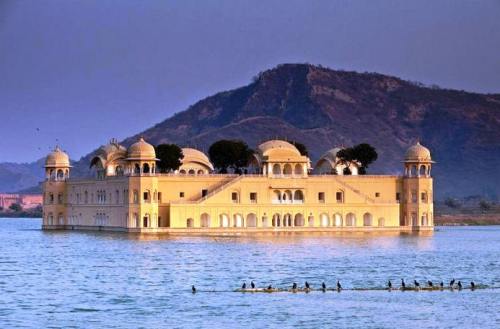 An image of Jal Mahal
