The Sunday lunch rush was underway at the Surf and Turf Lodge in Bessemer City, N.C., a restaurant about 30 miles west of Charlotte. Inside the rustic eatery with wooden plank walls, Roger Self, a former police officer turned private investigator, was eating appetizers with his family. Around noon, the 62-year-old got up from the table. The family thought he was going to the restroom, the Gaston Gazette later reported.
Moments later, waiter Brandon Wilson was heading to check on the table when a sound shattered the dining room.
“I saw a white Jeep just fly past my face,” Wilson told the Gazette. “It was so unreal. I saw chairs and tables and cups just flying everywhere. It just sounded like a tornado.”
Rasdiono remembers when the sea was a good distance from his doorstep, down a hill. Back then he opened the cramped, gaily painted bayside shack he named the Blessed Bodega, where he and his family sell catfish heads, spiced eggs and fried chicken.
It was strange, Rasdiono said. Year by year, the water crept closer. The hill gradually disappeared. Now the sea loomed high over the shop, just steps away, held back only by a leaky wall.
With climate change, the Java Sea is rising and weather here is becoming more extreme. Earlier this month another freakish storm briefly turned Jakarta’s streets into rivers and brought this vast area of nearly 30 million residents to a virtual halt.
In mid-July 2016, a retired American professor approached an adviser to Donald Trump’s presidential campaign at a symposium about the White House race held at a British university.
The professor took the opportunity to strike up a conversation with Carter Page, whom Trump had named a few months earlier as a foreign policy adviser.
But the professor was more than an academic interested in American politics — he was a longtime U.S. intelligence source. And, at some point in 2016, he began working as a secret informant for the FBI as it investigated Russia’s interference in the campaign, according to people familiar with his activities.
The role played by the source is now at the center of a battle that has pitted President Trump against his own Justice Department and fueled the president’s attacks on the special counsel’s investigation. In a Thursday tweet, he called the probe “a disgusting, illegal and unwarranted Witch Hunt.”
.
Carter Page, a former foreign-policy adviser to Donald Trump’s presidential campaign, had numerous encounters with an FBI informant in 2016. (Pavel Golovkin/AP)
The horses, a rumor of thundering hoofs and distant roars disappearing into the fog at the first turn, made an invisible loop around Pimlico Race Course’s liquid track, then suddenly reappeared out of the gauzy mist and came heaving and splashing down the homestretch. Out in front was the strapping chestnut colt named Justify, his white blaze the first thing to come into view. But behind him — and keeping pace, if not gaining — was a pack of rivals.
As he has across the entirety of his brief and meteoric career, Justify answered the challenge and prevailed Saturday, winning the 143rd Preakness Stakes and keeping alive his Triple Crown hopes.
Tested like never before, Justify, an overwhelming 2-5 favorite, ran neck-and-neck with rival Good Magic for much of the race, seized the lead coming out of the last turn and held off late-charging Bravazo down the stretch for a half-length victory, the smallest by far of his five career wins. Tenfold also closed hard and finished third by a neck. Good Magic faded to fourth.
.
Justify, with jockey Mike Smith aboard, holds off second-place Bravazo (8) and Tenfold (6) to capture the Preakness, giving him the first two legs of the Triple Crown. (Amber Searls/USA Today Sports)
Part of Vittorio Sebastiano’s job is to babysit a few million stem cells. The research professor of reproductive biology at Stanford University keeps the cells warm and moist deep inside the Lorry I. Lokey Stem Cell Research Building, one of the nation’s largest stem cell facilities. He’s joined there by an army of researchers, each with their own goals. His own research program is nothing if not ambitious: He wants to reverse aging in humans.
Stem cells are the Gary Oldman of cell types. They can reprogram themselves to carry out the function of virtually any other type of cell, and play a vital role in early development. This functional reprogramming is usually accompanied by an age reset, down to zero. Sebastiano figures that if he can separate these different kinds of reprogramming, he can open up a whole new kind of aging therapy. Nautilus caught up with him last month.
Recent projections show that by 2050, two-thirds of the global population will live in cities.Which makes it imperative that our future cities aren’t vast urban hellscapes but are instead smart urban centers with a dash of sci-fi: devices, roads, and lampposts all talking to each other – making life in cities safer and smoother. And this transformation…is already beginning
Some content on this page was disabled on April 15, 2025 as a result of a DMCA takedown notice from Guardian Media Group. You can learn more about the DMCA here:
Nineteen-ninety-eight changed the course of technology, which is to say that it changed the course of history. A nearly bankrupt relic of ’80s tech nostalgia released a gumdrop-shaped PC called the iMac. An innovative search engine originally known as BackRub became a company with an even stranger name. A fast-growing online bookstore hatched a plan to start selling, well, everything.
In hindsight, these were tectonic shifts, but they hardly registered as tremors compared to the earthquake emanating from Washington, D.C. On May 18, 1998, the U.S. Justice Department and 20 state attorneys general filed an antitrust suit against the most powerful tech company in America: Microsoft.
The then-23-year-old giant, which ruled the personal computer market with a despotic zeal, stood accused of using monopoly power to bully collaborators and squelch competitors. Its most famous victim was Netscape, the pioneering web browser, but everyone from Apple to American Airlines felt threatened by late-’90s Microsoft. The company was big enough to be crowned America’s most valuable firm, bold enough to compare attacks on its domain to Pearl Harbor, and, eventually, bad enough to be portrayed as a (semifictionalized) cadre of hypercapitalist murderers in a major motion picture. The “don’t be evil” optics that colored the rise of today’s tech giants (and have recently lost their efficacy) were a direct response to Microsoft’s tyrannical rule.
Having the sense to take a shortcut, the most direct route from point A to point B, doesn’t sound like a very impressive test of intelligence. Yet according to a new report appearing today in Nature, in which researchers describe the performance of their new navigational artificial intelligence, the system’s ability to explore complex simulated environments and find the shortest route to a goal put it in a class previously reserved for humans and other living things.
The surprising key to the system’s performance was that while learning how to navigate, the neural net spontaneously developed the equivalent of “grid cells,” sets of brain cells that enable at least some mammals to track their location in space.
For neuroscientists, the new work seems to offer important clues about how grid cells in living brains make us better navigators. It also shows how neural nets could contribute greatly to future neuroscience studies: Neil Burgess, a cognitive neuroscientist at University College London who was not involved with the study, suggested that the systems should “provide fertile ground for understanding how and why the human brain works as it does.”
Your 20s seem like the perfect age between childhood and adulthood. You’re out of school, finally, so you’ll have more freedom than ever before, and you won’t be pinned down with responsibilities from late-career advancements, serious relationships, or children. On top of that, since the life expectancy in the United States is now nearly 80, it feels like you have plenty of time to make up for any mistakes you make now.
That may be true, to some extent, but you’re also vulnerable in your 20s. Some of the financial mistakes you make in your 20s could end up haunting you the rest of your life.
Film and Writing Festival for Comedy. Showcasing best of comedy short films at the FEEDBACK Film Festival. Plus, showcasing best of comedy novels, short stories, poems, screenplays (TV, short, feature) at the festival performed by professional actors.

 Rammed restaurant with car
 Jakarta Is Sinking
 Carter Page, a former foreign-policy adviser to Donald Trump’s presidential campaign, had numerous encounters with an FBI informant in 2016. (Pavel Golovkin/AP)
 Justify, with jockey Mike Smith aboard, holds off second-place Bravazo (8) and Tenfold (6) to capture the Preakness, giving him the first two legs of the Triple Crown. (Amber Searls/USA Today Sports)

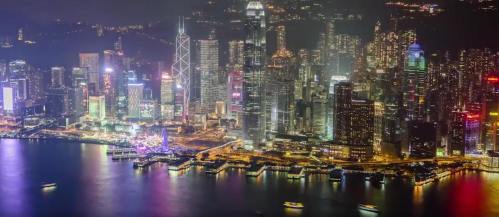 City of tomorrow
/cdn.vox-cdn.com/uploads/chorus_image/image/59774405/microsoft_antitrust_getty_ringer.0.jpg)


 7 Money Mistakes
