September 3, 2023
Mohenjo
Business, Food For Thought, Human Interest, Political, Science, Technical
amazon, business, Business News, current-events, Future, Hotels, human-rights, medicine, mental-health, research, Science, Science News, technology, Technology News, travel, vacation

Click the link below the picture
.
A chill on our skin tells us that fall is in the air. Our noses let us know someone nearby is baking bread — or that it’s trash day. The sounds of songbirds, emergency sirens, or music playing in a passing car stir emotions. Our eyes show us that leaves are changing color. And our taste buds determine if it’s pumpkin-spice season or the soup needs a tad more salt.
Our senses provide endless information, yet unless we’re paying attention, their input can be easy to overlook. We get used to certain sounds, sights, and smells to the point that we no longer actively experience them. People who’ve ever lived near train tracks, a freeway, or an airport may know that best once they no longer notice the sound of trains chugging along, traffic whizzing by, or planes overhead.
Intentionally tuning in to our sensory perceptions can have big benefits for well-being. Senses bring us into the present moment when anxiety or panic strikes. Paying attention to what we see, hear, smell, touch, and taste can bring us deeper into the present moment, evoke meaningful memories, and help us connect with other people in the world.
The popular 5-4-3-2-1 technique grounds us in the now by asking us to notice five things we can see in our immediate environment, four things we can touch (such as the ground beneath our feet or clothing against our skin), three things we can hear, two things we can smell, and one thing we can taste (even just the inside of the mouth counts). This exercise takes us away from our spiraling thoughts and instantly puts us into what’s happening in the moment.
“It’s very easy to get stuck in our heads, so we don’t notice the beauty that’s around us,” says Gretchen Rubin, author of The Happiness Project and Life in Five Senses: How Exploring the Senses Got Me Out of My Head and Into the World. “We start to feel like our experiences are drained and flat because we’re getting information through screens, or it feels hyper-processed because we’re eating foods that hit every bliss point in a way that’s not natural. Tuning in to our five senses makes us feel that connection.”Individually exploring the senses can be a great source of delight and personal discovery, according to Rubin. We learn about ourselves and what we really like and don’t like when we tune in to what our eyes, ears, nose, mouth, and skin are telling us.
.
 Cas Marotta
.
.
Click the link below for the article:
.
__________________________________________
September 3, 2023
Mohenjo
Business, Food For Thought, Human Interest, Political, Science, Technical
amazon, business, Business News, current-events, Future, Hotels, human-rights, medicine, mental-health, research, Science, Science News, technology, Technology News, travel, vacation

Click the link below the picture
.
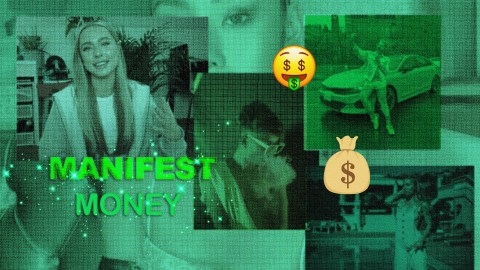
Manifestation coaches are reinventing the law of attraction — the belief that you attract what you focus on — for a new generation. They spread the philosophy that self-worth is the law of attraction and that we can manifest anything that’s in alignment with “our current state of subconscious worthiness.”
Dressed like fashion bloggers, these new leaders speak of “calling in” unseen powers to materialize new homes, jobs, or maybe just that perfect pair of jeans. On the To Be Magnetic website, one happy customer detailed manifesting a discounted white Le Creuset tea kettle. Other leaders skew more ambitious, selling $2,000 money workshops that reportedly draw in tenfold the class fee, thereby offering their own spin on the prosperity gospel.
Manifestation holds that there’s a tangible connection between the mind and cosmic workings. Spiritual influencers’ messages of overcoming personal struggles hold that you need a belief in yourself, since “the universe has your back.” That and with talk of modern-day issues — body image pressures, noncommittal boyfriends, sexist bosses — they’re instantly relatable.
Today, Jessie De Lowe, a manifestation coach and co-founder of the lifestyle site How You Glow, likens manifestation to life coaching. The majority of De Lowe’s clients are young, female, and college-educated. Though they possess countless advantages, she describes an unsatisfied group gripped by peer competitiveness and unrealistic expectations fueled by social media. They aren’t comparing themselves to the millennial next door. They’re comparing themselves to start-up founders and the globe-trotting friends clogging their Instagram feed. “They feel inadequate, like they’re never where they should be [already],” says De Lowe.
.
 Annelisa Leinbach / Big Think, Wikimedia Commons, Adobe Stock
.
.
Click the link below for the article:
.
__________________________________________
September 2, 2023
Mohenjo
Business, Food For Thought, Human Interest, Political, Science, Technical
amazon, business, Business News, current-events, Future, Hotels, human-rights, medicine, mental-health, research, Science, Science News, technology, Technology News, travel, vacation

Click the link below the picture
.
Being a good listener means having empathy. But empathy is one of the most misunderstood listening skills.
Empathy is what we feel when we are trying to understand the world from the perspective of another person.
One of the common misconceptions about empathy is that you need to have lived through what the other person has experienced to understand them.
Simply having the same experiences as another person is not enough to understand them. Two people can face the same challenges or difficulties, but respond in completely different ways. Your experiences are unique to you and no one else can know how you feel, even if they have been wearing your shoes. The only way to understand how someone feels is to listen to them, without assuming that they feel the same as you did in that situation.
So, let’s think about empathy in a different way.
Your unique perception of the world
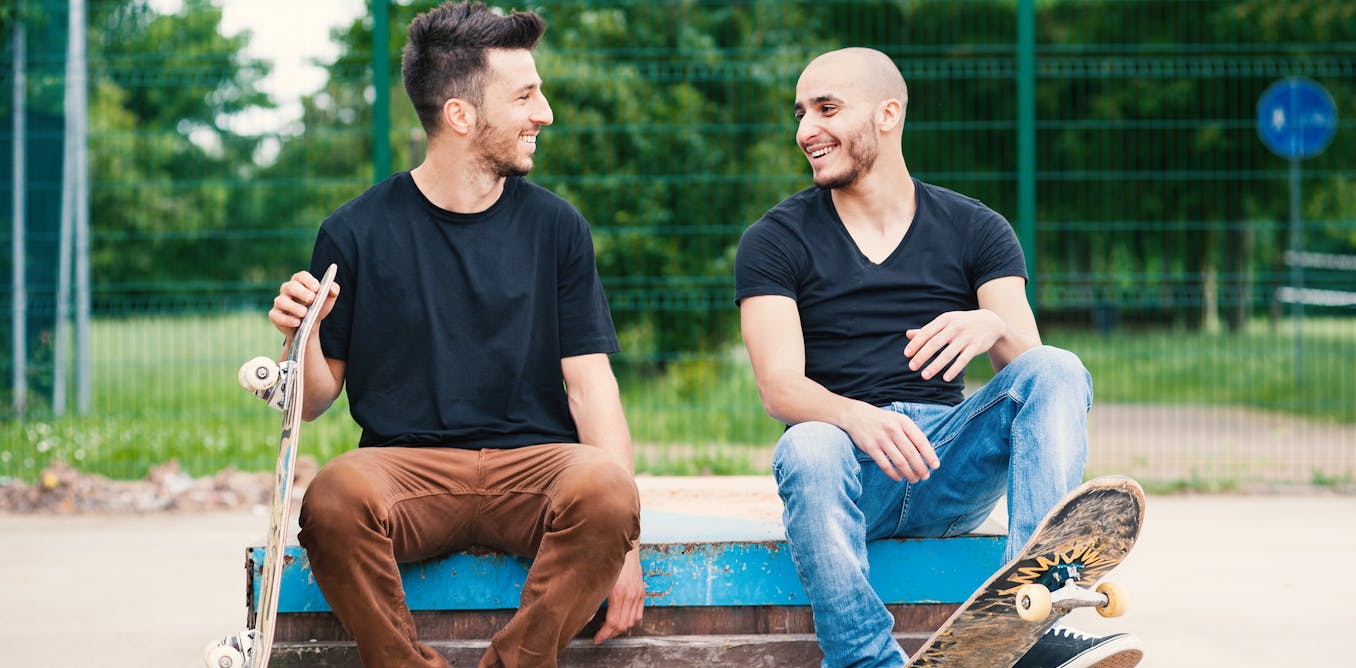
Imagine that every baby is born holding a wooden frame that contains a pane of glass. Whenever they look at anything in the world, they do so through this glass.
The glass is not completely clear when they receive it. It is slightly warped and discolored, and these are the marks of their genetics and biology. This means that everyone has a different piece of glass through which to see the world. And this glass becomes more marked as each of us moves through our lives. Every experience – good and bad – changes the glass. It warps, scratches, and smudges. Parts of it may be stained in different colors, like church windows. And so our view of the world changes as the glass changes over time.
We do not see the world as it truly exists. Rather, we see the world through a filter created by our biology and life experiences.
.
 pio3/Shutterstock
.
.
Click the link below for the article:
.
__________________________________________
September 2, 2023
Mohenjo
Business, Food For Thought, Human Interest, Political, Science, Technical
amazon, business, Business News, current-events, Future, Hotels, human-rights, medicine, mental-health, research, Science, Science News, technology, Technology News, travel, vacation
Click the link below the picture
.
After moving back in with her parents during the pandemic, Kayla Ibe was feeling restless. The 28-year-old public relations executive from Manahawkin, New Jersey, felt she wasn’t taking full advantage of her newfound perk of working remotely, so Ibe posted a half-joking tweet asking if anyone wanted to drive across the country with her. A few moments later, Ibe’s phone started buzzing.
It was her college friend Amaana Hasan. “She’s like, ‘I saw your tweet,’” Ibe reminisces. “‘Are you serious?’” Ibe wondered to herself if they would be compatible road trip partners considering they hadn’t been in proximity for years. “We were like, ‘Could we actually do this? Do we think we could make it work?’ By the end of the week, I had the first two weeks of our trip planned.”
The duo met the that way many new college students do: living in the same dorm during their freshman year. After graduating in 2016, they occasionally exchanged text messages. “We really didn’t have much of an in-person relationship post-college,” Ibe says, “which is what makes the story so fun.”
Ibe and Hasan had a preliminary conversation about the budget and the length of the trip. Because they would be working full-time, they decided to share hotel rooms to take advantage of free breakfasts and Wi-Fi. They committed to making lunch and dinner in Ibe’s mini Instant Pot and took turns cooking, from penne in Bryce Canyon to chili in Moab, Utah.
Initially, Ibe was nervous to broach other topics surrounding traveling together. “I didn’t want to be like, ‘I’m anticipating that we’re going to fight. How are you going to handle that?’” But on the first day of the trip, Ibe blurted out a question in the car about just that. Hasan’s answer was more relaxed than she anticipated. Ibe could stay in the room, and Hasan would go to the lobby or for a drive to give them space.
The conversation prepared the mates for an afternoon at Zion National Park when they had differing visions for their day. After a hike, Ibe wanted to do another, but Hasan wanted to go back to the hotel and nap. Hasan had put Ibe on her car insurance before the trip, so after a brief bit of tension, she suggested Ibe drop her off at the hotel and take the car to embark on a solo excursion. “That was the moment,” Ibe says, “that I realized we’re on this trip together … but we can still have our own experiences. Not every little moment has to be shared.”
.
 Shondaland Staff
.
.
Click the link below for the article:
.
__________________________________________
September 1, 2023
Mohenjo
Business, Food For Thought, Human Interest, Political, Science, Technical
amazon, business, Business News, current-events, Future, Hotels, human-rights, medicine, mental-health, research, Science, Science News, technology, Technology News, travel, vacation

Click the link below the picture
.
On a warm July evening, I dove into bed and grabbed my phone, giddy and anxious. As I scrolled through TikTok, attempting to calm my nerves, a Google Calendar notification flashed on the screen: “VIDEO CALL WITH SIMONE.”
Before I could swipe the reminder away, Simone FaceTimed me. I attempted to rehearse my greeting as the call buffered: Should I keep it cool with a, “Hey, what’s good?” No, that sounds cold. What about a Keke Palmer-esque, “Girl!” No, that’s doing too much. “Good evening?” No, it’s not evening her time, that doesn’t even make sen—
“Girl!” Simone said with a chuckle.
I couldn’t help but crack a smile. As I’d learned over the course of our six-year friendship, her warmth never failed to replace my anxiety with joy.
“Damn, it’s been a minute.” she added.
Both are my fault. In 2020, after months holed up in my tiny Washington, D.C. apartment, I decided to wait out the winter at my mother’s cottage in Kenya. It was just what the doctor ordered, and a few months later, I decided to move to Nairobi permanently.
My move changed our friendship—it changed all of my friendships, actually. I tried to stay in touch with my friends stateside for a while, but as time went on, FaceTime dates became harder to plan, and fewer voice notes were exchanged via WhatsApp. Now, I don’t know if I can call any of them friends anymore—and my relationship with Simone felt like it was hanging by a thread.
Things in Kenya aren’t much better. Though I’m Kenyan by ethnicity, I grew up abroad, in the US and UK, and I’ve found that my foreign accent and perspective other me, even within my family. These days, my social life tends to begin and end with nights on the couch, re-watching Shameless with my boyfriend. I’m ashamed and terrified about that reality; it feels dangerous to rely on only him for human connection.
After all, friends are witnesses to your life. They enrich the living experience. Not having that makes me feel like that tree that falls in the forest alone: Can anybody hear me? Do I matter?
.
.jpg) Photo Getty Images
Photo Getty Images
.
.
Click the link below for the article:
.
__________________________________________
September 1, 2023
Mohenjo
Business, Food For Thought, Human Interest, Political, Science, Technical
amazon, business, Business News, current-events, Future, Hotels, human-rights, medicine, mental-health, research, Science, Science News, technology, Technology News, travel, vacation

Click the link below the picture
.
Some people love hosting guests in their home. (They even specifically seek a house or apartment with a spare bedroom for such a purpose.) Some of us, however, hate the idea of opening up our homes to overnight guests—but it can be difficult to be honest about this. There’s a certain amount of societal pressure behind the expectation that friends and family should be able to crash at your place whenever they visit.
If you want to stop the cycle of annoying—and frequently selfish—people using your bathroom all the time, here’s what you need to do.
Skip the spare
One of the main reasons people want to stay at your house is probably because it’s a comfortable option. We all instinctively want to make guests feel comfortable, even if we don’t want them in the first place, and having a dedicated space for them can send the impression that you do, in fact, want them.
Thus, the most important thing you can do to discourage houseguests is to turn your home into an unwelcoming space for them. Convert your spare bedroom into an office or exercise room. Replace your sleeper-sofa with a non-sleeper model. Get rid of anything designed for the benefit of guests. If you don’t really have a place for folks to stay, it’s easier to say that when people try to invite themselves over. Your most determined guests will insist they can make it work, but by removing the easy accommodations, you’ll discourage the bulk of your guests.
Don’t be a hypocrite
If you’re going to refuse to host overnight guests in your home, you should practice what you preach. It might seem perfectly fair to accept other people’s hospitality—they’re adults, and they can choose to host you if they want! But like it or not, this creates a bit of social debt. You’ll be expected to return the favor, and no amount of logical argument concerning our respective freedom to make our own decisions about the use of our property will make you seem like less of a hypocrite. Stay in hotels when you visit people, just like you want them to do when they visit you.
.
 Photo: txking (Shutterstock)
.
.
Click the link below for the article:
.
__________________________________________
August 31, 2023
Mohenjo
Business, Food For Thought, Human Interest, Political, Science, Technical
amazon, business, Business News, current-events, Future, Hotels, human-rights, medicine, mental-health, research, Science, Science News, technology, Technology News, travel, vacation

Click the link below the picture
.
During one of several explosive exchanges between Vivek Ramaswamy and his Republican opponents in the first debate of the 2024 presidential-primary season, former New Jersey governor Chris Christie called Ramaswamy an “amateur” who “sounds like Chat GPT.” Ramaswamy met this volley, as well as a cascading chorus of whoops and laughter and “oohs” from the crowd, with an impervious smile and a barb about Christie literally embracing Barack Obama after Hurricane Sandy. The shield of his smile had to be deployed all night long, as his rivals took obvious umbrage at the presence of this rude political neophyte and attacked him with relish — an uncanny replay of the dynamic that governed Donald Trump’s debates in 2016. But nothing could dampen Ramaswamy’s spirit or dim that grin. To borrow a line from FDR, Ramaswamy seemed to be saying to his rivals that he welcomed their hatred.
Ramaswamy, a wealthy entrepreneur who muscled and hustled his way from obscurity onto a debate stage that notably did not include the race’s front-runner, Trump, is adept at borrowing lines. Christie’s jab was in part a reference to his robotic, rat-a-tat delivery of aphorisms that resemble a cross between traditional conservative know-nothingism and Elon Musk’s brand of Silicon Valley know-everythingism. (“Fossil fuels are a requirement for human prosperity!”) But Christie was also calling out Ramaswamy’s naked appropriation of one of Obama’s most famous quotes from the 2008 campaign, with Ramaswamy introducing himself to the Republican faithful in Milwaukee as a “skinny guy with a funny last name.” His crisp hand gestures and tight little head shakes were vintage Obama, yet the words coming out of his mouth were “Reverse racism is racism.” It really did feel like Ramaswamy was a computer program trawling the past two decades of American history to cobble together a ruthless striver’s idea of a political persona, some unholy amalgamation of Obama, Trump, and Musk.
The press has been about as hostile to Ramaswamy as the rest of the Republican field. In a New York Times roundtable after the debate, commentators from across the ideological spectrum described him as “astoundingly arrogant,” “irritating,” “glib,” “smarmy,” “obnoxious,” “a zero,” “preening,” and “completely bananas.” The conservative columnist Bret Stephens said Ramaswamy “seems to think he’s Jesus,” and not in the meek-shall-inherit-the-Earth way. There is a sense in the Establishment media that because Ramaswamy is such a copycat, particularly of Trump, that he represents no broader threat or significance, that he’s just another wannabe swimming in the MAGA slipstream. The Princeton historian Kevin Kruse tweeted, “What’s funny is that Vivek is going to campaign with furious Debate Bro energy for six nonstop months and then Trump will casually refer to him as ‘Rama-smarmy, or whatever’ and he’ll immediately turn to dust.”
.
 “Astoundingly arrogant,” “irritating,” “glib,” “smarmy,” “obnoxious,” “a zero,” “preening,” and “completely bananas,” according to Times roundtable. But is that what winning looks like now? Photo: Scott Olson/Getty Images
.
.
Click the link below for the article:
.
__________________________________________
August 31, 2023
Mohenjo
Business, Food For Thought, Human Interest, Political, Science, Technical
amazon, business, Business News, current-events, Future, Hotels, human-rights, medicine, mental-health, research, Science, Science News, technology, Technology News, travel, vacation

Click the link below the picture
.
Rachel Simmons was raised Catholic and later joined a Presbyterian church, but she told me the closest thing she’s ever had to true religion came from a childhood friendship. When she was in middle school, she and two other kids, Margo Darragh and Sam Lodge, formed “RMS”—a name combining each of their first initials—that elevated their friend group to a sacred entity.
As they approached high school, the girls would sneak out of their rural Pennsylvania homes at night and one would drive the rest on a four-wheeler into a forest on Lodge’s neighbor’s property. Inspired by Warriors, an adventure-book series, the girls divided the forest into four territories, and each girl ruled over one. The shared area in the middle, featuring a creek with large moss-covered rocks, became their ceremonial site. They’d chant, “Leaders of Star Clan, we come to these rocks, to drink, share tongues, and faithfully talk.” They’d divulge their feelings, meditate in silence, and drink a palmful of the creek water.
These ceremonies were just one part of the elaborate set of practices that RMS developed during middle and high school. Others included three-day sleepovers and a secret code language. The three friends essentially created their own culture and, with it, a profound bond.
.
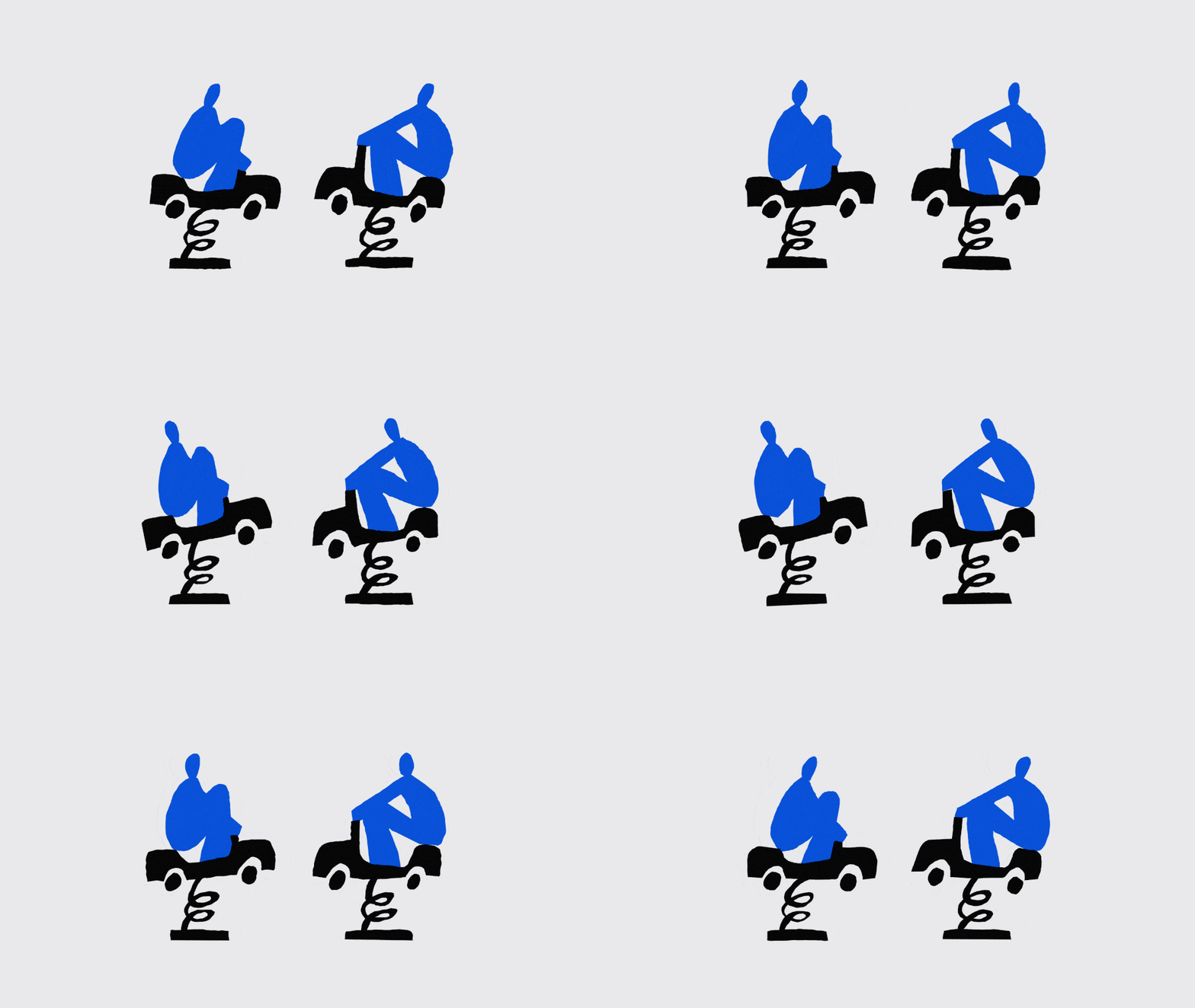 Illustration by Ben Hickey
.
.
Click the link below for the article:
.
__________________________________________
August 30, 2023
Mohenjo
Business, Food For Thought, Human Interest, Political, Science, Technical
amazon, business, Business News, current-events, Future, Hotels, human-rights, medicine, mental-health, research, Science, Science News, technology, Technology News, travel, vacation

Click the link below the picture
.
Researchers hope brain implants will one day help people who have lost the ability to speak to get their voice back—and maybe even to sing. Now, for the first time, scientists have demonstrated that the brain’s electrical activity can be decoded and used to reconstruct music.
A new study analyzed data from 29 people who were already being monitored for epileptic seizures using postage-stamp-size arrays of electrodes that were placed directly on the surface of their brain. As the participants listened to Pink Floyd’s 1979 song “Another Brick in the Wall, Part 1,” the electrodes captured the electrical activity of several brain regions attuned to musical elements such as tone, rhythm, harmony, and lyrics. Employing machine learning, the researchers reconstructed garbled but distinctive audio of what the participants were hearing. The study results were published on Tuesday in PLOS Biology.
Neuroscientists have worked for decades to decode what people are seeing, hearing, or thinking from brain activity alone. In 2012 a team that included the new study’s senior author—cognitive neuroscientist Robert Knight of the University of California, Berkeley—became the first to successfully reconstruct audio recordings of words participants heard while wearing implanted electrodes. Others have since used similar techniques to reproduce recently viewed or imagined pictures from participants’ brain scans, including human faces and landscape photographs. But the recent PLOS Biology paper by Knight and his colleagues is the first to suggest that scientists can eavesdrop on the brain to synthesize music.
.
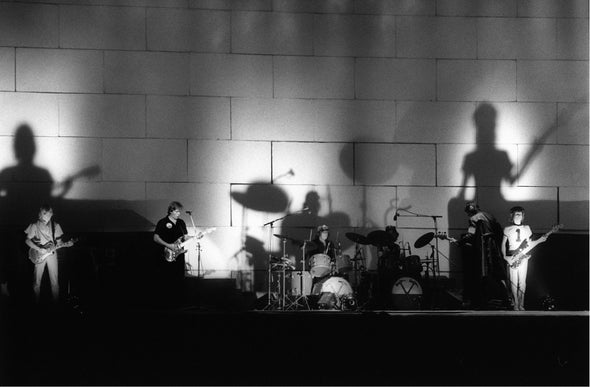 Pink Floyd performs on stage at Earl’s Court in London during The Wall Tour on August 6, 1980. Researchers re-created the band’s song “Another Brick in the Wall, Part 1” from listeners’ brain activity. Credit: Rob Verhorst/Redferns/Getty Images
.
.
Click the link below for the article:
.
__________________________________________
August 30, 2023
Mohenjo
Business, Food For Thought, Human Interest, Political, Science, Technical
amazon, business, Business News, current-events, Future, Hotels, human-rights, medicine, mental-health, research, Science, Science News, technology, Technology News, travel, vacation
Click the link below the picture
.
Aging isn’t something that only happens to old people. We’re all aging, all the time, as long as we’re alive. Most of us just don’t spend much time thinking about aging unless we’re blowing out birthday candles or reaching specific milestones. Otherwise, it doesn’t typically come up.
Today, aging is a broadening spectrum, according to David Cravit, co-author of SuperAging: Getting Older Without Getting Old. He believes that long-accepted benchmarks — buy a house by 30, gain that promotion by 40, retire and stop working by 65 — no longer apply.
Human beings are living longer and healthier than at any other time in history. Despite a drop in life expectancy during the pandemic, the human lifespan has steadily increased. The number of people living to age 100 nearly doubled over the last two decades. By 2050, there are projected to be more than 3.7 million centenarians worldwide.
As a new longevity becomes the norm, there are fewer time constraints on opportunities. You could break track and field records at 102, run for president at 82, pose in a swimsuit on a magazine cover at 81, or embrace #grandmacore in your 20s.
“The clock keeps ticking, but the spectrum gets pushed further and further, and the end gets compressed,” Cravit says. “It happens later, and it’s shorter. And until it happens, you’re still productive and learning and growing and contributing.”
.
 Shondaland Staff
.
.
Click the link below for the article:
.
__________________________________________
Older Entries
Newer Entries

