With the refugee crisis on the top of everyone’s social agenda, there is a population especially feeling the impacts of displacement and violence: women.
Actress Sienna Miller knows the trauma of women refugees well. She was inspired to go visit the Democratic Republic of the Congo after becoming knowledgeable of the rape epidemic there, where one woman is raped every five minutes.
Her visit, she said, showed just how devastating the situation was.
“I met two year olds that had been gang raped,” Miller, who is an International Medical Corps global ambassador, said.
“The impact of what you see is completely heartbreaking and at the same time really galvanizing in terms of the need for all of us to pay attention to the world we are living in.”
.
Actress Sienna Miller speaks about women in crisis at the 2015 Social Good Summit on Sept. 28, 2015.
Brittany Maynard will die on Nov. 1, and it’s a decision she made herself.
The 29-year-old was diagnosed in April with stage 4 glioblastoma, a malignant brain tumor, and was given just six months to live. With no cure available for her condition, she chose to end her own life using medication prescribed by her doctor.
Maynard explains her decision as well as the story of her cancer diagnosis in a video and interview with People.
There is not a cell in my body that is suicidal or that wants to die. I want to live. I wish there was a cure for my disease, but there’s not. … My glioblastoma is going to kill me, and that’s out of my control. I’ve discussed with many experts how I would die from it, and it’s a terrible, terrible way to die. Being able to choose to go with dignity is less terrifying.
Ian Burkhart had barely finished his freshman year of college when he broke his neck.
Standing on top of a cliff in North Carolina’s Outer Banks, which overlooked an orange sandbar jutting into the Atlantic Ocean, he dove hands-first toward the deceptively shallow water below.
“It happened so fast. There was this loud snap,” he says.
The impact with the sandbar broke his vertebrae at what’s called the C5 level, paralyzing his body from the elbows down. He spent the next four months recovering. Doctors told him he’d never be able to use his arms again.
.
Image: The Ohio State University
Ian Burkhart shares a smile with Chad Bouton, research leader from Battelle. Bouton and his team at Battelle pioneered the Neurobridge technology, working closely with doctors from The Ohio State University Wexner Medical Center, which allowed Burkhart to become the first patient ever to move his paralyzed hand with his own thoughts.
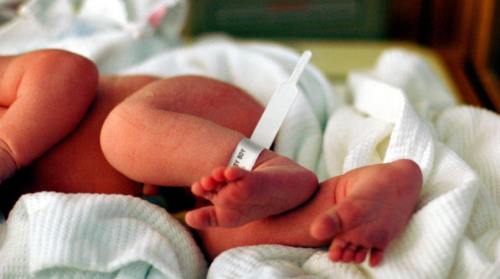
It seems there’s almost nothing computers can’t simulate these days: Now, a new computer program simulates human birth using 3D virtual reality.
The simulator is the first of its kind to take into account factors such as the shape of the mother’s body, and the shape and position of the baby. It could help doctors and midwives prepare for unusual or dangerous births, according to the researchers in England who developed it.
“You can’t see inside during a live birth. The simulator shows you what’s happening inside,” said Rudy Lapeer, a computer scientist at the University of East Anglia, leader of the research that was presented Nov. 22 at a conference on E-Health and Bioengineering in Romania.
Hospitals have used models to simulate the birthing process since the 1800s, Lapeer told LiveScience. But whereas most current simulators are based on known scenarios, the new simulator models the physics of childbirth — the basic forces exerted by the cervix, abdominal muscles and the doctor or midwife — so it can simulate an unfamiliar birth scenario.
The simulator is also designed to be patient-specific. Doctors can scan a pregnant woman, and then adapt the simulator to her anatomy. They can run through a number of scenarios based on previous births.
Film and Writing Festival for Comedy. Showcasing best of comedy short films at the FEEDBACK Film Festival. Plus, showcasing best of comedy novels, short stories, poems, screenplays (TV, short, feature) at the festival performed by professional actors.




 Image: The Ohio State University

 James' World 2