Essen is the central and second-largest city of the Ruhr, the largest urban area in Germany.Its population of 583,109 makes it the tenth-largest city of Germany, as well as the fourth largest city of the federal state of North Rhine-Westphalia. On the Ruhr and Emscher rivers, Essen geographically is part of the Rhineland and the larger Rhine-Ruhr Metropolitan Region. The Ruhrdeutsch regiolect spoken in the region has strong influences of both Low German (Westphalian) and Low Franconian (East Bergish).
“Look to your left, look to your right. One of you won’t be here in the next semester.”
It’s a typical lecture delivered at the start of a semester in the sciences, and one that Ainissa Ramirez remembered hearing early during her undergraduate studies at Brown University.
Now a successful materials scientist and science writer, Dr. Ramirez recalls that she was almost pushed out of pursuing a career in science because of her weed-out classes. As their name suggests, the classes are common especially in the sciences and mathematics at American universities and are designed to demarcate students who are likely to do well in a given subject from those who are not.
Those who excel in these introductory classes can proceed with completing a major on the topic if they wish. But there’s evidence that weed-out classes disproportionately hinder underrepresented groups including women as well as Black, Native American, and Hispanic people from pursuing STEM degrees.
As I opened my copy of Science at home one night, an unfamiliar word in the title of a new study caught my eye: dopaminylation. The term refers to the brain chemical dopamine’s ability, in addition to transmitting signals across synapses, to enter a cell’s nucleus and control specific genes. As I read the paper, I realized that it completely upends our understanding of genetics and drug addiction. The intense craving for addictive drugs like alcohol and cocaine may be caused by dopamine controlling genes that alter the brain circuitry underlying addiction. Intriguingly, the results also suggest an answer to why drugs that treat major depression must typically be taken for weeks before they’re effective. I was shocked by the dramatic discovery, but to really understand it, I first had to unlearn some things.
“Half of what you learned in college is wrong,” my biology professor, David Lange, once said. “Problem is, we don’t know which half.” How right he was. I was taught to scoff at Jean-Baptiste Lamarck and his theory that traits acquired through life experience could be passed on to the next generation. The silly traditional example is the mama giraffe stretching her neck to reach food high in trees, resulting in baby giraffes with extra-long necks. Then biologists discovered we really can inherit traits our parents acquired in life, without any change to the DNA sequence of our genes. It’s all thanks to a process called epigenetics — a form of gene expression that can be inherited but isn’t actually part of the genetic code. This is where it turns out that brain chemicals like dopamine play a role.
The pointe de Pen-Hir is a promontory of the Crozon peninsula in Brittany, to the south-west of Camaret-sur-Mer. On a clear day, there are views to the Pointe du Raz and the islands of Sein and Ouessant and to Pointe Saint-Mathieu. The cliffs are as tall as 70 meters (230 ft) high.
It is the site of the Monument to the Bretons of Free France, known as the Cross of Pen-Hir and inaugurated by General Charles de Gaulle in 1960. It is intended to bear witness to the group of Free French Bretons who founded Sao Breiz in Great Britain during the Second World War. It was created in 1949-1951 by architect Jean-Baptiste Mathon and sculptor Victor-François Bazin
By the spring of 2020, the high stakes involved in rigorous, timely, and honest statistics had suddenly become all too clear. A new coronavirus was sweeping the world. Politicians had to make their most consequential decisions in decades, and fast. Many of those decisions depended on data detective work that epidemiologists, medical statisticians, and economists were scrambling to conduct. Tens of millions of lives were potentially at risk. So were billions of people’s livelihoods.
In early April, countries around the world were a couple of weeks into lockdown, global deaths passed 60,000, and it was far from clear how the story would unfold. Perhaps the deepest economic depression since the 1930s was on its way, on the back of a mushrooming death toll. Perhaps, thanks to human ingenuity or good fortune, such apocalyptic fears would fade from memory. Many scenarios seemed plausible. And that’s the problem.
An epidemiologist, John Ioannidis, wrote in mid-March that Covid-19 “might be a once-in-a-century evidence fiasco”. The data detectives are doing their best – but they’re having to work with data that’s patchy, inconsistent, and woefully inadequate for making life-and-death decisions with the confidence we would like.
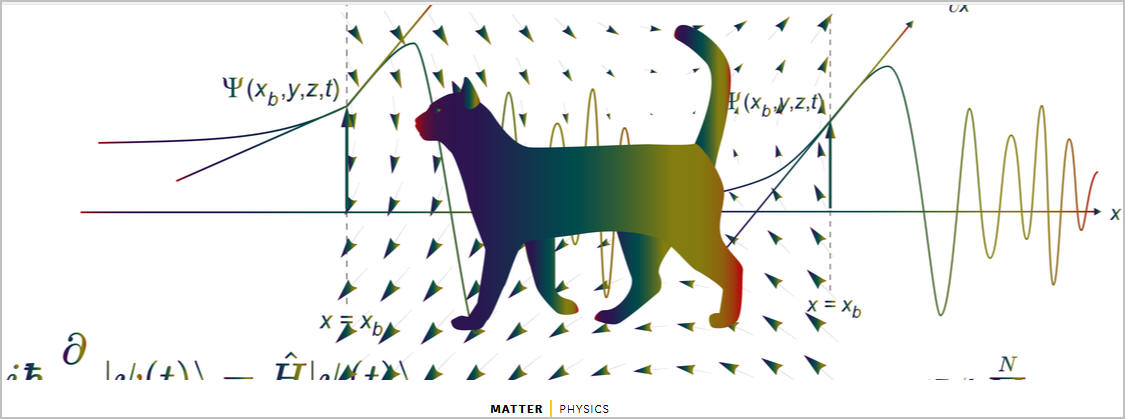
Some of the most perplexing topics in physics revolve around quantum theory. The quandary is seen most famously in the Schrödinger’s cat question and the issue of information loss in black hole evaporation. Richard Feynman said, “I think that I can safely say that nobody understands quantum mechanics.” Most physicists have just gotten used to it. There’s no doubt quantum theory is successful at the practical level. But when considering it as more than a tool for calculating probabilities for possible outcomes of experiments in the laboratory, and taking it as a fundamental description of the “world out there,” it faces serious conceptual problems.
The basic problem is that quantum theory seems to be about what we measure and not about what is out there in the world. One might think this is just fine, as the theory represents just “our information” about the world. But that would make sense only if there were something about the world that we can be informed of, which must be, in general situations, specified by the theory. Understanding how to deal with this conceptual problem requires us to look at the theory in more detail.
The United States has made huge advances in fighting the coronavirus. The astonishingly high death rates the country saw during the spring have fallen, and Americans are much more likely now than they were then to survive a COVID-19 hospitalization. New treatments have, in some cases, helped speed recovery—President Donald Trump has trumpeted his own bout with the virus as proof that there is a “cure” for the illness. (There is not.) These developments have given Americans the impression that no matter how high cases surge, deaths might not reach the heights of the spring.
But the truth is grimmer. The story people want to believe about how much treatments have improved in recent months does not hold up to quantitative scrutiny.
The U.S. health-care system has not reduced the deadliness of the coronavirus since July, according to a new estimate by a prominent COVID-19 researcher, which accounts for the lags in public reporting of cases and deaths. Instead, the virus has, with ruthless regularity, killed at least 1.5 percent of all Americans diagnosed with COVID-19 over the past four months.
This rate is a major improvement, down more than tenfold from the earliest days of the pandemic when deaths were high and the extreme limits on coronavirus testing held down the number of diagnosed cases. But in this new phase of the pandemic, when testing is more widely available and a much higher proportion of cases are diagnosed, to begin with, it is also terrible, terrible news.
It is not often that a comedian gives an astrophysicist goosebumps when discussing the laws of physics. But comic Chuck Nice managed to do just that in a recent episode of the podcast StarTalk. The show’s host Neil deGrasse Tyson had just explained the simulation argument—the idea that we could be virtual beings living in a computer simulation. If so, the simulation would most likely create perceptions of reality on demand rather than simulate all of the reality all the time—much like a video game optimized to render only the parts of a scene visible to a player. “Maybe that’s why we can’t travel faster than the speed of light because if we could, we’d be able to get to another galaxy,” said Nice, the show’s co-host, prompting Tyson to gleefully interrupt. “Before they can program it,” the astrophysicist said, delighting at the thought. “So the programmer put in that limit.”
Such conversations may seem flippant. But ever since Nick Bostrom of the University of Oxford wrote a seminal paper about the simulation argument in 2003, philosophers, physicists, technologists and, yes, comedians have been grappling with the idea of our reality being a simulacrum. Some have tried to identify ways in which we can discern if we are simulated beings. Others have attempted to calculate the chance of us being virtual entities. Now a new analysis shows that the odds that we are living in base reality—meaning an existence that is not simulated—are pretty much even. But the study also demonstrates that if humans were to ever develop the ability to simulate conscious beings, the chances would overwhelmingly tilt in favor of us, too, being virtual denizens inside someone else’s computer. (A caveat to that conclusion is that there is little agreement about what the term “consciousness” means, let alone how one might go about simulating it.)
Film and Writing Festival for Comedy. Showcasing best of comedy short films at the FEEDBACK Film Festival. Plus, showcasing best of comedy novels, short stories, poems, screenplays (TV, short, feature) at the festival performed by professional actors.

 An image from Essen, Germany

 James O’Brien for Quanta Magazine



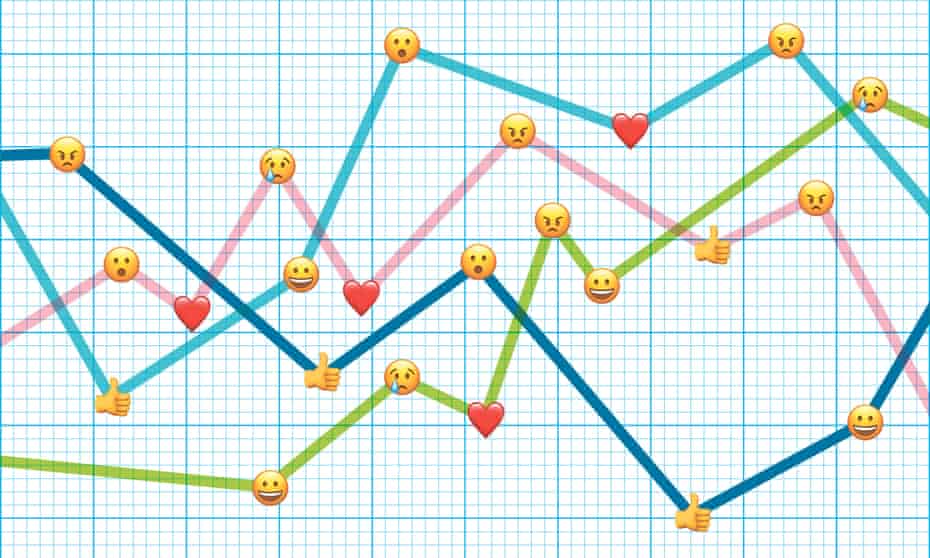 Illustration Guardian Design


 Credit: Getty Images
