November 5, 2021
Mohenjo
Business, Food For Thought, Human Interest, Science, Technical
amazon, business, Business News, current-events, Future, Hotels, human-rights, medicine, mental-health, research, Science, Science News, technology, Technology News, travel, vacation

Click the link below the picture
.
A year ago, as the pandemic ravaged country after country and economies shuddered, consumers were the ones panic-buying. Today, on the rebound, it’s companies furiously trying to stock up.
Mattress producers to car manufacturers to aluminum foil makers are buying more material than they need to survive the breakneck speed at which demand for goods is recovering and assuage that primal fear of running out. The frenzy is pushing supply chains to the brink of seizing up. Shortages, transportation bottlenecks, and price spikes are nearing the highest levels in recent memory, raising concern that a supercharged global economy will stoke inflation.
Copper, iron ore and steel. Corn, coffee, wheat, and soybeans. Lumber, semiconductors, plastic, and cardboard for packaging. The world is seemingly low on all of it. “You name it, and we have a shortage on it,” Tom Linebarger, chairman, and chief executive of engine and generator manufacturer Cummins Inc., said on a call this month. Clients are “trying to get everything they can because they see high demand,” Jennifer Rumsey, the Columbus, Indiana-based company’s president, said. “They think it’s going to extend into next year.”
.

Irrigation lines are set up to water almond tree rootstocks in Tulare, California, on April 21. Photographer: Gary Coronado/Los Angeles Times/Getty Images
.
.
Click the link below for the article:
.
__________________________________________
November 5, 2021
Mohenjo
Crime, Food For Thought, Human Interest, Medical, missed News, Political, Science, Technical
amazon, business, Business News, current-events, Future, Hotels, human-rights, medicine, mental-health, research, Science, Science News, technology, Technology News, travel, vacation

.
News You might have missed!
Use your browser or smartphone back arrow (<-) to return to this table for your next selection.
.
__________________________________________
November 4, 2021
Mohenjo
Business, Enthralling, Human Interest, Photographs
amazon, business, Business News, current-events, Future, Hotels, human-rights, medicine, mental-health, research, Science, Science News, technology, Technology News, travel, vacation

Click the link below the picture
.
Frederic Edwin Church (May 4, 1826 – April 7, 1900) was an American landscape painter born in Hartford, Connecticut. He was a central figure in the Hudson River School of American landscape painters, best known for painting large landscapes, often depicting mountains, waterfalls, and sunsets. Church’s paintings put an emphasis on realistic detail, dramatic light, and panoramic views. He debuted some of his major works in single-painting exhibitions to a paying and often enthralled audience in New York City. In his prime, he was one of the most famous painters in the United States.
Frederic Edwin Church was a direct descendant of Richard Church, a Puritan pioneer from England who accompanied Thomas Hooker on the original journey through the wilderness from Massachusetts to what would become Hartford, Connecticut. Church was the son of Eliza (1796–1883) and Joseph Church (1793–1876). Frederic had two sisters and no surviving brothers. His father was successful in business as a silversmith and jeweler and was a director at several financial firms. His mother’s brother was Adrian Janes, who owned an iron foundry that constructed the U.S. Capitol Dome. The family’s wealth allowed Frederic to pursue his interest in art from a very early age. In 1844, aged 18, Church became the pupil of landscape artist Thomas Cole in Catskill, New York after Daniel Wadsworth, a family neighbor and founder of the Wadsworth Athenaeum, introduced the two. Church studied with him for two years; by this time his talent was more than evident. Cole wrote that Church had “the finest eye for drawing in the world”. During his time with Cole, he traveled around New England and New York to make sketches, visiting East Hampton, Long Island, Catskill Mountain House, The Berkshires, New Haven, and Vermont. His first recorded sale of a painting was in 1846 to Hartford’s Wadsworth Athenaeum for $130; it was a pastoral depicting Hooker’s journey in 1636. In 1848, he was elected as the youngest Associate of the National Academy of Design and was promoted to full member the following year. He took his own students including Walter Launt Palmer, William James Stillman, and Jervis McEntee. Wikipedia
.
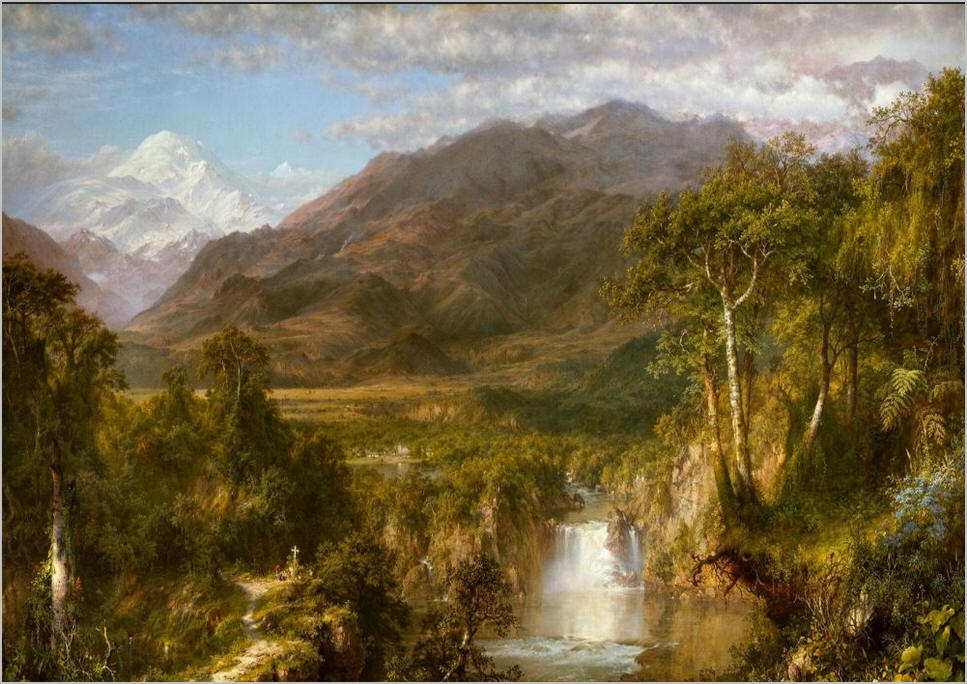 A painting Heart Of The Andes by Frederic Edwin Church
.
.
Click the link below for images:
.
__________________________________________
November 4, 2021
Mohenjo
Business, Food For Thought, Human Interest, Science, Technical
amazon, business, Business News, current-events, Future, Hotels, human-rights, medicine, mental-health, research, Science, Science News, technology, Technology News, travel, vacation

Click the link below the picture
.
Remember those old and scratchy vinyl records that would skip and play the same thing over and over until you moved the needle? (I know I’m showing my age, play along.)
Well, the Gallup Organization has been playing a tune now for over three decades, one that sure sounds a lot like a scratchy record that won’t move forward. You know it well—roughly 30 percent of employees in the U.S. are actually engaged in their work. But here’s the part of the song that keeps skipping incessantly: People leave managers, not companies.
We’ve known this for a while and yet we can’t seem to solve the leadership crisis that will result in happy, engaged, and motivated workers.
That’s because most people in positions of power don’t have a clear understanding of what it truly takes to influence others. You don’t manage people; you lead people and manage the work.
.
 Photo from Sergey Tinyakov/Getty Images.
.
.
Click the link below for the article:
.
__________________________________________
November 4, 2021
Mohenjo
Business, Food For Thought, Human Interest, Medical, Science, Technical
amazon, business, Business News, current-events, Future, Hotels, human-rights, medicine, mental-health, research, Science, Science News, technology, Technology News, travel, vacation

Click the link below the picture
.
All over the world, countries are confronting population stagnation and a fertility bust, a dizzying reversal unmatched in recorded history that will make first-birthday parties a rarer sight than funerals, and empty homes a common eyesore.
Maternity wards are already shutting down in Italy. Ghost cities are appearing in northeastern China. Universities in South Korea can’t find enough students, and in Germany, hundreds of thousands of properties have been razed, with the land turned into parks.
Like an avalanche, the demographic forces — pushing toward more deaths than births — seem to be expanding and accelerating. Though some countries continue to see their populations grow, especially in Africa, fertility rates are falling nearly everywhere else. Demographers now predict that by the latter half of the century or possibly earlier, the global population will enter a sustained decline for the first time.
A planet with fewer people could ease pressure on resources, slow the destructive impact of climate change and reduce household burdens for women. But the census announcements this month from China and the United States, which showed the slowest rates of population growth in decades for both countries, also point to hard-to-fathom adjustments.
.
 A family eating hotpot at a restaurant in Beijing. China’s population is projected to contract sharply this century.Credit…Gilles Sabrié for The New York Times
.
.
Click the link below for the article:
.
__________________________________________
November 4, 2021
Mohenjo
Arts, Business, Food For Thought, Human Interest, Medical, missed News, Science, Technical
amazon, business, Business News, current-events, Future, Hotels, human-rights, medicine, mental-health, research, Science, Science News, technology, Technology News, travel, vacation
.
News You might have missed!
Use your browser or smartphone back arrow (<-) to return to this table for your next selection.
.
__________________________________________
November 3, 2021
Mohenjo
Business, Enthralling, Human Interest, Photographs
amazon, business, Business News, current-events, Future, Hotels, human-rights, medicine, mental-health, research, Science, Science News, technology, Technology News, travel, vacation
Click the link below the picture
.
Eagle Pass is a city in and the county seat of Maverick County in the U.S. state of Texas. Its population was 26,255 as of the 2010 census (2019 estimate 29,684).
Eagle Pass borders the city of Piedras Negras, Coahuila, Mexico, which is to the southwest and across the Rio Grande. The Eagle Pass-Piedras Negras metropolitan area (EG-PN) is one of six binational metropolitan areas along the United States-Mexican border. As of January 2008, according to the US census, the EGPN’s population was 48,401 people, and the Piedras Negras metropolitan area’s population was 169,771.
Eagle Pass was the first American settlement on the Rio Grande. Originally known as Camp Eagle Pass, it served as a temporary outpost for the Texas militia, which had been ordered to stop illegal trade with Mexico during the Mexican–American War. Eagle Pass is so named because the contour of the hills through which the Rio Grande flows bore a fancied resemblance to the outstretched wings of an eagle.
General William Leslie Cazneau (1807–1876) founded the Eagle Pass townsite in the 1840s.
In 1850, Rick Pawless opened a trading post called Eagle Pass. In 1871, Maverick County was established, and Eagle Pass was named the county seat. During the remainder of the 19th century, schools and churches opened, the mercantile and ranching industries grew, and a railway was built. Wikipedia
.
 An image from Eagle Pass, TX, USA
.
.
Click the link below for images:
.
__________________________________________
November 3, 2021
Mohenjo
Business, Food For Thought, Human Interest, Science, Technical
amazon, business, Business News, current-events, Future, Hotels, human-rights, medicine, mental-health, research, Science, Science News, technology, Technology News, travel, vacation

Click the link below the picture
.
For ancient mammalian megafauna—from brown bears to bison and more—death was something of a boy’s club. At least that’s what you might conclude from the vaults of natural history museums around the world, where the majority of fossilized mammal specimens come from males.
This has less to do with misogyny than with prehistoric herd distributions, sex-specific causes of death, and a slew of other factors that influenced where and how large mammals tended to die, according to a study published September 3 in Proceedings of the National Academy of Sciences.
Researchers from the University of Adelaide in Australia first identified this strange trend after analyzing ancient DNA in specimens in their own collection, according to Graham Gower, a genomic programmer and a coauthor of the study. There are a few ways to sex an ancient bone. If you’re lucky enough to have a whole bone, such as a skull, the size, shape, and dimensions might differ between male and female. In the case of fragments, researchers might have to dig into DNA for the number of X-chromosome sequences, Gower says. But usable DNA is scarce in most specimens that old. From approximately 20,000 samples, Gower says, the researchers got usable DNA from 5 percent.
.
 Woolly mammoths in a mural at the American Museum of Natural History in New York. Source: Charles R. Knight / Public Domain.
.
.
Click the link below for the article:
.
__________________________________________
November 3, 2021
Mohenjo
Business, Food For Thought, Human Interest, Science, Technical
amazon, business, Business News, current-events, Future, Hotels, human-rights, medicine, mental-health, research, Science, Science News, technology, Technology News, travel, vacation

Click the link below the picture
.
Shane Campbell-Staton never planned on traveling to Mozambique in search of tuskless elephants, but weird things can happen when you stay up ’til 3 a.m. binge-watching YouTube videos. (“Sometimes, a brother can’t get to sleep, Ed,” he told me.)
Battling insomnia, Campbell-Staton watched a video about Gorongosa National Park. The park was once Edenic, but during Mozambique’s civil war, from 1977 to 1992, much of its wildlife was exterminated. Government troops and resistance fighters slaughtered 90 percent of Gorongosa’s elephants, selling their ivory to buy arms and supplies. Naturally, tuskless females, which are normally rare, were more likely to survive the culls; after the war, their unusual trait was noticeably common.
Campbell-Staton, a biologist at Princeton who studies rapid evolution, had questions. Was this a dramatic example of natural selection in action? Why only the females? Which genes were involved? He idly emailed his questions to a colleague who studies elephants, inadvertently setting off a chain of emails that recast his casual curiosity as serious intent, and soon found himself being introduced to a large group of Gorongosa researchers as “a guy who wants to study the genetic basis of tusklessness in elephants,” he told me. In response to which he thought: Wait a minute, I didn’t say that! I didn’t mean for this to be a whole thing. He had only ever worked with small anole lizards, but even so, when one of those researchers invited him to Gorongosa, he said yes.
.
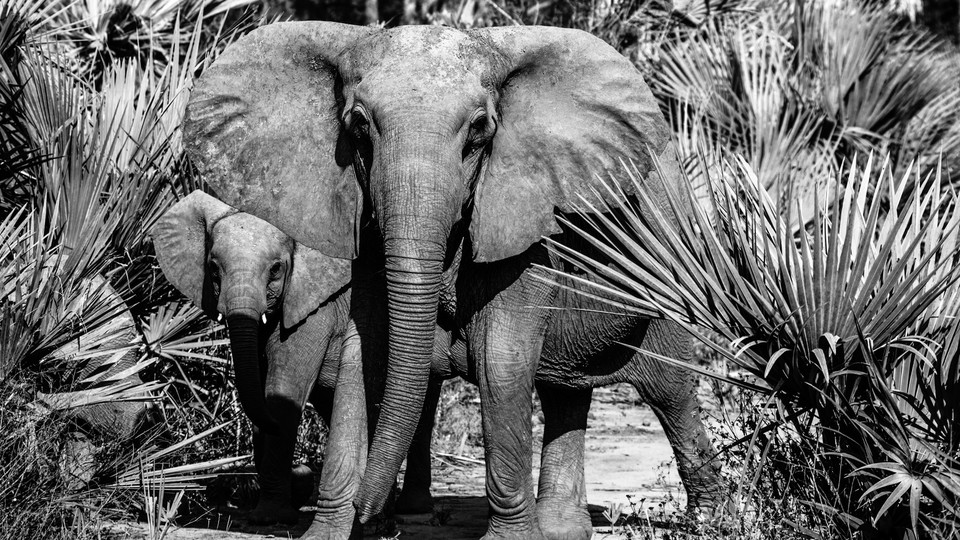 Jacques Le Roux / iStock / Getty
.
.
Click the link below for the article:
.
__________________________________________
November 3, 2021
Mohenjo
Food For Thought, Human Interest, Medical, missed News, Science, sports, Technical
amazon, business, Business News, current-events, Future, Hotels, human-rights, medicine, mental-health, research, Science, Science News, technology, Technology News, travel, vacation
.
News You might have missed!
Use your browser or smartphone back arrow (<-) to return to this table for your next selection.
.
__________________________________________
Older Entries
Newer Entries
 James' World 2