March 17, 2016
Mohenjo
Science
amazon, brains, business, Business News, CBS, earworms, Hotels, human-rights, INMI, involuntary musical imagery, medicine, mental-health, personalities, research, Science, Science News, Taylor Swift, technology, Technology News, things we loathe, travel, vacation, Wildest Dreams

Click link below picture
.
The fact that Taylor Swift’s romantic dramedy of a song, “Wildest Dreams,” has been stuck in your head for damn days has nothing to do with whether or not it’s good. According to science, the reason why music gets stuck in our heads may have more to do with us — our brains, our personalities and the things we loathe — than it does with the imposing songs themselves.
A 2015 study found that earworms — scientifically speaking, involuntary musical imagery (INMI) — occur more frequently in people with tissue highly concentrated in the parts of the brain that are linked to memory and sound perception, as one would maybe guess if one were able to put the internal music on pause and really focus on the root of the problem.
“We did find a link between certain brain areas involved in music perception and music-evoked emotions and actually, emotions in general,” lead author of the study, Nicolas Farrugia, told CBS.
.

Even princes like William struggle with earworms (we imagine). Source: Max Mumby/Indigo/Getty Images
.
.
Click link below for article:
http://mic.com/articles/137149/why-does-a-song-get-stuck-in-your-head-here-s-what-science-has-to-say-about-earworms#.FUK1dxSLJ
.
__________________________________________
February 6, 2013
Mohenjo
Science
brains, brains and our minds, business, climate, connectome, focuses on the connections between neurons, Future, genome, Health, mapping, medicine, mental-health, Mind, minds, model of the brain, neuron, new model, new model of the brain, research, Science, Science News, Sebastian Seung, ted, travel, vacation, Youtube Videos

Click link below picture
.
Sebastian Seung is mapping a massively ambitious new model of the brain that focuses on the connections between each neuron. He calls it our “connectome,” and it’s as individual as our genome — and understanding it could open a new way to understand our brains and our minds.
.

.
.Click link below for Ted talk:
http://www.youtube.com/watch?v=HA7GwKXfJB0
.
____________________________________________________
February 5, 2013
Mohenjo
Science
amp, article requests, biology, brains, business, climate, connectome, Connectome Q&A, connectomics, consciousness, evolution, Facebook, first-ever official Connectome Q&A, Future, imaging, incoming questions, neuroanatomy, neurophysiology, queries, research, Science, Science News, technology, Technology News, travel, Twitter, vacation
Click link below picture
.
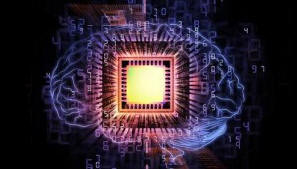
As promised, here’s the first-ever official Connectome Q&A! We’ve been getting lots of incoming questions on our Facebook and Twitter pages – some of them on the technical side; others of the more “general interest” variety. Most of these questions require pretty involved answers – and it’s important to me that each of them gets the full treatment it deserves.
So for today’s Q&A, I’ve decided to focus on just one question. That doesn’t mean we’ve forgotten the others, though – we keep everything archived, and we’ll be doing plenty more Q&As in the future. So keep sending those neuroscience queries and article requests our way.
.
.
.Click link below for article:
http://theconnecto.me/2012/11/qa-can-we-preserve-our-brains-after-death/
.
____________________________________________________
July 28, 2012
Mohenjo
Uncategorized
"GPS neurons", Baylor College, Baylor College of Medicine, bbc, bbc news, brains, cells, climate, cryptochromes, David Dickman, Earth, Earth's magnetic field, Environment, group of 53 cells within pigeons, Henrik Mouritsen, how birds navigate, Le-Qing Wu, magnetic field, medicine, nature, news science, pigeons, pigeons' brains, puzzled, Science, science environment, Science News, Uk News, www bbc co uk

Click link below picture
.
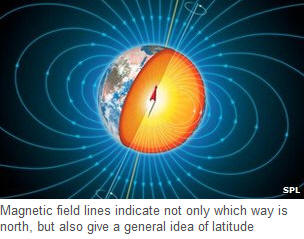
Researchers have spotted a group of 53 cells within pigeons’ brains that respond to the direction and strength of the Earth’s magnetic field.
.
.
.Click link below for article:
http://www.bbc.co.uk/news/science-environment-17855194
.
____________________________________________________
 James' World 2