June 5, 2015
Mohenjo
Science
amazon, Amblyopia, Brain Plasticity, Brain Science, business, Business News, Hotels, huffingtonpost, Huffpost Science Click, human-rights, Inner Space Brain Science, learning, medicine, mental-health, Neurons, Neuroplasticity, Neurotransmitters, research, Science, Science News, Slideshow, technology, Technology News, travel, vacation, What's Working
FROM
Huffpost Science
Click link below picture
.
Can an old brain learn new tricks?
The answer could soon be a resounding “yes.”
Scientists from the University of California at Irvine may have found a way to restore the youthful flexibility of the still-developing brain. In a study on mice recently published in the journal Neuron, the researchers were able to re-activate a younger neural state in an older brain.
.
.
.
Click link below for story and slideshow:
http://www.huffingtonpost.com/2015/05/22/brain-aging-neuroplasticity_n_7307662.html?cps=gravity_1787_3149956806053155669
.
__________________________________________
April 4, 2015
Mohenjo
Medical, Science
affluent families, amazon, brain development, Brain Development Poverty, Brain Science, business, Business News, Child Development, Children's Hospital Los Angeles, Columbia University Medical Center, Developmental Cognitive Neuroimaging Laboratory, Disadvantaged Children, Early Childhood Development, family income, Family Income Child Development, Global Motherhood, Hotels, huffingtonpost, human-rights, medicine, mental-health, Poverty Brain Size, Poverty Child Development, research, Science, Science News, technology, Technology News, travel, vacation
FROM
Huffpost Science
Click link below picture
.
We’ve long known that children from affluent families get a head start that can translate into a long-lasting advantage, especially when it comes to academic achievement. Now, scientists have found what may be part of the explanation: Children who grow up in higher-income families appear to have larger brains.
.
Researchers from nine universities across the country, led by neuroscientists at Children’s Hospital Los Angeles and Columbia University Medical Center, conducted a major new study of the effects of family income and parental education on child and adolescent brain development.
“We’ve known for a long time that kids from lower-income or disadvantaged families don’t do as well in school and have more difficulties on standardized tests,” Dr. Elizabeth Sowell, director of the Developmental Cognitive Neuroimaging Laboratory at Children’s Hospital Los Angeles, told The Huffington Post. “We know that the brain is driving cognition and behavior, so there must be some difference in the brain. This is the largest study to look at things like family income and the size of the brain.”
.

A major new study shows a positive association between family income and greater brain development in children. | Orhanam via Getty Images
.
.
Click link below for article:
http://www.huffingtonpost.com/2015/03/30/brain-development-poverty_n_6968758.html?cps=gravity_1787_4648557740919786609
.
__________________________________________
January 29, 2015
Mohenjo
Medical
amazon, Brain Hemorrhage, Brain Science, business, Business News, Hotels, huffingtonpost, human-rights, Husband and Wife, Husband Helps Wife Regain Memory, Love, Love Matters, Love&sex, medicine, mental-health, Newlyweds, Raleigh Hall, research, Science, Science News, Slideshow, technology, Technology News, travel, Tunicia Hall, vacation, Wife Loses Memory
FROM
Click link below picture
.
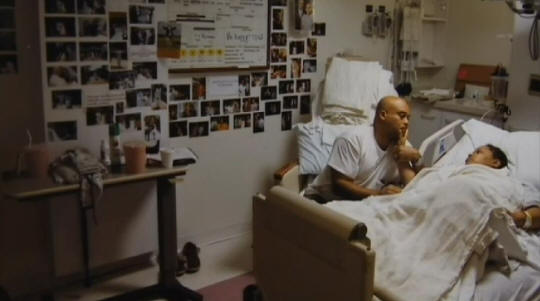
A month after his wedding, Raleigh Hall’s new bride was rushed to the hospital following a near fatal brain hemorrhage. Doctors said she had a 50/50 chance of survival.
.
Thankfully, Tunicia Hall survived, but her recent memories did not — including the memory of her June wedding. She looked up at her new husband, whom she had known for 30 years, and asked, “Are we married?” reports NBC 4 in New York.
“I felt like I lost her,” Raleigh said.
.
 Tunicia Hall
.
.
Click link below for story and slideshow:
http://www.huffingtonpost.com/2014/10/02/newlyweds-brain-injury_n_5924076.html?cps=gravity_2692_-2091815246287371195
.
__________________________________________
February 5, 2014
Mohenjo
Science
amazon, Brain Science, business, Business News, Hotels, huffingtonpost, Human Biology, human-rights, medicine, mental-health, Myths About the Brain, Neurology, Percentage of the Brain, research, Richard Cytowic, Richard Cytowic Debunks Brain Myth, Science, Science News, Slideshow, Smarter Ideas, technology, Technology News, ted, Ted Ed, Ted Lesson, travel, vacation, Video, What Percentage of Our Brain Do We Use
Click link below picture
.
It’s commonly said that we humans use only about 10 percent of our brains, with some people attributing Einstein’s brilliance to his ability to stretch that paltry figure to 15 percent.
But in the video above, neurologist Dr. Richard Cytowic debunks these familiar notions, arguing that brain regions once believed to be “silent” are actually humming with activity.
.
.
.
Click link below for story, video and slideshow:
.
__________________________________________
October 25, 2013
Mohenjo
Medical
amazon, Brain Happiness, Brain Science, business, Business News, Emotional Intelligence, Finding Happiness, Happiness Tips, Hardwiring Happiness, Health, Healthy Living News, Hotels, huffingtonpost, human-rights, Joy!, medicine, mental-health, Mindfulness, Mindfulness Benefits, Paying Attention, research, Rick Hanson, Science, Science News, Serenity Saturdays, Slideshow, technology, Technology News, The Huffington Post, The Third Metric, travel, vacation, Video
FROM

Click link below picture
.
The secret to lasting happiness might be neatly summed up in a cheesy neuroscience joke: “The neurons that fire together, wire together.”
“It’s a classic saying, and it’s widely accepted because it’s very true,” neuropsychologist Rick Hanson, author of Hardwiring Happiness: The New Brain Science Of Contentment, Calm and Confidence, tells The Huffington Post. “The longer the neurons [brain cells] fire, the more of them that fire, and the more intensely they fire, the more they’re going to wire that inner strength –- that happiness, gratitude, feeling confident, feeling successful, feeling loved and lovable.”
But on a day to day basis, most of us don’t stay with our positive experiences long enough for them to be encoded into neural structure (meaning there’s not enough wiring and firing going on). On the other hand, we naturally tend to fixate on negative experiences. Positive and negative emotions use different memory systems in the brain, according to Hanson, and positive emotions don’t transfer as easily to long-term memory.
Hanson argues that the problem is we’re wired to scout for the bad stuff — as he puts it, the brain is like velcro for negative experience and teflon for positive ones.
.
.
.
Click link below for story, video and slideshow:
.
______________________________________________________________________________
October 18, 2013
Mohenjo
Science
Alexandros Vgontzas, amazon, Brain Science, business, Business News, Catch Up Sleep, Catching Up On Sleep, Health, Hotels, huffingtonpost, human-rights, mental-health, Physiology-Endocrinology, Polls, Recovery Sleep, research, Science, Science News, Sleep, Sleep Habits, Sleep Loss, Sleep Science, Sleep Weekends, Slideshow, technology, Technology News, The Third Metric, travel, vacation, Video
FROM
Click link below picture
.
Ah, the weekend. Many of us who work long hours during the week may see the weekend as an opportunity to “catch up” on some rest by sleeping in. But is it really possible to recover from sleep loss by finding time later to snooze, and does it do the mind and body any good?
For starters, a study published in the current issue of the American Journal of Physiology-Endocrinology and Metabolism suggests that using your weekend to sleep in actually doesn’t fix all the damage caused by missing out on some slumber during the week.
“The major take away message is that extended sleep helps, but only to some extent,” study co-author Dr. Alexandros Vgontzas, professor at Penn State University’s Hershey Sleep Research & Treatment Center, told The Huffington Post in an email. “The repeated cycle of restriction/recovery may be harmful to your health in the long run.
.
.
.
Click link below for story, video and slideshow:
.
______________________________________________________________________________
October 12, 2013
Mohenjo
Science
Albert Einstein, Albert Einstein's Brain, amazon, Brain Science, business, Business News, celebrities, Daily Discovery, Dean Falk, Einstein, Einstein's Brain, Florida State University, Genius, Hotels, huffingtonpost, human-rights, intelligence, mental-health, research, Science, Science News, technology, Technology News, Thomas Harvey, travel, vacation
FROM

Click link below picture
.
While Albert Einstein, considered one of the foremost geniuses of the 20th century, has transformed scientists’ understanding of physics and astronomy with his theories, the intellect of Einstein himself has remained misunderstood.
Ever since pathologist Dr. Thomas Harvey harvested the scientist’s brain in 1955, researchers have tried to crack the mystery of Einstein’s genius by observing that brain.
Now scientists think they’ve found a clue. A new study, published in the journal Brain on September 24, 2013, suggests that the two hemispheres in Einstein’s brain were unusually well connected.
“This study, more than any other to date, really gets at the ‘inside’ of Einstein’s brain,” study co-author Dean Falk, an evolutionary anthropologist at Florida State University, said in a written statement. “It provides new information that helps make sense of what is known about the surface of Einstein’s brain.”
In the study, Falk and her colleagues looked at a series of unpublished photographs of the brain, taken from many angles. The team analyzed the thickness of the brain’s corpus callosum — the large bundle of fibers that connects the brain’s two cerebral hemispheres and allows them to communicate with each other. Then the researchers compared that part of Einstein’s brain to the same structure in 15 elderly males and 52 younger men from 1905.
.

Getty
Celebrated picture dated March 18, 1951, shows German-born Swiss-US physicist Albert Einstein (1879-1955), awarded the Nobel Prize for Physics in 1921, sticking out his tongue at photographers on his 72nd birthday. (ARTHUR SASSE/AFP/Getty Images)
.
.
Click link below for story, video and slideshow:
.
______________________________________________________________________________
October 1, 2013
Mohenjo
Science
amazon, Brain Science, Brains Copied To Computer, Brains Stephen Hawking, business, Business News, Hawking, Health, Hotels, huffingtonpost, human-rights, medicine, mental-health, research, Science, science fiction, Science News, Slideshow, Stephen Hawking, Stephen Hawking Brains, Stephen Hawking Heaven, Stephen Hawking Life After Death, technology, Technology News, travel, vacation, Video
FROM
Click link below picture
.
Could your brain keep on living even after your body dies? Sounds like science fiction, but celebrated theoretical physicist Stephen Hawking recently suggested that technology could make it possible.
“I think the brain is like a program in the mind, which is like a computer,” Hawking said last week during an appearance at the Cambridge Film Festival, The Telegraph reported. “So it’s theoretically possible to copy the brain on to a computer and so provide a form of life after death.”
He acknowledged that such a feat lies “beyond our present capabilities,” adding that “the conventional afterlife is a fairy tale for people afraid of the dark.”
Hawking, 71, made the remarks in conjunction with the premiere of a new documentary about his life.
.
.
.
Click link below for story, video and slideshow:
.
______________________________________________________________________________
September 21, 2013
Mohenjo
Medical
amazon, bbc, bbc news, brain, brain cell, brain repair, Brain Science, brain's circuitry, business, Business News, Cell (biology), cell death, Death, Dr Chiara Cirelli, Hotels, immature oligodendrocytes, Journal of Neuroscience, Myelin, oligodendrocytes, rapid eye movement, rapid eye movement sleep, REM sleep, research, Science, Science News, Scientists, Sleep, sleep lab, stress responses, technology, Technology News, travel, University of Wisconsin, vacation, why we need to sleep, Wisconsin, wisconsin team, www bbc co uk, your brain
Click link below picture
.
Scientists believe they have discovered a new reason why we need to sleep – it replenishes a type of brain cell.
Sleep ramps up the production of cells that go on to make an insulating material known as myelin which protects our brain’s circuitry.
The findings, so far in mice, could lead to insights about sleep’s role in brain repair and growth as well as the disease MS, says the Wisconsin team.
The work is in the Journal of Neuroscience.
Dr Chiara Cirelli and colleagues from the University of Wisconsin found that the production rate of the myelin making cells, immature oligodendrocytes, doubled as mice slept.
The increase was most marked during the type of sleep that is associated with dreaming – REM or rapid eye movement sleep – and was driven by genes.
In contrast, the genes involved in cell death and stress responses were turned on when the mice were forced to stay awake.
Precisely why we need to sleep has baffled scientists for centuries. It’s obvious that we need to sleep to feel rested and for our mind to function well – but the biological processes that go on as we slumber have only started to be uncovered relatively recently.
.
.
.
Click link below for article:
.
______________________________________________________________________________
June 25, 2013
Mohenjo
Science
amazon, aviation, Bionic Mind, Brain Prosthesis, Brain Science, business, climate, Epilepsy, eternal sunshine of the spotless mind, Health, Hotels, huffingtonpost, Human Memory, human-rights, medicine, Memory Prosthesis, mental-health, rats and monkeys, research, Science, Science News, Slideshow, technology, Technology News, theodore berger, transportation, travel, vacation, Weird Science
FROM
Click link below picture
.
In the film “Eternal Sunshine of the Spotless Mind,” the characters undergo a scientific procedure to erase their memory. But what if instead of erasing memory, you could restore it? One neuroscientist aims to do just that.
Theodore Berger of the University of Southern California is developing a prosthesis to restore memory, by replacing a circuit in the brain’s hippocampus. Berger described the device at the Global Future 2045 International Congress, held here June 15-16. Already successful in rats and monkeys, the prosthesis is now being tested in humans.
Memory machine
The hippocampus, a brain structure tucked deep in the brain’s temporal lobe, converts short-term memories to long-term ones. Epilepsy or other neurological disorders can damage the hippocampus, preventing a person from retaining new memories.
.

A prosthetic device could restore memory to patients with brain damage due to epilepsy or other conditions. It’s being developed by USC’s Dr. Theodore Berger (above).
.
.Click link below for story and slideshow:
http://www.huffingtonpost.com/2013/06/23/memory-prosthesis-brain-memories_n_3483965.html?utm_hp_ref=weird-science
.
____________________________________________________
Older Entries




 James' World 2