March 16, 2019
Mohenjo
Business, Human Interest, Medical, Science, Technical
amazon, business, Business News, current-events, Future, Hotels, human-rights, medicine, mental-health, research, Science, Science News, technology, Technology News, travel, vacation

Click the link below the picture
.
It was May 17, 2009, and Astronaut Michael Massimino was lapping Earth at 18,000 miles an hour, sweating up his spacesuit as he struggled to fix the ailing Hubble Space Telescope. A stripped bolt was stopping him from removing a handrail to get at a crucial piece of hardware, and his nerves were fraying.
Massimino fumbled at the bolt repeatedly through thick gloves, but without luck. It seemed that one dumb piece of metal might stymie NASA’s billion-dollar rescue mission — but that’s not how things turned out. He finally managed to pry open the telescope and complete his job before clambering back inside the Space Shuttle Atlantis. Hubble returned to action, going on to snap some of astronomy’s most iconic photos.
Massimino was guided by experts on the ground, as astronauts always are. But his steely resolve in the face of long odds — and his methodical approach to solving a difficult problem while floating weightless in the vacuum of space — was honed by the brutal regimen of survival training he had endured more than a decade earlier.
.
.
.
Click the link below for the article:
https://www.nbcnews.com/mach/science/panic-space-can-be-deadly-here-s-how-astronauts-train-ncna892941
.
__________________________________________
March 16, 2019
Mohenjo
Business, Enthralling, Human Interest, Science, Technical
amazon, business, Business News, current-events, Future, Hotels, human-rights, medicine, mental-health, research, Science, Science News, technology, Technology News, travel, vacation

Click the link below the picture
.
Generally, most of us rely on forecasts to tell us what kind of weather to expect. However, it is possible to predict the weather using your skills of observation and knowledge of weather patterns. Not only can predicting the weather be a fun hobby, it can also be a useful skill if you enjoy outdoor activities, such as hiking or camping. By learning what to look for, you can predict the weather without a forecast or technological device.
.
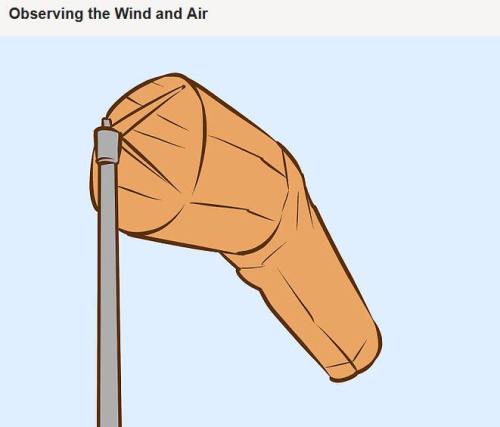 .
.
.
Click the link below for the article:
https://www.wikihow.com/Predict-the-Weather-Without-a-Forecast
.
__________________________________________
March 15, 2019
Mohenjo
Business, Human Interest, Technical
amazon, business, Business News, current-events, Future, Hotels, human-rights, medicine, mental-health, research, Science, Science News, technology, Technology News, travel, vacation

Click the link below the picture
.
Think about all the times you use the word “sorry” in a typical day. There are the necessary “sorry”s — when you bump into someone, when you need to cancel plans with a friend. But what about the unnecessary “sorry”s? The “sorry, this may be an obvious idea” at a meeting, the “sorry to cause trouble” when rescheduling a haircut, the “sorry, there’s a spill in the dairy aisle” at the supermarket.
Canadian sociologist Maja Jovanovic believes the “sorry”s we sprinkle through our days hurt us. They make us appear smaller and more timid than we really are, and they can undercut our confidence.
Jovanovic, who teaches at McMaster University and Mohawk College in Hamilton, Ontario, became interested in this topic when she attended a conference four years ago. The four women on a panel were, she says, “experts in their chosen fields. Among them, they had published hundreds of academic articles, dozens of books. All they had to do was introduce themselves. The first woman takes a microphone and she goes, ‘I don’t know what I could possibly add to this discussion’ … The second woman takes the microphone and says, ‘Oh my gosh, I thought they sent the email to the wrong person. I’m just so humbled to be here.’” The third and fourth women did the same thing.
.
 Jenice Kim
.
.
Click the link below for the article:
Sorry to bother you, but do you say “sorry” too much? What to say instead
.
__________________________________________
March 14, 2019
Mohenjo
Business, Human Interest, Medical, Science, Technical

Click the link below the picture
.
Alan Jamieson remembers seeing it for the first time: a small, black fiber floating in a tube of liquid. It resembled a hair, but when Jamieson examined it under a microscope, he realized that the fiber was clearly synthetic—a piece of plastic. And worryingly, his student Lauren Brooks had pulled it from the gut of a small crustacean living in one of the deepest parts of the ocean.
For the past decade, Jamieson, a marine biologist at Newcastle University, has been sending vehicles to the bottom of marine trenches, which can be as deep as the Himalayas are tall. Once there, these landers have collected amphipods—scavenger relatives of crabs and shrimp that thrive in the abyss. Jamieson originally wanted to know how these animals differ from one distant trench to another. But a few years ago, almost on a whim, he decided to analyze their body for toxic, human-made pollutants such as polychlorinated biphenyls, or PCBs, which have been banned for decades but which persist in nature for much longer.
The team found PCBs galore. Some amphipods were carrying levels 50 times higher than those seen in crabs from one of China’s most polluted rivers. When the news broke, Jamieson was inundated with calls from journalists and concerned citizens. And in every discussion, one question kept coming up: What about plastics?
.
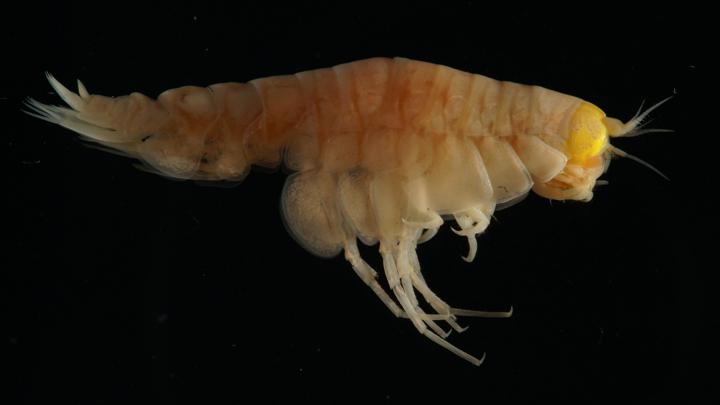 Hirondellea gigas, an amphipod collected from the Mariana TrenchAlan Jamieson / Newcastle University
.
.
Click the link below for the article:
https://www.theatlantic.com/science/archive/2019/02/deepest-ocean-trenches-animals-eat-plastic/583657/
.
__________________________________________
March 14, 2019
Mohenjo
Arts, Business, Crime, Human Interest, Medical, missed News, Political, Science, Technical

.
News You might have missed!
Use your browser or smartphone back arrow (<-) to return to this table for your next selection.
.
__________________________________________
March 13, 2019
Mohenjo
Breaking News, Business, Enthralling, Human Interest, Science, Technical
amazon, business, Business News, current-events, Future, Hotels, human-rights, medicine, mental-health, research, Science, Science News, technology, Technology News, travel, vacation

Click the link below the picture
.
Great idea: This company is using ocean plastics to make reusable shampoo bottles.
.
 .
.
.
Click the link below for the article:
https://twitter.com
.
__________________________________________
March 13, 2019
Mohenjo
Business, Human Interest, Medical, Science, Technical
amazon, business, Business News, current-events, Future, Hotels, human-rights, medicine, mental-health, research, Science, Science News, technology, Technology News, travel, vacation

Click the link below the picture
.
“We’re talking about 300,000 — at least — children who have died because of murder-by-alleged-medicines distributed by criminals,” said Dr. Joel Breman, a co-author of the report and senior scientific adviser emeritus at the Fogarty International Center of the US National Institutes of Health.
The World Health Organization has defined three types of falsified and substandard medical products.
.
“Falsified medical products” deliberately misrepresent their identity, composition or source. “Substandard medical products” are regulated drugs that somehow fail to meet quality standards or specifications — for example, they have less than needed amounts of an active pharmaceutical ingredients. “Unregistered or unlicensed medical products” are untested and unapproved drugs.
.

.
.
Click the link below for the article:
https://www.cnn.com/2019/03/11/health/fake-drugs-killing-children-study/index.html
.
__________________________________________
March 13, 2019
Mohenjo
Breaking News, Business, Crime, Human Interest, missed News, Science, Technical
amazon, AP, business, Business News, current-events, Future, Hotels, human-rights, medicine, mental-health, research, san juan puerto rico, Science, Science News, technology, Technology News, travel, vacation
.
News You might have missed!
Use your browser or smartphone back arrow (<=) to return to this table for your next selection.
.
__________________________________________
March 12, 2019
Mohenjo
Arts, Business, Human Interest, Technical
amazon, business, Business News, current-events, Future, Hotels, human-rights, medicine, mental-health, research, Science, Science News, technology, Technology News, travel, vacation

Click the link below the picture
.
The art school’s brief run in Germany shows not a simple dichotomy, but rather how, to varying degrees of bravery, individuals tried to survive under tyranny.
“Together let us call for, devise, and create the construction of the future, comprising everything in one form: architecture, sculpture and painting,” Walter Gropius declared in the Bauhaus Manifesto of 1919.
There are few symbols of Modernist design and architecture more iconic that his Bauhaus building in Dessau. And the structure did become that future; the epicenter of a design approach, style, and philosophy that permeates so much of the present. And yet, for many years, the building was derelict. The future Gropius had dreamed of seemed to have bitterly failed when the school had been closed by the Nazis in 1932, and turned into a bombed-out husk by 1945.
.
 The Nazis’ attempts to erase the Bauhaus through actions such as its demolition of Gropius’s “Monument to the March Dead” (1922) ultimately failed, but fate was cruel to some of its memebers. Wikimedia Commons
.
.
Click the link below for the article:
https://www.citylab.com/design/2019/03/walter-gropius-bauhaus-art-school-nazi-germany-anniversary/583999/
.
__________________________________________
March 12, 2019
Mohenjo
Breaking News, Business, Enthralling, Human Interest, Science, Technical
amazon, business, Business News, current-events, Future, Hotels, human-rights, medicine, mental-health, research, Science, Science News, technology, Technology News, travel, vacation

Click the link below the picture
.
Air pollution, the leading environmental cause of death worldwide, reflects the stark racial inequalities of American life. In the United States, the problem is disproportionately caused by the white majority, but its consequences are suffered mainly by blacks and Hispanics.
That is the finding of a new study, about five years in the making, published Monday in the Proceedings of the National Academy of Sciences of the United States of America. The results illuminate the fault lines of the lethal environmental danger, which is inseparable from the threat of climate change and responsible for more deaths globally each year than automobile accidents.
The research confirms with new statistical certainty the determination that racial and ethnic minorities are acutely vulnerable to air pollution because of the neighborhoods in which they live. But it also introduces a largely unstudied element into the analysis, examining who is responsible for the pollutants inhaled disproportionately by blacks and Hispanics. The answer, according to a nationwide team of engineers and economists, is white people.
.
 Smokestacks near an oil refinery are seen in front of the Utah State Capitol on Dec. 10, 2018. A new study released March 11 says African-Americans and Hispanics breathe in far more deadly air pollution than they are responsible for making. (Rick Bowmer/AP)
.
.
Click the link below for the article:
https://www.washingtonpost.com/nation/2019/03/12/whites-are-mainly-blame-air-pollution-blacks-hispanics-bear-burden-says-new-study/?utm_term=.9187981be301
.
__________________________________________
Older Entries
Newer Entries


