Citizens and policymakers around the world are grappling with how to limit companies’ use of data about individuals – and how private various types of information should be. But anthropologists like me know that cultures vary widely in their views of what is private and who is responsible for protecting privacy. Just like online privacy, real-world privacy can vary from person to person and from situation to situation.
Most concepts of privacy start with the physical body. Social scientists have found that every person has an intimate zone very near their body, a wider personal zone, and, beyond that, a social zone and then a public zone.
.
Is privacy what you can’t see, or where you don’t look? Photo by Kamil Macniak / Shutterstock.com.
Link previews are a ubiquitous feature found in just about every chat and messaging app, and with good reason. They make online conversations easier by providing images and text associated with the file that’s being linked.
Unfortunately, they can also leak our sensitive data, consume our limited bandwidth, drain our batteries, and, in one case, expose links in chats that are supposed to be end-to-end encrypted. Among the worst offenders, according to research published on Monday, were messengers from Facebook, Instagram, LinkedIn, and Line. More about that shortly. First a brief discussion of previews.
How would you feel if you read a poem — and then found out it was written by a computer? Would you be upset? Impressed? Would it make you like the poem less?
In 2013, Australian grad student Oscar Schwartz and his friend Benjamin Laird created a website called a bot or not. On the site, you’re presented with a poem and you have to guess whether it was written by a human or computer.
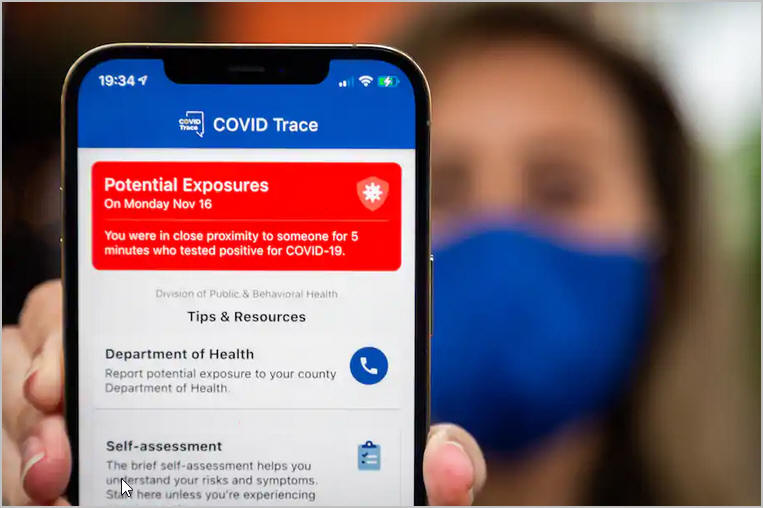
Here’s a phone alert you wouldn’t want to miss: “You have likely been exposed.”
The coronavirus surge is upon us, and your phone might be able to help. More than 160 million Americans have the ability to get pop-up notifications from local health authorities when they’ve personally spent time near someone who later tested positive for the coronavirus.
But exposure notifications only work if you and the people around you turn them on. Yes, you!
There’s early evidence this anonymous smartphone technology works — but so far isn’t helping very many Americans. In August, I wrote about the first of these state-sponsored alerts, Virginia’s Covidwise app. In the three months that followed, only 488 people have used the state’s app to send alerts about a positive diagnosis to others.
.
This demonstration shows a close-contact alert from the Bluetooth coronavirus exposure notification app made by the Nevada Department of Health and Human Services. (Geoffrey Fowler/The Washington Post)
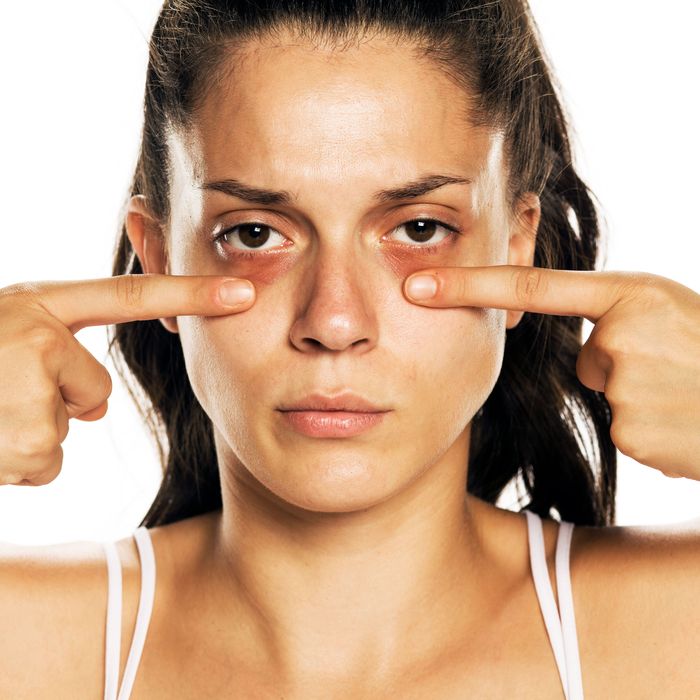
The TikTok teens are at it again. This time they’re … drawing on eye bags? According to the New York Times, Gen-Zers are switching out their nude concealers for brown makeup products as they try to accentuate their dark under eyes, rather than hide them. The trend is rooted in the idea that dark circles should be normalized since they’re something everyone deals with. Although this sounds lovely in theory, it’s more complicated in reality — especially for people who have spent years (and countless amounts of money) trying to cover up their own under-eye areas. Below, several Cut editors discuss.
Alexia LaFata, SEO editor: Cannot believe dark under-eye circles are now a trend. Literally, all I do is try to hide mine.
Izzy Grinspan, deputy style editor: One of my childhood friends had an extremely chic mom who always had visible dark circles. They made her look interesting and mysterious like she’d been up all night with her handsome young lover. So I’ve always thought they were kind of sexy.
Machine learning typically requires tons of examples. To get an AI model to recognize a horse, you need to show it thousands of images of horses. This is what makes the technology computationally expensive—and very different from human learning. A child often needs to see just a few examples of an object, or even only one, before being able to recognize it for life.
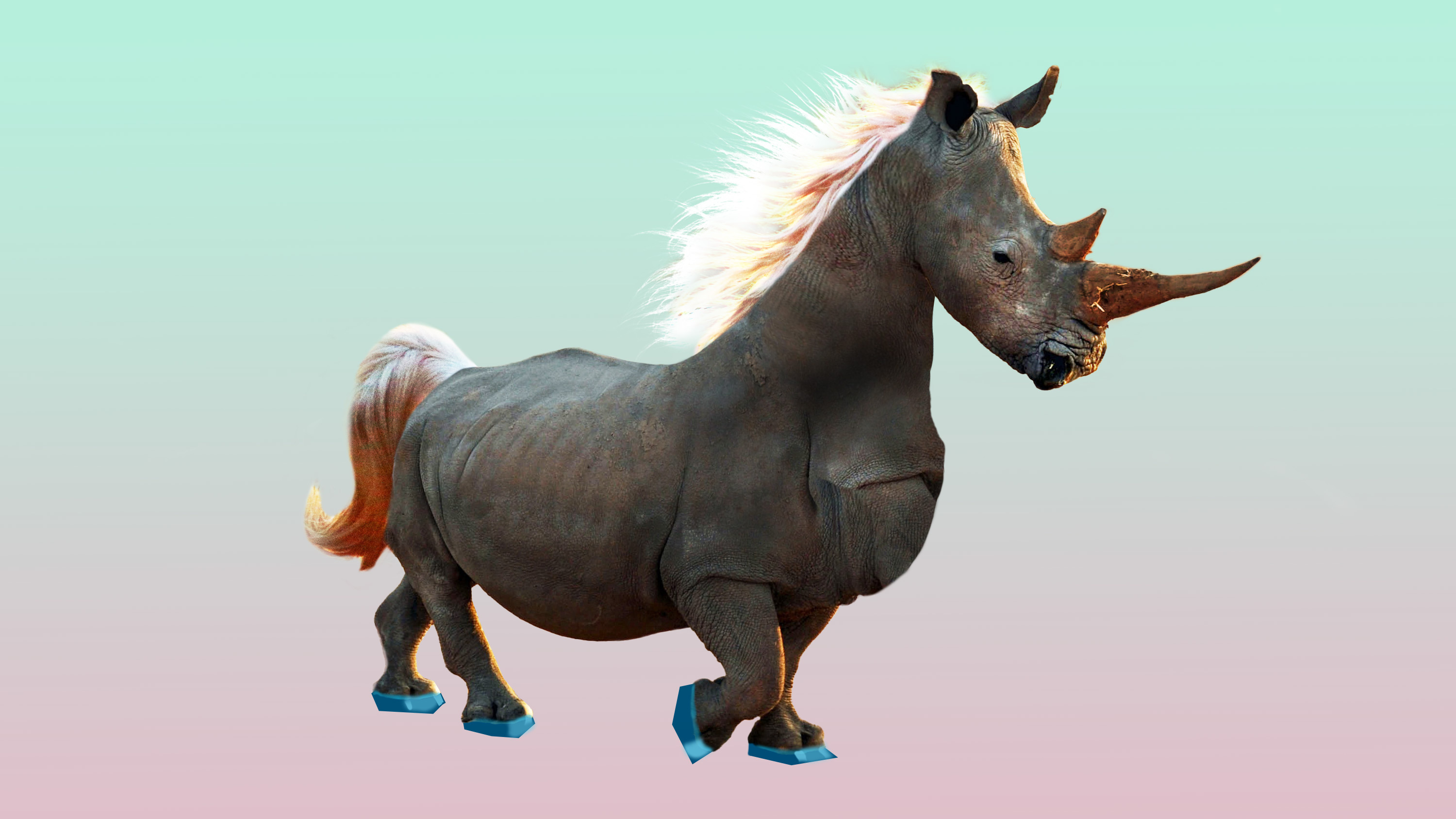
In fact, children sometimes don’t need any examples to identify something. Shown photos of a horse and a rhino, and told a unicorn is something in between, they can recognize the mythical creature in a picture book the first time they see it.
Now a new paper from the University of Waterloo in Ontario suggests that AI models should also be able to do this—a process the researchers call “less than one”-shot, or LO-shot, learning. In other words, an AI model should be able to accurately recognize more objects than the number of examples it was trained on. That could be a big deal for a field that has grown increasingly expensive and inaccessible as the data sets used become ever larger.
The excitement of getting a new phone is often tempered by nagging regret. A lot of times, it’s not like there was anything really wrong with the old phone (unless there was — a bulging battery or a shattered screen is always a bad look). If it was a breakup, the conversation with an old phone would start, “You’re terrific. It’s not you. It’s me. I just wanted a newer model.”
Ashamed of yourself? Don’t be. There’s no need to stick the old phone into a drawer or use it as a doorstop or furniture shim. There are lots of ways you can put your older phone to work. After all, most older smartphones still have plenty of horsepower. Think of yours as a connected device that just doesn’t happen to have a SIM card anymore. Here are some suggestions for what to do with that extra, older phone.
(All of this presumes that you’re not recycling or reselling your older Android or iOS device — two excellent options you should consider.)
Film and Writing Festival for Comedy. Showcasing best of comedy short films at the FEEDBACK Film Festival. Plus, showcasing best of comedy novels, short stories, poems, screenplays (TV, short, feature) at the festival performed by professional actors.



 Getty Images


 This demonstration shows a close-contact alert from the Bluetooth coronavirus exposure notification app made by the Nevada Department of Health and Human Services. (Geoffrey Fowler/The Washington Post)


/cdn.vox-cdn.com/uploads/chorus_image/image/67735822/xs09-02_12-06-08g1020_gallery_post.5.jpeg)
 James' World 2