Women have endured critiques over their appearance since their entry into public spaces. But since Vice President Kamala Harris’s loss in the United States presidential election, criticism of women and their bodies has become even more explicit and misogynistic. The goal is to tell women to “get back in the kitchen” at home and stay out of the public domain. Combatting this bias against women is more important than ever, as disapproval of women’s appearance and bodies still happens to women at work every day in subtle and overt ways.
When one professional worked at a public relations agency, the male chief executive officer told her to “help the receptionist lose some weight.” He considered the female receptionist’s “sloppy appearance” a bad first impression to people coming into the office. Another professional worked in an organization where there were plenty of women in director roles, but almost all were “thin, blonde, white, [and] usually tall as well.”
Yet being attractive may not be an advantage either. Colleagues told a scientist that she was “too cute to be taken seriously” and that she “must struggle to convey [her] intellect.” In another case, the female
supervisors of a social worker were concerned that she was too distracting to male clients. The social worker felt she was to blame. So, she dressed very conservatively and gained weight to “make [herself] less attractive.”
Lookism, also known as pretty privilege, explains that physically attractive people have advantages in the workplace. While research on this beauty advantage exists, it does not sufficiently address differences between women and men. Like so many workplace generalizations, what is true for men is not necessarily true for women. Not only do women perceived as unattractive encounter workplace disadvantages, but attractive women do as well. In fact, women are criticized for their appearance no matter how they look. The femaleness of their body stands out, considered abnormal in a traditionally male space.
Through our research of 913 women leaders, social media posts, articles, and our own experiences, we found myriad ways that women’s appearance at work is “never quite right.”
‘The impossible tightrope of looking good but not too good at work’
Women walk a fine line when it comes to clothing at work. A health services researcher noted that some women were criticized for dressing “too sexy” while others were deemed “too sloppy.” She called it “the impossible tightrope of looking good but not too good at work!” One woman working a $30,000 per year job was told she needed to purchase a new wardrobe because her clothing was not “professional enough.” She said, “With what money am I to purchase professional attire?”
Lending money to a friend or family member can put a strain on the relationship if you’re not careful.
Nearly a quarter of people who lent money or covered a group expense with the expectation of being paid back say doing so negatively impacted their relationship with the other party, Bankrate’s 2024 financial taboos survey found.
While a common rule of thumb is to simply not expect to receive the money back after loaning it out, there’s another way to navigate this dilemma without going bankrupt yourself: Set boundaries and clearly communicate them.
“Decide if you can afford to give them the money and if you can’t, you may not really be in a position to help,” Aja Evans, a board-certified therapist who specializes in financial therapy, tells CNBC Make It. “You cannot potentially sink your own ship to bail out someone else.”
That’s not to say having that conversation is easy, Evans says. Often, close friends or family members may be aware of the things you’re spending money on, like clothes or vacations, and make judgements about what you can or can’t afford.
But it’s important to remind yourself that no one knows your money better than you, Evans says. “Just because you have it in your account doesn’t mean you can give it,” she says. “Especially if you know other bills are coming.”
Here’s an example of a healthy boundary you can set when asked to loan money and how to navigate the potential guilt that may come if you say no.
Give what you can afford
Directly saying no when a friend or family member asks for money can be hard, especially if you’ve loaned them money in the past. That’s why it’s OK to start small, Evans says.
One way to do that is by lending what you can afford, even if it’s less than they’ve requested, she says. Say a friend asks to borrow $100, but you know giving them the full amount would significantly impact your budget. Try offering an amount that is more feasible for you, such as $20 or $30.
And while you don’t necessarily owe them an explanation for why you can’t give them the full amount they’ve requested, it can be helpful to honestly communicate the other financial obligations you’re managing, Evans says.
“That’s a healthy boundary because, while you may not be able to give all of what they want, you’re giving what you can without sinking your own ship,” she says.
It’s OK to feel guilty
It’s common to feel guilty after refusing to lend money to a friend or family member, even if you’re proud of yourself for setting the boundary, Evans says. To deal with the guilt, it can be helpful to write down your financial boundaries and the reasons you’re setting them.
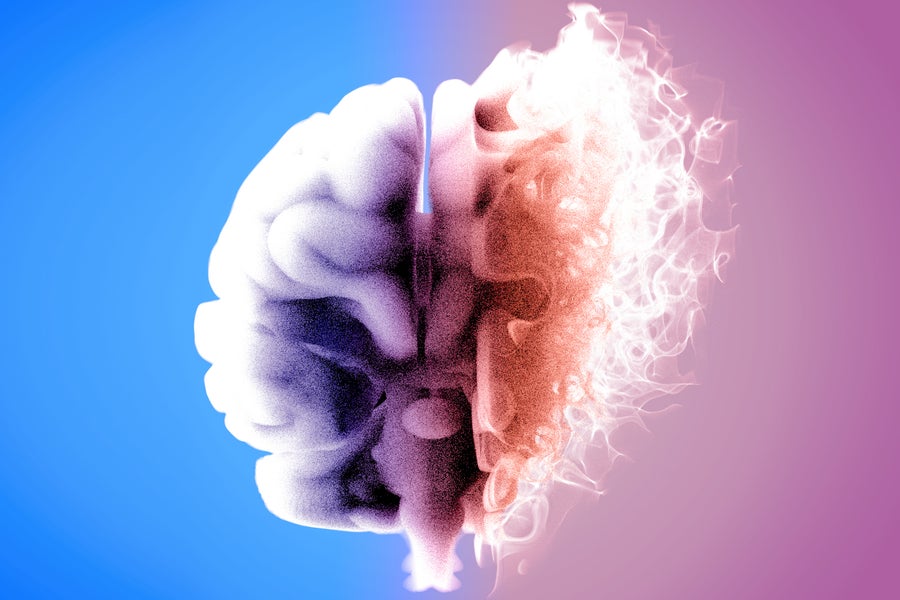
No part of our body is as perishable as the brain. Within minutes of losing its supply of blood and oxygen, our delicate neurological machinery begins to suffer irreversible damage. The brain is our most energy-greedy organ, and in the hours after death, its enzymes typically devour it from within. As cellular membranes rupture, the brain liquifies. Within days, microbes may consume the remnants in the stinky process of putrefaction. In a few years, the skull becomes just an empty cavity.
In some cases, however, brains outlast all other soft tissues and remain intact for hundreds or thousands of years. Archaeologists have been mystified to discover naturally preserved brains in ancient graveyards, tombs, mass graves, and even shipwrecks. Scientists at the University of Oxford published a study earlier this year that revealed that such brains are more common than previously recognized. By surveying centuries of scientific literature, researchers counted more than 4,400 cases of preserved brains that were up to 12,000 years old.
“The brain just decays super quickly, and it’s really weird that we find it preserved,” says Alexandra Morton-Hayward, a molecular scientist at Oxford and lead author of the new study. “My overarching question is: Why on Earth is this possible? Why is it happening in the brain and no other organ?”
Such unusual preservation involves the “misfolding” of proteins—the cellular building blocks—and bears intriguing similarities to the pathologies that cause some neurodegenerative conditions.
As every biology student learns, proteins are formed by chains of amino acids strung together like beads on a necklace. Every protein has a unique sequence of amino acids—there are 20 common types in the human body—that determines how it folds into its proper three-dimensional structure. But disturbances in the cellular environment can make folding go awry.
The misfolding and clumping of brain proteins is the underlying cause of dozens of neurodegenerative disorders, including Alzheimer’s disease, Parkinson’s disease, amyotrophic lateral sclerosis (ALS), and the cattle illness bovine spongiform encephalopathy (BSE), also called mad cow disease. Now scientists are discovering that some misfolded proteins also can form clumps after death—and persist for hundreds or thousands of years.
Only in recent years have scientists begun to seriously investigate these bizarre cases. A big breakthrough occurred in 2008 when archaeologists discovered the 2,500-year-old skull of a man who had been hanged, decapitated, and dumped into an irrigation channel in Heslington, England. All other soft tissue had long since vanished, but investigators were stunned to find that the skull still contained a shrunken brain.
A team of neuroscientists at University College London analyzed the ancient brain with a chemical analysis technique known as liquid chromatography–mass spectrometry and identified nearly 800 preserved proteins—the most ever discovered in an archaeological specimen. They concluded the ancient brain was preserved by the aggregation of proteins.
When Protein Folding Goes Wrong
In living organisms, protein folding is very context-dependent, and disturbances in the cellular environment can make it to go astray.
A classic example is egg white. Normally, it is a transparent liquid, but when conditions change—as when an egg is fried or boiled—its proteins unravel, become entangled, and form clumps. “That’s an aggregate,” says Ulrich Hartl, a leading researcher of protein-folding diseases at the Max Planck Institute of Biochemistry in Martinsried, Germany. “The same thing happens in your brain at a microscopic level.” Many diseases share a similar underlying mechanism: the protein abandons its healthy native state, unfurls, and becomes entangled in a jumbled mass with other misfolded proteins.
In diseases, the misfolded version becomes the protein’s most thermodynamically stable state, often making the aggregations irreversible. Hartl says he would not be surprised if a similar mechanism lay behind ancient brain preservation. “It’s fascinating that the brain can be preserved for such a long time after death,” he says. “The question of interest for me is: Does this reflect, in any way, what is going on during neurodegeneration?”
Enduring Brains
The discovery of the Heslington brain stimulated new research into brain preservation. The epicenter of this effort is the University of Oxford, and its lead investigator is Morton-Hayward, a former mortician turned molecular scientist. Now a Ph.D. candidate, she has gathered the world’s largest collection of ancient brains—more than 600 specimens up to 8,000 years old from locales such as the U.K., Belgium, Sweden, the U.S. and Peru—and she is analyzing how they were preserved. (The specimens were collected in accordance with Oxford’s research ethics guidelines.)
To understand why these brains haven’t decayed, Morton-Hayward has peered at ancient brain tissue with powerful microscopes. She has placed mouse brains in jars of water or sediment to measure how they decompose over time. She has employed mass spectrometry to identify the proteins and amino acids that persist in the ancient brains. She has identified more than 400 preserved proteins. (The most abundant of these is myelin basic protein, which helps form the insulating sheath on our neural wiring.) She has sliced up ancient brain tissues and taken the samples to the Diamond Light Source synchrotron (the U.K.’s national particle accelerator) to pummel them with electrons traveling at almost the speed of light to understand the metals, minerals and molecules involved in the preservation process.
Bodies can avoid decomposition via embalming, freezing, tanning, or dehydration, but Morton-Hayward focuses on cases where brains are the only soft tissues remaining. Typically, the preserved brains come from waterlogged, low-oxygen burial environments such as low-lying graveyards or, in the case of the Heslington brain, an irrigation ditch. Human brains are composed of about 80 percent water, and the rest is roughly divided between proteins and lipids (fatty, waxy or oily compounds that are insoluble in water). The Oxford researchers suspect that this unique chemistry makes neural tissue especially amenable to preservation.
Former President Donald Trump’s social media company outsourced jobs to workers in Mexico even as Trump publicly railed against outsourcing on the campaign trail and threatened heavy tariffs on companies that send jobs south of the border.
The firm’s use of workers in Mexico was confirmed by a spokesperson for Trump
Media, which operates the Truth Social platform. The workers were hired through another entity to code and perform other technical duties, according to a person with knowledge of Trump Media. The reliance on foreign labor was met with outrage among the company’s own staff, who accused its leadership of betraying their “America First” ideals, the person said.
The outsourcing to Mexico helped prompt a recent whistleblower letter from staff to Trump Media’s board that has been roiling the company.
That complaint, reported by ProPublica last month, calls for the board to fire CEO Devin Nunes, a former Republican congressman. The letter alleges he has “severely” mismanaged the company. It also asserts the company is hiring “America Last” — with Nunes imposing a directive to hire only foreign contractors at the expense of “American workers who are deeply committed to our mission.”
“This approach not only contradicts the America First principles we stand for but also raises concerns about the quality, dedication, and alignment of our workforce with our core values,” the complaint reads.
A Trump Media spokesperson said the company uses “two individual workers” in Mexico. “Presenting the fact that [Trump Media] works with precisely two specialist contractors in Mexico as some sort of sensational scandal is just the latest in a long line of defamatory conspiracy theories invented by the serial fabricators at ProPublica,” the spokesperson said.
The spokesperson declined to answer other questions about the company’s Mexican contractors, including how much they’ve been paid, how many have been used over time, and how their hiring squares with Trump’s promises to punish firms that send jobs outside of the U.S. The Trump campaign did not respond to questions.
For a company of its prominence, Trump Media has a tiny permanent staff, employing just a few dozen people as of the end of last year, only a portion of whom work on the Truth Social technology.
Trump Media’s hiring of Mexican coders also prompted frustration within the staff, the person with knowledge of the company said, because they were perceived by staff to not have the technical expertise to do the work.
On its homepage, Truth Social bills itself as “Proudly made in the United States of America. 🇺🇸”
.
Trump’s social media company outsourced jobs to workers in Mexico even as the former president publicly railed against outsourcing on the campaign trail and threatened to levy heavy tariffs on businesses that send jobs south of the border.Credit: Adam Gray/Bloomberg via Getty Images
From the sunlit top 200 meters of the sea, plankton carcasses, excrement, and molt particles constantly drift toward the depths. As this so-called marine snow sinks, the bits can clump together or break apart, gain speed or sink more slowly, or get eaten up by bacteria. They descend through darker, colder, and denser waters, carrying carbon with them and settling on the bottom as biomass.
The oceans absorb billions of tons of carbon every year, a process crucial to account for in climate models. But researchers have long been stumped by how much carbon actually reaches the seafloor—and stays there. To find out, oceanographers are investigating how carbon is eaten, expelled, and otherwise influenced as it drifts through what some scientists think of as the ocean’s “digestive system.”
Measuring the rate of carbon storage means scrutinizing the composition of what sinks, how particles stick together and thus drop faster or slower, the decelerating effects of mucus-producing phytoplankton—and even, for a new study published in Science, specific microbes’ dietary preferences.
“We currently do not have a very good way to connect the processes at the surface with what’s arriving at the seafloor,” says Monterey Bay Aquarium Research Institute oceanographer Colleen Durkin. “We know they’re linked, but it’s been very difficult to observe the mechanisms that drive that connection.”
Recent advances in sensor development, imaging, and DNA sequencing are now giving researchers a closer look at the particular organisms and processes at work. By isolating and testing bacterial populations in marine snow, the study’s co-author Benjamin Van Mooy, a researcher at Woods Hole Oceanographic Institution, and his colleagues found that specific microbe populations prefer to eat phytoplankton that contain specific kinds of fatty acid biomolecules called lipids.
Lipids constitute up to 30 percent of the particulate organic matter at the ocean’s surface, so bacterial dietary preferences in a given region could significantly alter how much carbon-containing biomass reaches the seafloor. “If we can start to understand what [microbes] can do, then we can imagine a future where we can start to predict, potentially, the fate of carbon based on the organisms that are present,” says Van Mooy, who was awarded a MacArthur Fellowship in 2024 for his work.
Scientists are also working to document what falls through particular locations over various time frames. Sediment traps reveal a snapshot of certain areas’ marine snow, and Durkin and others are deploying sensors with autonomous cameras to observe sinking particles over a longer period. Seeing the complexity of marine snow distribution, says Rutgers University microbial oceanographer Kay Bidle, “reveals how we can’t necessarily model and understand carbon flux by the very simple constructs and equations and laws that we had before.”
.
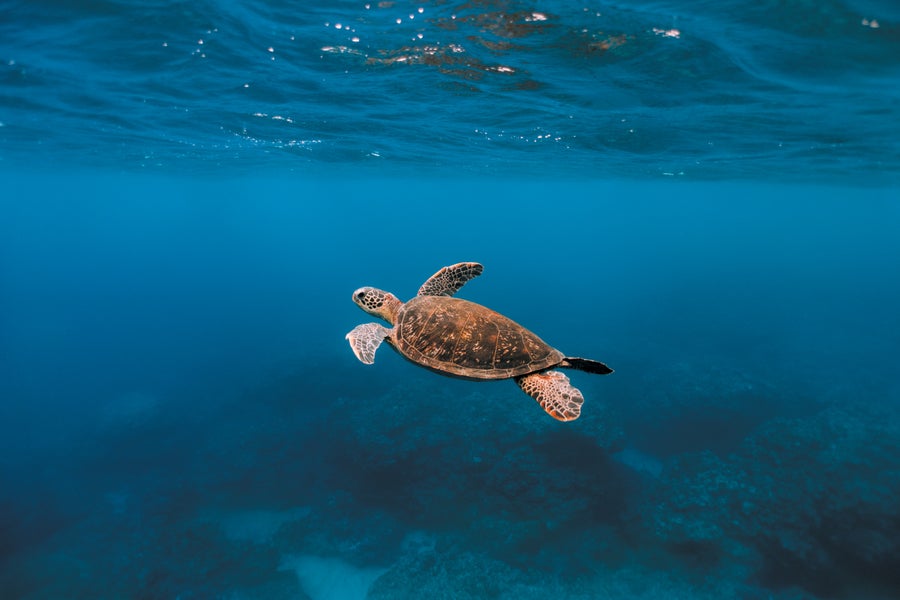
Carbon falls as “marine snow” through ocean layers. Ippei Naoi/Getty Images
The typical American retires far earlier than he or she expects to, and it’s often not by choice, according to new research from the Transamerica Center for Retirement Studies.
The median retirement age in the U.S. is 62, with nearly six in 10 retirees telling the research firm that they stepped back from the workforce earlier than they had planned. Almost half of those people said the reason came down to health issues, such as physical limitations or disability. Losing a job or an organizational change at their employer were among the other reasons people stopped working before they planned to retire.
“Financially precarious”
The findings underscore the fragility of retirement in the U.S., with older Americans often finding themselves retired before they’re financially ready to call it quits. And with many people outliving earlier generations — the typical respondent told Transamerica they believe they’ll live to age 90 — they’re also facing the prospect of supporting themselves financially for several decades in retirement, which can easily stretch or even exhaust their savings.
“Many of them are financially precarious — if they were to have some sort of major financial shock or their health would decline and needed long-term care, they would have a hard time affording it,” Catherine Collinson, CEO and president of the Transamerica Center for Retirement Studies, told CBS MoneyWatch.
The research backs up previous research about the typical retirement age, with the nonprofit Employee Benefit Research Institute finding earlier this year that the median retirement age for Americans is 62. That underscores a gap between retirement plans and reality, with business leaders and policy experts often urging Americans to work longer so they can save more for their old age — a strategy that often doesn’t unfold as envisioned.
Retirees forced to leave their jobs earlier than planned is a “cautionary tale for people currently in the workforce,” Collinson said.
People should actively maintain their health and keep their skills up to date, while also educating themselves about retirement and financial planning, as well as socking away savings, she noted.
Why Americans claim Social Security early
Retiring before a person expects may explain why millions of Americans claim Social Security before they reach their “full retirement age,” or the age at which they are entitled to their full benefits.
Retirement experts generally urge Americans to hold off on claiming Social Security as long as possible because of the financial benefits of waiting. Workers can file for the retirement benefit as early as age 62, but the tradeoff is a roughly 30% reduction in their monthly checks compared with waiting until full retirement age, which is either 66 or 67 depending on one’s birth year.
But the median age when Americans claim Social Security benefits is 63, Transamerica found in its survey of more than 2,400 retirees. That means many older Americans are locking themselves into permanently lower monthly checks throughout their retirement.
On the flip side, waiting until age 70 to collect Social Security — the maximum age to claim benefits — provides a boost of more than 30% to one’s monthly benefits. Despite that incentive, Transamerica found that only 4% of retirees wait until 70 to file for their benefits.
“One of the most important things they can do is fully understand their benefits, and if they have any options to stretch out those benefits,” Collinson said. “If it’s a spousal situation, maybe if they need the income, one claims first and the other later, or if they can jump back in the workforce and hit the pause button on Social Security and get more income.”
In troubling times, how do we move forward? What mindsets help us bounce back from adversity?
When the world ground to a halt because of the COVID-19 pandemic in 2020, few industries felt the impact quite like the performing arts. Venues shuttered and crowds dispersed. Musicians, actors, and production crews faced an unprecedented challenge: they needed to stay resilient despite the fact that their livelihood had vanished overnight.
Along with my colleagues at Clemson University and North Carolina State University, I wanted to explore what helps people persevere through such moments, so we partnered with MusiCares, a nonprofit that supports music industry professionals, to study how artists maintained their resilience during the pandemic’s darkest days. We were particularly interested in two mental approaches: mindfulness (being present and aware in the moment) and hopefulness (believing in and working toward a better future). In psychology, these concepts can be used to describe a general state of being, one that reflects both personality (some people are naturally more mindful or hopeful) and actions, such as regularly practicing meditation to improve one’s focus on the present. Many researchers also view mindfulness as a metacognitive process, that is, something that enables people to consciously monitor and modulate their attention, emotions and behaviors to attend to the current moment in an open and curious, nonjudgmental way. Hope, meanwhile, functions as a future-oriented state that helps people to reflect on one’s perceived ability to generate pathways around challenges.
Mindfulness—a buzzword in wellness circles—might seem to be the obvious key to weathering a storm such as the pandemic. After all, staying grounded in the present moment seems like a good way to avoid spiraling into anxiety about an uncertain future. But our research tells a different, somewhat
surprising story. Although mindfulness is a powerful tool for well-being, it does have limitations—and learning to cultivate a hopeful mindset is another critical strategy.
Our study followed 247 performers for 18 months, much of which was spent in lockdown. We asked them about their mindset and well-being at different stages of the pandemic. As part of this effort, we gathered data through questionnaires that we sent out in 2021. People told us about their early experiences of the pandemic and their level of work-related tension and resilience. We also asked them about how much they agreed with various statements related to mindfulness or hopefulness in relation to the pandemic specifically. A higher state-of-mindfulness score suggested someone working to maintain awareness of their experiences in a nonjudgmental way, and a higher hopefulness state indicated someone who was actively envisioning potential solutions to pandemic-related obstacles. This allowed us to assess people’s mental strategies and better understand how each approach had helped people navigate the unprecedented challenges of COVID-19.
We found, unsurprisingly, that these artists were indeed adversely affected by COVID-19’s challenges. More intriguingly, we did not find evidence that mindfulness was particularly helpful to them as a pandemic coping strategy. Although it wasn’t harmful, it also didn’t significantly help artists bounce back or stay engaged with their work during this prolonged period of stress.
Instead hope was the real superstar. Those who maintained a hopeful outlook reported higher levels of work-related resilience and engagement, even as their industry remained in limbo. They were also more likely to experience positive emotions, which in turn boosted their ability to cope with the ongoing crisis. Hopefulness also contributed to their ability to stay productive by exploring new ways to deliver their craft, such as virtual performances and online collaborations.
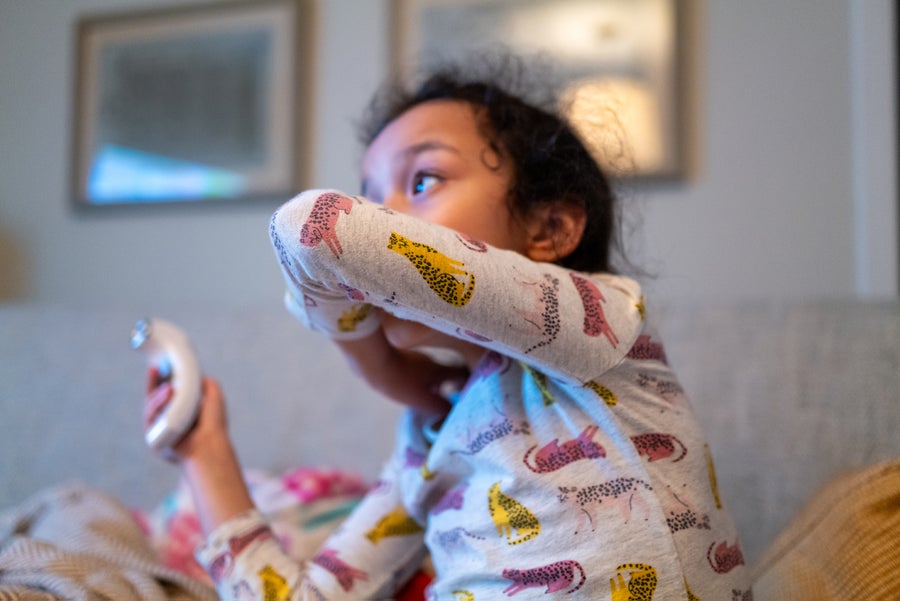
The temperature is dropping, and rates of a whole host of respiratory illnesses are doing the opposite. Among them is so-called walking pneumonia, a relatively mild form of pneumonia that has been unusually common in young children this year.
Pneumonia can be caused by dozens of different pathogens, but walking pneumonia is most commonly caused by a bacterium called Mycoplasma pneumonia. Traditional pneumonia can require hospitalization. Walking pneumonia, however, can feel like a bad cold and is sometimes not even serious enough to force people to rest at home. This year experts are particularly concerned about the infection because it appears more prevalent than usual in young children. According to the Centers for Disease Control and Prevention, this past October, about 7 percent of children and adolescents between two and 17 years old who had pneumonia-related emergency room visits were diagnosed with a M. pneumoniae infection. The proportion of M. pneumoniae cases increased between March and October, and the increase was higher in children between two and four years old than it was in older children. That is especially striking because, traditionally, infections have been highest among children between age five and 17.
Scientific American spoke with Eberechi Nwaobasi-Iwuh, a pediatric hospitalist
at Atlantic Health System’s Morristown and Overlook Medical Centers in New Jersey, about walking pneumonia trends and what parents should know.
[An edited transcript of the interview follows.]
What is walking pneumonia?
The reason it’s referred to as walking pneumonia is that you can be infected with Mycoplasma and develop pneumonia from it, and even though you have pneumonia, you won’t have the typical symptoms. You may have some fatigue and fever and cough, but it doesn’t make you typically as ill as one would expect from pneumonia. That said, recently we’re seeing some kids who are coming in who are fairly sick with it.
How would you characterize walking pneumonia rates this year compared with previous years?
Usually, it’s more common in school-aged kids, adolescents, and young adults, but this year we’re seeing it in very young children and even infants. Sometimes they may be symptomatic, or sometimes we’re just catching it when we’re swabbing them for microbes with other presentations. We’re just seeing it distributed more widely across more age groups than we typically do.
Are there also more cases this year than usual, or is it just that unusual age pattern?
Oh, definitely more cases. In my experience, we’ve probably seen a two- to threefold increase in the number of cases you ordinarily see for this time of year.
Are there any theories about what’s driving the age shift, with more young kids getting sick?
Since COVID, all the regular seasonal variations with viruses and bacteria really don’t follow the same patterns they used to. Some degree of decrease in immunity may have occurred, or the cause may be a more virulent strain that’s just a little bit more transmissible than usual. But I think it’s kind of hard to say what exactly is spurring the age shift.
Some viruses have episodic increases, so every five to seven years, you’ll see an increase in cases. Mycoplasma bacteria also follow that pattern sometimes, so this may just be the typical increase that we would have expected overall, historically.
How seasonal is walking pneumonia in general?
Usually, it’s more common during the fall and winter months, but even in August we started seeing somewhat increased cases, and that’s continued. Even during the early summer and late spring, we were seeing some Mycoplasma, but it was manifesting differently.
Louisa and Isaac, a lively, warm, and bright couple in their 40s, fell in love two decades ago. They were intellectually engaged with each other, adventurous, and, for years, shared “deep blue” affiliations. That changed during Donald Trump’s first term.
One of their earliest arguments about politics, they told me recently, erupted when Isaac announced he thought a wall on the southern border made sense. Louisa was shocked. She worked with undocumented immigrants; the spirit of protectiveness for the vulnerable was a deep part of her identity.
As Isaac became more engaged with a conservative worldview, their arguments grew more heated. Louisa described how their political divisions made them fearful of each other. “I didn’t recognize him,” she said. “I was afraid — maybe he wasn’t a compassionate person? Who is he? Is he even kind, loving? Does he care about people?”
I was introduced to Isaac and Louisa (that’s her middle name) by a director of my Showtime series, “Couples Therapy.” In my work as a psychoanalyst and couples therapist, I see a deep resignation in response to our political divide and a newfound fear of “the other side.” Due to our political differences, people in this country are deeply alienated from one another.
From a psychoanalytic perspective, I see how political disputes follow dynamics similar to disputes between couples, albeit amplified. People typically come to any event with differing views
of the world informed by their life and background. Couples negotiate these differences by creating their own political system and guiding ideologies.
Grasping the degree to which each of their “truths” emerges from a deeply subjective place is their most important challenge. This process is difficult — for a couple or for a country. A psychoanalytic approach offers a path.
As children, early in our psychological development, we all resort to a defense mechanism identified by the psychoanalyst Melanie Klein as “splitting.” To cope with negative or inexplicable experiences, we divide our perceptions of people into either all-good or all-bad.
This splitting allows us to avoid dealing with feelings of vulnerability, shame, hate, ambivalence or anxiety by externalizing (or dumping) unwanted emotions onto others. We then feel free to categorize these others as entirely negative, while seeing ourselves as good.
In political environments, this kind of splitting manifests in an “us versus them” mentality — where “our” side is virtuous and correct, and “their” side is wrong and flawed — which produces the kind of rigid, extreme, ideological warring we are caught up in now.
The technologies that mediate our access to reality only exacerbate this dynamic. The algorithms used by social media prioritize sensationalist and divisive content, creating “bubbles” that limit our exposure to diverse perspectives, rather than fostering a balanced discourse.It’s important for us to recognize just how gratifying this process can be, both for individuals and larger groups. Splitting produces a kind of ecstatic righteousness. There’s an intoxicating thrill in hate — in feeling that you’re in the bosom of a like-minded brotherhood, free from complexity and uncertainty. In this state, we’re prone to ignore information that contradicts our idealized version of ourselves, we become allergic to dissonance, and those with differing views are cast out or canceled.
Film and Writing Festival for Comedy. Showcasing best of comedy short films at the FEEDBACK Film Festival. Plus, showcasing best of comedy novels, short stories, poems, screenplays (TV, short, feature) at the festival performed by professional actors.









 zeljkosantrac/Getty Images
 Catherine McQueen/Getty Images


 James' World 2