August 8, 2017
Mohenjo
Breaking News, Business, Human Interest, Medical, Science
amazon, business, Business News, current-events, Future, Hotels, human-rights, medicine, mental-health, New York, research, Science, Science News, technology, Technology News, travel, vacation
Click link below picture
.
He approaches the first stranger with an expectant smile and an urgent query: “Do you know about the solar eclipse?”
The man shakes his head, and Mike Kentrianakis is launched. He’s here at the Hayden Planetarium as an emissary of the American Astronomical Society, and his mission is to spread the word: On Aug. 21, the moon will pass between the sun and Earth, casting a shadow across a swath of the United States. The spectacle will be like nothing most people have ever seen.
Carmen Irizarry, a science teacher from Staten Island, walks over with her two young granddaughters. She’s been thinking about taking them to a spot on the path of totality — where the moon will completely block out the sun for a few mesmerizing minutes. “I entirely encourage it,” Kentrianakis tells her. “It’s a completely different phenomenon. It shouldn’t even be called an eclipse. It should be called something else.”
.
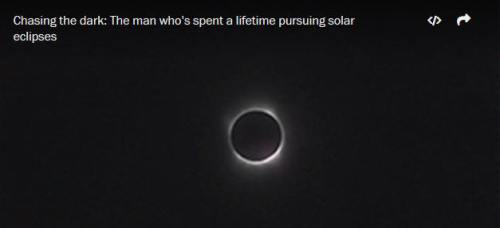 Total eclipse this August
.
.
Click link below for article and video:
America’s greatest eclipse is coming, and this man wants you to see it …
.
__________________________________________
August 8, 2017
Mohenjo
Breaking News, Business, Human Interest, Medical, Science
amazon, business, Business News, current-events, Future, Hotels, human-rights, medicine, mental-health, research, Science, Science News, technology, Technology News, ted talks, travel, vacation, Video
Click link below picture
.
Jimmy Lin is developing technologies to catch cancer months to years before current methods. He shares a breakthrough technique that looks for small signals of cancer’s presence via a simple blood test, detecting the recurrence of some forms of the disease 100 days earlier than traditional methods. It could be a ray of hope in a fight where early detection makes all the difference.
.
 Cancer detection with a simple blood test
.
.
Click link below for video:
https://www.youtube.com
.
__________________________________________
August 5, 2017
Mohenjo
Breaking News, Business, Human Interest, Medical, Science
amazon, business, Business News, current-events, Future, Hotels, human-rights, medicine, mental-health, nbc news, research, Science, Science News, technology, Technology News, travel, vacation
Click link below picture
.
The trip to the bat cave was just a filler, a way to kill time while the more interesting attractions in the Uganda jungle, the gorillas and chimpanzees, were snoozing away in the heat of the day.
Michelle Barnes brought back more than memories from that trip. She came home infected with Marburg virus — a cousin of Ebola that’s even deadlier.
Now Barnes’ blood has provided a potential cure for the infection. Researchers at Vanderbilt University and Mapp Biopharmaceutical Inc. isolated an especially potent immune system protein called a monoclonal antibody from Barnes and have used it to cure monkeys infected not only with Marburg virus, but with a related virus called Ravn.
.
Scientists work in a specialized, high-security biological containment facility at the University of Texas Medical Branch in Galveston, Texas while developing therapies for dangerous pathogens like the Marburg and Ravn viruses. University of Texas Medical Branch at Galveston
.
.
Click link below for article:
http://www.nbcnews.com/storyline/ebola-virus-outbreak/antibody-treatment-cures-monkeys-marburg-deadly-ebola-cousin-n744086
.
__________________________________________
August 5, 2017
Mohenjo
Breaking News, Business, Human Interest, Science
amazon, business, Business News, current-events, Future, Hotels, human-rights, medicine, mental-health, research, Science, Science News, TAMPA BAY Fla., technology, Technology News, the washington post, travel, vacation
Click link below picture
.
Mark Luther’s dream home has a window that looks out to a world of water. He can slip out the back door and watch dolphins swim by his private dock. Shore birds squawk from nearby nests in giant mangroves.
He said it’s hard to imagine ever leaving this slice of paradise on St. Petersburg’s Bayou Grande, even though the water he adores is starting to get a little creepy.
Over the 24 years since he moved into the house, the bayou has inched up a protective sea wall and crept toward his front door. As sea level rises, a result of global warming, it contributes to flooding in his Venetian Isle neighborhood and Shore Acres, a neighboring community of homes worth up to $2.5 million, about 70 times per year.
“Why stay?” asked Luther, an oceanographer who knows perfectly well a hurricane could one day shove 15 feet of water into his living room. “It’s just so nice.”
.
 Tampa Bay’s Salvador Dali museum has been built to withstand a category 5 hurricane to protect the art collection worth millions of dollars. (Zoeann Murphy/The Washington Post)
.
.
Click link below for article and videos:
Tampa Bay is due for a major hurricane. It is not … – Washington Post
.
__________________________________________
August 3, 2017
Mohenjo
Business, Human Interest, Science
amazon, business, Business News, current-events, Future, Hotels, human-rights, medicine, mental-health, Mic.com, research, Science, Science News, technology, Technology News, travel, vacation
Click link below picture
.
Google CEO Sundar Pichai announced at Google’s I/O event on Wednesday that the company is releasing a new version of Smart Reply for Gmail — a service that uses artificial intelligence to make replying to emails a cinch.
The feature — originally rolled out on its Inbox email app in 2015 and currently also available on its Allo messaging app — uses machine learning to predict responses. This technology is now coming to Gmail on iOS and Android devices.
“Inspired by how humans understand languages and concepts, we turned to hierarchical models of language, an approach that uses hierarchies of modules, each of which can learn, remember and recognize a sequential pattern,” two Google researchers — one of whom is prominent futurist Ray Kurzweil, who is also Google Research’s engineering director — wrote in a blog post.
.
Source: Getty Images
.
.
Click link below for article:
https://mic.com/articles/177452/google-smart-reply-gmail-will-use-artificial-intelligence-to-let-you-answer-emails-faster#.4GvRUWXwZ
.
__________________________________________
August 2, 2017
Mohenjo
Breaking News, Business, Human Interest, Science
amazon, business, Business News, current-events, Future, Hotels, human-rights, medicine, mental-health, research, Science, Science News, technology, Technology News, the washington post, travel, vacation
Click link below picture
.
Inspired by slug slime, scientists have developed a flexible adhesive that sticks to wet surfaces. This stretchy glue can be attached to a beating, bleeding heart and could someday replace stitches in wound repair.
Other commercially available glues create strong but inflexible bonds or stretchy but weak connections. The slug-inspired glue cements tightly and it is held together by a stretchy matrix.
The sticking power of this adhesive is “probably on the order of 10 times better than what’s currently on the market,” said Phillip Messersmith, a professor of bioengineering at the University of California at Berkeley, who was not involved with a study of the substance that was published Thursday in the journal Science.
.
 (Jianya Li, Adam D. Celiz and David J. Mooney)
.
.
Click link below for article:
https://www.washingtonpost.com/news/to-your-health/wp/2017/07/27/stretchy-glue-inspired-by-slugs-could-be-the-future-of-sutures/?utm_term=.bf8a900374cb
.
__________________________________________
August 2, 2017
Mohenjo
Breaking News, Business, Human Interest, Science
amazon, business, Business News, current-events, Future, Hotels, human-rights, medicine, mental-health, research, Science, Science News, technology, Technology News, the washington post, travel, vacation
Click link below picture
.
Scientists have successfully edited the DNA of human embryos to erase a heritable heart condition that is known for causing sudden death in young competitive athletes, cracking open the doors to a controversial new era in medicine.
This is the first time gene editing on human embryos has been conducted in the United States. Researchers said in interviews this week that they consider their work very basic. The embryos were allowed to grow for only a few days, and there was never any intention to implant them to create a pregnancy. But they also acknowledged that they will continue to move forward with the science, with the ultimate goal of being able to “correct” disease-causing genes in embryos that will develop into babies.
News of the remarkable experiment began to circulate last week, but details became public Wednesday with a paper in the journal Nature.
.
 Illustration of a human embryo. (iStock)
.
.
Click link below for article, video and slideshow:
First human embryo editing experiment in US … – Washington Post
.
__________________________________________
August 2, 2017
Mohenjo
Breaking News, Human Interest, Science
amazon, business, Business News, current-events, Future, Hotels, human-rights, medicine, mental-health, research, Science, Science News, technology, Technology News, the washington post, travel, vacation
Click link below picture
.
On Aug. 21, as millions of Americans prepare to watch a total solar eclipse from the ground — wearing their safety spectacles, natch — a small team of scientists will hop aboard a Gulfstream V jet in Tennessee. Time will be short. The plane, a research aircraft owned by the National Science Foundation, will race to intercept the path of the moon’s shadow and follow it as long as it can. The astrophysicists, once they’re above southern Kentucky, should have a four-minute window to record the ghost of the missing sun.
They won’t have another shot for years. The next solar eclipse to pass over the United States occurs in 2024.
“The thing that makes me nervous is we only have those four minutes,” said Jenna Samra, an applied physics graduate student at Harvard University. “All this work for years and then we’d have to wait for the next eclipse.”
.
 A total solar eclipse in Belitung, Indonesia, in March 2016. (AP)
.
.
Click link below for article and video:
August total solar eclipse gives scientists rare chance to study sun’s …
.
__________________________________________
August 1, 2017
Mohenjo
Crime, Human Interest, Science
amazon, business, Business News, current-events, Future, Hotels, human-rights, medicine, mental-health, research, Science, Science News, technology, Technology News, the washington post, travel, vacation
Click link below picture
.
The first murder solved with the help of insects, per an account written in the year 1235, took place in China. A villager was found slashed to death. The judge summoned local farmers and told them to bring their sickles. As the farmers stood in the summer heat, insects swarmed around one man’s tool — drawn to traces of blood left on the blade. The man confessed. The telltale bugs, Hawaiian forensic entomologist M. Lee Goff wrote in his 2000 book, “A Fly for the Prosecution,” were “certainly blow flies.”
Seven centuries later, investigators still look to blow flies, maggots and other insects for evidence. Bodies are ripe “to be colonized by plants and animals,” Goff wrote, like volcanic islands freshly erupted from the sea. Some bugs can smell a decomposing body from miles away. They come to feed. Or they’ll lay eggs in the nose, eyes and throat. Based on who’s still eating or whose eggs have hatched when the victim is discovered, experts can sketch a rough history of the corpse.
.

Dermestid beetles and flies on a human skull. (Damien Charabidze)
.
.
Click link below for article:
Corpse-eating bugs are imperfect forensic clues, scientists say
.
__________________________________________
July 29, 2017
Mohenjo
Breaking News, Human Interest, Medical, Science
amazon, business, Business News, current-events, Future, Hotels, human-rights, medicine, mental-health, research, Science, Science News, technology, Technology News, The New York Times, travel, vacation
Click link below picture
.
Dr. Shigeaki Hinohara, who cautioned against gluttony and early retirement and vigorously championed annual medical checkups, climbing stairs regularly and just having fun — advice that helped make Japan the world leader in longevity — died on July 18 in Tokyo. Dutifully practicing the credo of physician heal thyself, he lived to 105.
When he died, Dr. Hinohara was chairman emeritus of St. Luke’s International University and honorary president of St. Luke’s International Hospital, both in Tokyo. The cause was respiratory failure, the hospital said.
“He is one of the persons who built the foundations of Japanese medicine,” said Yoshihide Suga, Japan’s chief cabinet secretary.
Dr. Hinohara was born in 1911, when the average Japanese person was unlikely to survive past 40. He never wasted a day defying the odds.
.

Dr. Shigeaki Hinohara, right, with Emperor Akihito in 2006 in Tokyo. Dr. Hinohara’s advice helped make Japan the world leader in longevity. Credit Toshifumi Kitamura/Agence France-Presse — Getty Images
.
.
Click link below for article:
https://www.nytimes.com
.
__________________________________________
Older Entries
Newer Entries









 James' World 2