February 5, 2021
Mohenjo
Business, Food For Thought, Human Interest, Science, Technical
amazon, business, Business News, current-events, Future, Hotels, human-rights, medicine, mental-health, research, Science, Science News, technology, Technology News, travel, vacation

Click the link below the picture
.
How would you feel if you read a poem — and then found out it was written by a computer? Would you be upset? Impressed? Would it make you like the poem less?
In 2013, Australian grad student Oscar Schwartz and his friend Benjamin Laird created a website called a bot or not. On the site, you’re presented with a poem and you have to guess whether it was written by a human or computer.
.

Cover art by Timo Kuilder.
.
.
Click the link below for the article:
.
__________________________________________
February 5, 2021
Mohenjo
Arts, Business, Human Interest, Medical, missed News, Political, Science, sports, Technical
amazon, business, Business News, current-events, Future, Hotels, human-rights, medicine, mental-health, research, Science, Science News, technology, Technology News, travel, vacation

.
News You might have missed!
Use your browser or smartphone back arrow (<-) to return to this table for your next selection.
.
__________________________________________
February 4, 2021
Mohenjo
Arts, Food For Thought, Human Interest, Medical, missed News, Political, Science, Technical
amazon, business, Business News, current-events, Future, Hotels, human-rights, medicine, mental-health, research, Science, Science News, technology, Technology News, travel, vacation
.
News You might have missed!
Use your browser or smartphone back arrow (<-) to return to this table for your next selection.
.
__________________________________________
February 3, 2021
Mohenjo
Business, Food For Thought, Human Interest, Science, Technical
amazon, business, Business News, current-events, Future, Hotels, human-rights, medicine, mental-health, research, Science, Science News, technology, Technology News, travel, vacation

Click the link below the picture
.
Machine learning typically requires tons of examples. To get an AI model to recognize a horse, you need to show it thousands of images of horses. This is what makes the technology computationally expensive—and very different from human learning. A child often needs to see just a few examples of an object, or even only one, before being able to recognize it for life.
In fact, children sometimes don’t need any examples to identify something. Shown photos of a horse and a rhino, and told a unicorn is something in between, they can recognize the mythical creature in a picture book the first time they see it.
Now a new paper from the University of Waterloo in Ontario suggests that AI models should also be able to do this—a process the researchers call “less than one”-shot, or LO-shot, learning. In other words, an AI model should be able to accurately recognize more objects than the number of examples it was trained on. That could be a big deal for a field that has grown increasingly expensive and inaccessible as the data sets used become ever larger.
.
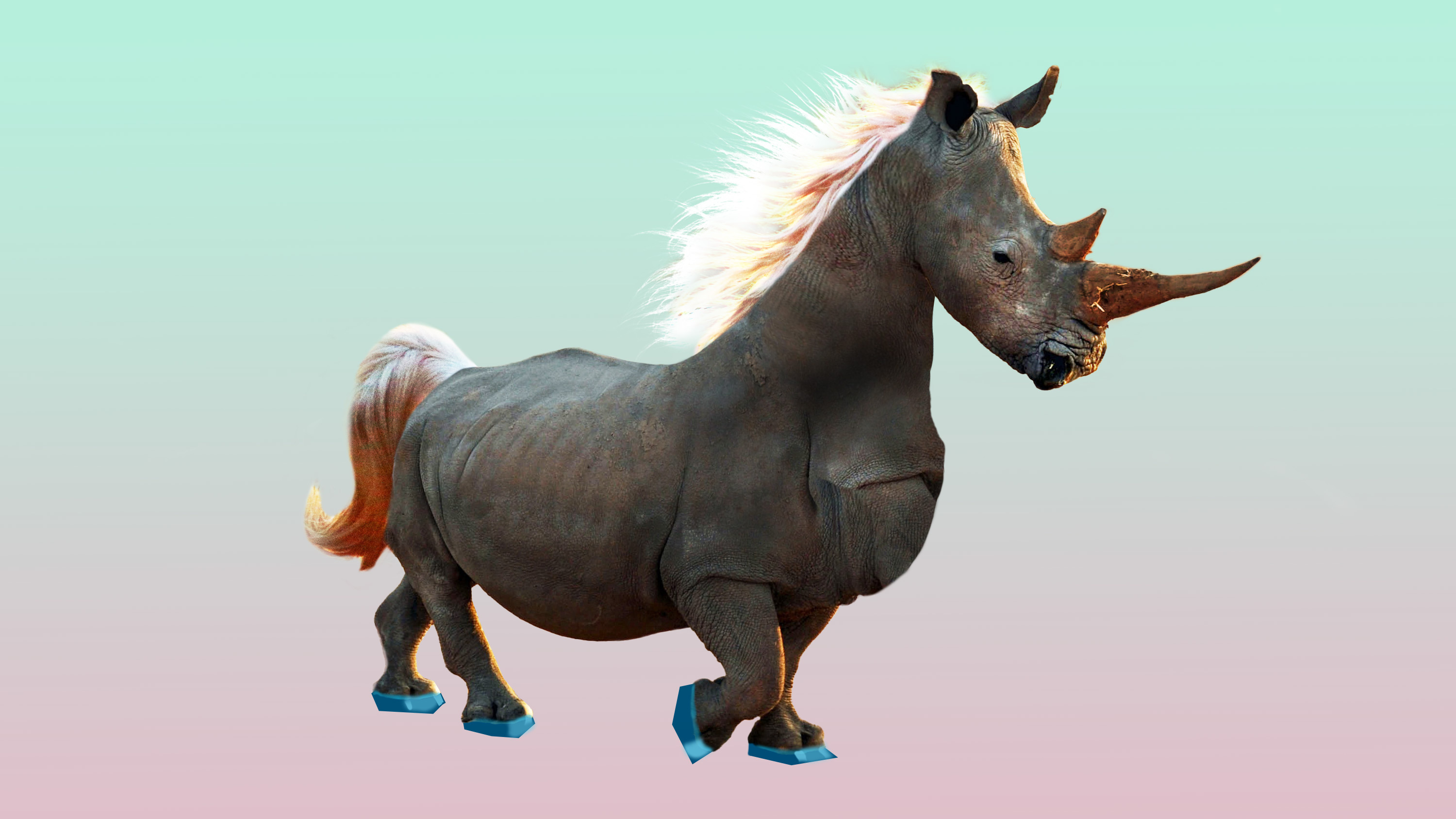 The mythical Rhinocort.Ms Tech / Pixabay
.
.
Click the link below for the article:
.
__________________________________________
February 3, 2021
Mohenjo
Business, Human Interest, Science, Technical
amazon, business, Business News, current-events, Future, Hotels, human-rights, medicine, mental-health, research, Science, Science News, technology, Technology News, travel, vacation

Click the link below the picture
.
The excitement of getting a new phone is often tempered by nagging regret. A lot of times, it’s not like there was anything really wrong with the old phone (unless there was — a bulging battery or a shattered screen is always a bad look). If it was a breakup, the conversation with an old phone would start, “You’re terrific. It’s not you. It’s me. I just wanted a newer model.”
Ashamed of yourself? Don’t be. There’s no need to stick the old phone into a drawer or use it as a doorstop or furniture shim. There are lots of ways you can put your older phone to work. After all, most older smartphones still have plenty of horsepower. Think of yours as a connected device that just doesn’t happen to have a SIM card anymore. Here are some suggestions for what to do with that extra, older phone.
(All of this presumes that you’re not recycling or reselling your older Android or iOS device — two excellent options you should consider.)
.
/cdn.vox-cdn.com/uploads/chorus_image/image/67735822/xs09-02_12-06-08g1020_gallery_post.5.jpeg) Apple’s iPhone 5 and iPhone 4
Apple’s iPhone 5 and iPhone 4
.
.
Click the link below for the article:
.
__________________________________________
February 3, 2021
Mohenjo
Arts, Business, Finance, Human Interest, Medical, missed News, Political, Science, Technical
amazon, business, Business News, current-events, Future, Hotels, human-rights, medicine, mental-health, research, Science, Science News, technology, Technology News, travel, vacation
.
News You might have missed!
Use your browser or smartphone back arrow (<-) to return to this table for your next selection.
.
__________________________________________
February 2, 2021
Mohenjo
Business, Food For Thought, Human Interest, Science, Technical
amazon, business, Business News, current-events, Future, Hotels, human-rights, medicine, mental-health, research, Science, Science News, technology, Technology News, travel, vacation

Click the link below the picture
.
- A Harvard Business School professor who has studied remote work for years says companies risk making big mistakes in a rushed moved to new employment models after Covid.
- He referenced GitLab, a 1,300-employee company that has been fully remote since it was founded and built rigorous processes from Day One to make it work.
- GitLab’s CEO says hybrid work models, which many companies now say they will favor in the future, can turn out to be “horrible.”
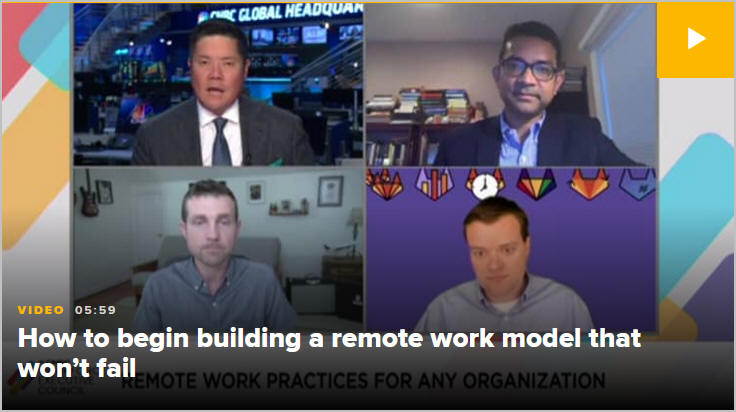
If you work for a company that is planning to make work-from-home permanent after the Covid-19 crisis, a big mistake could be in the making. That’s because, according to Harvard Business School professor Prithwiraj (Raj) Choudhury — a remote work expert who has been studying the phenomenon since well before the coronavirus — work-from-home is not the right model, even if it was a pandemic-induced short-term requirement. The new employment normal needs to be work-from-anywhere, or it is more likely to be a failure.
“Remote work is more than work-from-home, and the form of remote work I am most excited about is work-from-anywhere, where the employee has the choice to live anywhere,” Choudhury said at a recent CNBC Workforce Executive Council virtual event.
The Harvard professor, who recently wrote a cover story for the Harvard Business Review on his research, points to several key ways companies that think they are doing the right thing in migration to remote work may get it wrong.
.
 .
.
.
Click the link below for the article (Be Sure to play video in the article):
.
__________________________________________
February 2, 2021
Mohenjo
Arts, Business, Food For Thought, Human Interest, Made Me Laugh, Medical, missed News, Political, Science, Technical
amazon, business, Business News, current-events, Future, Hotels, human-rights, medicine, mental-health, research, Science, Science News, technology, Technology News, travel, vacation
.
News You might have missed!
Use your browser or smartphone back arrow (<-) to return to this table for your next selection.
.
__________________________________________
February 1, 2021
Mohenjo
Arts, Business, Crime, Food For Thought, Human Interest, Medical, missed News, Political, Science, Technical
amazon, business, Business News, current-events, Future, Hotels, human-rights, medicine, mental-health, research, Science, Science News, technology, Technology News, travel, vacation
.
News You might have missed!
Use your browser or smartphone back arrow (<-) to return to this table for your next selection.
.
__________________________________________
January 30, 2021
Mohenjo
Business, Human Interest, Science, Technical
amazon, business, Business News, current-events, Future, Hotels, human-rights, medicine, mental-health, research, Science, Science News, technology, Technology News, travel, vacation
Click the link below the picture
.
-
-
On the AI field’s gaps: “There’s going to have to be quite a few conceptual breakthroughs…we also need a massive increase in scale.”
-
On neural networks’ weaknesses: “Neural nets are surprisingly good at dealing with a rather small amount of data, with a huge numbers of parameters, but people are even better.”
-
On how our brains work: “What’s inside the brain is these big vectors of neural activity.”
The modern AI revolution began during an obscure research contest. It was 2012, the third year of the annual ImageNet competition, which challenged teams to build computer vision systems that would recognize 1,000 objects, from animals to landscapes to people.
In the first two years, the best teams had failed to reach even 75% accuracy. But in the third, a band of three researchers—a professor and his students—suddenly blew past this ceiling. They won the competition by a staggering 10.8 percentage points. That professor was Geoffrey Hinton, and the technique they used was called deep learning.
Hinton had actually been working with deep learning since the 1980s, but its effectiveness had been limited by a lack of data and computational power. His steadfast belief in the technique ultimately paid massive dividends. The fourth year of the ImageNet competition, nearly every team was using deep learning and achieving miraculous accuracy gains. Soon enough deep learning was being applied to tasks beyond image recognition, and within a broad range of industries as well.
.
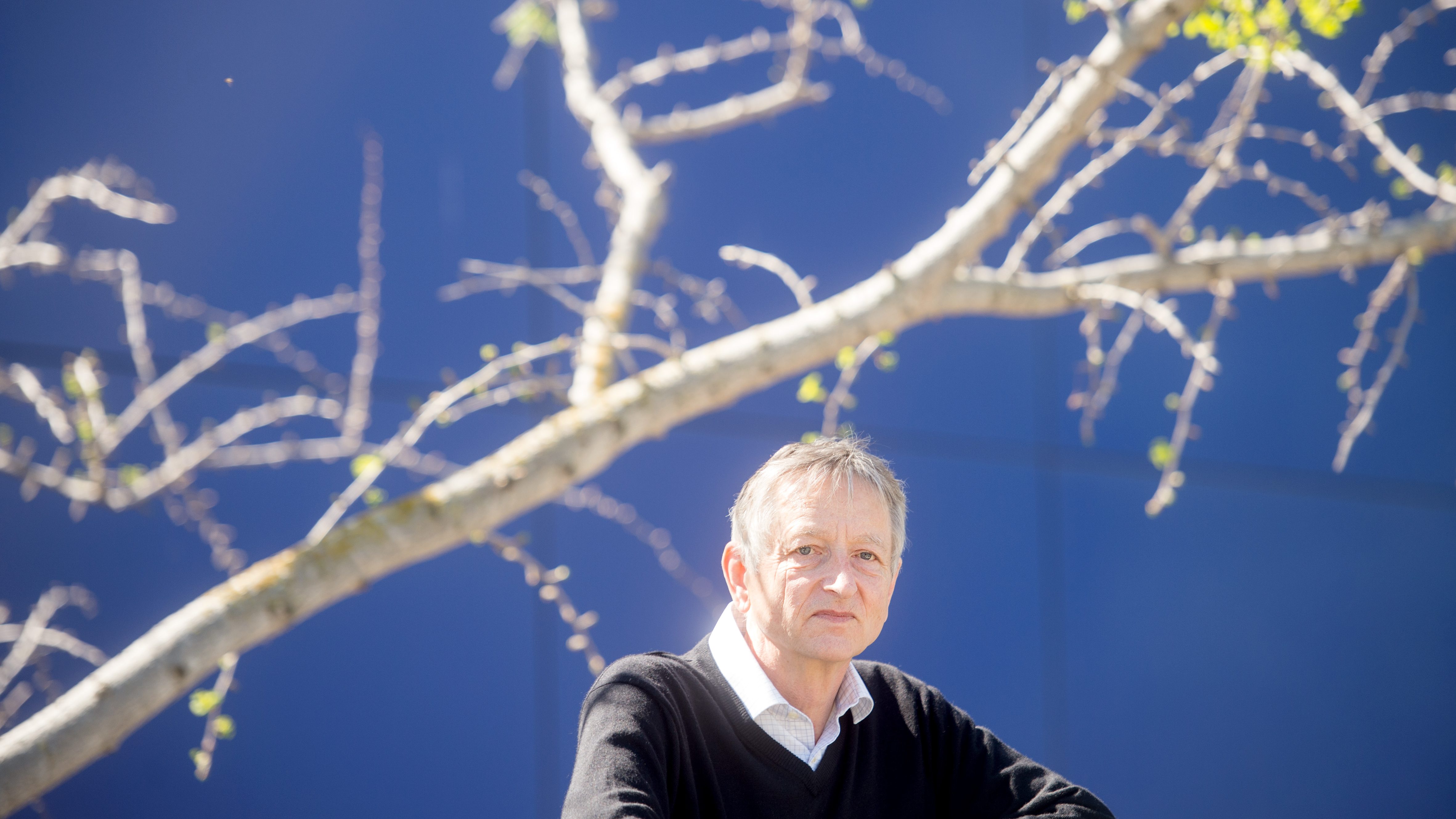 Noah Berger / AP
.
.
Click the link below for the article:
.
__________________________________________
Older Entries
Newer Entries
 James' World 2