February 22, 2021
Mohenjo
Business, Food For Thought, Human Interest, Science, Technical
amazon, business, Business News, current-events, Future, Hotels, human-rights, medicine, mental-health, research, Science, Science News, technology, Technology News, travel, vacation

Click the link below the picture
.
In 1966, just over 50 years ago, the distinguished Canadian-born anthropologist Anthony Wallace confidently predicted the global demise of religion at the hands of an advancing science: ‘belief in supernatural powers is doomed to die out, all over the world, as a result of the increasing adequacy and diffusion of scientific knowledge. Wallace’s vision was not exceptional. On the contrary, the modern social sciences, which took shape in 19th-century western Europe, took their own recent historical experience of secularisation as a universal model. An assumption lay at the core of the social sciences, either presuming or sometimes predicting that all cultures would eventually converge on something roughly approximating secular, Western, liberal democracy. Then something closer to the opposite happened.
Not only has secularism failed to continue its steady global march but countries as varied as Iran, India, Israel, Algeria, and Turkey have either had their secular governments replaced by religious ones, or have seen the rise of influential religious nationalist movements. Secularisation, as predicted by the social sciences, has failed.
.

Photo by guenterguni / Getty Images.
.
.
Click the link below for the article:
.
__________________________________________
February 22, 2021
Mohenjo
Arts, Business, Human Interest, Medical, missed News, Political, Science, Technical
amazon, business, Business News, current-events, Future, Hotels, human-rights, medicine, mental-health, research, Science, Science News, technology, Technology News, travel, vacation

.
News You might have missed!
Use your browser or smartphone back arrow (<-) to return to this table for your next selection.
.
__________________________________________
February 20, 2021
Mohenjo
Business, Food For Thought, Human Interest, Science, Technical
amazon, business, Business News, current-events, Future, Hotels, human-rights, medicine, mental-health, research, Science, Science News, technology, Technology News, travel, vacation

Click the link below the picture
.
In 1702, when the Spanish still ruled Florida, an English fleet from colonial Carolina approached Castillo de San Marcos, a Spanish stronghold on the Atlantic shore.
The fort guarded the Spanish empire’s trade routes as well as the surrounding city of St. Augustine, and the English wanted to run this politically and economically important outpost for themselves. Led by Carolina’s governor James Moore, the English boats dropped their anchors and laid siege.
But even after nearly two months of being shelled with cannonballs and gunfire, the fort’s walls wouldn’t give. In fact, they appeared to be “swallowing” the British cannonballs, which then became embedded within the stone. Precisely how the walls did this remained a mystery for the next three centuries.
Normally, a cannonball creates long, deep cracks in stone that radiate out from the impact’s center, causing catastrophic damage to a structure. This was clearly not the case for the walls surrounding Castillo de San Marcos. Built from coquina—sedimentary rock formed from compressed shells of dead marine organisms—the walls suffered little damage from the British onslaught. As one Englishman described it, the rock “will not splinter but will give way to cannonball as though you would stick a knife into cheese.”
.
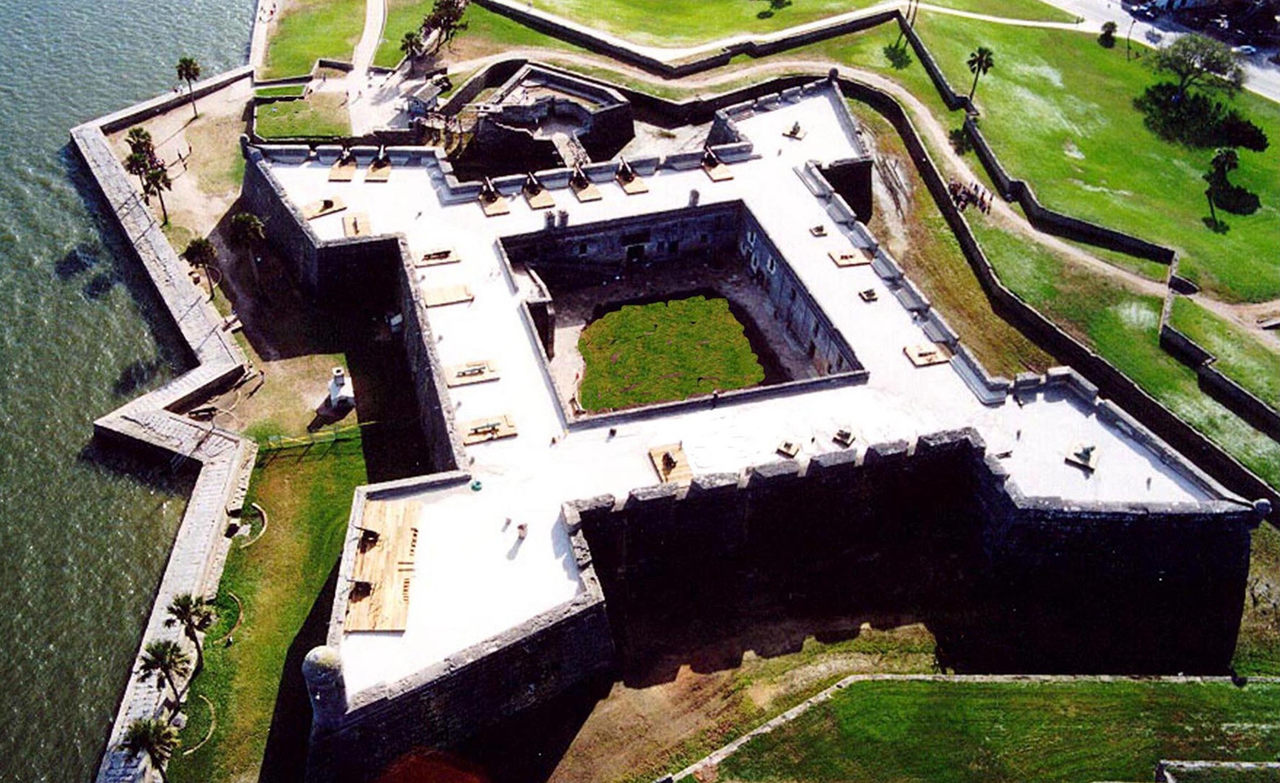
Castillo de San Marcos from above. Photo from the National Parks Service / Public Domain.
.
.
Click the link below for the article:
.
__________________________________________
February 20, 2021
Mohenjo
Business, Food For Thought, Human Interest, Science, Technical
amazon, business, Business News, current-events, Future, Hotels, human-rights, medicine, mental-health, research, Science, Science News, technology, Technology News, travel, vacation

Click the link below the picture
.
Sugar is a cruel, cruel mistress—it’s delicious and addictive, but it’s not doing you any favors. Aside from causing weight gain, increased consumption of refined sugar increases the risk of insulin resistance, type 2 diabetes, and cardiovascular disease, and can impact cognitive function and memory, says best-selling author Sara Gottfried, M.D.
It turns out your daily afternoon sugary treat not only gives you major brain fog—according to author David Wolfe, it also accelerates aging.
It may seem daunting, even impossible, to remove processed sugar from your diet, but understanding all the extraordinary things that happen when you cut it out can empower you to kick the habit. Keep reading.
After an Hour
Expect withdrawals, even after a few hours. “Sugar is addictive and activates a dopamine response in the reward center of the brain, like a drug,” says Wolfe. Depending on the amount of sugar you consume daily, you might experience varying drops in blood sugar levels, sweating, shaking, irritable moodiness, hunger, and sadness. Gottfried suggests fighting through these symptoms by consuming fresh vegetables with fiber, anti-inflammatory protein sources, and healthy fats.
.

Photography by Cody Guilfoyle.
.
.
Click the link below for the article:
.
__________________________________________
February 20, 2021
Mohenjo
Business, Food For Thought, Human Interest, Science, Technical
amazon, business, Business News, current-events, Future, Hotels, human-rights, medicine, mental-health, research, Science, Science News, technology, Technology News, travel, vacation

Click the link below the picture
.
We, humans, are a social species. We live in groups. We take care of one another. We build civilizations.
Our ability to cooperate has been a major adaptive advantage. It has allowed us to colonize virtually every habitat on Earth and thrive in more climates than any other animal, except maybe bacteria.
Part of being a social species, it turns out, is that we regulate one another’s body budgets — the ways in which our brains manage the bodily resources we use every day. For your whole life, outside of your awareness, you make deposits into other people’s body budgets, as well as withdrawals, and others do the same for you. This has pros and cons, as well as profound implications for how we live our lives.
How do the people around you influence your body budget and rewire your adult brain? Your brain changes its wiring after new experiences, a process called plasticity. Microscopic parts of your neurons change gradually every day. Branch-like dendrites become bushier, and their associated neural connections become more efficient. Little by little, your brain becomes tuned and pruned as you interact with others.
.
 Eugenia Mello
.
.
Click the link below for the article:
.
__________________________________________
February 20, 2021
Mohenjo
Arts, Food For Thought, Human Interest, Medical, missed News, Political, Science, Technical
amazon, business, Business News, current-events, Future, Hotels, human-rights, medicine, mental-health, research, Science, Science News, technology, Technology News, travel, vacation
.
News You might have missed!
Use your browser or smartphone back arrow (<-) to return to this table for your next selection.
.
__________________________________________
February 19, 2021
Mohenjo
Business, Human Interest, Science, Technical
amazon, business, Business News, current-events, Future, Hotels, human-rights, medicine, mental-health, research, Science, Science News, technology, Technology News, travel, vacation
Click the link below the picture
.
Sometimes, one of my psychotherapy clients will be late. “The tube got stuck; I do apologize.” If it happens once, I don’t treat it as significant. But some clients are perpetually late – perhaps just five or 10 minutes, but always – and out of breath when they get to the door. Then I am curious about what is behind their pattern of lateness, what it means, and what purpose it serves.
There are probably as many reasons for unpunctuality as there are habitually late people. Sometimes it seems unfathomable, but not always. One client remembered that his mother always spent so long in the bathroom that she made him late for school. She told him that it didn’t matter, and early people are uptight anyway. In his unconscious, being on time for things had got mixed up with being disloyal to his mother and therefore bad. Once he had found this narrative, he lost his compulsion for lateness.
.
 Photo by Willie B. Thomas / Getty Images.
.
.
Click the link below for the article:
.
__________________________________________
February 19, 2021
Mohenjo
Arts, Crime, Food For Thought, Human Interest, Medical, missed News, Political, Science, Technical
amazon, business, Business News, current-events, Future, Hotels, human-rights, medicine, mental-health, research, Science, Science News, technology, Technology News, travel, vacation
.
News You might have missed!
Use your browser or smartphone back arrow (<-) to return to this table for your next selection.
.
__________________________________________
February 18, 2021
Mohenjo
Business, Human Interest, Science, Technical
amazon, business, Business News, current-events, Future, Hotels, human-rights, medicine, mental-health, research, Science, Science News, technology, Technology News, travel, vacation
Click the link below the picture
.
In late 2019, paleontologists reported finding the fossil of a flattened turtle shell that “was possibly trodden on” by a dinosaur, whose footprints spanned the rock layer directly above. The rare discovery of correlated fossils potentially traces two bygone species to the same time and place. “It’s only by doing that that we’re able to reconstruct ancient ecosystems,” one paleontologist told The New York Times.
The approach parallels the way cosmologists go about inferring the history of the universe. Like fossils, astronomical objects are not randomly strewn throughout space. Rather, spatial correlations between the positions of objects such as galaxies tell a detailed story of the ancient past. “Paleontologists infer the existence of dinosaurs to give a rational accounting of strange patterns of bones,” said Nima Arkani-Hamed, a physicist and cosmologist at the Institute for Advanced Study in Princeton, New Jersey. “We look at patterns in space today, and we infer a cosmological history in order to explain them.”
.
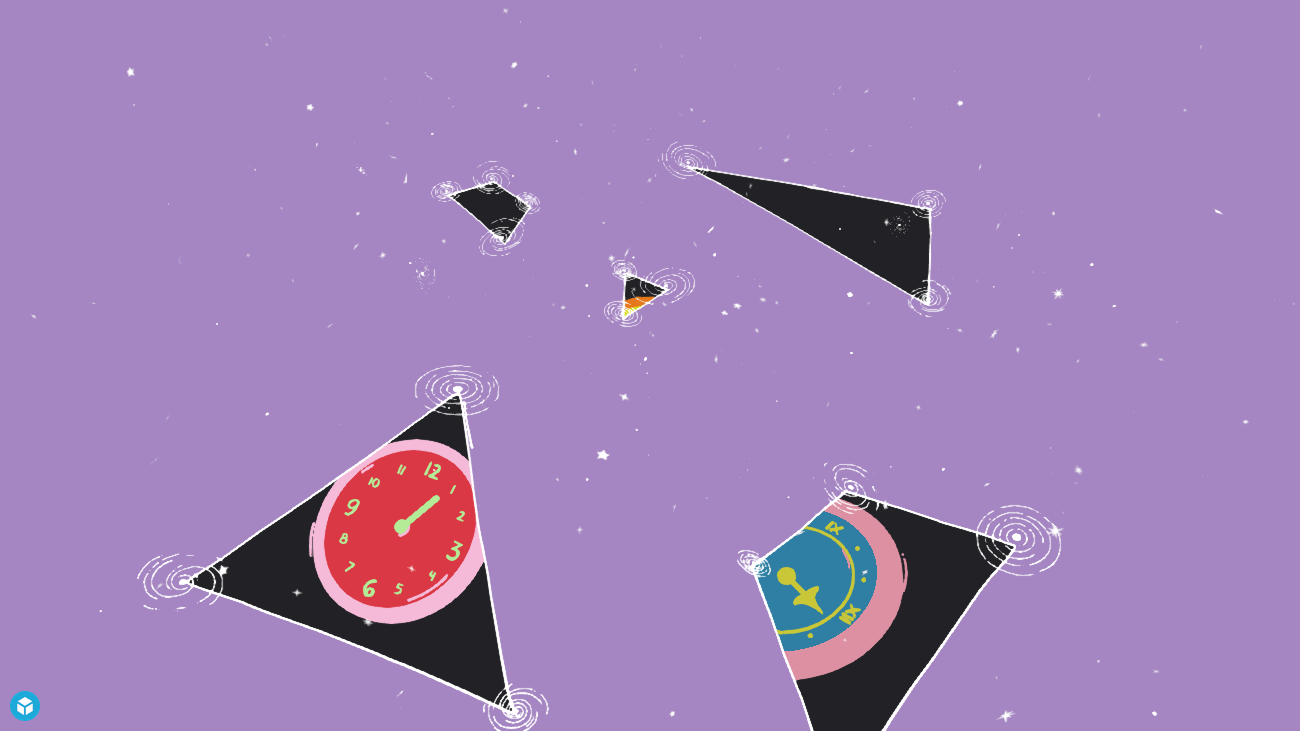
Shapes made by objects in the sky may hold clues about the nature of time. Click and drag on the image to move around; scroll to zoom in and out. Credit: Olena Shmahalo/Quanta Magazine.
.
.
Click the link below for the article:
.
__________________________________________
February 18, 2021
Mohenjo
Business, Human Interest, Science, Technical
amazon, business, Business News, current-events, Future, Hotels, human-rights, medicine, mental-health, research, Science, Science News, technology, Technology News, travel, vacation
Click the link below the picture
.
If you ask her husband, Dr. Lisa Feldman Barrett has just written the first neuroscience beach read. But Dr. Barrett considers her new book, Seven and a Half Lessons About the Brain, more of a choose-your-own-adventure, a chance to distill her favorite dinner party stories about the mind—from how our big gray blobs evolved to the myth of the “lizard brain”—into a witty and information-packed page-turner.
“At a time where science is under attack in some political circles, I wanted to show people that it can be useful and interesting. Science may not be a perfect endeavor, but it’s still the best way we have for learning about ourselves and the world.”
That’s part of why she challenged herself to turn her typical scientific writing—“extremely technical, filled with gazillions of references”—into a series of essays that reflect a more conversational approach.
.
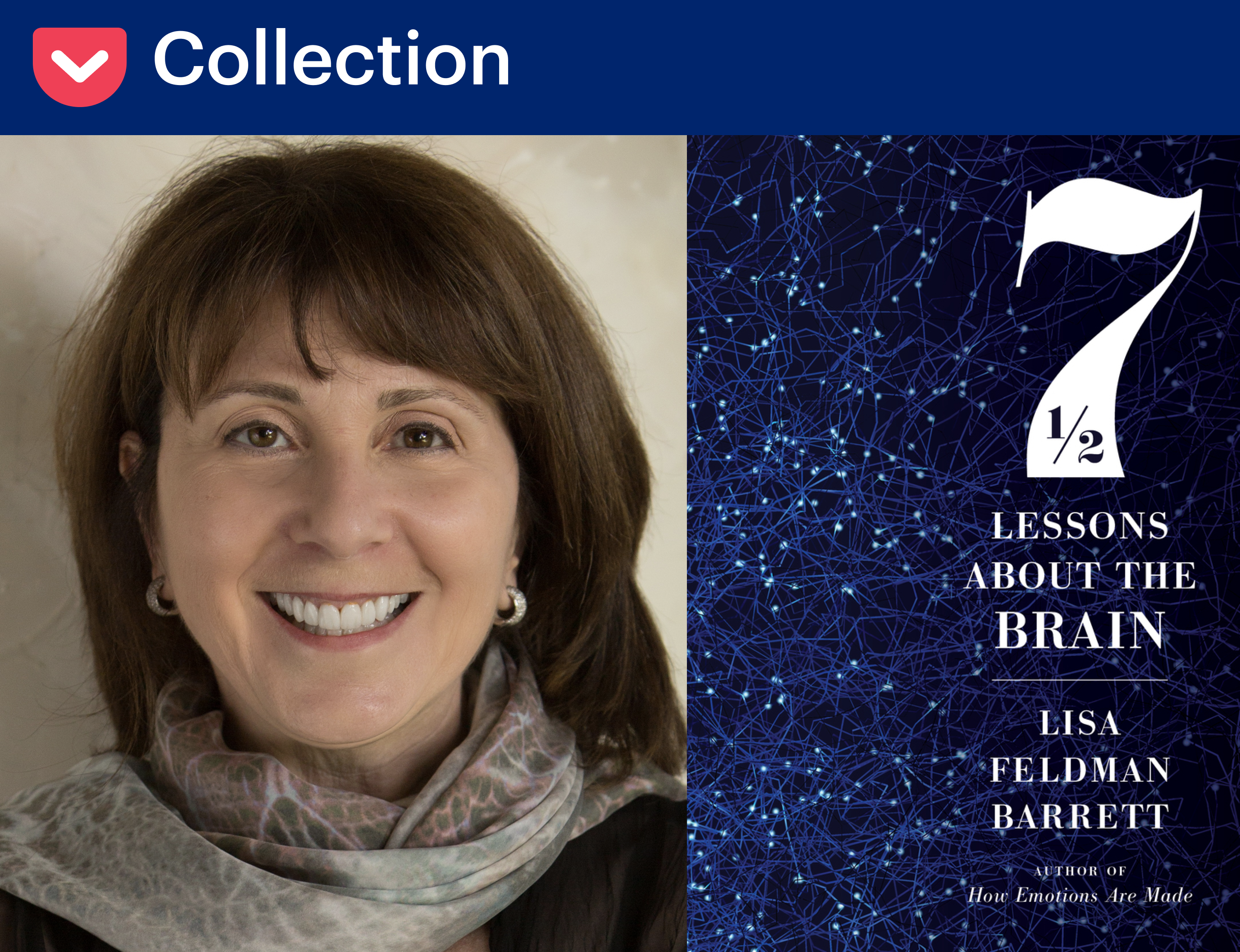 The brain
.
.
Click the link below for the article:
.
__________________________________________
Older Entries
Newer Entries
 James' World 2