March 2, 2021
Mohenjo
Business, Food For Thought, Human Interest, Science, Technical
amazon, business, Business News, current-events, Future, Hotels, human-rights, medicine, mental-health, research, Science, Science News, technology, Technology News, travel, vacation

Click the link below the picture
.
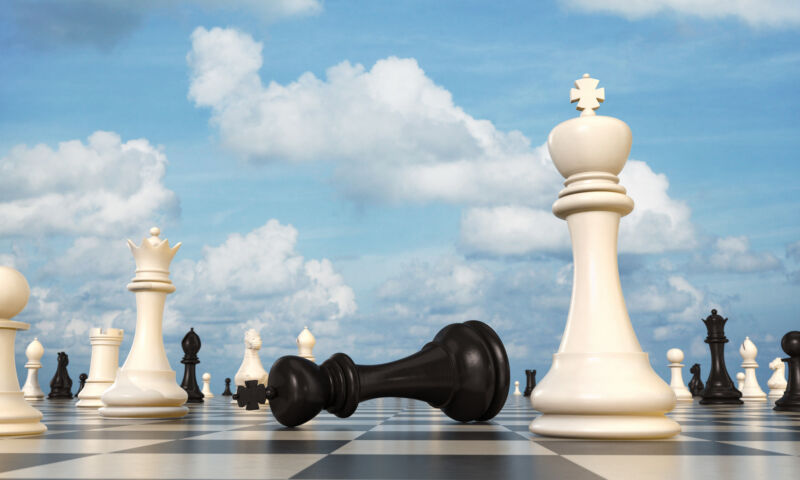
Chess has a reputation for cold logic, but Vladimir Kramnik loves the game for its beauty.
“It’s a kind of creation,” he says. His passion for the artistry of minds clashing over the board, trading complex but elegant provocations and counters, helped him dethrone Garry Kasparov in 2000 and spend several years as world champion.
Yet Kramnik, who retired from competitive chess last year, also believes his beloved game has grown less creative. He partly blames computers, whose soulless calculations have produced a vast library of openings and defenses that top-flight players know by rote. “For quite a number of games on the highest level, half of the game—sometimes a full game—is played out of memory,” Kramnik says. “You don’t even play your own preparation; you play your computer’s preparation.”
Wednesday, Kramnik presented some ideas for how to restore some of the human art to chess, with help from a counterintuitive source—the world’s most powerful chess computer. He teamed up with Alphabet artificial intelligence lab DeepMind, whose researchers challenged their superhuman game-playing software AlphaZero to learn nine variants of chess chosen to jolt players into creative new patterns.
In 2017, AlphaZero showed it could teach itself to roundly beat the best computer players at either chess, Go, or the Japanese game shogi. Kramnik says its latest results reveal beguiling new vistas of chess to be explored if people are willing to adopt some small changes to the established rules.
.
 Dimitri Otis | Getty Images
.
.
Click the link below for the article:
.
__________________________________________
March 2, 2021
Mohenjo
Crime, Food For Thought, Human Interest, Made Me Laugh, Medical, missed News, Political, Science, Technical
amazon, business, Business News, current-events, Future, Hotels, human-rights, medicine, mental-health, research, Science, Science News, technology, Technology News, travel, vacation

.
News You might have missed!
Use your browser or smartphone back arrow (<-) to return to this table for your next selection.
.
__________________________________________
March 1, 2021
Mohenjo
Crime, Food For Thought, Human Interest, Medical, missed News, Political, Science, Technical
amazon, business, Business News, current-events, Future, Hotels, human-rights, medicine, mental-health, research, Science, Science News, technology, Technology News, travel, vacation
.
News You might have missed!
Use your browser or smartphone back arrow (<-) to return to this table for your next selection.
.
__________________________________________
February 27, 2021
Mohenjo
Arts, Food For Thought, Human Interest, Made Me Laugh, Medical, missed News, Political, Science, Technical
amazon, business, Business News, current-events, Future, Hotels, human-rights, medicine, mental-health, research, Science, Science News, technology, Technology News, travel, vacation
.
News You might have missed!
Use your browser or smartphone back arrow (<-) to return to this table for your next selection.
.
__________________________________________
February 26, 2021
Mohenjo
Business, Food For Thought, Human Interest, Science, Technical
amazon, business, Business News, current-events, Future, Hotels, human-rights, medicine, mental-health, research, Science, Science News, technology, Technology News, travel, vacation

Click the link below the picture
.
Three decades after the Chernobyl disaster—the world’s worst nuclear accident—signs of life are returning to the exclusion zone. Wild animals in Chernobyl are flourishing within the contaminated region; puppies roaming the area are capturing the hearts of thousands. Tourists who have watched the critically acclaimed HBO series Chernobyl are taking selfies with the ruins. Once thought to be forever uninhabitable, the Chernobyl Exclusion Zone has become a haven for flora and fauna that prove that life, as they say in Jurassic Park, finds a way.
.

Photo from iStock / Tijuana2014.
.
.
Click the link below for the article:
.
__________________________________________
February 26, 2021
Mohenjo
Arts, Enthralling, Human Interest, Medical, missed News, Political, Science, Technical
amazon, business, Business News, current-events, Future, Hotels, human-rights, medicine, mental-health, research, Science, Science News, technology, Technology News, travel, vacation
.
News You might have missed!
Use your browser or smartphone back arrow (<-) to return to this table for your next selection.
.
__________________________________________
February 25, 2021
Mohenjo
Arts, Food For Thought, Human Interest, Medical, missed News, Political, Science, Technical
amazon, business, Business News, current-events, Future, Hotels, human-rights, medicine, mental-health, research, Science, Science News, technology, Technology News, travel, vacation
.
News You might have missed!
Use your browser or smartphone back arrow (<-) to return to this table for your next selection.
.
__________________________________________
February 24, 2021
Mohenjo
Business, Human Interest, Medical, Science, Technical
amazon, business, Business News, current-events, Future, Hotels, human-rights, medicine, mental-health, research, Science, Science News, technology, Technology News, travel, vacation

Click the link below the picture
.
It’s uttered in hushed tones during mommy-and-me yoga classes and at Montessori-school drop-offs, discussed ad nauseam in breastfeeding support groups and on parenting message boards.
It’s called tongue-tie, and it’s everywhere. In online mom groups, it’s blamed for all sorts of parenting woes. Baby isn’t gaining weight, or won’t take a bottle? Have you tried checking for ties? Kid won’t nap? It’s probably related to tongue-tie. Baby has a rash? Check under the tongue!
Tongue-tie, or ankyloglossia, is characterized by an overly tight lingual frenulum, the cord of tissue that anchors the tongue to the bottom of the mouth. It occurs in 4 to 11 percent of newborns. A lip tie—a related condition—is an unusually tight labial frenulum, the piece of tissue that keeps the upper lip tethered close to the gum line. Tongue and lip ties often occur in tandem.
To breastfeed effectively, babies need to create negative pressure (in a word, a vacuum) on the breast. This differs from the compression that some babies with limited tongue mobility use, effectively squeezing the milk out rather than sucking.
.

Photo from Shutterstock.
.
.
Click the link below for the article:
.
__________________________________________
February 24, 2021
Mohenjo
Enthralling, Food For Thought, Human Interest, Medical, missed News, Political, Science, Technical
amazon, business, Business News, current-events, Future, Hotels, human-rights, medicine, mental-health, research, Science, Science News, technology, Technology News, travel, vacation
.
News You might have missed!
Use your browser or smartphone back arrow (<-) to return to this table for your next selection.
.
__________________________________________
February 22, 2021
Mohenjo
Business, Human Interest, Science, Technical
amazon, business, Business News, current-events, Future, Hotels, human-rights, medicine, mental-health, research, Science, Science News, technology, Technology News, travel, vacation
Click the link below the picture
.
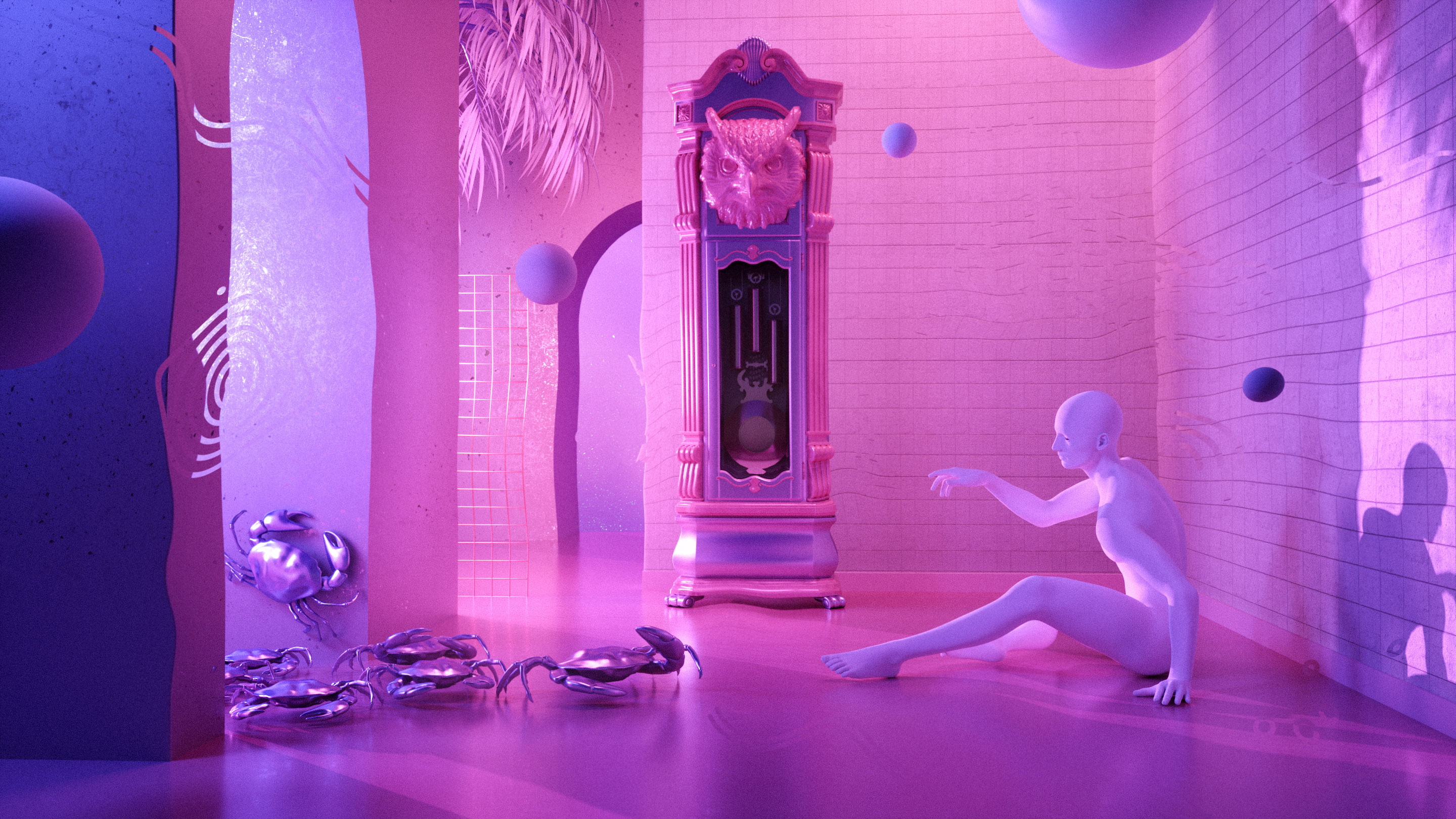
In the 1920s, decades before counterculture guru Timothy Leary made waves self-experimenting with LSD and other psychedelic drugs at Harvard University, a young perceptual psychologist named Heinrich Klüver used himself as a guinea pig in an ongoing study into visual hallucinations. One day in his laboratory at the University of Minnesota, he ingested a peyote button, the dried top of the cactus Lophophora williamsii, and carefully documented how his visual field changed under its influence. He noted recurring patterns that bore a striking resemblance to shapes commonly found in ancient cave drawings and in the paintings of Joan Miró, and he speculated that perhaps they were innate to human vision. He classified the patterns into four distinct types that he dubbed “form constants”: lattices (including checkerboards, honeycombs, and triangles), tunnels, spirals, and cobwebs.
Some 50 years later, Jack Cowan of the University of Chicago set out to reproduce those hallucinatory form constants mathematically, in the belief that they could provide clues to the brain’s circuitry. In a seminal 1979 paper, Cowan and his graduate student Bard Ermentrout reported that the electrical activity of neurons in the first layer of the visual cortex could be directly translated into the geometric shapes people typically see when under the influence of psychedelics. “The math of the way the cortex is wired, it produces only these kinds of patterns,” Cowan explained recently. In that sense, what we see when we hallucinate reflects the architecture of the brain’s neural network.
.
Credit: aeforia and Olena Shmahalo / Quanta Magazine.
.
.
Click the link below for the article:
.
__________________________________________
Older Entries
Newer Entries
 James' World 2