President Donald Trump fired acting Attorney General Sally Yates on Monday night, hours after she said the Justice Department would not defend Trump’s executive order on immigration.
White House spokesman Sean Spicer said that Yates had been relieved of her duties. Dana Boente, U.S. attorney for the Eastern District of Virginia, was named as acting attorney general.
Spicer’s statement said Yates had “betrayed the Department of Justice” by refusing to defend Trump’s order. The statement added that Yates, a career prosecutor whom Trump named as acting attorney general, is “weak on borders and very weak on illegal immigration.”
Boente will serve until Sen. Jeff Sessions (R-Ala.) is confirmed as attorney general.
The stunning move was reminiscent of President Richard Nixon’s “Saturday Night Massacre” in 1973, when his attorney general and deputy attorney general resigned in protest after he ordered them to dismiss Archibald Cox, the special prosecutor in the Watergate case.
.
Image: Breaking News and Opinion on The Huffington Post
Six people are dead after a shooting at a mosque in Quebec City, according to Quebec Provincial Police. Eight people were injured. The attack, which took place at the city’s Quebec Islamic Cultural Center, is being investigated as an act of terrorism by police.
In what was described as a coordinated attack, witnesses say at least two gunmen wearing black fired indiscriminately into the dozens of worshipers — including families — in the mosque.
Thirty-nine people who were at the mosque during shooting were unharmed, Christine Coulombe, spokeswoman of National Police of Quebec, said. Of the eight injured, six are described as being in critical condition.
Two people have been arrested, a police said at a news conference. One was captured near the mosque and the other was apprehended on a highway nearby.
.
The Canadian province’s premier, Philippe Couillard, called the shooting a terrorist act on Twitter.
For the second day in a row, protesters came out across the country to rally against President Donald Trump’s executive order issued on Friday to block Syrian refugees and travelers from several Muslim-majority countries from entering the United States.
In New York City, two incredible markers of America’s immigrant roots, the Statue of Liberty and Ellis Island, provided a fitting background for protesters gathered in Manhattan’s Battery Park. About 10,000 demonstrators were present, some carrying signs reading, “Refugees welcome here,” and “No hate, no fear.”
Friends, families and individuals of all ages and backgrounds chanted “Let them in!” and “Si se puede!” Speakers fired up the massive crowd with messages of unity and hope, before thousands marched down Greenwich Street toward the U.S. Citizenship and Immigration Services building.
.
Image: Breaking News and Opinion on The Huffington Post
Dark parts of American history are often swept under the rug for being too shameful and painful. But engaging with that history is crucial to understand the present — and figure out how to move forward.
A new website, called Monroe Work Today, is bringing the harrowing history of lynching in the United States out of the shadows. Its detailed map and other resources document the names and experiences of nearly 5,000 people of color who were killed between 1835 and 1963.
“History class taught you the tip of the iceberg,” the site reads. “Every citizen has a duty to know this story. This history belongs to everyone.”
Throughout the first 100 days of Donald Trump’s presidency, 100 artists are coming together to illustrate the things that already make America great.
The “What Makes America Great” project, a pointed reference to President Donald Trump’s campaign slogan “Make America Great Again,” was launched on Inauguration Day by the Creative Action Network — a global community of artists making “art with purpose.”
America is great,” the project website says. “The things that make it great are unique to each and every one of us, and deserve to be celebrated.”
And from the moment he became president, Donald J. Trump has unleashed so many of consequence that the public has barely had time to parse their full implication. Words about the dishonest media, the end of Obamacare, the construction of that border wall with Mexico — this is an abbreviated list, and he hasn’t even completed his first week in office.
Amid the verbal deluge, President Trump this week repeated an assertion he made shortly after his election: that millions of ballots cast illegally by undocumented immigrants cost him the popular vote. If true, this would suggest the wholesale corruption of American democracy.
Not to worry: As far as anyone knows, the president’s assertion is akin to saying that millions of unicorns also voted illegally.
But such a baseless statement by a president challenged the news media to find the precise words to describe it. This will be a recurring challenge, given President Trump’s habit of speaking in sales-pitch hyperbole and his tendency to deride any less-than-flattering report as “fake news.”
.
Kellyanne Conway, an adviser to President Trump, used the phrase “alternative facts” to describe assertions by the White House.Credit Doug Mills/The New York Times
As Wall Street cheered the Dow hitting 20,000 for the first time in history this week, Donna Coomer just shrugged.
Coomer doesn’t have a cent in the stock market. Sure, she handles a lot of money every day as the manager of a busy Valero gas station in Beattyville, a small town in eastern Kentucky.
But she trusts the bank, not the stock market, with her hard-earned money.
.
“I have a little bit in my checking [account], little bit in my savings,” Coomer, a grandma of three who still works 55 hours a week at the gas station, told CNNMoney.
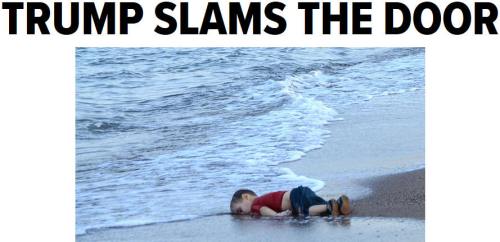
President Donald Trump signed an executive order Friday that bans Syrians from taking refuge in the United States, halts the U.S. refugee resettlement program for four months and temporarily blocks people from a handful of unnamed countries from entering the U.S. at all.
“I am establishing new vetting measures to keep radical Islamic terrorists out of the United States of America. We don’t want them here,” he said at a swearing-in ceremony at the Pentagon for Secretary of Defense James Mattis. “We don’t want to admit into our country the very threats we are fighting overseas.”
Trump approved the refugee ban amid the biggest refugee crisis in history and on Holocaust Remembrance Day, which honors the millions of people killed during World War II, many of whom tried to flee to the U.S. but were turned away.
It’s not the blanket ban on Muslims that Trump advocated for during his campaign, and it does not single out any country by name other than Syria for its refugees.
On August 31st, 2016, the first commercial flight directly from the United States to Cuba touched down on the once-forbidden island’s soil. It was a tangible result of nearly three years of efforts from the Obama administration to ease 58 years of tension between the U.S. and Cuba by relaxing trade and travel restrictions, restoring diplomatic relations with Cuba and taking the island nation off the U.S. list of state sponsors of terror.
But any security of lasting reparations was short-lived. The 2016 presidential election and the death of Fidel Castro marked November with uncertainty. The former Cuban dictator’s death was the emblematic end of an anti-democratic era for Cuban people, but the impending closure of the Obama era proved to have a far bigger impact – and the relationship with Cuba seemed to grow even more fragile when Donald Trump was elected as the 45th President of the United States on November 8th – only 70 days after that first commercial flight.
On November 9th, the tumult between the two countries churned again. Cuba activated their troops and began a five-day nationwide military exercise to prepare its “troops and population to counter a range of enemy action,” as described by the country’s Ministry of Defense. It was a sign from the Cuban government of a potential emerging diplomatic strain – a signal to the Trump administration that they would be ready, just in case. Ready for exactly what, no one could say.
.
How Cuba reacted to Trump’s Inauguration Day. Zach Doleac for Rolling Stone
Kellyanne Conway, counselor to President Trump, said on NBC’s “Meet the Press” on Sunday that the White House had put forth “alternative facts” to ones reported by the news media about the size of Mr. Trump’s inauguration crowd.
She made this assertion — which quickly went viral on social media — a day after Mr. Trump and Sean Spicer, the White House press secretary, had accused the news media of reporting falsehoods about the inauguration and Mr. Trump’s relationship with the intelligence agencies.
In leveling this attack, the president and Mr. Spicer made a series of false statements.
.
Kellyanne Conway, counselor to President Trump, before speaking live on TV outside the White House on Sunday.Credit Andrew Harnik/Associated Press
Film and Writing Festival for Comedy. Showcasing best of comedy short films at the FEEDBACK Film Festival. Plus, showcasing best of comedy novels, short stories, poems, screenplays (TV, short, feature) at the festival performed by professional actors.

 Image: Breaking News and Opinion on The Huffington Post
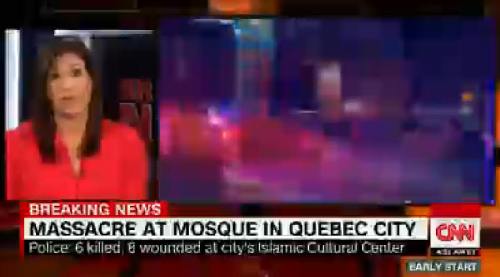
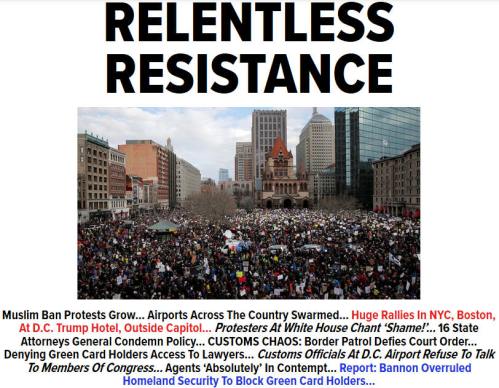 Image: Breaking News and Opinion on The Huffington Post


 .
. Trump Targets Muslims


 James' World 2