The nation has split into political tribes. The culture wars are back, waged over transgender rights and immigration. White nationalists are on the march.
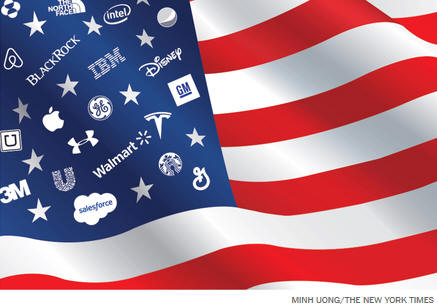
Amid this turbulence, a surprising group of Americans is testing its moral voice more forcefully than ever: C.E.O.s.
After Nazi-saluting white supremacists rioted in Charlottesville, Va., and President Trump dithered in his response, a chorus of business leaders rose up this past week to condemn hate groups and espouse tolerance and inclusion. And as lawmakers in Texas tried to restrict the rights of transgender people to use public bathrooms, corporate executives joined activists to kill the bill.
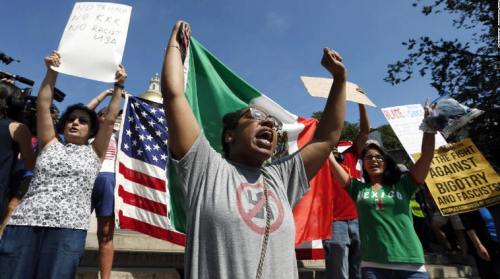
Thousands of counterdemonstrators marched Saturday in downtown Boston in response to a self-described free speech rally that had sparked concerns of possible violence.
The largely peaceful march and rally came one week after racially motivated protests in Charlottesville, Virginia, turned deadly.
Amid a heavy police presence, men, women and children from diverse backgrounds showed up Saturday morning to march from the Reggie Lewis Track and Athletic Center in Roxbury to Boston Common, the nation’s oldest park.
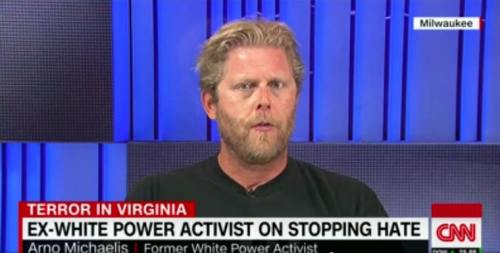
Everybody’s writing about white nationalists. But nobody’s asking them the things I really want to know, as a woman of color and a mom of two kids. I reached out to Arno Michaelis, a former activist in the white power movement, to better understand how their world might affect mine. He is the author of “My Life After Hate” and details his journey in this CNN Opinion piece.
The California man who was separated from his wife in the chaotic moments of Thursday’s terrorist attack in Barcelona, Spain, was among the 13 killed at the scene, his family said Friday.
The father of 42-year-old Jared Tucker, Dan Tucker, told NBC News that Tucker’s wife, Heidi Nunes, confirmed her husband’s death. The Walnut Creek couple were in Europe celebrating their first wedding anniversary and had just enjoyed drinks on Barcelona’s wide, largely pedestrianized tourist street of La Rambla when their relaxing vacation was shattered by sharp cries.
“Next thing I know there’s screaming, yelling,” Nunes, a 40-year-old teacher, earlier told NBC News. “I got pushed inside the souvenir kiosk and stayed there hiding while everybody kept running by screaming.”
.
Heidi Nunes and her husband Jared Tucker. This photo was taken just an hour before the attack. Heidi Nunes
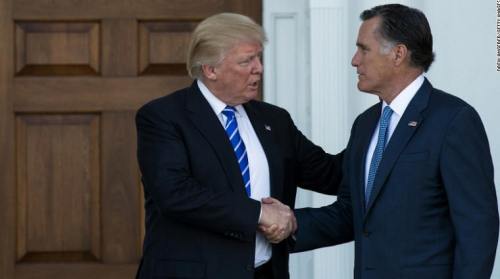
Mitt Romney called on President Donald Trump Friday to apologize for his comments about Charlottesville, Virginia, saying the President’s remarks this week “caused racists to rejoice.”
“The potential consequences are severe in the extreme,” Romney wrote in a Facebook post. “Accordingly, the president must take remedial action in the extreme. He should address the American people, acknowledge that he was wrong, apologize.”
.
He said that Trump’s remarks — in which he blamed “both sides” for inciting violence, an equivocation between neo-Nazis and those protesting them — had a hurtful impact on the nation.
.
“Whether he intended to or not, what he communicated caused racists to rejoice, minorities to weep, and the vast heart of America to mourn,” Romney wrote. “His apologists strain to explain that he didn’t mean what we heard. But what we heard is now the reality, and unless it is addressed by the president as such, with unprecedented candor and strength, there may commence an unraveling of our national fabric.
Late in his senior year of high school, James A. Fields Jr. was excitedly mapping his future, hoping to join the Army right after graduation. Although his political and social views ran counter to American values — he much preferred authoritarianism and the racialpurity dogma of the Third Reich — Fields looked forward to soldiering in democracy’s most powerful military.
That’s how Derek Weimer, his favorite teacher in 2015, remembers it.
Then one day in that spring semester, Fields told Weimer that the Army had turned him down for a reason related to his psychiatric history, Weimer recalled this week. Weimer wasn’t surprised by the rejection, he said, because Fields had confided to him a year earlier that he suffered from schizophrenia and was being treated with drugs to control his illness.
.
James A. Fields Jr., fourth from right in front row, holds a black shield Aug. 12 in Charlottesville. (Go Nakamura/AP)
It took more than 48 hours, but President Donald Trump finally denounced the white supremacist groups whose rally in Charlottesville, Virginia, this past weekend sparked deadly violence.
But his Monday proclamation that “racism is evil” means little coming from a man who largely has not backed away from the racism upon which he built both his campaign and his real estate business.
Not only did Trump’s condemnation pale in comparison to those from lawmakers on both sides of the aisle, celebrities and even the maker of the tiki torches used at the rally, but it also came after he blamed “many sides” for the violent protest.
Throughout his campaign and after his election, HuffPost kept running lists of examples of Trump’s racism dating as far back as the 1970s. We’ll continue to document those incidents here as they happen.
.
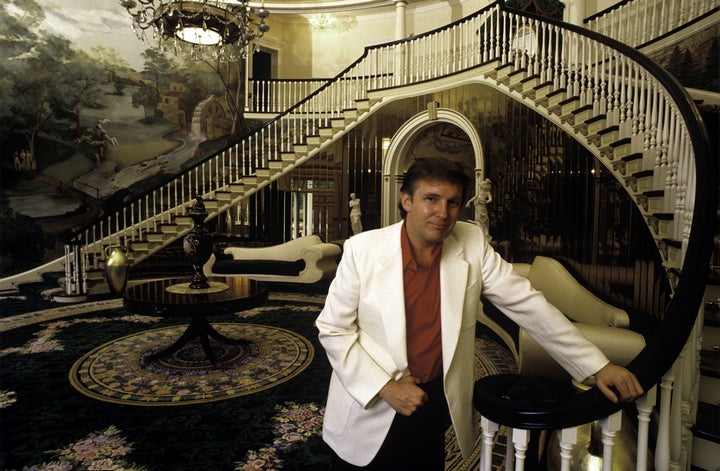
Joe McNally/Getty Images
In the 1980s, Donald Trump was much younger, but just as racist as he is now.
Some of the biggest-named charities in America are walking away from President Trump.
The American Red Cross, The Salvation Army and Susan G. Komen foundation all said Friday they’re canceling events at Trump’s Palm Beach property Mar-a-Lago. That comes after three organizations made similar announcements on Thursday.
The cancellations follow the spectacular implosion of Trump’s business councils this week over the president’s insistence that counter-protesters shared the blame for violence at a white supremacist rally in Charlottesville, Virginia.
.
The collapse of the councils was an extraordinary rebuke to a president who prides himself on being business-friendly. High-profile CEOs like JPMorgan Chase’ (JPM)Jamie Dimon have publicly slammed Trump’s reaction to Charlottesville.
Now, Trump’s words are affecting his own business.
It was 1934 and fascism was on the march not only in Europe but in America. People who admired Adolf Hitler, who had taken power in Germany, formed Nazi organizations in the United States.
The American Civil Liberties Union, represented by lawyers who were Jewish, faced an existential question: Should the freedoms it stood for since its founding in 1920 apply even to racist groups that would like nothing more than to strip them away?
Ultimately, after much internal dissent, the ACLU decided: Yes, the principles were what mattered most. The ACLU would stand up for the free-speech rights of Nazis.
“We do not choose our clients,” the ACLU’s board of directors wrote in an October 1934 pamphlet called “Shall We Defend Free Speech for Nazis In America?” “Lawless authorities denying their rights choose them for us. To those who support suppressing propaganda they hate, we ask — where do you draw the line?”
.
A white supremacist carries a Nazi flag into Emancipation Park in Charlottesville, Va., on Saturday. (Steve Helber / Associated Press)
Film and Writing Festival for Comedy. Showcasing best of comedy short films at the FEEDBACK Film Festival. Plus, showcasing best of comedy novels, short stories, poems, screenplays (TV, short, feature) at the festival performed by professional actors.

 .
.
 .
. .
.
 .
.






 .
.
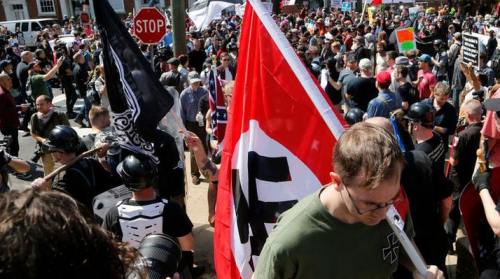 A white supremacist carries a Nazi flag into Emancipation Park in Charlottesville, Va., on Saturday. (Steve Helber / Associated Press)
 James' World 2