For more than a quarter-century, professional golf has endured a binary existence: a tournament either had Tiger Woods in the field or it did not.Everything flowed from his presence or lack thereof — prestige, television ratings, gallery size, buzz. Wins by his competitors were even plunked in two buckets: Did you beat Tiger? Or did you just beat everyone else?
In America’s bloody history of racial violence, the little-known Elaine Massacre in Phillips County, Arkansas, which took place in October 1919, a century ago this week, may rank as the deadliest. The reasons why the event has remained shrouded and obscure, despite a shocking toll of bloodshed inflicted on the African-American inhabitants of Phillips County, speak to a legacy of white supremacy in the US and ruthless suppression of labor activism that disfigures American society to this day.
Phillips County, located deep in the Arkansas Delta, was largely rural and three-quarters African-American; in the small town of Elaine, there were ten times as many black residents as white. The African Americans of Phillips County, like those throughout the South, were subjected to segregation and disenfranchisement, those twin pillars of white supremacy. But the black sharecroppers and tenant farmers there were also the victims of a particularly harsh form of repression known as “debt peonage.” Under this system, they were loaned money or rented land by plantation owners; they were then forced to sell their crops to the owners at below-market rates and to purchase their food and other supplies from over-priced plantation stores, trapping them in a cycle of perpetual debt, with the owners keeping—and often doctoring—the accounts.
In the spring of 1919, a group of Phillips County African-American sharecroppers and tenant farmers, many of them veterans who had recently returned from service overseas in World War I, decided to challenge this system by joining a union called the Progressive Farmers and Household Union of America (PFHUA), which had been founded the year before by army veteran Robert Lee Hill, a black tenant farmer in Winchester, Arkansas. The union’s goal was “to advance the interest of the Negro, morally and intellectually,” and its constitution ended with a proclamation: “WE BATTLE FOR THE RIGHTS OF OUR RACE; IN UNION IS STRENGTH.”
.
Arkansas State Archives
The body of Frances Hall, one of the few victims of the massacre who can be identified by name, thanks to the journalists Robert Whitaker and Ida B. Wells, near Elaine, Arkansas, October 1919
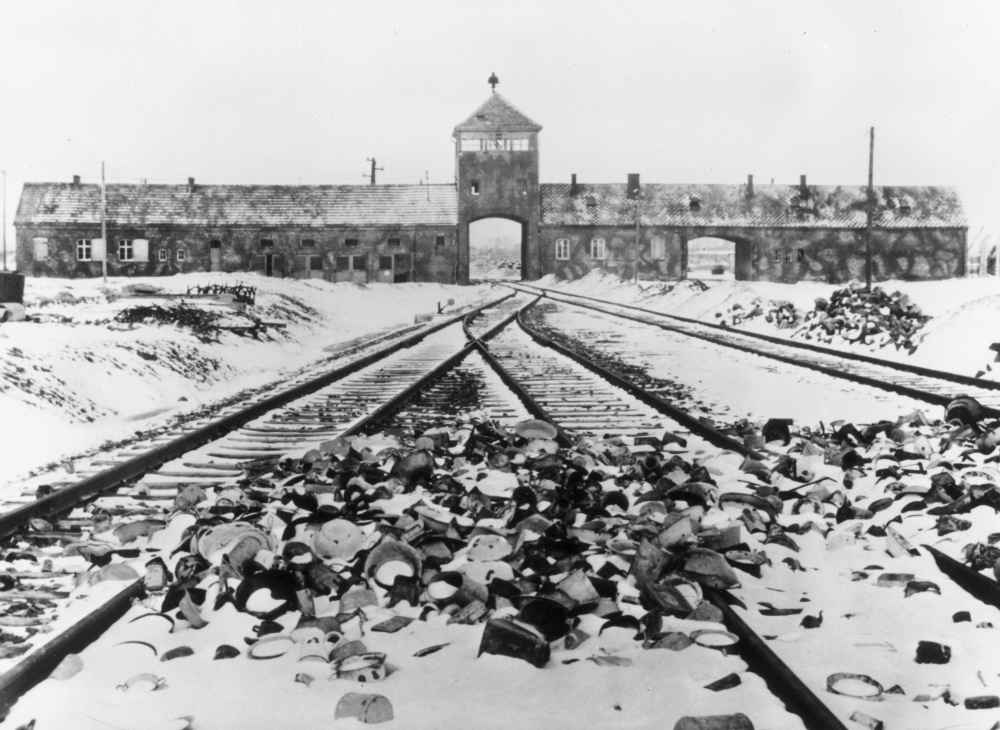
It was January 1945, and fires burned at Auschwitz-Birkenau. Not at the crematoria where, at the height of the Nazi concentration and extermination camp’s operations, an average of 6,000 Jews were gassed and cremated each day—those had been blown up at the command of SS officers preparing the camps’ evacuation. This time, the Nazis had set ablaze their prisoners’ looted possessions. The fires raged for days.
Once, the sprawling 40-camp complex now known as Auschwitz was characterized by grim record-keeping and brutal order. With chilling efficiency, the architects of the Holocaust orchestrated processes of deportation, detention, experimentation, enslavement, and murder. Between 1940 and 1945, approximately 1.1 million Jews, Poles, Roma people, Soviet POWs, and others were killed at the Auschwitz camps. Now, as Soviet troops marched westward through occupied Poland, the SS sought to dismantle their killing machine.
The Red Army’s arrival meant liberation, the camps’ end. But what came after the murders finally stopped?
.
A picture taken in January 1945 depicts the gate and railway of Auschwitz-Birkenau after the camp’s liberation by Soviet troops. Photo from Hulton Archive / Getty Images.
Film and Writing Festival for Comedy. Showcasing best of comedy short films at the FEEDBACK Film Festival. Plus, showcasing best of comedy novels, short stories, poems, screenplays (TV, short, feature) at the festival performed by professional actors.






 James' World 2