May 30, 2023
Mohenjo
Business, Food For Thought, Human Interest, Political, Science, Technical
amazon, business, Business News, current-events, Future, Hotels, human-rights, medicine, mental-health, research, Science, Science News, technology, Technology News, travel, vacation

Click the link below the picture
.
Not long ago, I was preparing to interview Tom Hanks at Symphony Space, a theater on the Upper West Side of Manhattan, for an audience of seven hundred-plus people at The New Yorker Live. Hanks had just published a novel called “The Making of Another Major Motion Picture Masterpiece,” and he was hitting the road for a while. Symphony Space was the first stop on the tour. Someone from Knopf, his publisher, let me know that I would embarrass Hanks if, in my introduction, I went through the litany of movies he has starred in since the early eighties. In fact, if I had, that would have been the whole evening. The list is long and shimmery. Hanks is that rare thing, a real movie star who has sustained a four-decades-and-counting career. It’s not just that he has won two Oscars in a row (for “Philadelphia” and “Forrest Gump”) or made box-office hits including “Splash,” “Saving Private Ryan,” and Steven Spielberg’s most enjoyable film, “Catch Me If You Can.” He’s also capable of taking on a predictable vehicle, such as the recent feature “A Man Called Otto,” and pumping some life into it while attracting a sizable audience.
What surprised me is the degree to which Hanks, particularly in front of a live crowd, in no way resembles Jimmy Stewart, the laconic Hollywood icon to whom he’s most often, and most lazily, compared. When we met beforehand, then onstage for an hour and a half, and, finally, over a long dinner at a local Greek restaurant, Hanks was about as laconic as Muhammad Ali. Or a hand grenade. He is funny, sarcastic, self-knowing, and a tireless raconteur, particularly about his day job. In our interview, he sometimes answered questions as he might in a more private setting than Symphony Space; far more often, he took some element of the question as a cue for a prolonged, well-polished anecdote, performed at the edge of his seat. Hanks’s novel is all over the place at times, undisciplined and overstuffed, but it contains extended passages and set pieces describing how movies are made that are entirely worth the ticket.
As an editor, I’ve always been frustrated by the degree to which the gatekeepers of the Entertainment Industrial Complex, as Hanks calls it, bar reporters from watching how a film gets made, limiting inquisitive journalists to a few distant glimpses of the process and then a concocted interchange on the official press junkets. And so I began our conversation at Symphony Space, which was recorded for The New Yorker Radio Hour and is published here in edited form, with my parochial complaint and a discussion of how Hanks sees things from inside.
.
 Photograph by Lloyd Bishop / NBC / Getty
.
.
Click the link below for the article:
.
__________________________________________
May 29, 2023
Mohenjo
Business, Food For Thought, Human Interest, Political, Science, Technical
amazon, business, Business News, current-events, Future, Hotels, human-rights, medicine, mental-health, research, Science, Science News, technology, Technology News, travel, vacation

Click the link below the picture
.
Facebook, which was created in 2004, amassed 100 million users in just four and a half years. The speed and scale of its growth was unprecedented. Before anyone had a chance to understand the problems the social media network could cause, it had grown into an entrenched behemoth.
In 2015, the platform’s role in violating citizens’ privacy and its potential for political manipulation was exposed by the Cambridge Analytica scandal. Around the same time, in Myanmar, the social network amplified disinformation and calls for violence against the Rohingya, an ethnic minority in the country, which culminated in a genocide that began in 2016. In 2021, the Wall Street Journal reported that Instagram, which had been acquired by Facebook in 2012, had conducted research showing that the app was toxic to the mental health of teenage girls.
Defenders of Facebook say that these impacts were unintended and unforeseeable. Critics claim that, instead of moving fast and breaking things, social media companies should have proactively avoided ethical catastrophe. But both sides agree that new technologies can give rise to ethical nightmares, and that should make business leaders — and society — very, very nervous.
We are at the beginning of another technological revolution, this time with generative AI — models that can produce text, images, and more. It took just two months for OpenAI’s ChatGPT to pass 100 million users. Within six months of its launch, Microsoft released ChatGPT-powered Bing; Google demoed its latest large language model (LLM), Bard; and Meta released LLaMA. ChatGPT-5 will likely be here before we know it. And unlike social media, which remains largely centralized, this technology is already in the hands of thousands of people. Researchers at Stanford recreated ChatGPT for about $600 and made their model, called Alpaca, open-source. By early April, more than 2,400 people had made their own versions of it.
While generative AI has our attention right now, other technologies coming down the pike promise to be just as disruptive. Quantum computing will make today’s data crunching look like kindergarteners counting on their fingers. Blockchain technologies are being developed well beyond the narrow application of cryptocurrency. Augmented and virtual reality, robotics, gene editing, and too many others to discuss in detail also have the potential to reshape the world for good or ill.
.
 Carolina Niño
.
.
Click the link below for the article:
.
__________________________________________
May 29, 2023
Mohenjo
Crime, Food For Thought, Human Interest, missed News, Political, Science, sports, Technical
amazon, business, Business News, current-events, Future, Hotels, human-rights, medicine, mental-health, research, Science, Science News, technology, Technology News, travel, vacation

.
News You might have missed!
Use your browser or smartphone back arrow (<-) to return to this table for your next selection.
.
__________________________________________
May 29, 2023
Mohenjo
Business, Food For Thought, Human Interest, Political, Science, Technical
amazon, business, Business News, current-events, Future, Hotels, human-rights, medicine, mental-health, research, Science, Science News, technology, Technology News, travel, vacation


.
__________________________________________
May 28, 2023
Mohenjo
Business, Food For Thought, Human Interest, Political, Science, Technical
amazon, business, Business News, current-events, Future, Hotels, human-rights, medicine, mental-health, research, Science, Science News, technology, Technology News, travel, vacation

Click the link below the picture
.
You’ve done what you can to cut back your spending.
You brew coffee at home, you don’t walk into Target and you refuse to order avocado toast. (Can you sense my millennial sarcasm there?)
But no matter how cognizant you are of your spending habits, you’re still stuck with those inescapable monthly bills. You know which ones we’re talking about rent, utilities, cell phone bill, insurance, groceries…
So if you’re ready to stop paying them, follow these moves…
.
 By The Penny Hoarder Staff
.
.
Click the link below for the article:
.
__________________________________________
May 28, 2023
Mohenjo
Business, Food For Thought, Human Interest, Political, Science, Technical
amazon, business, Business News, current-events, Future, Hotels, human-rights, medicine, mental-health, research, Science, Science News, technology, Technology News, travel, vacation

Click the link below the picture
.
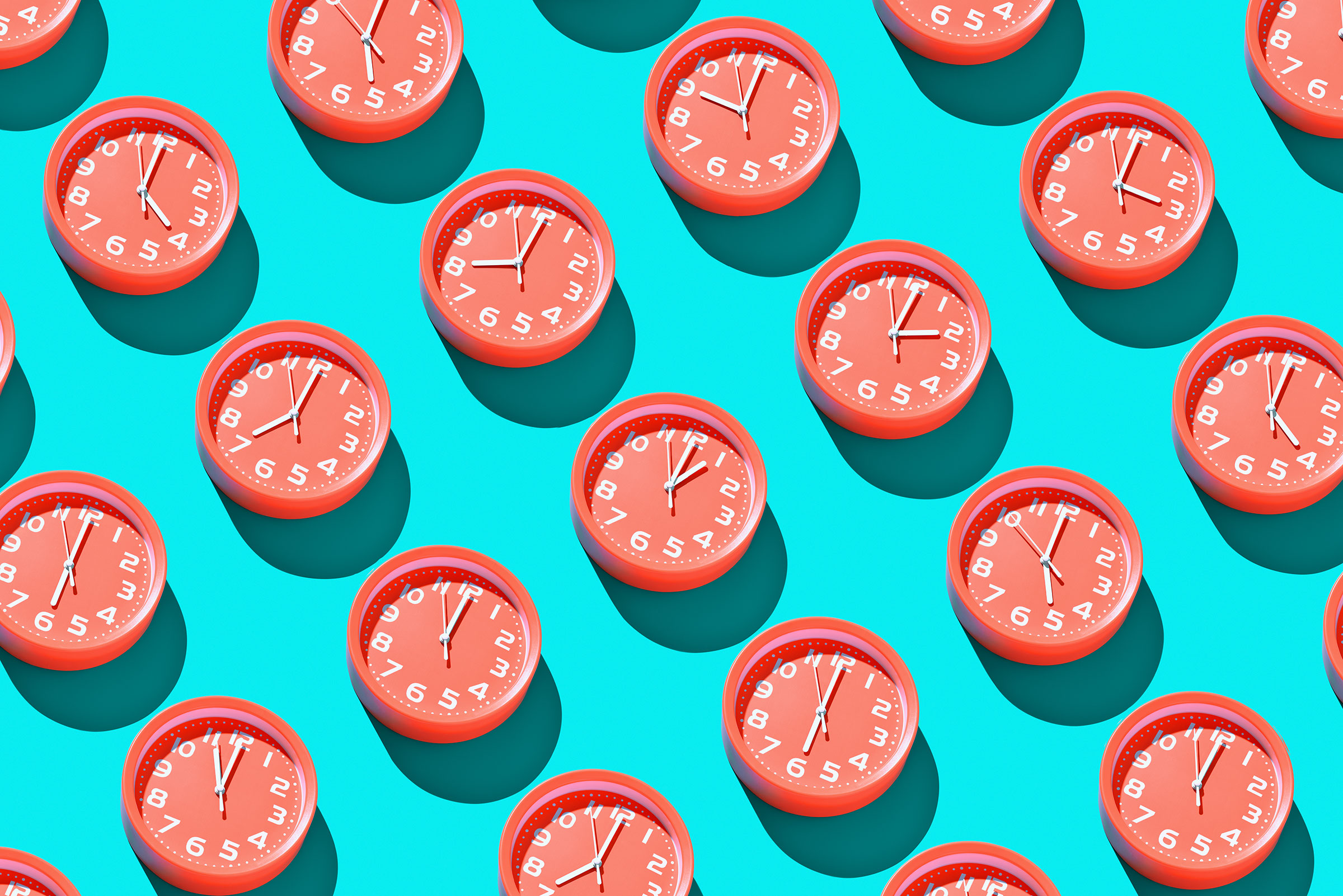
A favorite trope of sleep research is to divide the entire human population into two cute, feathered categories: early birds (also called larks) and night owls. Often, these studies link people’s natural sleep patterns—called their chronotype—with some waking behavior or personality trait.
It doesn’t take long to see which team more often comes out on top. (Hint: it’s the one that catches the worm.) Research says that early birds are happier, more punctual, do better in school, and share more conservative morals. Night owls are more impulsive, angry, and likely to become cyberbullies; they have shoddier diets and, most critically, are worse at kicking soccer balls.
But can the population really be categorized so neatly? Or is the research painting an incomplete and overly moralistic picture?
A study published May 24 in PLOS ONE by a group of Polish researchers takes a fresh look at the long-established link between being an early riser and being conscientious by examining a separate but potentially important variable that might underlie the link: being religious. The team found that people who woke up earlier tended to score higher on all dimensions of religiosity, leading them to conclude that being religious could help explain why early risers are more conscientious and more satisfied overall. “Morningness” might be closely aligned with godliness, in part because certain religions practice early-morning prayer—so religion could be driving the link between rising early and being conscientiousness.
.
.
.
Click the link below for the article:
.
__________________________________________
May 28, 2023
Mohenjo
Business, Food For Thought, Human Interest, Political, Science, Technical
amazon, business, Business News, current-events, Future, Hotels, human-rights, medicine, mental-health, research, Science, Science News, technology, Technology News, travel, vacation

Click the link below the picture
.
Richard Mathenge felt he’d landed the perfect role when he started training OpenAI’s GPT model in 2021. After years of working in customer service in Nairobi, Kenya, he was finally involved in something that felt meaningful and held a future for him. But the position left him scarred. For nine hours per day, five days a week, Mathenge led a team that taught the A.I. model about explicit content. The goal was to train it so it could keep such things away from users. Today, it remains stuck with him.
While at work, Mathenge and his team repeatedly viewed explicit text and labeled it for the model. They could categorize the content, the provenance of which was unclear, as child sexual abuse material, erotic sexual content, illegal, nonsexual, or some other options. Much of what they read horrified them. One passage, Mathenge said, described a father having sex with an animal in front of his child; others involved scenes of child rape. Some were so offensive Mathenge refused to speak of them. “Unimaginable,” he told me.
The type of work Mathenge performed has been crucial for bots like ChatGPT and Google’s Bard to function and to feel so magical. But the human cost of the effort been widely overlooked. In a process called “Reinforcement Learning from Human Feedback,” or RLHF, bots become smarter as humans label content, teaching them how to optimize based on that feedback. A.I. leaders, including OpenAI’s Sam Altman, have praised the practice’s technical effectiveness, yet they rarely talk about the cost some humans pay to align the A.I. systems with our values. Mathenge and his colleagues were on the business end of that reality.
Mathenge earned a degree from Nairobi’s Africa Nazarene University in 2018 and quickly got to work in the city’s technology sector. In 2021, he applied for work with Sama, an A.I. annotation service that’s worked for companies like OpenAI. After Sama hired Mathenge, it put him to work labeling LiDAR images for self-driving cars. He’d review the images and pick out people, other vehicles, and objects, helping the models better understand what they encountered on the road.
When that project wrapped, Mathenge was transferred to work on OpenAI’s models. And there, he encountered the disturbing texts. OpenAI told me it believed it was paying its Sama contractors $12.50 per hour, but Mathenge says he and his colleagues earned approximately $1 per hour and sometimes less. Spending their days steeped in depictions of incest, bestiality, and other explicit scenes, the team began growing withdrawn.
.
 It looms. STEFANI REYNOLDS/Getty Images
.
.
Click the link below for the article:
.
__________________________________________
May 28, 2023
Mohenjo
Business, Food For Thought, Human Interest, Political, Science, Technical
amazon, business, Business News, current-events, Future, Hotels, human-rights, medicine, mental-health, research, Science, Science News, technology, Technology News, travel, vacation

Click the link below the picture
.
Testifying before Congress on May 16, OpenAI chief executive Sam Altman said it was time for regulators to start setting limits on powerful AI systems. “As this technology advances, we understand that people are anxious about how it could change the way we live. We are too,” Altman told a Senate committee. “If this technology goes wrong, it can go quite wrong,” he said, claiming it could do “significant harm to the world.” He agreed with lawmakers that government oversight will be critical to mitigating the risks.
A topic barely on lawmakers’ radars a year ago, governments around the globe are now fiercely debating the pros and cons of regulating or even prohibiting some uses of artificial intelligence technologies. The question business leaders should be focused on at this moment, however, is not how or even when AI will be regulated, but by whom. Whether Congress, the European Commission, China, or even U.S. states or courts take the lead will determine both the speed and trajectory of AI’s transformation of the global economy, potentially protecting some industries or limiting the ability of all companies to use the technology to interact directly with consumers.
Since the November 2022 release of OpenAI’s ChatGPT, its generative AI chatbot built on a self-improving large language model neural network (LLM), use of generative AI has exploded. According to data compiled by Statista, ChatGPT reached one million users in five days, blowing away previously warp-speed internet product introductions including Facebook, Spotify, and Netflix. Midjourney and DALL-E, LLMs that create custom illustrations based on user input, have likewise exploded in popularity, generating millions of images every day. Generative AI certainly meets the criteria for what one of us previously co-defined as a “Big Bang Disruptor”: a new technology that, from the moment of release, offers users an experience that is both better and cheaper than those with which it competes.
Such a remarkable take-up is naturally cause for excitement, and, for incumbent businesses, alarm. The potential for LLMs seems limitless, perhaps revolutionizing everything from search to content generation, customer service to education, and well, you name it. Unlike more targeted Big Bang Disruptions, ChatGPT and other LLMs are uber-disruptors, breaking longstanding rules not just in one industry, but in all of them. At the same time.
.
 Marcos Osorio/Stocksy
.
.
Click the link below for the article:
.
__________________________________________
May 27, 2023
Mohenjo
Business, Food For Thought, Human Interest, Political, Science, Technical
amazon, business, Business News, current-events, Future, Hotels, human-rights, medicine, mental-health, research, Science, Science News, technology, Technology News, travel, vacation

Click the link below the picture
.
If you watch TV, especially conservative TV, you know Mike Lindell. He’s the guy who comes on every 10 minutes or so to sell his pillows for “the best night’s sleep in the whole wide world.” He’s also the guy who has sunk tens of millions of dollars into supporting investigations and lawsuits that claim the 2020 presidential election was stolen from Donald Trump.
And I just took him for $5 million.
You may have read a little about it. In the summer of 2021, Lindell announced that he was going to hold a “Cyber Symposium” in Sioux Falls, S.D., to release data that proved that U.S. voting machines were hacked by China. He said he would even pay $5 million to anyone who could disprove his data.
Right away, friends started calling to ask me if I was planning to go. After all, I invented the field of software forensics, the science of analyzing software source code for intellectual property infringement or theft. Still, I wasn’t sure. There are a lot of experts that could analyze data. And no one in their right mind would offer $5 million if the data wasn’t real and verified, right? Anyway, the symposium ran three days — not nearly long enough to analyze and verify any data.
.
 MyPillow Guy
.
.
Click the link below for the article:
.
__________________________________________
May 27, 2023
Mohenjo
Business, Food For Thought, Human Interest, Political, Science, Technical
amazon, business, Business News, current-events, Future, Hotels, human-rights, medicine, mental-health, research, Science, Science News, technology, Technology News, travel, vacation

Click the link below the picture
.
The Dyson Kool-Aid is powerful. For a week after touring Dyson’s Singapore headquarters, soaking up talks and presentations on filth and viruses, I can’t help but feel like my home isn’t clean enough. I’d always known that dust mites were an inevitable problem in all beds, but I’d never really had the urge to learn about how they defecate in the unreachable bowels of my mattress, filling our homes with allergy-causing poop. Thanks to Dyson, I now spend way too much time thinking about microscopic crap that cloaks my body as I sleep.
“Dust is a problem,” announces Zerline Lim, an associate principal engineer from Dyson’s Malaysian labs, during an hour-long presentation on dust and air science. For Dyson’s team, though, it’s less of a problem and more of a standing invitation — dust, to them, is a gateway into people’s lives.
You don’t need to tell me twice — I’m the sort of person who wakes up with watery eyes and pops a Zyrtec every day — and today, Dyson is unveiling a new range of cleaning products to address that sort of thing. It’s an unsurprisingly pricey set of gadgets that does more of the same robust cleaning and air filtering that the company has become known for. But this new set of toys is being introduced to a pandemic-driven world where our concerns around dust, air pollution, and germs have stoked interest in better and more powerful cleaning solutions.
It’s a sweltering Tuesday morning as I walk into the vast, cool interior of Dyson’s global headquarters in Singapore — an Edwardian-style brick behemoth that was once the St James Power Station, Singapore’s first power plant. After a stint as a warehouse, in 2006, the location became a sprawl of cheesy harbor side nightclubs with flashy cars and obnoxious drunks. Now, it’s pristine and quiet, a serene corporate haven of concrete, glass, and open-plan office spaces nestled within the building’s original industrial steel skeleton. On the ground floor’s communal area is a small copse of trees, which I’m told contained some rather unhappy snakes when they first arrived.
.
:format(webp)/cdn.vox-cdn.com/uploads/chorus_asset/file/24674088/IMG_3302.JPEG) Dyson’s Singapore HQ
Dyson’s Singapore HQ
.
.
Click the link below for the article:
.
__________________________________________
Older Entries
Newer Entries
 James' World 2