COVID cases are so high in Orlando, Florida, that residents are being asked to cut back on water usage to save oxygen supplies for patients.
The city’s Utilities Commission asked residents Saturday to stop watering their lawns, citing a “shortage of liquid oxygen linked to the surge of COVID-19 inpatient treatments.” If residents didn’t do their part to reduce water consumption, the commission warned, “water quality may be impacted.
”Linda Ferrone, the commission’s chief customer, and marketing officer said the commission may be forced to issue a boil water notice if conditions do not improve.
“This is another impact of the virus continuing to surge in our community,” Orlando Mayor Buddy Dyer said in a Facebook post. “And it’s another result of what happens when residents do not get the vaccine and become critically ill, needing medical support and treatment.”
We all know that lifting weights can build up our muscles. But by changing the inner workings of cells, weight training may also shrink fat, according to an enlightening new study of the molecular underpinnings of resistance exercise. The study, which involved mice and people, found that after weight training, muscles create and release little bubbles of genetic material that can flow to fat cells, jump-starting processes there related to fat burning.
The results add to mounting scientific evidence that resistance exercise has unique benefits for fat loss. They also underscore how extensive and interconnected the internal effects of exercise can be.
Many of us pigeonhole resistance training as muscle building, and with good reason. Lifting weights — or working against our body weight as we bob through push-ups, squats, or chair dips — will noticeably boost our muscles’ size and strength. But a growing number of studies suggest weight training also reshapes our metabolisms and waistlines. In recent experiments, weight workouts goosed energy expenditure and fat burning for at least 24 hours afterward in young women, overweight men, and athletes. Likewise, in a study I covered earlier this month, people who occasionally lifted weights were far less likely to become obese than those who never lifted.
If you want a quick way to check in on your posture, imagine a line running from the tip of your nose down to your chest. If it’s straight, congratulations—you’re in alignment. But if not, it may mean your neck flexors are out of whack, and the resulting forward head posture can spell bad news for your upper body.
“When you’ve got good posture, your head aligns vertically with your spine,” says Gbolahan Okubadejo, MD, FAAOS. “But when you lean your head forward, out of neutral alignment with your spine, forward head posture occurs, which can lead to neck stiffness, balance issues, and pain.” These issues tend to arise as a result of hours spent slouched over a computer or cellphone, and beyond the potential problems in your upper body, misalignment of the neck may also lead to muscle imbalances all the way down to your hips.
Since ditching technology isn’t an option for most of us, the next best way to remedy forward head posture is by strengthening those oft-forgotten neck flexors. “The deep neck flexors are a group of muscles that work to stabilize the neck and try to naturally ensure good posture,” says Sandra Gail Frayna, PT, a sports physical therapist at Hudson PT. “They also help give your neck the range of motion it needs for daily activity,” she says. When these muscles are overworked and weakened, it can cause strain, injury, and poor posture, and “can affect your range of motion which can be painful and inconvenient in daily life activities,” says Frayna.
A lot of us have struggled with weight gain, obesity, and diabetes or pre-diabetes for years. And we’ve tried all kinds of diets. Sometimes they work — the weight comes off for a while. But most of the time, the weight comes back. We see numbers on the scale higher than our pre-diet weights. We get discouraged, and sometimes we give up.
In a new documentary called “BETTER”, Harvard doctors explain why there’s more to weight loss than “calories in, calories out” and how all calories are not created equal. And real people share their struggles with obesity, the shame that can go along with it, and the solutions that worked for them.
One of those doctors, JoAnn Manson, MD, chief of the division of preventive medicine at Brigham and Women’s Hospital and professor of medicine at Harvard Medical School, sat down with TODAY to explain why losing weight is so difficult and to share her insights to make the process easier.
Your gut is a thriving universe unto itself. This tiny cosmos is inhabited by thousands on thousands of microorganisms, which together make up your gut microbiome.
Among other things, this internal ecosystem contains bacteria that we rely on to help us break down and process the foods that we’re not readily equipped to digest. But a slew of recent scientific studies shows that our gut also connects more broadly to our holistic health, even to things that are seemingly unrelated, like our brains.
The science is preliminary, but there is compelling evidence that what you eat — and in turn, that changes the gut microbiome — has an outsized influence on your health. But not in the way you’d think.
What’s new — A new study published on Friday in the journal Science Advances looks at how diet could alter multiple sclerosis (MS) symptoms via the gut microbiome. By feeding mice with an MS-like condition a specific diet, scientists were able to reprogram their gut bacteria — and reduce their symptoms.
The study started with the observation that the gut microbiomes of people with MS lack a kind of bacteria that, in most folks’ gut, breakdowns a nutrient called isoflavones. This nutrient is commonly found in everyday staple foods, like soy and beans.
So, the team hypothesized that MS might be related to the absence of these bacteria — and in turn, eating more foods with isoflavones in them could alleviate the symptoms.
From there, they were able to demonstrate the critical difference that the bacteria’s presence or absence can make in this disease.
.
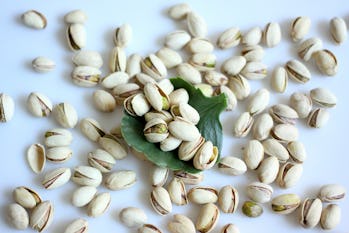
Eating foods like pistachios may influence the gut microbiome in positive ways.Renato Marzini/Photodisc/Getty Images
Film and Writing Festival for Comedy. Showcasing best of comedy short films at the FEEDBACK Film Festival. Plus, showcasing best of comedy novels, short stories, poems, screenplays (TV, short, feature) at the festival performed by professional actors.

 © Provided by The Daily Beast Chandan Khanna/AFP via Getty



 Photo: Getty Images/ Tirachard Kumtanom / EyeEm
 .
.
 James' World 2