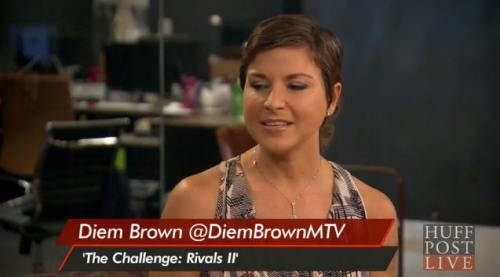
Diem Brown lost her long, extremely brave battle with cancer, PEOPLE reports. She was 32.
Diem first found fame on the MTV reality series “Real World/Road Rules Challenge” in 2006, and went on to compete in six more challenges.
In a statement, the network said: “MTV is tremendously sad to hear the news that Diem Brown has lost her long battle with cancer. We send our deepest condolences to her family and friends. Diem was a true fighter and brought passion to everything she touched. We will miss her.”
For someone whose knee is sore and creaky, the prospect of replacing it with a new, metal-and-plastic version of the joint can be beguiling. The surgery seems so easy and to promise so much: better mobility, less pain, an approximation, almost, of youth. But there is growing evidence that knee-replacement surgery may be too seductive — and that many people considering the procedure would be better served to first try other ways to improve their knees.
There’s no doubt that knee replacements are increasingly popular. More than 600,000 such surgeries were performed in 2012, compared with about 250,000 just 15 years ago. But some new studies suggest that people may be electing to have the procedure prematurely and, perhaps worse, gaining limited benefit from it. According to figures from the American Academy of Orthopaedic Surgeons, the number of knee replacements in people between 45 and 64 soared by 205 percent between 2000 and 2012; among people 65 and older, the increase was only 95 percent.
Brittany Maynard’s purposeful passing Saturday drove new dialogue on aid in dying, but her illness also reminded the world that science seems stuck in its bid to cure the most common type of brain cancer.
Maynard, 29 had glioblastoma, a fast-invading malignancy that, according to the National Brain Tumor Society, is “the most deadly, most prevalent form.” Even after surgery and chemotherapy, the tumor typically kills people in about 18 months, the group says.
Then, on Sunday, Lauren Hill, 19, stirred cheers and tears by notching two baskets for her Ohio college despite playing with a brain tumor that doctors project could claim her in weeks. Like Maynard, Hill’s tumor is in the glioma family. Her cancer is on the brain stem, which controls breathing and pulse, leaving surgeons unable to remove it while no drug has been found to effectively treat it.
New guidelines for the personal protective equipment that wear have on when treating Ebola patients make clear that what you wear counts — but even more important is how you put it on and take it off.
And the guidelines that the World Health Organization updated Friday suggest only highly trained medical professionals should be taking on the dangerous job of caring for Ebola patients, say the country’s leading doctors at the National Institutes of Health.
“Anybody could do this, but the training process is something that takes a lot of time,” Dr. Francis Collins, who heads the National Institutes of Health, told NBC News in an interview.
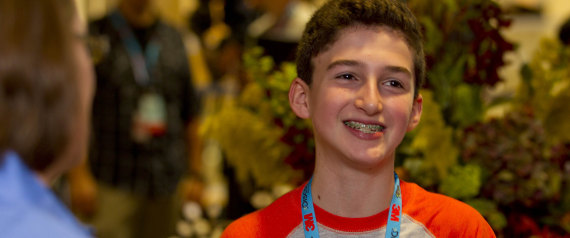
David Cohen understands that mosquitoes aren’t just pesky annoyances — they’re global killers, too.
That’s why the 12-year-old from Dallas invented a robot that drowns the pests using a pump-jet system that traps them underwater using mesh. He submitted his work to the Discovery Education 3M Young Scientist Challenge earlier this year and is one of the competition’s ten finalists.
The challenge, which is open for students who are in grades 5 through 8 at the time of submission, awards its winner $25,000, the title of “America’s Top Young Scientist,” and an all-expenses paid vacation. A victor will be decided after finalists present their work on Oct. 13 and 14 in St. Paul, Minnesota.
A New York City doctor who recently returned from treating Ebola patients in Guinea tested positive for the disease on Thursday.
Dr. Craig Spencer, 33, reported a fever of 100.3 degrees and gastrointestinal problems Thursday morning, both symptoms of Ebola. He was then transported to Bellevue Hospital in an ambulance staffed by a “specially trained HAZ TAC unit wearing Personal Protective Equipment,” according to a statement from the New York City Department of Health and Mental Hygiene. Tests conducted at the hospital revealed that he had the virus.
Spencer is the only case of Ebola in the city of more than 8 million. He is now the fourth person to be diagnosed in the U.S. with the viral disease.
Now that is cool: Testing your sugar without needles and without blood droplets.
In Europe, the medical company Abbott has just released its FreeStyle Libre system, which may usher in a revolution in diabetes care. And both doctors and patients can’t wait.
Prabahar Gopalakrishnan, 26, is a type 1 diabetic who has taken daily insulin injections since the age of seven. “I’ve probably pricked my fingers almost 15,000 times so far,” he tells me.
.
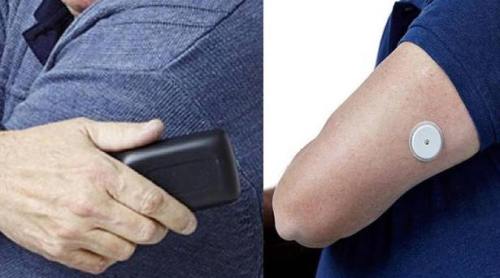
The Abbott FreeStyle Libre uses a cellphone-sized device, left, to display blood glucose readings gathered by a sensor placed on the arm, right.
Harvard University has produced the vast quantities of insulin-producing cells needed for transplants
A cure for diabetes could be imminent after scientists discovered how to make huge quantities of insulin-producing cells, in a breakthrough hailed as significant as antibiotics.
Harvard University has, for the first time, managed to manufacture the millions of beta cells required for transplantation.
It could mean the end of daily insulin injections for the 400,000 people in Britain living with Type 1 diabetes.
Brittany Maynard will die on Nov. 1, and it’s a decision she made herself.
The 29-year-old was diagnosed in April with stage 4 glioblastoma, a malignant brain tumor, and was given just six months to live. With no cure available for her condition, she chose to end her own life using medication prescribed by her doctor.
Maynard explains her decision as well as the story of her cancer diagnosis in a video and interview with People.
There is not a cell in my body that is suicidal or that wants to die. I want to live. I wish there was a cure for my disease, but there’s not. … My glioblastoma is going to kill me, and that’s out of my control. I’ve discussed with many experts how I would die from it, and it’s a terrible, terrible way to die. Being able to choose to go with dignity is less terrifying.
Nurses, the frontline care providers in U.S. hospitals, say they are untrained and unprepared to handle patients arriving in their hospital emergency departments infected with Ebola.
Many say they have gone to hospital managers, seeking training on how to best care for patients and protect themselves and their families from contracting the deadly disease, which has so far killed at least 3,338 people in the deadliest outbreak on record.
The U.S. Centers for Disease Control and Prevention has repeatedly said that U.S. hospitals are prepared to handle such patients. Many infectious disease experts agree with that assessment.
.
Experts warn deadly Ebola virus could spread to Britain through MEAT: Scientists fear contaminated ‘bush’ produce illegally smuggled into UK could carry killer bug and may be ‘on a market stall in London’
Film and Writing Festival for Comedy. Showcasing best of comedy short films at the FEEDBACK Film Festival. Plus, showcasing best of comedy novels, short stories, poems, screenplays (TV, short, feature) at the festival performed by professional actors.