Even infants can have conversations with mom or dad. Their turn just tends to involve a smile or some gibberish instead of words. That’s a key lesson from programs that are coaching parents to talk more with their babies—and recording their attempts.
At issue is how to bridge the infamous “word gap,” the fact that affluent children hear far more words before they start school than low-income kids. New research suggests intervening early can at least boost the words at-risk tots hear, and maybe influence some school-readiness factors.
One program in Providence, Rhode Island, straps “word pedometers” onto tots to record how many words a day they hear from family or caregivers—not TV. Another in New York City records video of parents practicing conversation strategies with babies too young to even say “Da-da.”
“Parents say: ‘Wow, look what I did there. I made a sound and my child smiled at me,” said Dr. Alan Mendelsohn of New York University. “The power in that is really something.”
The research was presented Friday at a meeting of the American Association for the Advancement of Science in Boston.
.
In this Jan. 11, 2016 photo, caseworker Stephanie Taveras, left, reads a book with 20-month-old Gracey Niebla, right, at the child’s home in Providence, R.I. The city is in the third year of its effort to boost language skills for children
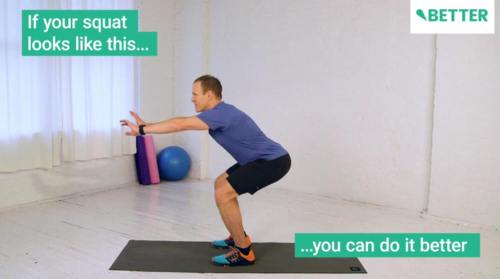
Squats are the most efficient way to strengthen all your muscles from the waist down. What I tell my patients and the people I train is that if you have a strong butt, you have a happy life.
That’s because squats strengthen your glute muscles particularly, and the glute muscles are the biggest, strongest muscles in the body — they’re your biggest power generator.
Done properly, squats take the pain out of your hips: The glute muscles are external rotators and they take the pressure off the hip joint. So if you have achy hips or arthritic hips, stronger butt muscles actually literally open up the hip joint and take the pressure off the hip pinching.
In honor of Black History Month, here’s a look at 14 people who broke color barriers to become the first Black Americans to achieve historic accomplishments in politics, academics, aviation, entertainment and more tangie
.
Gordon Parks in Hollywood on April 4, 1968. Associated Press
In 1975, researchers at Stanford invited a group of undergraduates to take part in a study about suicide. They were presented with pairs of suicide notes. In each pair, one note had been composed by a random individual, the other by a person who had subsequently taken his own life. The students were then asked to distinguish between the genuine notes and the fake ones.
Some students discovered that they had a genius for the task. Out of twenty-five pairs of notes, they correctly identified the real one twenty-four times. Others discovered that they were hopeless. They identified the real note in only ten instances.
As is often the case with psychological studies, the whole setup was a put-on. Though half the notes were indeed genuine—they’d been obtained from the Los Angeles County coroner’s office—the scores were fictitious. The students who’d been told they were almost always right were, on average, no more discerning than those who had been told they were mostly wrong.
.
The vaunted human capacity for reason may have more to do with winning arguments than with thinking straight.Illustration by Gérard DuBois
An elephant that was kept in chains for 50 years and abused by a drug addict who used the animal beg in India has been freed. Raju had been beaten and starved since being poached from the wild as a baby and resorted to eating paper and plastic to fill his stomach. The chains and spikes wrapped around his legs had left him with chronic wounds and arthritis and he was in almost constant pain. But now he is walking free for the first time after a daring rescue by conservationists with a court order by the Uttar Pradesh Forest Department to take the elephant from his abusive owner.
The charity took Raju in the middle of the night on Thursday, supported by police and state officials. The elephant’s mahout and previous owner tried to stop him being taken by adding more chains and having people block the roads for the rescue lorry. Experts worked for hours to gain the elephant’s trust with fruit and encouragement until they could get him into the van that would take him to a sanctuary.
When Raju was being rescued, volunteers said they saw tears rolling down his face. Pooja Binepal, from Wildlife SOS UK, said: “The team were astounded to see tears roll down his face during the rescue. It was so incredibly emotional for all of us. “We knew in our hearts he realised he was being freed. “Elephants are not only majestic, but they are highly intelligent animals, who have been proven to have feelings of grief, so we can only imagine what torture half a century has been like for him.”
New imaging techniques enable exploration of the brain in much more detail than ever before, opening the door to greater understanding of neurological problems and possibly new treatments, researchers say.
Showcased this week at the American Association for the Advancement of Science annual meeting, the research and innovations are the product of three US scientists involved in a project launched by former president Barack Obama in 2013 to unlock the inner workings of the brain.
Obama’s Brain Research through Advancing Innovative Neurotechnologies (BRAIN) initiative promised a multidisciplinary approach, with a budget of $434 million for 2017, aimed at unlocking the mysteries of the brain and treating diseases such as Alzheimer’s, Parkinson’s and schizophrenia.
One of the technologies developed as part of the initiative, called Scape, enables scientists to see brain structures at a microscopic level.
Scape permits the three-dimensional observation of individual neurons in the brain of a fruit fly as the insect is in flight, searching for food or suddenly afraid for its life, said Elisabeth Hillman, professor of biomedical engineering at Columbia University.
“You can see actually flashing green as the brain is telling the body to move,” she told the conference.
.
Obama’s Brain Research through Advancing Innovative Neurotechnologies (BRAIN) initiative promised a multidisciplinary approach, with a budget of $434 million for 2017, aimed at unlocking the mysteries of the brain
Some of the victims can’t speak. They rely on walkers and wheelchairs to leave their beds. They have been robbed of their memories. They come to nursing homes to be cared for.
Instead, they are sexually assaulted.
The unthinkable is happening at facilities throughout the country: Vulnerable seniors are being raped and sexually abused by the very people paid to care for them.
It’s impossible to know just how many victims are out there. But through an exclusive analysis of state and federal data and interviews with experts, regulators and the families of victims, CNN has found that this little-discussed issue is more widespread than anyone would imagine.
Even more disturbing: In many cases, nursing homes and the government officials who oversee them are doing little — or nothing — to stop it.
.
Sonja Fischer is shown here in earlier days. She is pictured at top of this story during the last years of her life, with her daughter Maya’s haunting quote.
Mounting research continues to show the links between the health of the gut and that of the brain. Now, a new study from Lund University in Sweden finds that unhealthy intestinal flora can accelerate the development of Alzheimer’s disease.
The report, published Feb. 8 in the journal Scientific Reports, demonstrates that mice with Alzheimer’s have a different gut bacterial profile than those that do not have the disease.
The gut microbiome is highly responsive to dietary and lifestyle factors. This suggests that a gut-healthy diet may play a powerful role in preventing one of the most feared diseases in America.
“Alzheimer’s is a preventable disease and in the near future we will likely be able to give advice on what to eat to prevent it,” study author Dr. Frida Fak Hållenius, associate professor at the university’s Food for Health Science Centre, told The Huffington Post. “Take care of your gut bacteria, by eating lots of whole-grains, fruits and vegetables.”
.
Nomadsoul1 via Getty Images
A new study suggests that a gut-healthy diet may play a powerful role in preventing one of the most feared diseases in America.
As you read this, a protein in your body called P-gp is hunting down and ejecting unwanted chemicals from your insides. It’s a critical defensive measure we rely on that pretty much makes sure you aren’t constantly getting poisoned.
But new research suggests there’s something in seafood that could make that protein worthless — and compromise your body’s ability to protect itself.
Researchers tested yellowfin tuna, a fish you’d commonly find in sushi rolls, along with human blood and urine to detect traces of Persistent Organic Pollutants, like the pesticide DDT and flame-retardant chemicals.
A pot belly can be a bad thing, even if you’re not considered overweight.
New research suggests normal-weight people who carry their fat at their waistlines may be at higher risk of death over the years than overweight or obese people whose fat is more concentrated on the hips and thighs.
Monday’s study signals the distribution of fat matters whatever the scale says.
“If the waist is larger than your hips, you’re at increased risk for disease,” said Dr. Samuel Klein, an obesity specialist at Washington University School of Medicine at St. Louis, who wasn’t involved in the new research.
It also has implications for advising patients whose body mass index or BMI, the standard measure for weight and height, puts them in the normal range despite a belly bulge.
“We see this with patients every day: ‘My weight is fine. I can eat whatever I want,'” said study senior author Dr. Francisco Lopez-Jimenez, preventive cardiology chief at the Mayo Clinic. “These results really challenge that.”
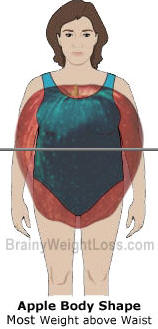
Abdominal fat — the main cause of an apple-shaped figure — has long been considered more worrisome than fat that settles on the hips and below, which marks the so-called pear shape. Risk increases for men if their waist circumference is larger than 40 inches, and 35 inches for women. Still, doctors typically focus more on BMI than waistlines; after all, girth tends to increase as weight does.
Film and Writing Festival for Comedy. Showcasing best of comedy short films at the FEEDBACK Film Festival. Plus, showcasing best of comedy novels, short stories, poems, screenplays (TV, short, feature) at the festival performed by professional actors.

 In this Jan. 11, 2016 photo, caseworker Stephanie Taveras, left, reads a book with 20-month-old Gracey Niebla, right, at the child’s home in Providence, R.I. The city is in the third year of its effort to boost language skills for children
 .
.



 .
. Obama’s Brain Research through Advancing Innovative Neurotechnologies (BRAIN) initiative promised a multidisciplinary approach, with a budget of $434 million for 2017, aimed at unlocking the mysteries of the brain